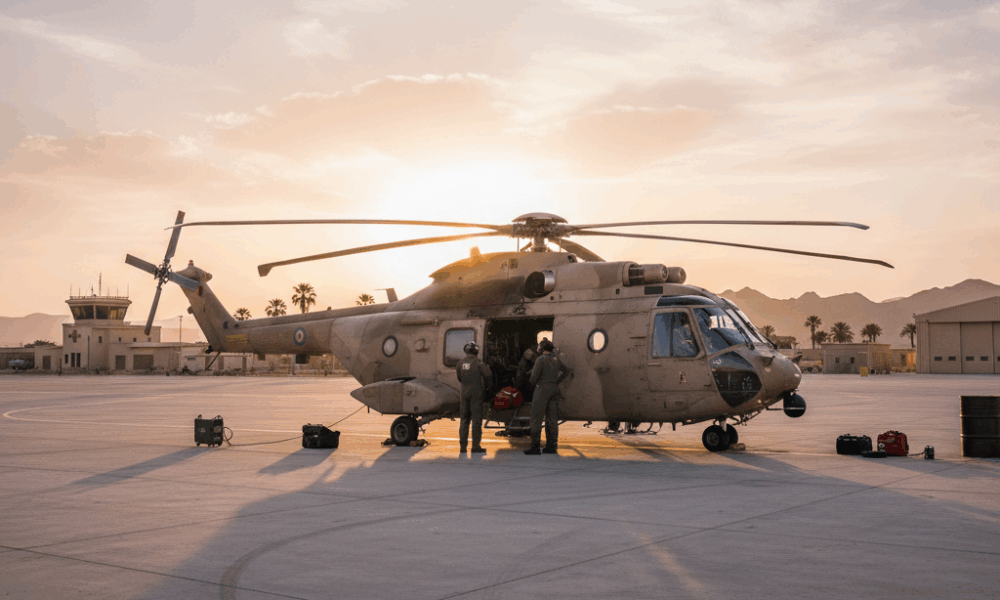
Morocco orders ten Airbus H225M helicopters: challenges of strengthening the air fleet and CSAR missions
The order of ten Airbus H225M helicopters by Morocco, made official at the Dubai airshow, marks a major turning point for the national air fleet. This acquisition, intended for the Royal Air Forces, aims to strengthen combat search and rescue (CSAR) capabilities and special missions. It responds to a dual imperative: to replace the venerable Puma helicopters in service for over forty years and to align operational resources with the international standards of modern defense.
The H225M is renowned for its robustness in demanding environments, supported by a fleet of more than 360 H225/H225M aircraft totaling nearly 980,000 flight hours worldwide. Its adoption by France, the Netherlands, Brazil, Mexico, Thailand, Indonesia, Iraq, and Kuwait attests to its operational credibility. For Morocco, this leap in capability fits within a logic of sovereignty, border security, and regional integration.
Why the H225M is the choice for Morocco
The configuration chosen by Rabat includes a dual winch, a searchlight, and a Safran Euroflir 410 optronic ball. The aircraft can be equipped with door-mounted machine guns and an electronic warfare system for self-protection. This setup balances power, range, detection accuracy, and survivability. It enables interventions at night, in desert dust or in mountainous terrain, where every minute counts to save lives.
CSAR missions require instant coordination between crews, advanced air controllers, and ground forces. In a typical scenario, an isolated patrol is recovered in a risk zone: discreet guidance, winch descent, extraction under threat, then evacuation to a base. The H225M excels in this pattern thanks to its avionics suite, ability to operate with night vision goggles, and significant payload.
- 🔎 Enhanced detection: the Euroflir 410 provides long-range, multispectral vision.
- 🛡️ Increased protection: onboard electronic warfare and localized armor.
- ⏱️ Optimized response time: dual winch and modular cabin for rapid extractions.
- 🌍 Versatility: from CSAR to humanitarian missions, including medical evacuation.
- 🔗 Interoperability: NATO standard, smooth coordination with allies and national services.
What this changes on the ground
Morocco has a varied territory between the Atlantic coast, the Atlas, the Rif, and Saharan zones. Air needs differ: sea rescues, high-altitude evacuations, monitoring large areas. The modularity of the H225M provides a unique response to this geographical mosaic. It also strengthens cooperation with the Royal Navy and the Gendarmerie, already operators of Airbus helicopters.
Beyond military technology, the aircraft becomes a civil protection asset. During fire season, it can carry heliportable firefighting equipment. During storms or earthquakes, its carrying and winching capacity multiplies rescue options. It is this dual usefulness, military and civilian, that anchors the decision in the public interest.
| Mission 🌐 | H225M capabilities ⚙️ | Operational effect 🎯 |
|---|---|---|
| CSAR | Dual winch, Euroflir 410, self-protection | Fast and safe extraction in hostile zone ✅ |
| Maritime SAR | Searchlight, radar/EO, long endurance | Enhanced location and sea rescue 🚁 |
| Medical evacuation | Modular cabin, MEDEVAC kits | Stabilized care and fast transport ⛑️ |
| Special support | Machine guns, data links | Fire support and covert team insertion 🎯 |
| Logistics | High payload, winching/slings | Efficient resupply of isolated posts 📦 |
The choice of the H225M reduces the technological gap with international standards and consolidates a credible national security posture.
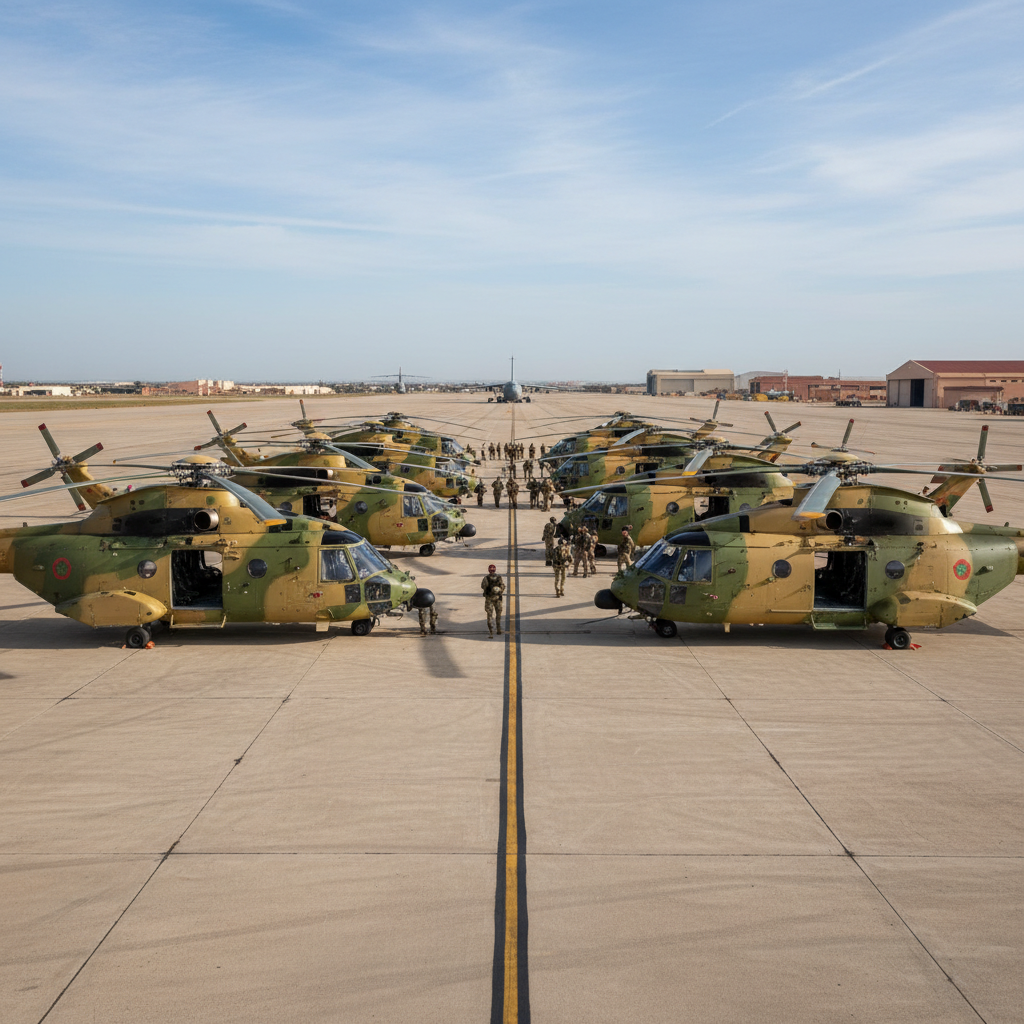
Industrial benefits in Morocco: jobs, MRO, and aerospace value chain around the H225M
Fleet modernization is accompanied by a decisive industrial component. Airbus has had a historic presence in Morocco since 1951 through Airbus Atlantic, specialized in composites, metal sub-assemblies, and avionics. In 2024, a customer center was announced to support nearly 60 Airbus helicopters operated by the air force, the Royal Navy, and the Gendarmerie. This center is expected to evolve into an MRO (maintenance, repair, overhaul) hub and become a regional center for West Africa.
This trajectory strengthens the Nouaceur/Midparc ecosystem and its spillover effects on Moroccan SMEs. The needs for parts, tooling, sensors, maintenance software, and related services stimulate a qualified local supply chain. Expected results: skills development, higher value-added jobs, and new opportunities for recent graduates in aeronautics.
Which trades and skills to mobilize
The transition to the H225M mobilizes diverse profiles, from helicopter maintenance to cybersecurity and logistics. Moroccan companies can capture activities in mechanical assembly overhaul, avionics repair, and stock management via connected tools. Bridges exist with the automotive and electronics industries already mature in Morocco.
- 🧰 MRO Technicians: structures, engines, avionics, wiring.
- 💻 Data & AI applied to predictive maintenance.
- 📦 Supply chain and critical parts planning.
- 🔐 Systems security and protection of operational data.
- 🧪 Quality and testing on benches, calibration, and metrology.
A leverage effect for SMEs and territories
Local companies can position themselves on electrical harnesses, surface treatments, non-destructive testing (NDT), or 3D printing of templates. A telling example: a fictional SME “Atlas Aero Services” in Nouaceur could secure contracts for eddy current inspection and sensor integration, while hiring technicians from OFPPT. This type of trajectory creates a virtuous circle: local know-how, export of services, job stability.
| Domain 🧭 | Key skill 🛠️ | Demand level 📈 | Opportunity in Morocco 🇲🇦 |
|---|---|---|---|
| Helicopter MRO | Part-145, safety procedures | High 🔥 | Regional hub to develop ✅ |
| Avionics | Sensor/software integration | High 🚀 | Specialized workshops in Nouaceur ⚙️ |
| Supply chain | Critical parts planning | Medium ↗️ | National logistics platforms 📦 |
| Data & maintenance | Predictive analysis, IoT | High 📊 | Data units at operators and MRO 💡 |
| Quality/Testing | NDT, metrology | Medium ➕ | Accredited labs to reinforce 🧪 |
This dynamic is sustainable only if accompanied by a trained and certified human capital, which naturally leads to the skills challenge.
Skills and training to operate Airbus H225M helicopters within the air force
The success of the program relies on a simple equation: modern equipment, rigorous procedures, and duly qualified talents. The Royal Air School in Marrakech, the engineering schools (ENSAM, ENSEM, EMI), and OFPPT must align their courses with the specific needs of the H225M. Curricula should include data-driven maintenance, optronics, and systems security, in addition to mechanical and electrical fundamentals.
For crews, the CSAR culture requires integrated training, mission simulation, and continuous feedback. Aircrew mechanics, pilots, and loadmasters must master winching procedures, low-altitude navigation, and tactical communication. Coordination with onboard medical teams and ground forces is crucial.
Typical pathway for recent graduates
A coherent pathway can revolve around a general aeronautical foundation, helicopter specialization, then recognized certification. Modular training (Part-66) opens the way to heavy maintenance, while H225M-type familiarization ensures technical ease. On the operations side, simulator hours and complex CSAR scenarios foster decision-making in degraded environments.
- 🎓 Fundamentals: structures, turbine engines, avionics, human factors.
- 🧩 Specialization: optronics, electronic warfare, winching.
- 🛰️ Digital: data analytics, connected maintenance, cybersecurity.
- 🧪 Simulation: night/high altitude/sea scenarios.
- 🤝 Interop: joint exercises air force–Navy–Gendarmerie.
| Certification 🎖️ | Objective 🎯 | Actor/Institution 🏫 | Added value ✅ |
|---|---|---|---|
| Part-66 (B1/B2) | Maintenance license | Technical schools/OFPPT | Access to helicopter MRO 🔧 |
| Part-145 | Maintenance organization | Certified MROs | Quality and traceability 🧾 |
| Type rating H225M | Aircraft qualification | Airbus/ERA centers | Specific competency 🚁 |
| SMS & HF | Safety and human factors | Operational units | Enhanced safety culture 🛡️ |
Inspiring case study
“Aya,” a technician from an ISTA, follows a Part-66 license, completes an internship in an avionics workshop in Nouaceur, then obtains an H225M qualification. She then moves to predictive maintenance using connected dashboards, reducing downtime. This kind of pathway is accessible and values local talent.

With the support of a national MRO center and certified pathways, Morocco can secure the necessary skills and build a regional reference school.
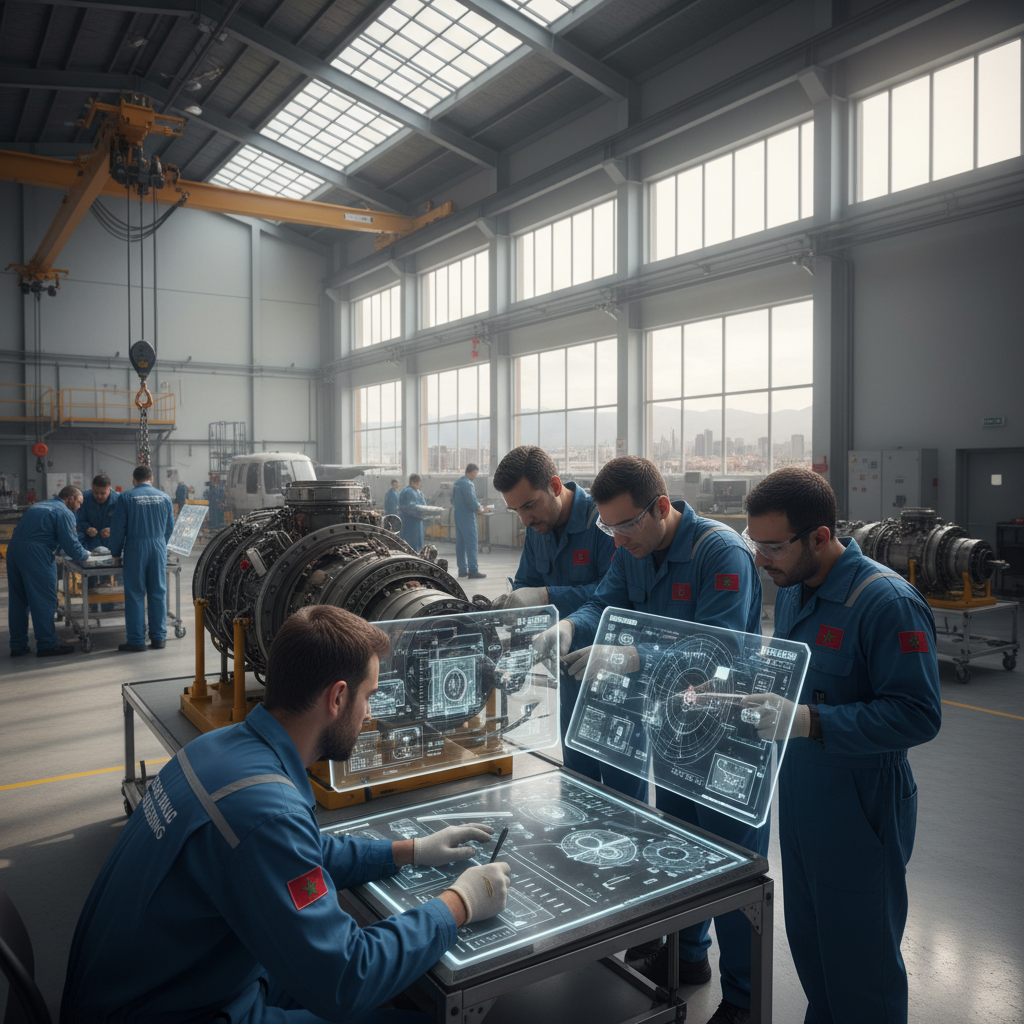
Governance, financing, and cooperation: what the H225M order changes for Moroccan defense
The order of the H225M is part of a longstanding relationship between Rabat and Airbus, reinforced by industrial projects and continuous dialogue. The contract includes a package of support and services with connected solutions. This model, close to performance-based maintenance, guides actors toward operational availability rather than mere parts volume.
Governance of such a program relies on life-cycle management: scheduling visits, parts availability, configuration standardization, and cost monitoring. Operational data, properly anonymized and protected, serve to detect weak signals and anticipate failures. The goal is clear: increase fleet availability and reduce total costs.
Interoperability and international feedback
The H225M is operated by several countries in international coalitions. For Morocco, this anchor facilitates combined training, sharing best practices, and access to proven updates. Harmonization of CSAR procedures and use of NATO standards improve coordination during joint exercises.
- 🤝 Doctrine sharing: common CSAR procedures and feedback.
- 🔄 Standardization: harmonized configuration, simplified logistics.
- 🛰️ Connected services: data analysis for increased availability.
- 📚 Training: access to certified curricula like H225M.
- 🧩 Resilience: dual sourcing and continuity plans.
Financing and extended benefits
Modern financing approaches favor framework contracts and long-term support agreements. They allow smoothing investment by avoiding budget spikes linked to unforeseen heavy maintenance. The presence of Airbus Atlantic and the future MRO center provide value localization levers, with particular attention to upgrading Moroccan skills.
| Governance pillar 🧭 | Mechanism 🧰 | Benefit for Morocco 🌟 | Emoji marker 🔖 |
|---|---|---|---|
| Life cycle | LCC and PBL planning | Controlled cost and increased availability | 📈 |
| Data & services | Connected maintenance | Proactive decisions | 💡 |
| Interop | NATO standards | Smooth combined exercises | 🔗 |
| Local content | MRO and subcontracting | Qualified jobs | 🧑🏭 |
| Cyber & compliance | Data protection | Trust and sovereignty | 🛡️ |
This governance framework makes the decision robust, while preparing the ground for sustainable economic and employment benefits.
Territorial impact and opportunities for the Moroccan economy: beyond military technology
The value of a helicopter program is also measured by its societal utility. The H225M helicopters can contribute to civil protection, crisis management, and opening up territories. Morocco, marked by demanding relief and a long coastline, benefits from having a fast vector for medical evacuation, sea rescue, and emergency logistics.
In the Atlas, winching capacity and high-altitude flight improve the response to mountain incidents. On the Atlantic side, optronic detection facilitates night search operations. In the South, endurance and precision navigation serve surveillance and support to isolated populations.
Indirect economic effects and innovation
The demands of the H225M raise the digital ecosystem: sensors, data platforms, cybersecurity, 3D mapping. Local start-ups can develop mission planning or maintenance visualization applications. This dynamism irrigates other sectors, from transport to health, fostering transferable skills.
| Region 🗺️ | Primary use 🚁 | Societal benefit 🤝 | Employment effect 👷 |
|---|---|---|---|
| Atlas/Rif | Winching, mountain rescue | Reduced rescue delays | Trained guides/rescuers ⛰️ |
| Coastline | Maritime SAR, night watch | Protection of lives at sea | Optronic operators ⚓ |
| Sahara | Surveillance, logistics | Supply of isolated zones | Logisticians and mechanics 🛠️ |
| Greater Casablanca | MRO and data | Industrial upgrade | Engineers/technicians 💼 |
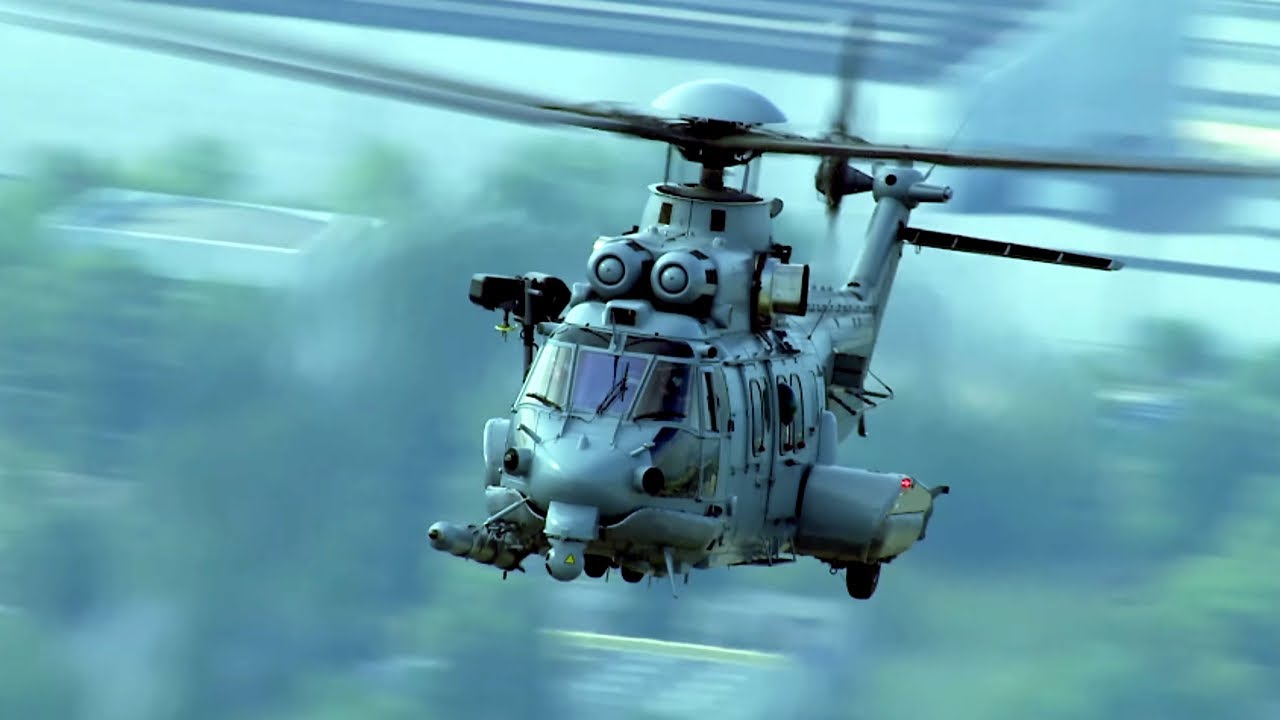
By bringing together security, innovation, and territorial inclusion, the H225M program goes beyond the strict defense perimeter and spreads tangible benefits in daily life.
Roadmap for talents, recruiters and SMEs: leveraging air fleet strengthening
To capitalize on this, the Moroccan ecosystem must develop a clear roadmap. Talents seek clarity on pathways and bridges. Recruiters want operational skills. SMEs need access to quality standards and export markets. Fine coordination between ministries, operators, and training institutions is crucial.
A useful guiding thread is to prepare mixed cohorts “operations–maintenance–data”, able to communicate and optimize interfaces. Developing an MRO/digital campus in Nouaceur can accelerate scaling up. In parallel, a network of regional testing laboratories will support parts and process qualification.
Concrete actions and indicators
Practical measures are necessary in the short term: map skills, align curricula, structure certification pathways. Medium term: incubators for connected maintenance solutions, innovative public procurement, and tech showcases during joint exercises. Long term: a Moroccan MRO helicopter label recognized in West Africa.
- 🧭 Mapping of national skills and gaps.
- 🧩 Bridges school–company with qualifying internships.
- 📊 KPI of fleet availability and repair lead time.
- 🌐 Regional clusters linked to Nouaceur/Midparc.
- 🔒 Cybersecurity integrated in MRO chains.
| Action 🎯 | Deadline ⏳ | Actors 🧑💼 | Expected result 🌟 |
|---|---|---|---|
| Certification program | 0–12 months | ERA, OFPPT, MRO | Quickly employable technicians ✅ |
| MRO data platform | 6–18 months | Operators, start-ups | Predictive maintenance 📈 |
| SME framework contracts | 12–24 months | Contracting authorities | Visibility and investment 🤝 |
| Moroccan MRO label | 24–36 months | Authorities, industry | Recognized regional hub 🌍 |
This operational milestone, humanized by the ambition of Moroccan talents, transforms the strengthening of the air fleet into a genuine development strategy.
{“@context”:”https://schema.org”,”@type”:”FAQPage”,”mainEntity”:[{“@type”:”Question”,”name”:”What main missions will the H225M fulfill in Morocco?”,”acceptedAnswer”:{“@type”:”Answer”,”text”:”The H225M will be dedicated to combat search and rescue (CSAR), maritime rescue, medical evacuation, special forces support, and logistical missions. Their versatility will also allow contribution to civil protection in case of crisis.”}},{“@type”:”Question”,”name”:”Why replace the Puma after more than 40 years of service?”,”acceptedAnswer”:{“@type”:”Answer”,”text”:”Technical obsolescence and increased security, autonomy, and sensor needs justify the replacement. The H225M brings modern sensors (Euroflir 410), advanced avionics, a dual winch, and self-protection options adapted to current environments.”}},{“@type”:”Question”,”name”:”What are the benefits for employment and skills in Morocco?”,”acceptedAnswer”:{“@type”:”Answer”,”text”:”The creation and ramp-up of an MRO center, avionics and data specialization, and supply chain needs will support hundreds of skilled jobs in the medium term, with certifying pathways (Part-66/145, H225M type rating).”}},{“@type”:”Question”,”name”:”How do support and connected services improve availability?”,”acceptedAnswer”:{“@type”:”Answer”,”text”:”The analysis of operational data allows anticipating failures, planning interventions, and reducing downtime. Performance-oriented contracts align all actors on the real availability of the fleet.”}},{“@type”:”Question”,”name”:”How does this order strengthen Airbus’s industrial presence in Morocco?”,”acceptedAnswer”:{“@type”:”Answer”,”text”:”Airbus has been present via Airbus Atlantic since 1951. The customer center announced in 2024 is evolving into a regional MRO hub, offering Morocco a role as a West African hub for helicopter maintenance and training.”}}]}What main missions will the H225M fulfill in Morocco?
The H225M will be dedicated to combat search and rescue (CSAR), maritime rescue, medical evacuation, special forces support, and logistical missions. Their versatility will also allow contribution to civil protection in case of crisis.
Why replace the Puma after more than 40 years of service?
Technical obsolescence and increased security, autonomy, and sensor needs justify the replacement. The H225M brings modern sensors (Euroflir 410), advanced avionics, a dual winch, and self-protection options adapted to current environments.
What are the benefits for employment and skills in Morocco?
The creation and ramp-up of an MRO center, avionics and data specialization, and supply chain needs will support hundreds of skilled jobs in the medium term, with certifying pathways (Part-66/145, H225M type rating).
How do support and connected services improve availability?
The analysis of operational data allows anticipating failures, planning interventions, and reducing downtime. Performance-oriented contracts align all actors on the real availability of the fleet.
How does this order strengthen Airbus’s industrial presence in Morocco?
Airbus has been present via Airbus Atlantic since 1951. The customer center announced in 2024 is evolving into a regional MRO hub, offering Morocco a role as a West African hub for helicopter maintenance and training.
- 🚑 Health: faster medical evacuations, hospital–aircraft coordination.
- 🔥 Civil security: support to firefighters during forest fires.
- 🌊 Sea: coastal rescue and surveillance.
- 📡 Digital: IoT solutions and decision platforms.
- 🧭 Responsible tourism: reinforced safety in mountainous areas.
| Region 🗺️ | Primary use 🚁 | Societal benefit 🤝 | Employment effect 👷 |
|---|---|---|---|
| Atlas/Rif | Winching, mountain rescue | Reduced rescue delays | Trained guides/rescuers ⛰️ |
| Coastline | Maritime SAR, night watch | Protection of lives at sea | Optronic operators ⚓ |
| Sahara | Surveillance, logistics | Supply of isolated zones | Logisticians and mechanics 🛠️ |
| Greater Casablanca | MRO and data | Industrial upgrade | Engineers/technicians 💼 |
By bringing together security, innovation, and territorial inclusion, the H225M program goes beyond the strict defense perimeter and spreads tangible benefits in daily life.
Roadmap for talents, recruiters and SMEs: leveraging air fleet strengthening
To capitalize on this, the Moroccan ecosystem must develop a clear roadmap. Talents seek clarity on pathways and bridges. Recruiters want operational skills. SMEs need access to quality standards and export markets. Fine coordination between ministries, operators, and training institutions is crucial.
A useful guiding thread is to prepare mixed cohorts “operations–maintenance–data”, able to communicate and optimize interfaces. Developing an MRO/digital campus in Nouaceur can accelerate scaling up. In parallel, a network of regional testing laboratories will support parts and process qualification.
Concrete actions and indicators
Practical measures are necessary in the short term: map skills, align curricula, structure certification pathways. Medium term: incubators for connected maintenance solutions, innovative public procurement, and tech showcases during joint exercises. Long term: a Moroccan MRO helicopter label recognized in West Africa.
- 🧭 Mapping of national skills and gaps.
- 🧩 Bridges school–company with qualifying internships.
- 📊 KPI of fleet availability and repair lead time.
- 🌐 Regional clusters linked to Nouaceur/Midparc.
- 🔒 Cybersecurity integrated in MRO chains.
| Action 🎯 | Deadline ⏳ | Actors 🧑💼 | Expected result 🌟 |
|---|---|---|---|
| Certification program | 0–12 months | ERA, OFPPT, MRO | Quickly employable technicians ✅ |
| MRO data platform | 6–18 months | Operators, start-ups | Predictive maintenance 📈 |
| SME framework contracts | 12–24 months | Contracting authorities | Visibility and investment 🤝 |
| Moroccan MRO label | 24–36 months | Authorities, industry | Recognized regional hub 🌍 |
This operational milestone, humanized by the ambition of Moroccan talents, transforms the strengthening of the air fleet into a genuine development strategy.
{“@context”:”https://schema.org”,”@type”:”FAQPage”,”mainEntity”:[{“@type”:”Question”,”name”:”What main missions will the H225M fulfill in Morocco?”,”acceptedAnswer”:{“@type”:”Answer”,”text”:”The H225M will be dedicated to combat search and rescue (CSAR), maritime rescue, medical evacuation, special forces support, and logistical missions. Their versatility will also allow contribution to civil protection in case of crisis.”}},{“@type”:”Question”,”name”:”Why replace the Puma after more than 40 years of service?”,”acceptedAnswer”:{“@type”:”Answer”,”text”:”Technical obsolescence and increased security, autonomy, and sensor needs justify the replacement. The H225M brings modern sensors (Euroflir 410), advanced avionics, a dual winch, and self-protection options adapted to current environments.”}},{“@type”:”Question”,”name”:”What are the benefits for employment and skills in Morocco?”,”acceptedAnswer”:{“@type”:”Answer”,”text”:”The creation and ramp-up of an MRO center, avionics and data specialization, and supply chain needs will support hundreds of skilled jobs in the medium term, with certifying pathways (Part-66/145, H225M type rating).”}},{“@type”:”Question”,”name”:”How do support and connected services improve availability?”,”acceptedAnswer”:{“@type”:”Answer”,”text”:”The analysis of operational data allows anticipating failures, planning interventions, and reducing downtime. Performance-oriented contracts align all actors on the real availability of the fleet.”}},{“@type”:”Question”,”name”:”How does this order strengthen Airbus’s industrial presence in Morocco?”,”acceptedAnswer”:{“@type”:”Answer”,”text”:”Airbus has been present via Airbus Atlantic since 1951. The customer center announced in 2024 is evolving into a regional MRO hub, offering Morocco a role as a West African hub for helicopter maintenance and training.”}}]}What main missions will the H225M fulfill in Morocco?
The H225M will be dedicated to combat search and rescue (CSAR), maritime rescue, medical evacuation, special forces support, and logistical missions. Their versatility will also allow contribution to civil protection in case of crisis.
Why replace the Puma after more than 40 years of service?
Technical obsolescence and increased security, autonomy, and sensor needs justify the replacement. The H225M brings modern sensors (Euroflir 410), advanced avionics, a dual winch, and self-protection options adapted to current environments.
What are the benefits for employment and skills in Morocco?
The creation and ramp-up of an MRO center, avionics and data specialization, and supply chain needs will support hundreds of skilled jobs in the medium term, with certifying pathways (Part-66/145, H225M type rating).
How do support and connected services improve availability?
The analysis of operational data allows anticipating failures, planning interventions, and reducing downtime. Performance-oriented contracts align all actors on the real availability of the fleet.
How does this order strengthen Airbus’s industrial presence in Morocco?
Airbus has been present via Airbus Atlantic since 1951. The customer center announced in 2024 is evolving into a regional MRO hub, offering Morocco a role as a West African hub for helicopter maintenance and training.

Comments are closed