
The diplomatic momentum initiated at the end of 2020 continues to redefine the geopolitical and economic balances of the Kingdom. Far from being a mere ceremonial agreement, the resumption of relations between Rabat and Tel Aviv is part of a long-term vision, driven by assumed economic and security pragmatism. A Moroccan official recently highlighted the significant progress of this rapprochement, underlining that the ambitions now go beyond the bilateral framework to aim for a common continental projection.
The strategic consolidation of the 2020 agreements by 2025
Since the signing of the tripartite agreement under the auspices of the United States, Morocco has demonstrated remarkable consistency in its diplomacy. Although the regional context remains complex, notably due to tensions in the Middle East, Rabat stays focused on its national interests. Normalization is not limited to exchanges of diplomatic courtesies; it is anchored in concrete and structuring projects.
This approach, described as “subtle” by international observers, allows the Kingdom to benefit from cutting-edge technologies while consolidating its position on the international stage. The partnership with the Hebrew State is seen as a development accelerator, impacting vital sectors such as agriculture, water management, and, of course, the defense industry. The goal is clear: to transform historical and cultural affinities—let us not forget the significant Moroccan Jewish diaspora—into tangible growth levers for the national economy.
A growing momentum in military and security cooperation
One of the most visible pillars of this rapprochement lies in the defense domain. Facing regional security challenges, Morocco has opted for accelerated modernization of its Royal Armed Forces (FAR). Within the framework of the 2025 budget, a notable 7% increase has been allocated to defense, illustrating Rabat’s determination to maintain strategic superiority.
This international collaboration is reflected by acquisitions of high-tech equipment but also by local industrial ambitions. It is no longer just about buying off the shelf but co-developing. Discussions around installing drone factories on Moroccan soil testify to this desire for technology transfer. This strategic alliance enables Morocco to diversify its suppliers while benefiting from Israel’s globally recognized expertise in surveillance and cyber defense 🛡️.
Priority areas of bilateral collaboration
Beyond the military, exchanges are structured around key competitiveness clusters essential for the future of the Moroccan market. Here is an overview of the areas where synergy is most active:
| Key Sector 🔑 | Nature of Cooperation | Expected Impact for Morocco 📈 |
|---|---|---|
| Defense Industry | Co-production of drones and surveillance systems | Strategic autonomy and increased technological expertise |
| Maritime Logistics | Free navigation agreement and port development | Optimization of trade flows and logistics competitiveness |
| Agriculture & Water | Irrigation and desalination technologies | Resilience against water stress and food security |
| Tourism & Culture | Direct air routes and heritage promotion | Diversification of source markets and soft power |
Africa as the new horizon for Morocco-Israel cooperation
The ambition expressed by Moroccan officials does not stop at the Kingdom’s borders. Morocco positions itself more than ever as the essential gateway to the African continent. In this setup, Israel sees Rabat as a reliable partner to penetrate rapidly expanding African markets. The vision is that of a triangulation: Israeli technology, Moroccan know-how and diplomatic network, and African resources or needs.
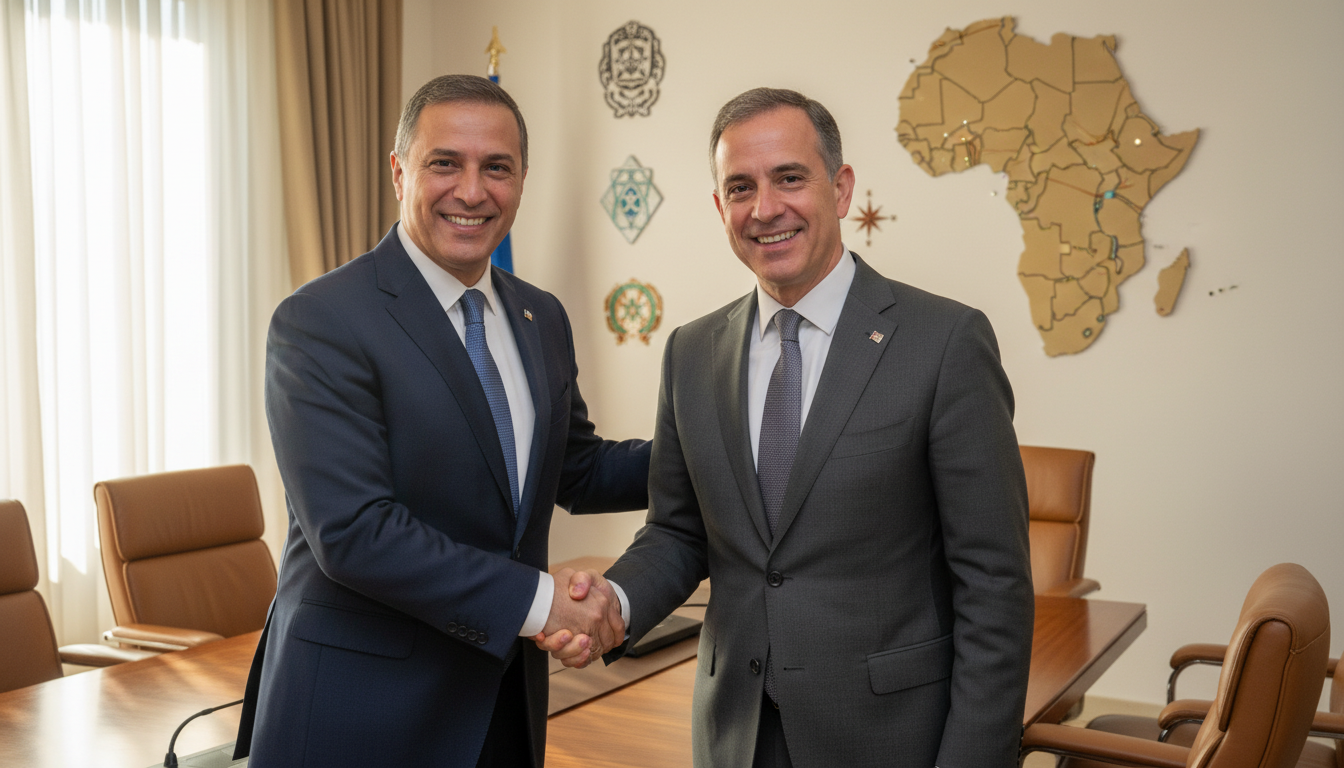
This tripartite cooperation aims to export success models, notably in precision agriculture and renewable energies, to sub-Saharan African countries. By facilitating the access of Israeli investors to the continent, Morocco strengthens its status as a regional hub and continental leader, while ensuring enhanced regional security through shared economic development 🌍.
Economic pragmatism and logistical resilience
To support these ambitions, infrastructure must keep pace. The reactivation and strengthening of maritime agreements, initiated as early as May 2023, play a crucial role. The goal is to facilitate the transport of goods between the two countries by ensuring fair competition and free navigation. For Moroccan companies, this opens up new export prospects and makes it easier to import technological inputs needed for local industry.
Despite geopolitical turbulences, economic development remains the priority. Economic operators observe that business continues, driven by a “Realpolitik” logic. Morocco skillfully separates its diplomatic positions from its vital economic interests, thus ensuring the sustainability of ongoing projects.
Why does this partnership withstand crises?
The strength of this relationship is explained by several structural factors that go beyond mere political circumstances:
- ✅ Human ties: The Moroccan-origin community in Israel remains an unbreakable bridge between the two nations.
- ✅ Common security interest: Facing asymmetric threats, intelligence cooperation has become indispensable.
- ✅ Technological sovereignty: Morocco needs agile technological partners to succeed in its industrial transition.
- ✅ Diplomatic recognition: Implicit or explicit support on the Sahara issue remains a cornerstone of this diplomatic relationship.

What are the economic advantages for Moroccan companies?
Moroccan companies benefit from privileged access to cutting-edge technologies (agritech, cyber, water) and export opportunities to a high purchasing power market, while profiting from industrial joint ventures.
How is cooperation implemented in Africa?
Morocco acts as a logistical and diplomatic hub, facilitating the establishment of Israeli projects in West Africa, notably in agriculture and renewable energy sectors.
Does the geopolitical context impact the agreements?
While the regional context may slow down some visible aspects of normalization, fundamental security and economic cooperation continues, driven by Morocco’s national strategic interests.

Comments are closed