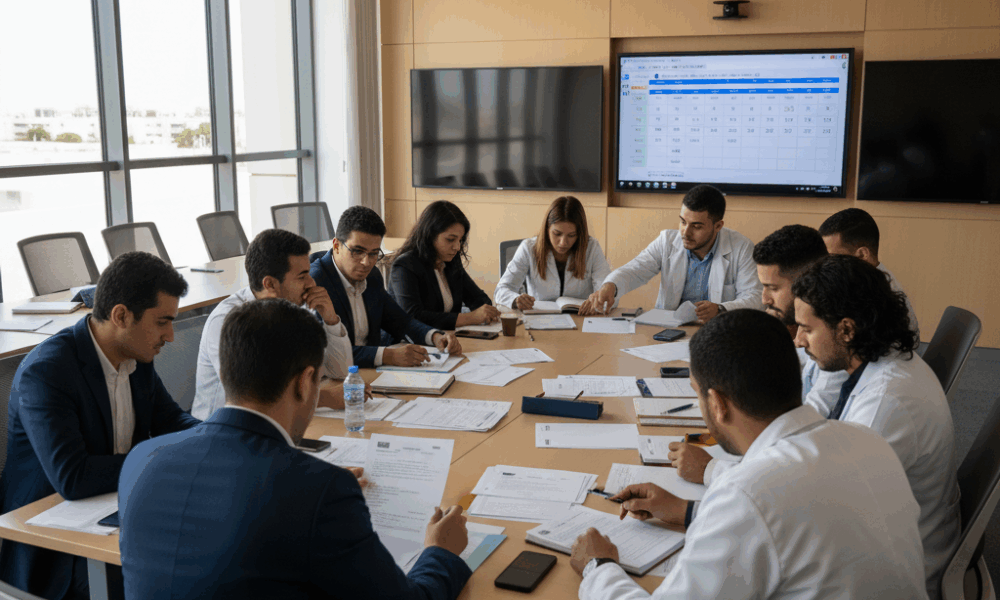
CHU Oujda competition 2025: schedule, number of positions and key points to remember
The CHU Oujda draws the attention of candidates from the Oriental region this year with two major events. On one side, a competition dedicated to the Mohammed VI University Hospital Center, with 61 positions and a precise schedule. On the other, the Regional Directorate of Health and Social Protection of the Oriental organizes a regional competition to fill 311 positions for nurses and first-category health technicians (scale 10). These two deadlines are organized to meet the healthcare needs in the region and support the dynamic of public health employment. Candidates must clearly distinguish the 2025 competition dates, registration platforms, and specific requirements for each competition.
For the regional competition, the session is scheduled on Sunday, October 5th at 9:00 AM, in Oujda. The legal quota provides for 25% of positions reserved for resistants, wards of the nation, former military personnel, and veterans, and 7% for people with disabilities. This framework encourages inclusive and transparent applications, in accordance with the principles of public employment. On the side of the CHU Oujda competition 2025, the final deadline for submitting applications is set for October 31 at 16:00, with CHU competition tests scheduled on November 16. The CHU competition is part of the hospital center’s mission: care, research, and training, as specified by the Dahir and the 2013 decrees, guaranteeing its legal personality and financial autonomy.
Many candidates confuse the two procedures. A simple way to clarify is to create a personal dashboard of deadlines and verify official websites. For the regional competition, registration is done via the Ministry of Health website before August 28 at 16:30. For the CHU, procedures follow the hospital center’s channels and portals dedicated to public service. In case of doubt, summary information available on Moroccan employment portals helps secure the application path. For a condensed overview of publications, consulting the official recruitment details for CHU Oujda helps avoid calendar errors.
A typical profile can help anticipate: Amal, a graduate from an ISPITS in Nador, targets the regional competition for the 311 positions while keeping an eye on the CHU Oujda competition in parallel. Her challenge? Gather documents early, plan medical competition preparation, and adjust her revision schedule between the public health written test and the practical exam. This dual horizon illustrates a cautious strategy in a health employment market that is opening up, with stable opportunities in the public sector and career pathways towards research or care coordination.
- 📌 Key dates: October 5 (regional competition), October 31 (CHU submission), November 16 (CHU tests).
- 🧭 Two pathways: Ministry of Health for 311 positions, CHU Mohammed VI for 61 positions.
- ✅ Quotas: 25% reserved categories, 7% disability for the regional competition.
- 🧾 CHU competition registration: respect submission deadline, legible documents, data consistency.
- 🧠 Success tips for the competition: public health revision, practice with MCQs, focused clinical cases.
| 🧩 Competition | 📅 Deadline | 📍 Location | 🧑⚕️ Positions | ⚖️ Specifics |
|---|---|---|---|---|
| DRSPS Oriental (scale 10) | Tests: October 5, registration until August 28 16:30 | Oujda | 311 | Reservations 25% + 7%, merit-based allocation |
| CHU Mohammed VI Oujda | Submission: October 31 16:00, competition on November 16 | Oujda | 61 | CHU process, missions: care, research, training |
To broaden the sectoral view and anticipate other opportunities, accessing pan-Moroccan resources can help find a job in Morocco in 2025 or identify complementary competitions such as the IRAT 2025 competitions guide. These readings nurture a career strategy and secure application timing.
The motto for this section: keep a clear focus on the schedule, distinguish the platforms, and prepare the next steps methodically.

Eligibility conditions and documents to provide for CHU and regional competition registration
CHU Oujda registration conditions and those of the regional competition follow a shared logic of the public health service: guaranteeing academic level, ethics, and candidate availability. The file composition must be anticipated because any incomplete file or late submission is rejected. For the regional competition (311 positions), access is reserved for Moroccan nationals, aged 18 to 45 years on January 1 of the current year, holders of an ISPITS license or an equivalent recognized diploma. The same rigorous standards apply to the CHU Oujda competition, which targets nursing and technical profiles according to published needs.
A solid file is legible, coherent, and compliant. The golden rule is to scan documents in high definition, name files explicitly (e.g., Lastname_Firstname_Diploma.pdf), and ensure dates correspond. This discipline avoids automatic refusals on the platform. It’s the basis to succeed in medical competitions even before entering the exam room. Amal, our candidate, structured her documents since July: ID card, diploma, transcripts, equivalence certificate if necessary, and a recent medical certificate for specific categories. Result: stress-free submission and rapid validation.
- 🗂️ Competition registration documents: ID card, diploma (ISPITS license), transcripts, CV, ID photo, situation proofs (disability, ward of the nation, etc.).
- 🧾 Compliance: legible mentions, visible stamps, name consistency between documents.
- 📤 Platform: online submission, documents in correct format (preferably PDF), respect for 2025 competition dates.
- ⚠️ Common errors: double scanning, expired document, missing equivalence certificate for non-Moroccan diplomas.
- 💡 Tip: keep a “master” file in the cloud and a USB key to handle unforeseen events.
| 📃 Document | 🎯 Purpose | ⏱️ Validity/Tip |
|---|---|---|
| Scanned ID card | Identification and nationality | Readable front/back, size < 2 MB 📎 |
| Diploma/ISPITS license | Academic eligibility | Include equivalence certificate if needed 📌 |
| Transcripts | Justify education path | Check year consistency 📅 |
| ID photo | Authentication | Standard passport format 🙂 |
| Reservation proofs | Categories 25%/7% | Updated certificates, legible signatures ✅ |
Beyond technique, smart monitoring broadens the horizon. Scientific pathways can be enriched thanks to Institut Pasteur Morocco programs, useful for those aiming for a career combining care and research. Candidates may also be inspired by effective application approaches in other public sectors like LPEE, to improve the form and clarity of their file. Before finalizing, consulting once again the CHU Oujda announcements remains the best guarantee for perfect compliance.
To warm up on learning and training methodology, a targeted video search allows viewing MCQ workshops and feedback sessions.
To conclude this section, the winning trio remains: complete documents, correct formats, and documentary consistency.
How to register online: platforms, steps, and mistakes to avoid
The registration process for both competitions relies on a digital system. For the regional competition of the DRSPS Oriental, registration and document submission are done on the Ministry of Health portal (www.sante.gov.ma) before August 28 at 16:30. Registration there is final, hence the importance of entering accurate data. For the CHU Oujda competition 2025, the application submission closes on October 31 at 16:00, with detailed procedures available on the establishment’s media and announcement portals. Double-checking entered fields and uploaded files is essential to secure the CHU competition registration.
The best approach is to follow a critical path in four steps: create the account, complete the form, upload compliant documents, and validate by reviewing the summary. Amal set a personal schedule: finalize the form one week before the deadline, then perform a final review 48 hours before the deadline. This habit reduces last-minute blocking risks or temporary platform unavailability.
- 📝 Step 1: create an account with an active email and valid phone number.
- 📄 Step 2: fill all sections (personal information, diplomas, experience if applicable).
- 📎 Step 3: upload documents in authorized formats (PDF/JPG), clearly named.
- 🔍 Step 4: check the summary, correct, then validate the submission.
- 📬 Step 5: monitor emails/SMS and lists on sante.gov.ma and emploi-public.ma.
| 🖥️ Platform | 📅 Deadline | 🕓 Time | 📌 Key action |
|---|---|---|---|
| Ministry of Health (DRSPS) | August 28 | 16:30 | Registration + online submission, final validation ✅ |
| CHU Mohammed VI Oujda | October 31 | 16:00 | Complete file, legible documents, data consistency 📎 |
The most frequent mistakes repeat: confusion of dates between the two competitions, non-compliant file formats, blurry documents, and name/surname entered differently on one document versus another. A real case: Yassine scanned his ID card as a compressed photo, making the stamp unreadable. Result, immediate file rejection and wasted time. The solution? Scan at 300 dpi and check readability on screen.
To maximize chances, it is useful to expand professional monitoring. Initiatives like Vinci Energies Young Talents inspire file standards and presentation, even if the sector differs. Similarly, following industrial trends such as LafargeHolcim innovations may surprise with connections to health (logistics, project management, data) useful in hospital support.
In summary, successful registration relies on rigorous execution, careful reading of instructions, and final quality control before validation.

CHU and regional competition tests: format, scoring, and exam strategies
Understanding the entrance tests remains the key to succeed in medical competitions and paramedical ones. For the regional competition (311 positions), two tests structure the evaluation: a 2-hour written test (coefficient 2) based on public health MCQs, and a 2-hour practical test (coefficient 3) composed of direct questions or specialty-oriented MCQs. Each test is scored from 0 to 20 with automatic elimination at 5/20 or below. Candidates are ranked by merit with a minimum average of 10/20. The message is clear: technical excellence and consistency matter more than occasional flashy performances.
For the CHU Oujda competition 2025, the general selection logic combines written assessments and, depending on profiles (e.g., state engineers, medical assistants, 3rd grade technicians), admission interviews. Past feedback showed the importance of interviews to assess transversal skills: patient communication, team management, risk awareness, and ethics culture. Training in concise speaking is therefore useful, even for categories dominated by written tests.
- 🧠 Written: master the fundamentals of public health (epidemiology, health promotion, sanitary safety).
- 🧪 Practical: clinical cases, triage, protocol reading, technical gestures (depending on specialty).
- 🗣️ Oral (according to CHU profile): situational judgement, ethics, multidisciplinary coordination.
- ⏳ Time management: 20/60/20 plan (initial reading, answering, review) ⏱️.
- 📚 Resources: thematic sheets, past exams, MCQ simulators, study groups.
| 🧭 Test | ⏱️ Duration | 🧮 Coefficient | 🧯 Elimination threshold | 🎓 Success criterion |
|---|---|---|---|---|
| Public health written | 2 h | 2 | ≤ 5/20 🚫 | Key knowledge + fast item reading |
| Specialty-oriented practical | 2 h | 3 | ≤ 5/20 🚫 | Application, protocol, prioritization |
| Interview (specific CHU profiles) | 10–20 min | Variable | — | Clarity, ethics, simulated cases |
A concrete example: during a public health MCQ, Amal starts by scanning all questions in 15 minutes, identifies 10 approachable items, then devotes 70 minutes to answering these, leaving 35 minutes for complex topics and 10 minutes for review. This method allows her to capitalize on “secured” points before venturing into difficult cases. On the practical side, she trains on emergency triage scenarios, isolation protocol reading, and act prioritization based on risks.
To enhance her revision, access to thematic audiovisual content can speed memorization and provide effective reminders the day before tests.
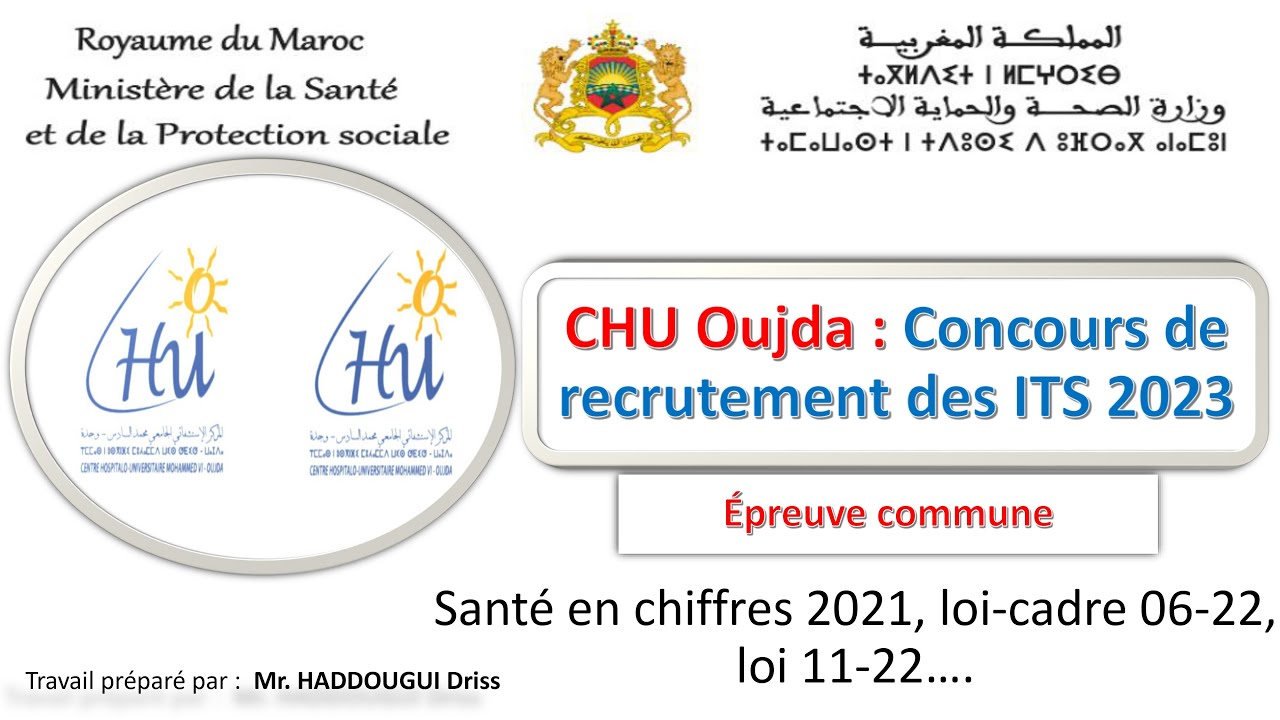
The key idea: know the format, anticipate traps, and execute a calm and reproducible strategy on D-day.
Medical and paramedical competition preparation: training plan, resources, and self-monitoring
Medical and paramedical competition preparation becomes more effective when based on a structured routine, growth mindset, and continuous self-evaluation. A good plan associates three axes: fundamentals revision, exam simulation, and mental management. Successful Moroccan candidates alternate between timed MCQs and case studies, while giving themselves micro-breaks to preserve focus. The goal is not to “know everything,” but to master chapters with high scoring value according to coefficients.
An intelligent weekly schedule distributes topics with deep work blocks of 90 minutes, followed by a 10-minute summary. Amal, for instance, studies epidemiology chapters in the morning, reserves the afternoon for practical cases, and keeps 30 minutes at the end of the day to review sheets. This discipline is supported by a self-monitoring table she updates nightly. WhatsApp/Discord groups targeted by specialty create a motivating dynamic while allowing sharing of past exams or corrections.
- 📖 Thematic revision: prioritize epidemiology, prevention, risks, hospital hygiene.
- 🏃 Training: 3 timed MCQ series/day, 2 complete practical cases/week.
- 🧘 Mental management: box breathing 4-4-4-4, positive visualization, regular sleep.
- 🧰 Tools: self-monitoring spreadsheet, flashcards (Anki), Pomodoro timer, past exam bank.
- 🤝 Peer learning: exchanges with laureates, mini mock orals, targeted feedback.
| 🗓️ Day | 📚 Focus | ⏱️ Volume | 🎯 Indicator |
|---|---|---|---|
| Monday | Epidemiology + MCQs | 3 h | MCQ score ≥ 70% ✅ |
| Wednesday | Hygiene/risks + practical cases | 3 h | Gesture checklist with no errors 🧼 |
| Friday | Past exams + review | 2 h | Stable time per question ⏳ |
Beyond handouts, the Moroccan opportunity ecosystem helps build a strong profile. Final-year students can strengthen their skills through internships via the best internship offers in Morocco. Cross-disciplinary resources, even outside health, improve project culture and communication, two key assets during orals and for hospital career evolution. Finally, those considering academic exchanges abroad should anticipate logistical steps such as visas; in this regard, information on TLS Contact Italy procedures can serve as a guide for good administrative practices.
To complement preparation with educational content, a targeted search on accelerated learning strategies offers concrete and immediately actionable techniques.

The essential: structured, measured, and lasting training to turn coefficients into winning points.
After admission: placement, careers and development opportunities in the Oriental region
Once admitted, regional competition candidates are assigned within the Oriental region according to their ranking. This logic rewards performance while addressing territorial needs. Working in Oujda, Berkane, or Nador opens a spectrum of missions ranging from advanced hospital services to local structures. For CHU Oujda competition 2025 laureates, the hospital center environment offers an ecosystem conducive to skill development: clinical teaching, participation in research projects, and quality culture. It is fertile ground for building a sustainable career.
Over time, career paths are multiple: clinical specialization, unit coordination, tutoring roles for incoming classes, or orientation toward crosscutting projects (quality, risks, health data). The Mohammed VI University Hospital Center in Oujda, strong in its legal mission (care, research, training), offers pathways where technical expertise combines with organizational innovation. The Oriental region benefits from this dynamic through continuous improvement of care offerings and reinforced attractiveness of health professions for local youth.
- 🚀 Progression: specialization, supervision, quality and safety of care projects.
- 🔬 Research: participation in studies, registries, local publications.
- 🤝 Networking: university partnerships, regional seminars, mentoring.
- 📈 Transversal skills: project management, patient communication, data.
- 🌍 Openness: continuing education, interregional exchanges.
| 🎓 Profile | 🛤️ Career path | 🌟 Key asset |
|---|---|---|
| General care nurse | Unit coordination, hygiene referent | Protocols + team leadership 💪 |
| Health technician | Technical platforms, quality | Procedural rigor + traceability 📊 |
| CHU technical profiles | Biomedical maintenance, health IT | Proactivity + tech watch 🔧 |
Broadening career vision through national resources strengthens perspectives. Generalist guides like find a job in Morocco in 2025 allow for skills assessment and step planning. Parapublic and private sectors offer useful bridges to strengthen the CV, including outside health, as evidenced by the density of programs like Vinci Energies Young Talents. Meanwhile, following consolidated CHU announcements on specialized portals via CHU Oujda recruitment updates helps prepare for future mobility.
The takeaway: think about a five-year career plan, with training milestones and concrete projects serving the patients of the Oriental region.
{“@context”:”https://schema.org”,”@type”:”FAQPage”,”mainEntity”:[{“@type”:”Question”,”name”:”What are the age and diploma conditions for the 311-position regional competition?”,”acceptedAnswer”:{“@type”:”Answer”,”text”:”Moroccan nationality is required, with an age between 18 and 45 years as of January 1 of the current year. An ISPITS license diploma or an equivalent recognized diploma is necessary.”}},{“@type”:”Question”,”name”:”What are the key dates to remember for the CHU Oujda competition 2025?”,”acceptedAnswer”:{“@type”:”Answer”,”text”:”The application submission deadline is set to October 31 at 16:00. The tests are scheduled for November 16. Updates may appear on the CHU channels and public portals.”}},{“@type”:”Question”,”name”:”How is the scoring of regional tests conducted?”,”acceptedAnswer”:{“@type”:”Answer”,”text”:”Two tests of 2 hours each: written (coef 2) and practical (coef 3). Each test is scored from 0 to 20, with elimination at 5/20 or less. Ranking is merit-based with a minimum average of 10/20.”}},{“@type”:”Question”,”name”:”Where to consult the lists of candidates admitted to compete?”,”acceptedAnswer”:{“@type”:”Answer”,”text”:”Lists are published on www.sante.gov.ma and www.emploi-public.ma. They become final two days after publication, except in case of justified claim.”}}]}What are the age and diploma conditions for the 311-position regional competition?
Moroccan nationality is required, with an age between 18 and 45 years as of January 1 of the current year. An ISPITS license diploma or an equivalent recognized diploma is necessary.
What are the key dates to remember for the CHU Oujda competition 2025?
The application submission deadline is set to October 31 at 16:00. The tests are scheduled for November 16. Updates may appear on the CHU channels and public portals.
How is the scoring of regional tests conducted?
Two tests of 2 hours each: written (coef 2) and practical (coef 3). Each test is scored from 0 to 20, with elimination at 5/20 or less. Ranking is merit-based with a minimum average of 10/20.
Where to consult the lists of candidates admitted to compete?
Lists are published on www.sante.gov.ma and www.emploi-public.ma. They become final two days after publication, except in case of justified claim.

Comments are closed