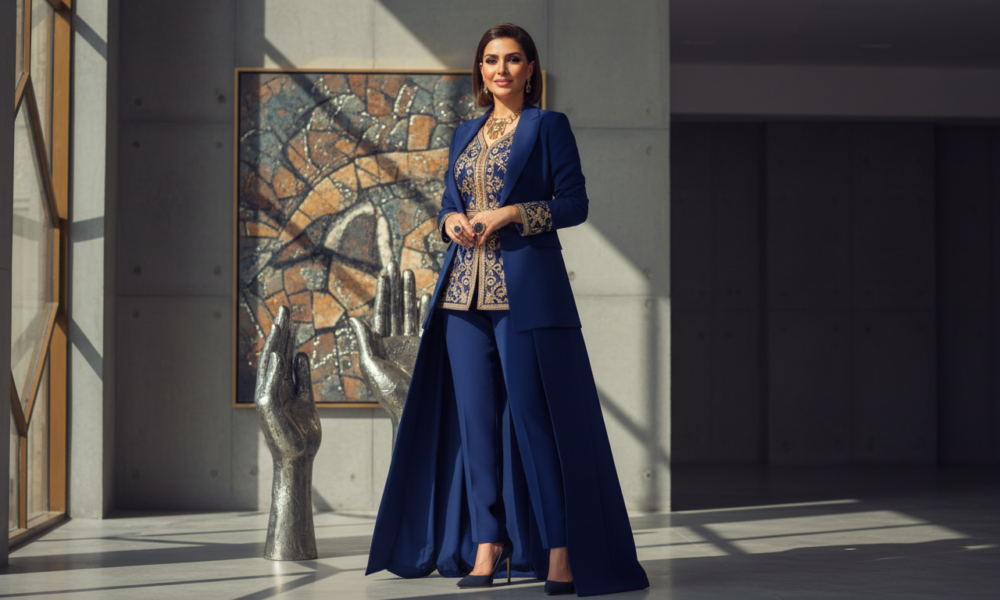
The Moroccan societal landscape of 2025 bears witness to a profound transformation in gender relations and the perception of female power. Far from the fixed orientalist clichés, the exploration of the figure of the woman who takes control — whether in the private sphere, professional life, or through more intimate lenses such as those of Moroccan dominatrices — reveals a quest for autonomy and bodily reclaiming. This dynamic fits into a often unknown historical continuity, where women, even within traditional structures, exerted a decisive political and social influence.
From historical reality to harem myths: a necessary reinterpretation
To understand the emergence of new forms of female freedom in Morocco, it is crucial to deconstruct the clichéd images inherited from the past. Contrary to preconceived ideas about “oriental despotism” and the supposed passivity of women, the history of the Moroccan sultanate demonstrates a much more complex reality. Until the modern era, structures of power were shaped by multiple actors, including the women of the harems. 🏛️
Recent anthropological works highlight a dynamic reading of this history. The harem was not only that closed and eroticized place imagined by the West, but a space where genuine political negotiations took place. Historical figures, such as Khnâta, wife of Sultan Mawlay Ismâ‘îl, illustrate this capacity for action. These women were not silent victims; they acted as intermediaries, mobilized networks, and actively participated in managing the affairs of the city.

This history of dominatrices, in the sense of women exercising political or social domination, has long been masked by a colonial vision imposing a rigid heteronormativity. From the 18th century, and especially during the protectorate, the European perception confined Moroccan women to a passive role, erasing the fluidity of genders and roles that existed previously. In 2025, the rediscovery of these narratives legitimizes current aspirations for an assumed female leadership.
Reclaiming the body and sexuality: breaking taboos in 2025
The year 2025 marks a turning point where the body is no longer just a matter of preservation but a tool of affirmation. Feminism in Morocco has evolved to include questions once considered unspeakable, relating to intimate sovereignty. In this context, interest in BDSM practices and the figure of the dominatrix is not merely fantasy but a desire to overturn traditional dynamics of submission.
It is no longer about enduring but dictating the rules. This role reversal, where the woman holds absolute control, acts as a mirror of societal evolutions. 🧠 The psychology behind these practices often reveals a need to compensate for social pressures by creating a space where consent and power are clearly defined and held by the female figure. It is a form of catharsis against persistent social taboos.
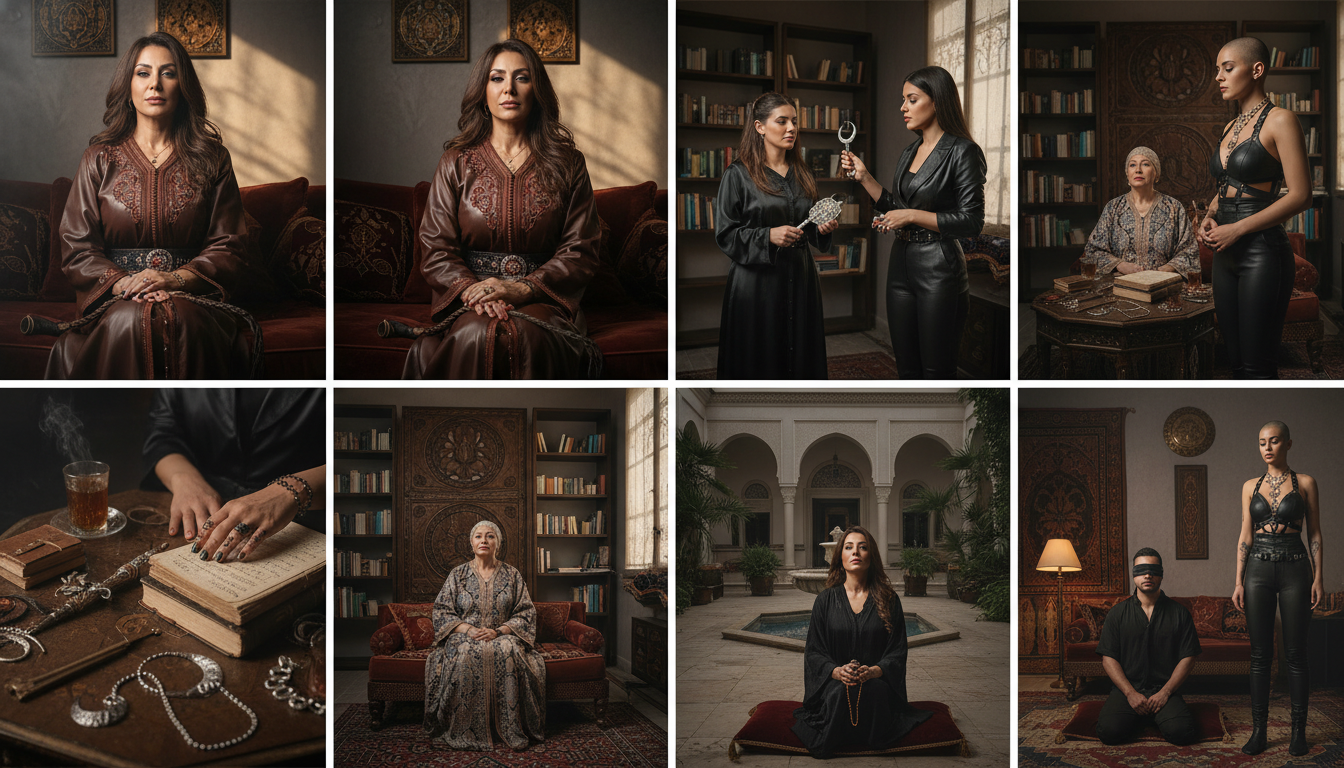
Testimonies gathered via secure digital platforms show that for some Moroccan women, taking on this role is a way to explore sexuality and power without the constraints of patriarchy. It is an approach that requires great emotional intelligence and a fine understanding of human psychology, skills that are highly valued in the modern professional world.
The nuances of contemporary female influence
The exercise of power by Moroccan women manifests in various forms, ranging from economic influence to subversive artistic expression. Here are some key aspects of this dynamic in 2025:
- Economic independence 💼 : Financial capacity remains the primary lever of autonomy, allowing women to free themselves from traditional family guardianships.
- Narrative rewriting 📝 : Artists and intellectuals deconstruct colonial representations (such as the “Black Sultana” or harem scenes painted by men) to offer an authentic vision of female experience.
- Fluidity of roles 🔄 : Inspired by the historical fluidity of genders, new generations reject rigid boxes, adopting behaviors considered “masculine” (authority, ambition) without renouncing their femininity.
- Digitalization of exchanges 🌐 : The internet offers a “safe” space to discuss sensitive topics such as 2025 testimonies on intimate life, far from direct social scrutiny.
Power dynamics: Historical and current comparison
To better grasp the evolution of mentalities, it is relevant to compare the perception of female power over time. This parallel shows how the concepts of “harem” and “domination” have evolved to adapt to the reality of 2025.
| Aspect | Historical / Colonial Perception 📜 | Reality and Practices in 2025 🚀 |
|---|---|---|
| Social role | Secluded woman, passive, object of exotic fantasy. | Active woman, decision-maker, actor in the economy and culture. |
| Sphere of influence | The harem (invisible and mediated influence). | The public space, business and digital spheres. |
| Sexuality | Controlled by imposed heteronormativity and reproduction. | Exploration of consent, BDSM practices as an expression of choice and control. |
| Relationship to power | Endured or negotiated in the shadows (mothers, favorites). | Claimed and exercised openly (executives, entrepreneurs). |
Societal impact and future perspectives
The emergence of discourse around Moroccan dominatrices and sexual autonomy must not be seen as an isolated or marginal phenomenon. It is symptomatic of a society in full mutation questioning its foundations. In 2025, Morocco navigates between respecting its cultural heritage and integrating universal values of individual freedom. 🌍
This gradual opening allows lifting the veil on realities long silenced. Moroccan culture proves resilient enough to integrate these new forms of expression without losing its soul. On the contrary, recognizing that women have always been political and social strategists, and not mere extras, strengthens national identity by restoring its complexity and richness.
Is the figure of the dominatrix accepted in Moroccan society in 2025?
Although mentalities are evolving, it remains a niche and often taboo subject. However, the discussion around consent and female power is much more open than before, notably thanks to social networks and feminist movements.
What link exists between the history of harems and modern women?
The link lies in the reality of power. Historically, the women of harems exercised real political influence (negotiations, alliances). Today, Moroccan women update this power by taking control of their professional and intimate lives, coming out of the shadows to act in full light.
How does the Moroccan work world reflect these changes?
The business world has become a major field of emancipation. There is an increased presence of women in leadership positions, exercising assertive leadership that challenges traditional patriarchal hierarchies, echoing this desire to reclaim control.
Are BDSM practices legal in Morocco?
Moroccan legal framework remains conservative regarding extramarital relations and certain sexual practices. However, the private sphere is increasingly seen as an individual sanctuary, and the public debate in 2025 tends toward decriminalization of individual freedoms, although the legislative path remains long.

Comments are closed