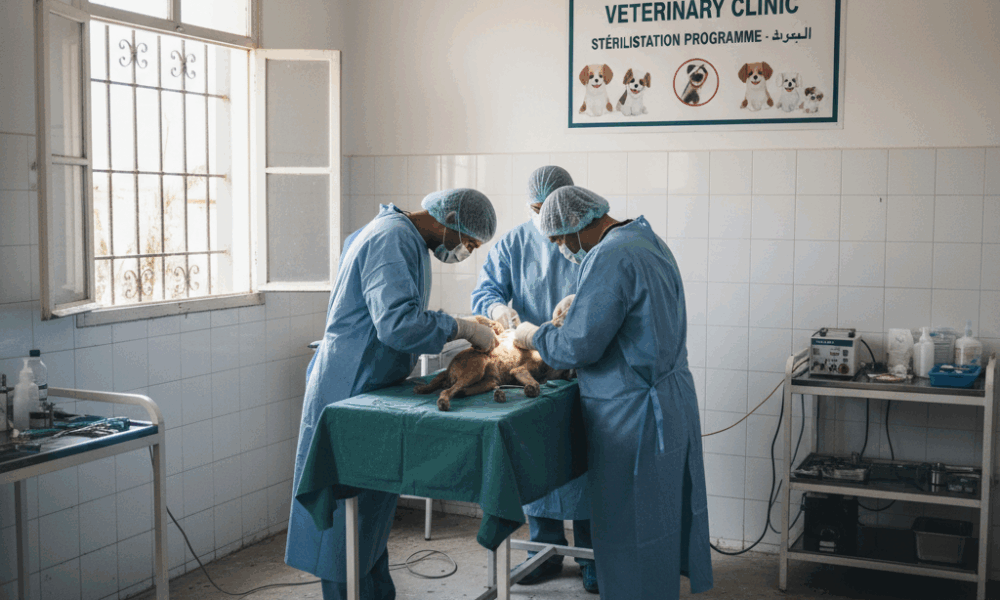
In Morocco, thousands of stray dogs culled ahead of the World Cup: socio-economic and HR issues
The controversy surrounding Stray Dogs in Morocco, ahead of the 2030 World Cup co-hosted with Spain and Portugal, highlights a tension between image imperatives, public health, and jobs. Animal Protection associations denounce a possible large-scale Animal Culling, sometimes estimated, according to certain sources, at several million animals by 2030. Authorities, for their part, insist on the need to protect citizens against bites and rabies, while denying any “massive plan” and recalling the existence of vaccination and sterilization initiatives. Beyond the emotion, the issue touches entire activity chains: tourism, sports event management, municipal services, health security, and veterinary employment.
International media pressure is intensifying ahead of the 2025 Africa Cup of Nations and the 2030 World Cup. Images of round-ups, shootings, or poisonings, where circulated, have fueled accusations of Animal Cruelty. At the same time, Moroccan cities are testing more inclusive approaches to Animal Management, inspired by “One Health” recommendations that articulate human, animal, and environmental health. This duality creates contradictory messages for residents as well as investors, with a direct effect on territorial attractiveness and the host cities’ employer brand.
To understand the scope, a local scenario may shed light. In a coastal municipality hosting a fan zone, about ten bites are reported during high season, undermining tourism operators and residents’ peace of mind. The city hall is urged to “act quickly”, while associations demand a sterilization campaign, the establishment of an alert number, and Citizen Awareness. Hotels worry about their bookings, event providers about their temporary jobs, and veterinarians propose a capture-sterilization-vaccination-release (TNR) protocol with chip tracking.
This dynamic involves HR trade-offs. Local authorities, under budget constraints, hesitate between quick outsourcing and sustainable skill investments (dog trainers, mediation agents, veterinary assistants). Tourism companies fear a snowball effect of an ethical controversy on social networks. Conversely, a clear Animal Protection policy can become a lever for reputation and green jobs. Why not make urban Wildlife management a project creating skilled jobs while reducing health risks?
Stakeholders, interests, and friction points
Understanding stakeholders helps avoid escalation and bring out operational compromises. A broad social dialogue — municipalities, associations, tourism offices, unions, veterinary schools — aligns objectives and avoids hasty decisions with high hidden costs.
- 🐶 Strengthen targeted vaccination and sterilization to reduce health risks without systematic Animal Culling.
- 💼 Deploy urban mediation jobs and veterinary assistants to professionalize Animal Management.
- ⚽ Prepare host cities for visitor flows for the Africa Cup of Nations and the World Cup with “One Health” plans.
- 📣 Accelerate public Awareness to limit abandonment and improve human-animal coexistence.
- 📊 Measure and communicate transparent indicators to reassure citizens, sponsors, and media.
| Stakeholders 🧩 | Main Concern ❗ | Perceived Risk ⚠️ | Professional Opportunity 💡 |
|---|---|---|---|
| Municipalities | Public order and health | International bad buzz | Creation of “One Health” brigades |
| Associations | Animal rights | Medialized Animal cruelty | Funded TNR partnerships |
| Tourism & events | Visitor experience | Cancellations, reputation | Ethical labels 🌿 |
| Veterinarians | Animal Protection protocol | Underfunding | Consulting, training 🧪 |
Section conclusion: when urban Wildlife management aligns with local employment and ethical standards, the debate turns from a cost incurred into a socially profitable investment.
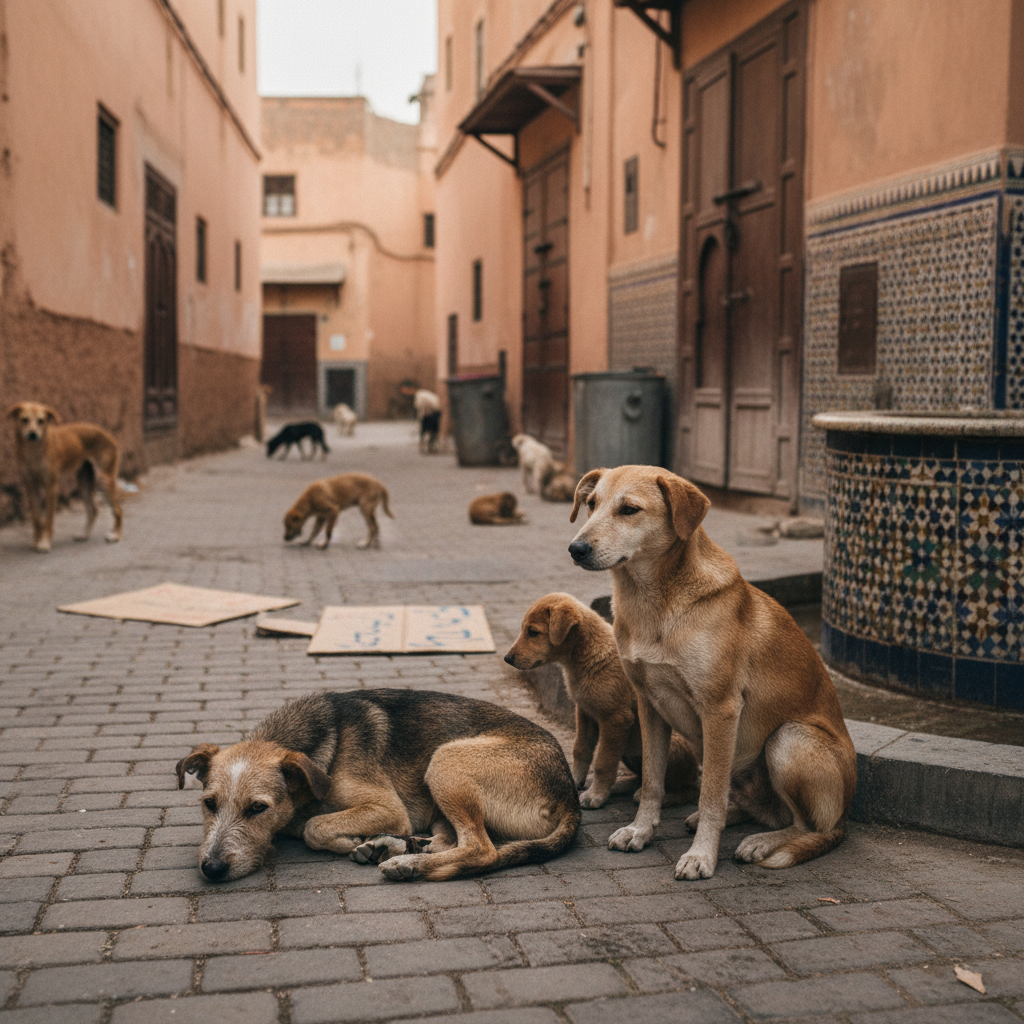
Legal framework, Animal rights, and local governance: what the controversy reveals
The Moroccan legal framework entrusts municipalities with sanitation, public hygiene, and animal management in urban environments. These competences are linked to ministerial circulars related to rabies control, health security, and Animal Protection. In recent years, several cities have experimented with vaccination and sterilization campaigns, often in partnership with NGOs and veterinary clinics. The recent controversy, fueled by foreign articles citing very high figures of eliminated animals, mainly reveals a demand for regulatory clarity, data transparency, and independent audits.
International standards recommend achieving about 70% canine vaccination coverage to break rabies transmission cycles. This threshold is achievable with well-planned TNR approaches, marking by chip or collar, and digital monitoring. Moroccan law, evolving, can incorporate more accountability mechanisms: quarterly publication of figures (captures, returns to the field, treatments), specifications for service providers, and recourse to local monitoring committees including associations and health professionals.
In practice, some municipalities have stopped shootings in urban areas, relying on identification, sterilization, and vaccination. Others continue occasional removal campaigns due to a lack of trained human resources and adapted infrastructures. The two models coexist and feed a perception of territorial disparity, explaining the rise of criticism. To secure public action, the challenge is to establish traceable governance: from citizen reporting to the logbook, up to the public report, every step must be documented.
Governance and transparency useful for employment
Modernized governance creates economic activity. Calls for tenders can require inclusion components (training assistants, local hiring), supported by multi-year budgets. Employment is all the more sustainable as the animal policy is continuous and evaluated. Host cities of sporting competitions stand to gain by turning a nuisance into a showcase of good practices.
- 🧭 Clarify municipal protocols to avoid abuses and protect agents.
- 🧑⚕️ Expand partner clinics for low-cost sterilization and vaccination.
- 📱 Launch a reporting app for Stray Dogs and intervention tracking.
- 🔎 Publish quarterly indicators to reduce rumors and strengthen trust.
- 🤝 Create neighborhood committees including residents, associations, and veterinary services.
| Governance Tool 🛠️ | Expected Effect ✅ | Employment Impact 💼 | Ethical Signal 🌍 |
|---|---|---|---|
| Public action register | Transparency | Local data managers | Animal rights respected |
| Reporting app | Reactivity | Technical support | Citizen participation 🙌 |
| TNR contracts | Durable reduction | Para-veterinarians | Animal Protection |
Field testimonies report that preventive communication reduces tensions and incident reports. Before major sporting events, a legally framed and socially accepted approach reassures sponsors and residents. Regulation is not just a constraint: it structures a professional ecosystem around public health and ethics.
Alternatives to animal culling: TNR, vaccination, and stabilization of urban wildlife
Faced with accusations of massive Animal Culling, effective alternatives exist and align with local employment. The TNR model (Trap-Neuter-Return) — capture, sterilization, vaccination, return on site — aims to stabilize Stray Dog groups by avoiding “vacuum effects” (new dogs colonize vacancies). Combined with rabies vaccination and marking, it reduces health risks and improves coexistence. The key is execution quality: trained teams, continuous schedule, shared data, and education for residents and merchants.
On the HR front, this approach creates jobs. Assistants capture using non-violent methods, veterinarians supervise procedures, urban mediators inform neighborhoods, while data analysts monitor indicators. Social enterprises may emerge for logistics, communication, or care center maintenance. This value chain is financed via pooled municipal budgets, private partnerships, and international grants when the strategy includes measurable objectives.
Let’s illustrate with a hypothetical case inspired by local practices: “Medina-Zen”, a program in a medium-sized city, targeted 2,000 dogs over 18 months. Expected result: 40% drop in reported incidents, improved tourist perception (supported by surveys), and creation of about ten direct jobs, plus intermittent contracts during campaigns. This type of program also involves waste collection and food point management, as food availability strongly influences canine population dynamics.
Skills and training: a local employment sector
Professionalization requires a skill framework: handling capture equipment, hygiene protocols, animal first aid, communication in tense situations. Moroccan universities and institutes can offer short certificates, while veterinarians ensure medical supervision. This upskilling anchors the approach and prevents return to hasty methods that fuel Animal Cruelty and social mistrust.
- 🎓 Certified animal control assistant trainings (3 to 6 months).
- 🧑⚕️ Rapid sterilization workshops supervised by certified veterinarians.
- 🧰 Soft capture and behavioral assessment modules.
- 📊 Introduction to data collection and indicator monitoring.
- 🗣️ Neighborhood mediation and Awareness of good practices.
| Method 🐾 | Estimated unit cost 💸 | Health effect 🧪 | Employment effect 👥 |
|---|---|---|---|
| TNR + vaccination | Medium | Durable reduction ✅ | Job creation |
| Occasional removal | Low immediate | Return effect ⚠️ | Intermittent jobs |
| Overcrowded shelter | High | Risk of overcapacity | Recurring costs |
Final insight: a documented TNR policy, combined with vaccination, is socially better accepted and economically sustainable, especially when it nurtures a useful employment sector for the territory.
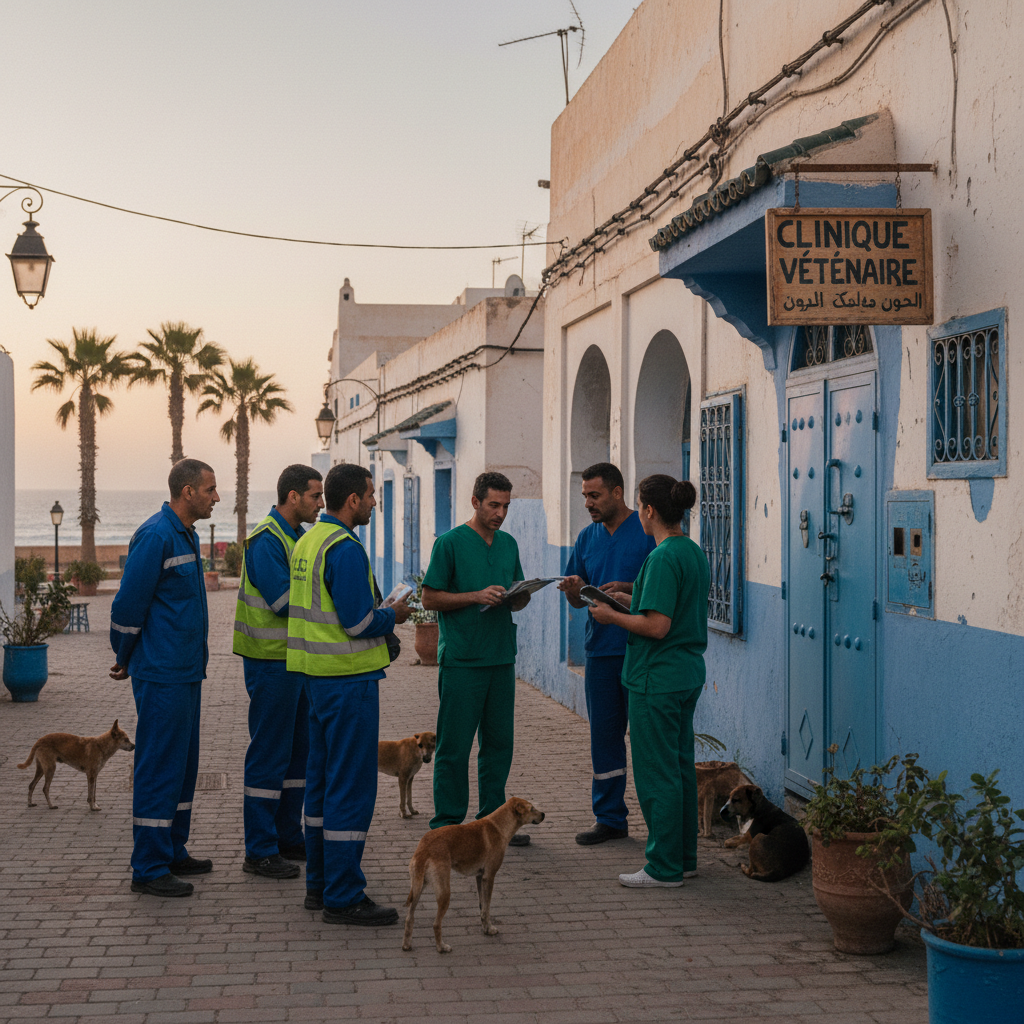
International image, tourism, and talent attractiveness: what impacts for Morocco as 2030 World Cup host?
A host country’s attractiveness depends as much on stadiums as on the ethical trust it inspires. Articles mentioning large-scale elimination campaigns can affect Morocco’s reputation with travelers and sponsors sensitive to Animal rights. Conversely, a clear, quantified, and respectful Animal Protection strategy becomes a differentiating factor. Hotels, MICE agencies, and booking platforms are increasingly attentive to ESG criteria. A city able to prove a drop in canine incidents while respecting ethics sends a positive signal to markets.
Employment spillovers depend on action coherence. A tourist season weakened by controversy reduces seasonal contracts in hospitality and catering. Conversely, transparent communication — vaccination figures, treated zones maps, hotline — reassures and consolidates activity. Local “Animal-friendly city” labels can encourage companies to adopt charters, with benefits in visibility and recruitment, especially among young graduates sensitive to social responsibility.
The diaspora, a powerful reputation relay, plays a strategic role. Moroccans abroad intensely share country-related content, which can amplify negative narratives… or highlight public innovations. Municipalities would benefit from involving credible influencers (veterinarians, urban planners, dog trainers) to document progress. This alignment strengthens trust capital and attracts qualified profiles in health, data, and social mediation fields.
Managing communication without downplaying risks
The topic is sensitive. Effective communication neither denies difficulties nor over-promises. It shows results, explains trade-offs, and publishes a timeline. Sponsors understand transitions when they are traceable. Residents buy in when concrete benefits are visible: fewer bites, less wandering near schools, cleaner public spaces.
- 📣 Monthly public dashboard (vaccinations, sterilizations, incidents).
- 🧭 Mapping of intervention zones and dedicated emergency number.
- 🤝 Visible partnerships with associations and local clinics.
- 🌍 Inclusion of ESG indicators in municipal tenders.
- 🎯 Awareness campaigns in tourist neighborhoods and schools.
| Scenario 🎬 | Impact on employment 🧰 | International perception 🌐 | Signal for talent 🧲 |
|---|---|---|---|
| Visible cullings | Seasonal loss | Negative narrative | Decreased attractiveness |
| Quantified TNR | Stability/increase | Good practice cited ✅ | Enhanced attractiveness |
| Inaction | Health risk | Misunderstanding | Brain drain |
Final insight: in view of the 2030 World Cup, ethical reputation is an economic asset. Securing it with measurable evidence is a winning HR investment.
Operational plan 2025-2030: realistic roadmap for Moroccan cities
A clear roadmap helps pacify the debate and create jobs. From 2025 to 2030, cities can deploy a plan on five axes: map, train, act, measure, communicate. Each axis has indicators and job effects. Quarterly management guarantees necessary adjustments, especially during tourist seasons and event periods.
An inspiring example is to start in priority zones (tourist sites, schools, markets), with mixed municipal-associative teams. The ramp-up then extends to peripheral neighborhoods. Public procurements include inclusion clauses and data transparency, while prefects ensure inter-municipal coherence. The “reporting-intervention-care-return-follow-up” chain becomes a standard, logged by a unified app.
Steps, indicators, and budget
This plan gives visibility to local businesses (clinics, tech, communication) and young graduates. It creates concrete perspectives and aligns public action with ethical expectations, thus limiting the risk of Animal Cruelty and mistrust. All contribute to territorial competitiveness approaching international competitions.
- 🗺️ Mapping hotspots and quarterly scheduling of rounds.
- 👩🏫 Accelerated training for assistants and neighborhood mediators.
- 🏥 TNR contracts with quantified objectives and independent audits.
- 📈 Public dashboards and regular citizen meetings.
- 📢 Awareness kits for schools, riads, and markets.
| Phase ⏱️ | Objective 🎯 | KPI indicator 📊 | Indicative budget 💵 |
|---|---|---|---|
| 2025 – Launch | Framework and pilots | 3 pilot cities | Medium |
| 2026-2027 – Scale-up | TNR at scale | 70% target zones | High |
| 2028-2030 – Consolidation | Durable stability | Incidents -50% ✅ | Medium |
For host cities, this plan is complemented by an event protocol: rapid reporting, temporary reinforcements, multilingual mediators, coordination with fan zones. It structures cooperation between public services and private partners and aligns the territory with international expectations.

Economics of solutions: costs, funding, and creation of local jobs
The economy of a modern canine policy is not limited to the cost of care. It includes fewer incidents, tourist attractiveness, controversy reduction, and job creation. A dirham invested in vaccination and sterilization avoids medical, legal, and image costs. Funding can combine municipal budgets, private partnerships (hospitality, sport, sponsors), and international contributions if clear and audited public health and Animal Protection objectives are defined.
Moroccan entrepreneurs have their role. Startups can develop traceability, mapping analysis, and field data capture solutions. Higher education could offer joint certificates in “urban Wildlife management and public data”. Social engineering firms structure dialogue with neighborhoods to reduce resistance. Over time, an “urban canine” sector takes shape, from capture to communication, with bridges to animal health and ecotourism.
A diversified funding portfolio ensures continuity. ESG-conscious sponsors will more willingly support projects documenting impact. To maximize job effect, lot division of contracts (small lots dedicated to local micro-enterprises) and inclusion clauses favor youth employment after training. This ecosystem logic shows that the alternative to Animal Culling is not a luxury but a socially profitable investment strategy for Morocco.
Which profiles to hire and how to measure the created value?
Value is measured in health, social, economic, and reputational indicators. Desired profiles range from para-veterinarians to data analysts and mediators. Coordination by a “One Health” project manager guarantees effectiveness. Cities that objectify their results build a strong territorial brand, useful for the World Cup and beyond.
- 👩⚕️ Veterinary assistants and TNR technicians.
- 🧮 Data analysts for tracking indicators and heat maps.
- 🗣️ Neighborhood mediators for education and conflict management.
- 🚐 Logistics specialists for rounds and equipment maintenance.
- 📢 Awareness and media relations officers.
| Economic lever 💼 | Value created 📈 | Indicator 🌟 | Key partner 🤝 |
|---|---|---|---|
| TNR + vaccination | Fewer incidents | −X% bites | Local clinics |
| Data transparency | Increased trust | Public dashboards ✅ | Data startups |
| Ethical labels | Attractiveness | ESG rating | Tourism offices |
Final insight: funding ethics is funding employment. A city that proves its results secures its reputation and strengthens its competitiveness sustainably.
{“@context”:”https://schema.org”,”@type”:”FAQPage”,”mainEntity”:[{“@type”:”Question”,”name”:”Does Morocco kill millions of stray dogs before the World Cup?”,”acceptedAnswer”:{“@type”:”Answer”,”text”:”Associations and media have mentioned very high numbers, sometimes several million by 2030. Authorities dispute these estimates and emphasize vaccination and sterilization actions. The serious response lies in verified public data (captures, sterilizations, incidents), published regularly and audited locally.”}},{“@type”:”Question”,”name”:”What alternatives to animal culling are effective?”,”acceptedAnswer”:{“@type”:”Answer”,”text”:”The TNR (capture-sterilization-vaccination-return) combined with high vaccination coverage, marking, and resident awareness constitutes a recommended approach. It stabilizes populations, reduces rabies, and improves coexistence without recourse to animal cruelty.”}},{“@type”:”Question”,”name”:”What is the impact on local employment?”,”acceptedAnswer”:{“@type”:”Answer”,”text”:”A modern policy creates positions for veterinary assistants, mediators, logisticians, and data analysts. Well-designed public contracts and private partnerships (tourism, sponsors) support a sustainable sector.”}},{“@type”:”Question”,”name”:”How can cities reassure visitors and sponsors?”,”acceptedAnswer”:{“@type”:”Answer”,”text”:”By publishing dashboards, demonstrating results (incident reduction, sterilization increase), displaying credible partnerships, and deploying mediation and rapid response systems around tourist and sports sites.”}},{“@type”:”Question”,”name”:”What actions should be prioritized by 2030?”,”acceptedAnswer”:{“@type”:”Answer”,”text”:”Structuring governance (local committees, transparency), scaling up TNR and vaccination, training local teams, creating reporting channels, and conducting ongoing awareness campaigns. These actions strengthen public health and Morocco’s image.”}}]}Does Morocco kill millions of stray dogs before the World Cup?
Associations and media have mentioned very high numbers, sometimes several million by 2030. Authorities dispute these estimates and emphasize vaccination and sterilization actions. The serious response lies in verified public data (captures, sterilizations, incidents), published regularly and audited locally.
What alternatives to animal culling are effective?
The TNR (capture-sterilization-vaccination-return) combined with high vaccination coverage, marking, and resident awareness constitutes a recommended approach. It stabilizes populations, reduces rabies, and improves coexistence without recourse to animal cruelty.
What is the impact on local employment?
A modern policy creates positions for veterinary assistants, mediators, logisticians, and data analysts. Well-designed public contracts and private partnerships (tourism, sponsors) support a sustainable sector.
How can cities reassure visitors and sponsors?
By publishing dashboards, demonstrating results (incident reduction, sterilization increase), displaying credible partnerships, and deploying mediation and rapid response systems around tourist and sports sites.
What actions should be prioritized by 2030?
Structuring governance (local committees, transparency), scaling up TNR and vaccination, training local teams, creating reporting channels, and conducting ongoing awareness campaigns. These actions strengthen public health and Morocco’s image.

Comments are closed