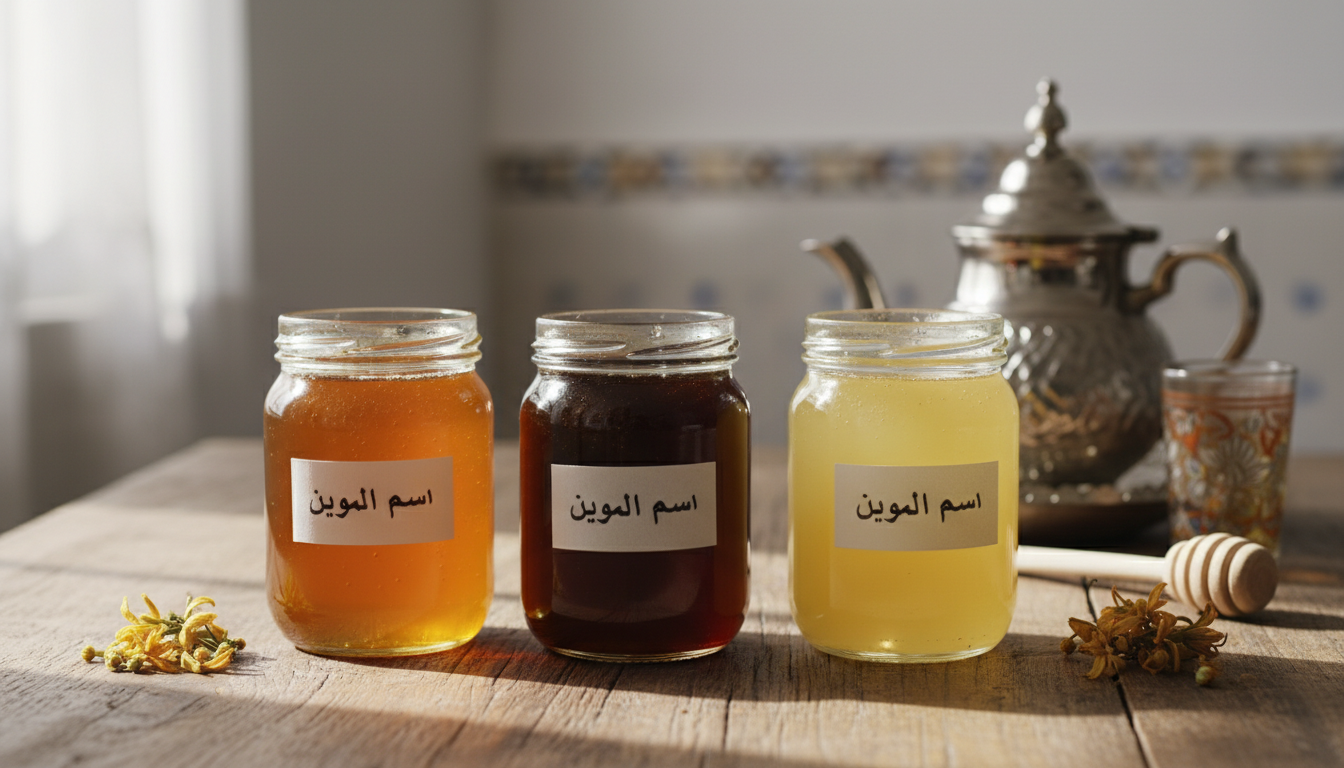
Morocco, a true crossroads of Mediterranean biodiversity, offers an invaluable liquid treasure: its honey. In 2025, interest in local products continues to grow, driven by a quest for authenticity and natural well-being. This sector, vital for the local economy and employment in rural areas, relies on ancestral know-how that modern cooperatives strive to preserve. Understanding the nuances of this nectar also means supporting a dynamic agricultural sector that is a source of pride for the Kingdom.
The treasures of the hive: an overview of varieties of excellence
Morocco’s geography, from the peaks of the Atlas to desert oases, allows for a unique floral diversity. Each region leaves its gustatory signature, creating terroir honeys with very distinct profiles. For the informed enthusiast or the health-conscious consumer, it is crucial to distinguish the main families of this noble product.
Jujube Honey (Sidr): Morocco’s liquid gold
Considered one of the most precious honeys in the world, jujube honey captivates with its rarity and aromatic power. Consumers often describe it as an intense sensory experience. Karim, a Casablanca enthusiast, points out that this Moroccan honey has a “deep and warm taste,” incomparable to industrial versions. It has become a central element of many traditional breakfasts, accompanying msemen and amlou. Its texture and flavor make it a luxury product, often offered on special occasions.
Euphorbia and Daghmous: The strength of arid regions
In pre-Saharan zones, bees forage on hardy plants such as cactiform euphorbia (Daghmous). This honey is renowned for its spicy throat sensation, a sign of its purity and active properties. Amina, a resident of Rabat, testifies to the effectiveness of this nectar for her grandmother’s digestive comfort, thus validating decades of traditional pharmacopoeia. It is a characterful product, often sought after by those wishing for an authentic discovery in Foum Zguid and southern regions, where these plants thrive under a blazing sun.

Benefits and therapeutic virtues: much more than a treat
Beyond gustatory pleasure, honey is ingrained in the care routines of Moroccan families. The richness in antioxidants and nutrients varies according to floral origin, offering a range of natural remedies for everyday ailments. In 2025, this preventive health approach continues to attract a wide audience.
Thyme and Eucalyptus: the allies of winter
Thyme honey, often harvested in the mountains, is prized for its antiseptic virtues. Mehdi, from Tangier, reports quick relief from his sore throats thanks to this nectar with an almost mentholated scent. Similarly, eucalyptus honey, although sometimes strong in aroma as noted by Youssef from Marrakech, remains a staple for infusions. These varieties are essential in the natural first aid kits of households. To understand the environment of these aromatic plants, it is interesting to visit the province of Khénifra, known for its vast forested areas favourable to mountain beekeeping.
Sweetness and digestion: Carob tree, Orange tree, and Lavender
For those who prefer sweeter notes, carob tree honey offers a creamy texture and a taste reminiscent of caramel, ideal to enhance yogurt, as suggested by Zineb from Agadir. Orange tree honey, with its floral notes from the plains of Souss and Gharb, soothes restless minds. Finally, lavender honey surprises with its delicate floral nuances, a discovery that conquered Samira in Fez. These honey varieties are perfect for introducing children or for a daily gourmet consumption.
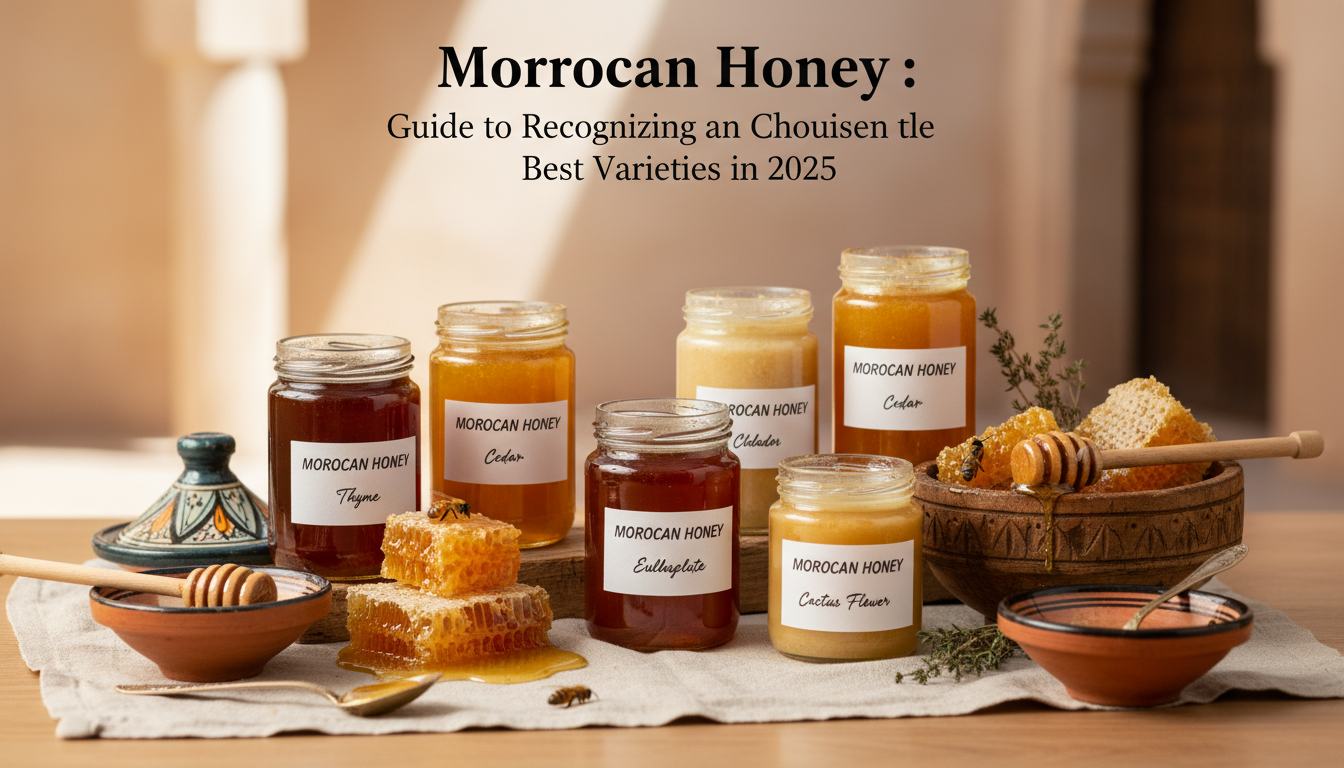
How to identify quality honey in 2025?
Faced with the multitude of offers, knowing how to choose your honey requires some expertise. Crystallization, often mistakenly perceived as a flaw, is in fact a sign of quality for most floral honeys (except acacia or jujube which remain liquid for a long time). Youssef also mentions the importance of sellers’ education on this natural phenomenon.
Here is a summary to guide you in your selection:
| Variety 🍯 | Taste Profile 👅 | Main Benefits 🌿 | Usual Texture |
|---|---|---|---|
| Jujube (Sidr) | Caramelized, sweet, intense | Energy, recovery, immunity | Liquid, slow crystallization |
| Daghmous (Euphorbia) | Spicy, acrid, warming | ENT sphere, asthma, fertility | Crystallizes quickly |
| Thyme | Woody, mentholated, strong | Antiseptic, healing | Amber, medium crystallization |
| Orange tree | Floral, fruity, delicate | Soothing, sleep, digestion | Clear, liquid to creamy |
| Carob tree | Chocolatey, caramel-flavored | Digestive, rich in trace elements | Often creamy and dark |
The importance of short circuits and origin
Choosing artisanal and natural honey also means supporting the local economy. Testimonials from satisfied customers, such as Leila who sends gift boxes to her family in France, show that honey is a vector of cultural identity. This connection to the homeland is powerful, recalling traditions even celebrities appreciate, as seen with Madonna in Morocco with family, enjoying the riches of the local terroir. Prioritizing producers who clearly display geographic origin and harvesting methods guarantees not only flavor but also the benefits of honey.
- 🔍 Traceability: Always check the harvesting region (Souss, Atlas, Rif, Oriental).
- 🏺 Packaging: Prefer glass, an inert material that preserves aromas, as consumers point out.
- 🧪 Analysis: Serious producers do not hesitate to provide laboratory analyses proving the absence of added sugar.
- 🤝 Ethics: Buying from cooperatives supports rural employment and bee preservation.
The 2025 honey guide would not be complete without recalling that honey production in Morocco is subject to climatic hazards. The rarity of certain batches justifies their price. As informed consumers, understanding the beekeeper’s work allows us to appreciate every drop of this golden nectar at its true value.
Why has my Moroccan honey hardened in the jar?
It is a natural phenomenon called crystallization. This often proves that the honey is raw and has not been heated at high temperature. You can make it liquid again by gently heating it in a water bath (below 40°C) so as not to alter its properties.
What is the best honey to boost immunity?
Thyme honey and Jujube honey (Sidr) are the most reputed to boost the immune system thanks to their richness in antioxidants and natural antibacterial properties.
How to tell if honey is pure and natural?
Read the label to check the origin and absence of additives. A simple test is to pour a drop of honey into a glass of water: pure honey sinks without immediately dissolving, unlike honey cut with sugar syrup.
Is Daghmous honey suitable for children?
Because of its very strong and spicy taste (slight burning sensation in the throat), Daghmous honey may be difficult for young children to appreciate. It is preferable to start with milder honeys like Orange tree or Lavender.

No responses yet