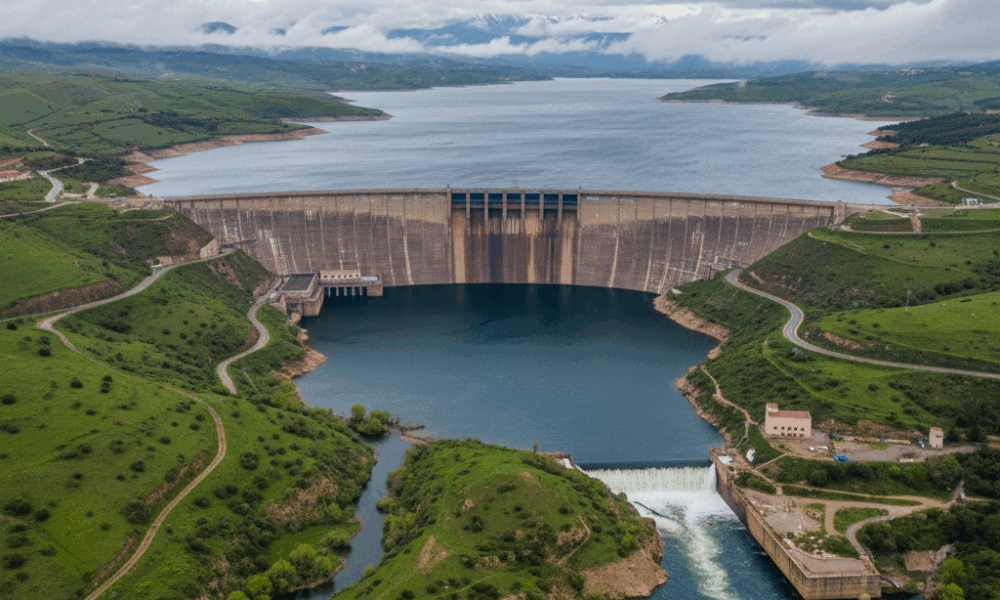
Morocco’s Dams Reinforced by Recent Rainfall: Key Figures and Immediate Effects on Water Reserves
The widespread rainfall has brought a breath of fresh air to Morocco’s dams, with significant gains in several basins. Official data from the Ministry of Equipment and Water show a clear increase in water resources stored, a crucial reserve for the replenishment of domestic and agricultural uses. The digital platform “El Ma Dialna” reports variable increases by region, confirming the beginning of an improvement in a situation marked by several years of deficit.
The 9 April 1947 dam, in the Tanger-Assilah prefecture, gained about 0.83 million m³, reaching 16.6% capacity. Nearby, the Ibn Battouta dam rose to 19.3% following an addition of 0.28 million m³. In the Kénitra province, the El M’nâa dam on the Sebou stands out with a level of 91.4%, after an increase of more than 1.52 million m³. The Al Massira dam, in Settat, records the largest single volume increase, approximately 1.65 million m³, although its overall rate remains around 2.89%, an encouraging sign for a highly pressured area.
These contributions add to a positive national trend: the aggregated stock exceeded 4.8 billion m³ as of February 10, 2025, compared to about 4.1 billion at the same time last year. The overall filling rate stands around 28%, an improvement from 25.22% a year earlier. In the North, the increase is particularly noticeable, while the Center-South remains under stress, underscoring the need for a more refined water management approach, balanced among drinking water, irrigation, and industrial needs.
What the figures say and why they matter
The added volumes, even modest locally, have a domino effect on the entire hydraulic infrastructure system. The drinking water services secure supply circuits in growing cities, while irrigated perimeters can plan a more serene agricultural season. A network operations consultant, Salma, illustrates this shift: by reconfiguring water releases over three weeks, her team enabled two municipalities to secure pressure and avoid the use of tanker trucks.
However, trade-offs remain strict: human consumption takes priority, followed by strategic crops. The agricultural season is not decided by a single rainy episode; it depends on a succession of disturbances and a progressive replenishment of the water reserve in aquifers and soils. Decision-support tools, such as telemetry or hydrological modeling, become indispensable to make the best use of inflows.
- 💧 Priority to drinking water: securing sensitive urban and rural centers.
- 🌾 Support for agriculture: targeted watering of food and high-value crops.
- 🛰️ Digital monitoring: sensors, platforms, and alerts to adjust flows.
- 🤝 Territorial coordination: basin agencies, municipalities, and agricultural operators.
- ⚠️ Flood vigilance: hydric benefit but torrential risk to be controlled.
| 🛰️ Facility | 📍 Region | 📈 Gain (Mm3) | 💦 Filling rate | 🎯 Priority use |
|---|---|---|---|---|
| 9 April 1947 | Tanger-Assilah | +0.83 | 16.6% | Drinking water |
| Ibn Battouta | Tanger | +0.28 | 19.3% | Mixed |
| El M’nâa (Sebou) | Kénitra | +1.52 | 91.4% | Irrigation |
| Al Massira | Settat | +1.65 | 2.89% | Strategic |
| Idriss I | Taounate | +0.32 | 33.5% | Mixed |
| Ahmed El Hansali | Béni Mellal | +0.65 | 9.1% | Supply |
Final insight: the recent improvement is real but uneven; it calls for agile planning to convert this crucial reserve into sustainable benefits for the territories.
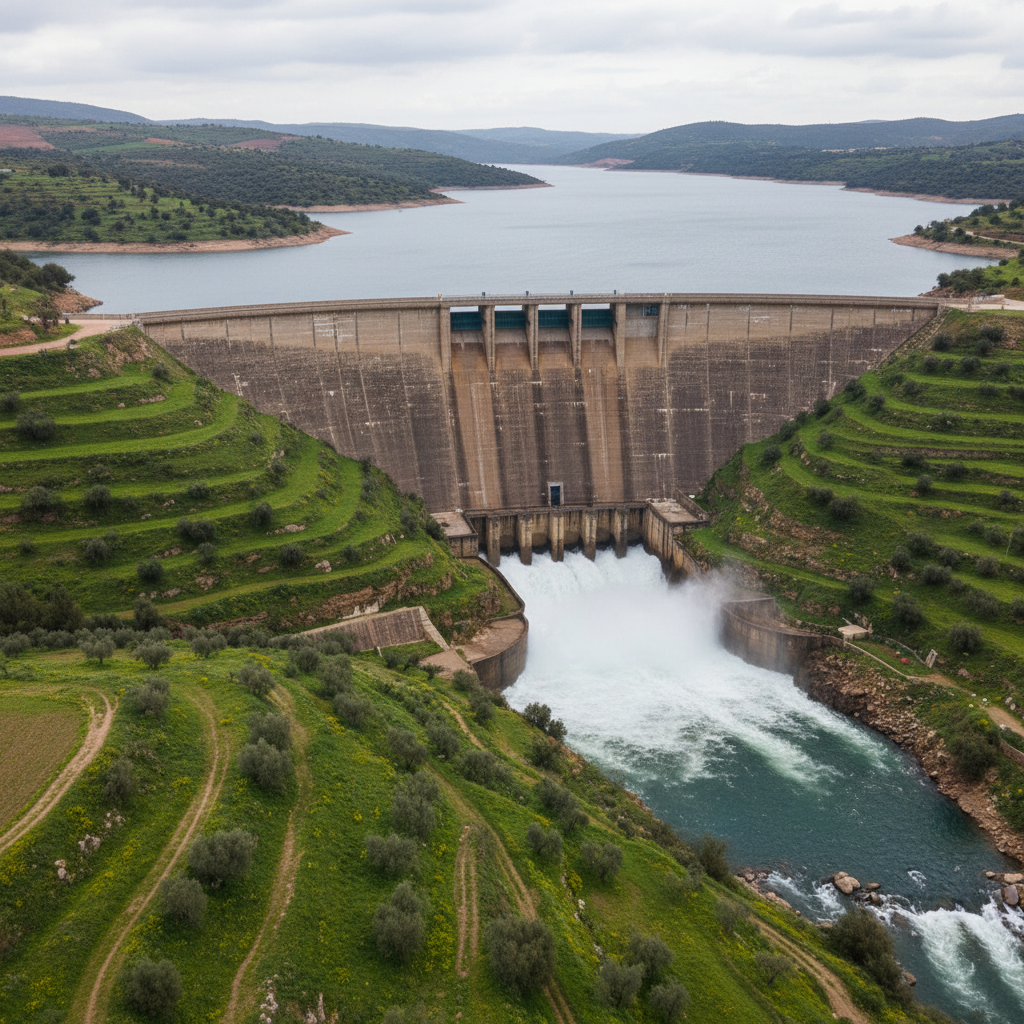
Impact on Agriculture, Employment, and Value Chains: Turning the Water Reserve into Opportunities
The replenished volumes alter the rhythm of the agricultural campaign. In Gharb and Loukkos, better-supplied dams allow the resumption of irrigation schedules, ensuring catch-up sowing and preserving vegetable crops. Local cooperatives reschedule water turns and recommend fractionated inputs to limit evaporation. This dynamic has an immediate effect on seasonal employment and service providers’ activity (pumping, maintenance, transport).
On the HR side, the water recovery stimulates urgent missions: inspection of facilities, valve recalibration, quality control of drinking water, station readings. Operational profiles are in demand, as well as GIS technicians or hydrological data analysts. In Kénitra, an irrigation SME rehired 18 technicians in two weeks to meet the demand of agricultural perimeters.
The urban lever is not left behind. Retention devices in cities, balancing basins, and stormwater networks become job-creating investments, supported by engineering actors. In this regard, development projects gain relevance, as shown by the expertise presented on urban and territorial engineering in Morocco. Companies that structure these projects act as a bridge between hydraulic infrastructure and local development.
Multiplier effects on the territories
For young graduates, the reconfiguration of water resources opens opportunities in asset management, hydraulic safety, or energy optimization of pumping stations. Farmer associations also report decreased uncertainty, conducive to engaging agricultural workers and maintenance agents. The challenge is to raise standards, for example, through certification of localized irrigation operators.
Decision-makers aim to preserve volumes for summer. Awareness campaigns encourage water saving, installation of water-saving devices, and adoption of resilient agricultural practices. Should quotas per crop be reassessed? This question returns vigorously, alongside the deployment of natural soil storage solutions (hedges, mulch, cover crops).
- 🌧️ Agricultural calendar: catch-up sowing and optimized water turns.
- 🧑🌾 Local jobs: irrigation technicians, electromechanics, quality controllers.
- 🏙️ Resilient city: stormwater basins, permeable surfaces, runoff management.
- 📊 Hydraulic data: monitoring, forecasting, predictive maintenance.
- 🔗 Partnerships: engineering and communities, see examples of development.
| 🏭 Sector | 🧩 Opportunity | 👥 Profiles sought | 🔧 Key skills |
|---|---|---|---|
| Irrigation | Network revival | Field technicians | Hydraulics, electromechanics 💧 |
| Drinking water | Supply security | Plant operators | Chlorination, sensors 🧪 |
| City | Stormwater facilities | Works supervisors | VRD, topography 🗺️ |
| Data | Decision support | GIS analysts | Python, mapping 💻 |
To deepen the urban dimension and its synergies with hydraulics, actors rely on feedback such as this focus on urban development, useful to link rain, roads, and population safety.
Final insight: the replenished water reserve sends a positive shock to agriculture, employment, and urban services, provided that usage is orchestrated and local skills are strengthened.
Water governance and management: prioritizing, modernizing, making hydraulic infrastructure more resilient
Turning recent gains into sustainable progress involves refined governance. Basin agencies implement allocation plans that favor drinking water, secure efficient irrigation, and maintain ecological volumes. Modernization of canals, sealing of pipelines, and dynamic monitoring of dams are at the heart of the roadmap.
Digital technologies speed up these transformations. The “El Ma Dialna” platform facilitates transparency and anticipation. Operators integrate modeling of intense events, improve leak detection, and use unified dashboards. An operations manager, Youssef, explains that installing level sensors and rain gauges allowed water releases to be adjusted in near real-time, reducing losses and increasing service reliability.
Resilience also comes from diverse sources: reuse of treated wastewater, aquifer recharge, regional interconnections, and, where appropriate, desalination. These levers complement the replenishment of the crucial reserve provided by rainfall. Partnerships between consulting firms, communities, and operators remain the operational engine, as highlighted by initiatives related to urbanism and networks described in integrated development projects.
Tools and trade-offs for 2025 and beyond
Planning is structured around alert thresholds, weather scenarios, and maintenance budgets. Trade-offs focus on agricultural water savings, tariff incentives, equipping households with water-saving devices, and reducing network losses. Meanwhile, urban flood management remains a priority to prevent hydric benefits from turning into risks.
Finally, citizen involvement plays a decisive role. Water sobriety campaigns, real-time information on levels, and association involvement improve acceptance of measures. The goal: a more participative and effective water management, adapted to Morocco’s territorial diversity.
- 🧭 Prioritization: drinking water, strategic crops, ecological flows.
- 🧠 Digital: sensors, forecasting, predictive maintenance.
- 🧩 Diversification: reuse, interconnections, targeted desalination.
- 🛡️ Prevention: flood control and protection of sensitive neighborhoods.
- 🏛️ Partnerships: engineering and territories, see urban achievements.
| 🛠️ Axis | 🎯 Objective | 📌 Measure | 📉 Expected result |
|---|---|---|---|
| Networks | Reduce losses | Leak detection | +15% efficiency 💧 |
| Irrigation | Water saving | Drip irrigation | -25% consumption 🌿 |
| Floods | Limit risks | Balancing basins | Safe zones 🛡️ |
| Transparency | Inform | Data portals | Citizen trust 📢 |
Final insight: modernization of hydraulic infrastructure must go hand in hand with clear trade-offs and open data to stabilize gains over time.

Regional disparities and local strategies: from surplus North to stressed Center-South
The North of Morocco benefits more intensely from recent episodes. Facilities near Tanger, Tétouan, and Kénitra show rising levels, while dams in the very pressured Center-South remain low. This asymmetry requires differentiated strategies: modulating irrigation schedules in the North, concentrating volumes on vital uses in the Center-South, and speeding up interconnections where technically and economically feasible.
In Tanger-Assilah, 9 April 1947 and Ibn Battouta regain operational margins. In Sebou, El M’nâa ranks among the highest rates in the country. Further south, Al Massira remains fragile despite a gain of 1.65 million m³; the challenge is to consolidate the season through continuing rainfall and water savings. Idriss I, in Taounate, and Ahmed El Hansali, in Béni Mellal, progress but maintain levels requiring strong vigilance.
Local authorities adapt their actions: occasional repairs of traditional irrigation networks, riverbed dredging, and farm awareness of rainwater harvesting. The industrial fabric, for its part, strengthens internal recycling. Several industrial zones have revised their industrial washing protocols to reduce pressure on the water reserve.
Operational insights and coordination
Regional water committees multiply meetings. Farmers participating in short circuits receive water management guides adapted to their crops. In cities, stormwater management plans modernize with the support of expertise such as those mentioned in urban adaptation projects, to prevent flooding while recharging soils.
These concrete adjustments act as social and economic shock absorbers. They give households and businesses time to align their investment strategies, especially regarding water-saving equipment and more sustainable agricultural practices.
- 🗺️ North strategy: optimizing releases and supporting high-value crops.
- 🏜️ Center-South strategy: strict prioritization of drinking water and food crops.
- 🔗 Interconnections: linking basins when technically and economically viable.
- 🏘️ City: infiltration, de-paving, stormwater facilities.
- 🧭 Technical support: studies and engineering, see territorial engineering.
| 🌍 Zone | 🏞️ Dam | 📊 Rate | ➕ Recent gain | 🔄 Priority |
|---|---|---|---|---|
| North | 9 April 1947 | 16.6% 💧 | +0.83 Mm3 | Urban supply |
| North | Ibn Battouta | 19.3% 💧 | +0.28 Mm3 | Mixed |
| Gharb | El M’nâa (Sebou) | 91.4% 🌿 | +1.52 Mm3 | Irrigation |
| Center-South | Al Massira | 2.89% ⚠️ | +1.65 Mm3 | Strategic |
| Prerif | Idriss I | 33.5% 💧 | +0.32 Mm3 | Mixed |
| Atlas | Ahmed El Hansali | 9.1% ⚠️ | +0.65 Mm3 | Human supply |
Final insight: local strategies benefit from being differentiated, with regionalized management synchronizing uses and valuing every replenished cubic meter.
From Rain to Performance: Employment, Skills, and Upgrading Water Professions
The consolidation of the crucial reserve in dams catalyzes a rise in water-related professions. Operators seek versatile talents capable of combining maintenance, data, and quality. Training centers adapt to meet the needs of modern hydraulic infrastructure, while public works companies redeploy teams on pipeline and facility rehabilitation sites.
The network operation segment is equipped with sensors and platforms. Connected technician profiles become essential to interpret alerts and trigger rapid interventions. Local authorities, for their part, strengthen coordination with consulting firms, as illustrated by projects highlighted in development expertise, where stormwater management is linked with urban planning, roads, and safety.
In high-pressure regions, skills needs for water saving intensify: hydraulic audits, adapted irrigation plans, pressure regulation, advanced leak detection. This upgrade promotes sustainable employment and professionalization of sectors, from pumping workshops to supervision posts.
Career paths and bridges
Bridges are being created between traditional roles and new ones. An electromechanic can evolve toward predictive maintenance; a VRD engineer toward multifunctional stormwater facilities; an agronomist toward hydric modeling. Public-private cooperation brings a useful learning dynamic, reinforced by interregional feedback.
Employers value soft skills: responsiveness, clear communication, public service mindset. Young talents are encouraged to specialize while keeping a systemic view of watershed basins. Online resources, such as this dossier on urban engineering, help contextualize projects and identify emerging professions.
- 🧑🔧 Maintenance 4.0: sensors, CMMS, targeted interventions.
- 🌐 Data & GIS: forecasting, mapping, performance indicators.
- 🧪 Water quality: protocols, traceability, continuous monitoring.
- 🏗️ Hydraulic works: rehabilitation, sealing, facility safety.
- 📚 Training: certifications, apprenticeships, feedback.
| 🧭 Profession | 🎓 Skills | 🛠️ Tools | 🚀 Evolution |
|---|---|---|---|
| Network technician | Hydraulics, safety | Sensors, CMMS 💻 | Field supervisor |
| GIS analyst | Mapping, data | QGIS, Python 🗺️ | Data project manager |
| VRD engineer | Urban hydrology | BIM, modeling 🧮 | Stormwater facilities expert |
| Plant operator | Quality, process | SCADA, lab 🧪 | Production manager |

Final insight: the water dynamic acts as a skills and employment accelerator, bringing together water sectors, urban planning, and agriculture in a shared performance logic.
Linking Water, City, and Economic Value: Integrated Design and Smart Investment
The water chain does not stop at dams. Moroccan cities strengthen retention, infiltration, and de-paving solutions to transform rain into territorial capital. Economic zones equip themselves with smart networks to reduce losses and recycle process water. A well-placed investment can ease pressure on the water reserve while improving productivity.
This integrated approach requires structured projects capable of synchronizing hydraulic infrastructure, mobility, and development. Engineering examples cited in urban development cases show the interest of unified management: multifunctional basins, blue-green corridors, draining roads. For recruiters, this means multidisciplinary teams and skills in multi-stakeholder project management.
On the agricultural business side, the rain-irrigation convergence results in the modernization of stations and plots. Governance of drinking water and economic uses gains readability, with accessible performance indicators and more regular reporting. Investor confidence is stronger when stock replenishment accompanies a long-term plan.
Useful indicators to manage value
Decision-makers track a few simple metrics: network efficiency, share of reused water, regional autonomy in days, leak rate. These indicators, when published and understood, promote transparency and citizen buy-in. They also help economic actors plan their activities and calibrate their stocks.
Meanwhile, risk culture is better established when communities integrate runoff management and transport line security. Links between rain and flooding are better described, allowing precise investment where vulnerability is highest. Support from engineering teams, such as those involved in technical partnerships, facilitates alignment between public and private actors.
- 📈 Network efficiency: key indicator for water efficiency.
- ♻️ Reuse: lever for autonomy and energy savings.
- 🏙️ Development: nature-based solutions and technical structures.
- 🤝 Governance: performance contracts, transparency.
- 🔗 Resources: see engineering references for concrete examples.
| 📍 Domain | 🔑 Indicator | 🎯 Target | ✅ Benefit |
|---|---|---|---|
| Urban networks | Efficiency (%) | >= 80% 💧 | Less losses |
| Industrial | Water reused | +20% ♻️ | Cost reduction |
| Agricultural | Irrigation efficiency | +15% 🌿 | More value |
| Urban risk | Flood zoning | Updated 🛡️ | Fewer claims |
To support this approach, resources such as urban and hydraulic development projects provide concrete benchmarks on technical coordination and project management.
Final insight: articulating rain, network, and development turns favorable weather into lasting value for the economy and employment.
{“@context”:”https://schema.org”,”@type”:”FAQPage”,”mainEntity”:[{“@type”:”Question”,”name”:”What is the overall status of reserves in Moroccan dams after recent rains?”,”acceptedAnswer”:{“@type”:”Answer”,”text”:”The aggregated stock exceeded about 4.8 billion m3 by mid-February 2025, compared to nearly 4.1 billion a year earlier. The national filling rate stands around 28%, with marked progress in the North and still fragile levels in the Center-South.”}},{“@type”:”Question”,”name”:”What are the priorities for resource use?”,”acceptedAnswer”:{“@type”:”Answer”,”text”:”Drinking water is a priority, followed by strategic crops and critical industrial needs. Ecological volumes are maintained to preserve ecosystems. Trade-offs are adjusted according to inflows and weather forecasts.”}},{“@type”:”Question”,”name”:”Which dams illustrate the diversity of situations?”,”acceptedAnswer”:{“@type”:”Answer”,”text”:”El M’nâa (Sebou) nears 91.4% filling while Al Massira remains close to 2.89% despite a significant volume gain. 9 April 1947 and Ibn Battouta progress in the North, Idriss I and Ahmed El Hansali remain under monitoring.”}},{“@type”:”Question”,”name”:”What impacts on employment and skills?”,”acceptedAnswer”:{“@type”:”Answer”,”text”:”The replenishment of the water reserve revives missions in operations, maintenance, quality, data, and works. Technician and analyst profiles are particularly sought after, with opportunities in agriculture, urban services, and engineering.”}},{“@type”:”Question”,”name”:”How can cities better capture the value of rainfall?”,”acceptedAnswer”:{“@type”:”Answer”,”text”:”By combining retention basins, permeable soils, recycling, and data management, cities transform rain into capital. Engineering partnerships and reliable public indicators facilitate decision making and transparency.”}}]}What is the overall status of reserves in Moroccan dams after recent rains?
The aggregated stock exceeded about 4.8 billion m3 by mid-February 2025, compared to nearly 4.1 billion a year earlier. The national filling rate stands around 28%, with marked progress in the North and still fragile levels in the Center-South.
What are the priorities for resource use?
Drinking water is a priority, followed by strategic crops and critical industrial needs. Ecological volumes are maintained to preserve ecosystems. Trade-offs are adjusted according to inflows and weather forecasts.
Which dams illustrate the diversity of situations?
El M’nâa (Sebou) nears 91.4% filling while Al Massira remains close to 2.89% despite a significant volume gain. 9 April 1947 and Ibn Battouta progress in the North, Idriss I and Ahmed El Hansali remain under monitoring.
What impacts on employment and skills?
The replenishment of the water reserve revives missions in operations, maintenance, quality, data, and works. Technician and analyst profiles are particularly sought after, with opportunities in agriculture, urban services, and engineering.
How can cities better capture the value of rainfall?
By combining retention basins, permeable soils, recycling, and data management, cities transform rain into capital. Engineering partnerships and reliable public indicators facilitate decision making and transparency.

Comments are closed