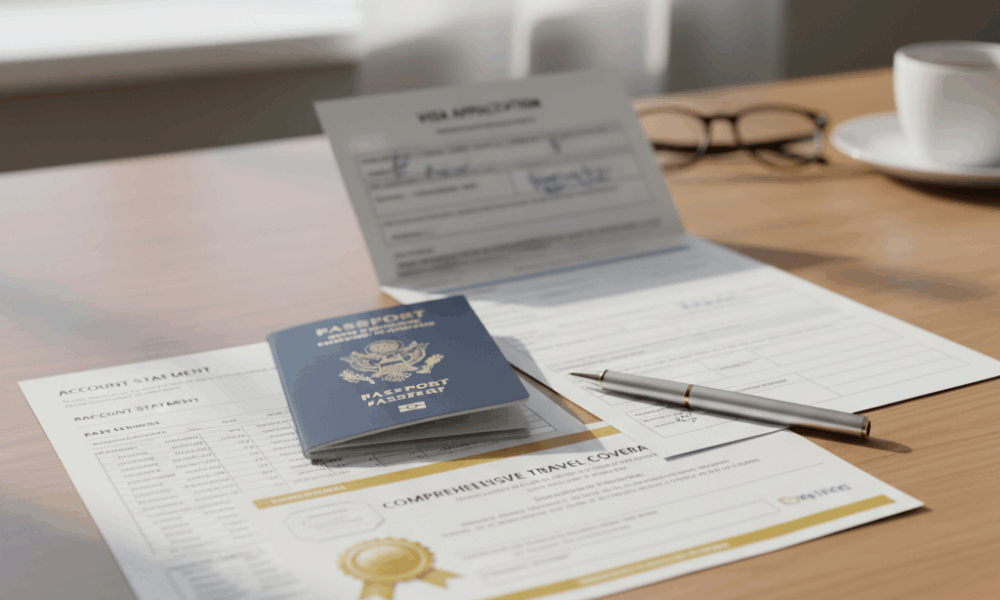
Obtaining a Schengen Visa in 2025: Types of Visas, Key Rules, and Mistakes to Avoid
Short stays in the Schengen area are mainly governed by the type C visa (tourism, business, family visit, short training), limited to 90 days within any 180-day period. For strict transit in the international airport zone, certain nationalities require a type A visa. Finally, stays from 3 to 12 months fall under the type D national visa, issued by a single country for reasons such as study or work. Understanding these categories helps avoid submitting an inappropriate application and reduces refusals.
For Moroccan travelers, the coherence of the itinerary is crucial: main destination country, realistic route, traceable accommodation, and sufficient funds must align. Controls remain possible at external borders, even with a visa, especially since the deployment of the Entry-Exit System (EES) in 2025, which strengthens biometric registration and automatic calculation of stays.
For a precise view of travel alternatives outside Schengen, readers can check the visa-free countries for Moroccans. This preparation helps prioritize between business trips, HR meetings in Europe, and regional opportunities.
Understanding the “90/180 Rule” and Multiple Entries
The validity period on the sticker (From/Until) is not the permitted duration of stay. The latter is the cumulative number of days allowed during the visa’s validity, most often 90 days. A single-entry visa becomes invalid as soon as the Schengen area is exited, even if days remain available. A multiple-entry visa authorizes several round trips as long as the 90/180 limit is not exceeded.
- ✅ Type C for “short stays” (tourism, business, visits) ✈️
- 🛫 Type A for airport transit, depending on nationality 🛄
- 🎓 Type D for study/work/family reasons (specific to each country) 📚
- 🕒 90/180: accurately calculate your days to avoid overstay 🧮
- 🔁 Multiple entries useful for frequent missions and trade fairs 💼
| Type of visa ✍️ | Authorized duration ⏳ | Common reasons 📌 | Points of attention ⚠️ |
|---|---|---|---|
| C (short stay) | Up to 90 days/180 days | Tourism, visit, business, short training | Coherent itinerary, funds, mandatory insurance |
| A (airport transit) | Stopover only in international zone | Connections outside Schengen | Nationalities subject to ATA to be verified |
| D (national) | 3 to 12 months | Study, work, family reunification | Rules specific to each member state |
Applicants attending HR fairs, conferences, or recruitment meetings in Europe will benefit from anticipating a multiple-entry strategy if multiple trips are planned during the year. Support services such as VisaFacile, Schengen Conseil, or Expert Visa Europe help clarify this choice upfront.
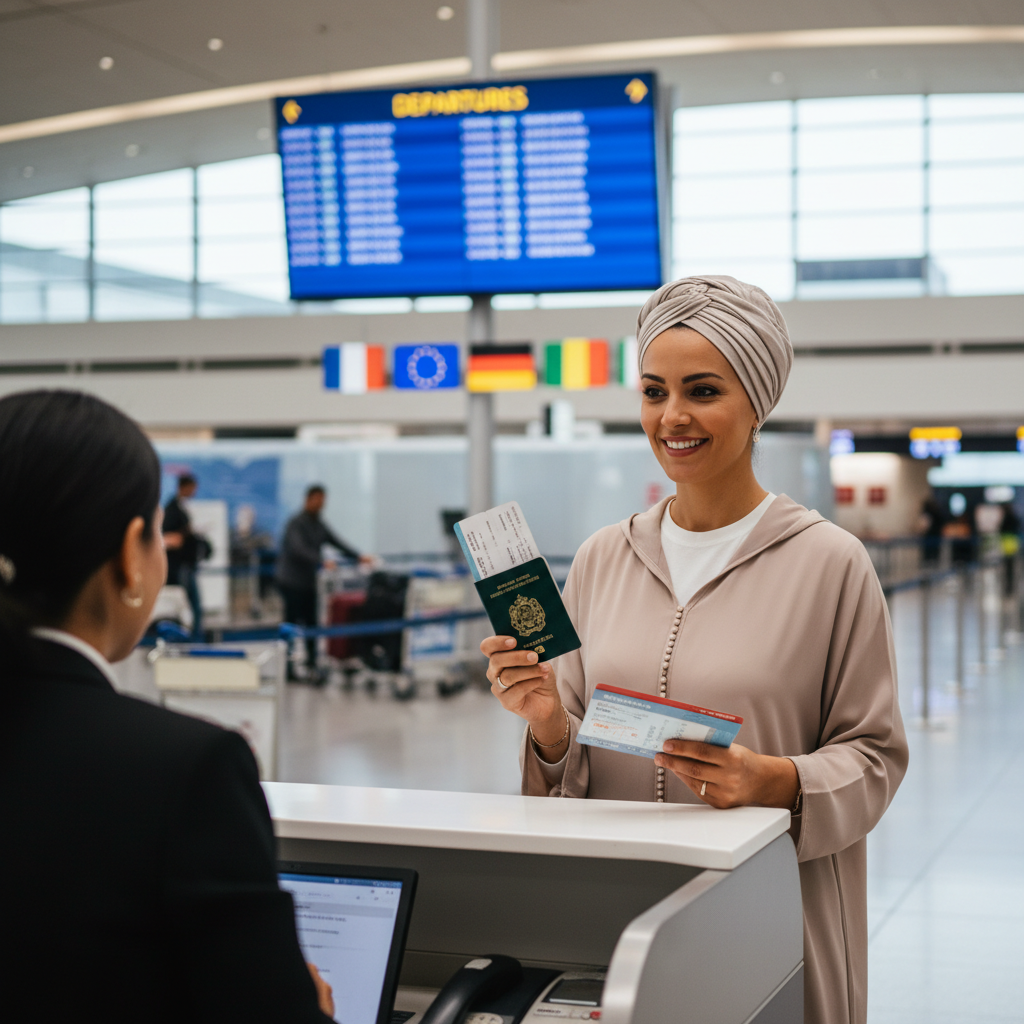
Schengen Procedures from Morocco: Appointment Scheduling, Accredited Centers, and Updated Deadlines
From Casablanca, Rabat, Tangier, Fez, or Marrakech, the logic remains the same: submit in the right place, with a complete file, within the correct time window. The basic rule is to apply to the country where the stay will be longest or, if durations are equal, the country of the first point of entry. In the absence of representation, a “partner embassy” handles the application.
Many states outsource submissions to centers such as BLS International, VFS Global, or TLScontact. For Spain, the BLS center in Rabat is a reference for the capital, with highly demanded slots before summer. Readers can check the organization of the BLS Rabat center to prepare their roadmap and optimize appointment booking.
For business trips, anticipation determines success. The goal is to align professional invitations, accommodation reservations, and proof of activity in Morocco. HR professionals and consultants can use internal solutions like “PasseportExpress” (internal checklist) or external ones (Visa Assistance, France Visa Services) to streamline Schengen procedures.
Time Window and Biometrics: How to Schedule Your Application
Applications can be submitted up to 6 months before the planned departure date and no later than 15 days prior. Peak periods (summer, year-end) increase waiting times. The collection of biometric data (photo, fingerprints) is mandatory unless valid data exists within the past 59 months in the Schengen database.
- 🗓️ Anticipate submission 6 to 8 weeks in advance ✅
- 📍 Choose the right consulate or outsourced center 🧭
- 🔐 Prepare biometrics and original documents 📎
- 🧾 Budget for accredited center service fees 💳
- 🚀 Use aids like VisaRapide 2025 for file tracking
| Step 🧩 | Action to take ✅ | Moroccan tip 💡 | Risk if ignored ⚠️ |
|---|---|---|---|
| Choice of competent country | Identify main destination | Clear itinerary to avoid inconsistencies | Refusal for vague reasons |
| Appointment booking | Book online early | Monitor morning slots | Compromised departure |
| Biometrics | Check validity within 59 months | Allow margin for fingerprints | Application delay |
| Follow-up | Center/consulate portal | Useful SMS notifications | Loss of key information |
For Spain, seasonal appointment demand is high; a dedicated guide “Spain Visa Appointment 2025” helps avoid virtual queues. Mobile profiles (salespeople, buyers, HR) benefit from maintaining a forecast mission calendar to spread submissions and reduce pressure.
The entry of Moroccan companies into European fairs requires exemplary logistical and documentary planning. Organizations can create a “mobility pack” with invitation templates, Documents & Visa checklists, and internal references to consolidate expertise. This discipline becomes an HR asset to support export and partnerships.
Documents for the Schengen Visa: Financial Proofs, Accommodation, Minors, and File Consistency
A solid file proves the ability to finance the stay, lodge, and return to Morocco. Besides the official form, a valid passport (less than 10 years old, +3 months after the end of stay) and compliant photos, the key piece remains the justification of purpose. Business profiles support their application with invitations, meeting agendas, and commercial relationship proofs; tourists with hotel and activity bookings; family visits with hosting attestations.
Proof of financial means typically consists of recent bank statements, pay slips, employer or sponsorship letters. Minimum amounts vary by targeted country; consistency among duration, accommodation costs, and declared resources is decisive. For minors, parents’ or guardians’ identity documents, exit authorization, and, if applicable, court decisions are required.
Targeted Checklists for Frequent Moroccan Profiles
- 💼 Professional on assignment: invitation, program, employment contract, insurance ✍️
- 🏖️ Tourism: flight/hotel bookings, proof of savings, realistic itinerary 🧭
- 👨👩👧 Family visit: accommodation attestation, relationship proofs, resources 🏠
- 👶 Minor: birth certificate, parental authorization, parental ID copy 📑
- 📚 Short training: training organization attestation, internship agreement, funding plan 🎓
| Required document 📎 | Expected details 🔍 | Common mistake ❌ | Practical advice ✅ |
|---|---|---|---|
| Passport | +3 months after the end of stay, 2 free pages | Insufficient validity | Renew before submission |
| Financial proofs | Bank statements, salaries, sponsorship | Inconsistent amounts | Align budget and itinerary |
| Accommodation | Hotel, rental, hosting attestation | Unconfirmed bookings | Traceable and dated documents |
| Insurance | Coverage of €30,000, all countries, entire duration | Unmatching dates | Match the entire stay |
| Minors | Parental authorization + identity documents | Missing signatures | Provide originals + copies |
For Spain or France, dedicated centers provide detailed lists, but these remain indicative. It is wise to review the most recent version and include all relevant documents. Those traveling via Rabat can familiarize themselves with the BLS Rabat instructions, while those targeting Spain can anticipate using the guide Spain visa appointment booking. Non-Schengen alternatives for regional seminars are listed here: discover visa-free destinations.
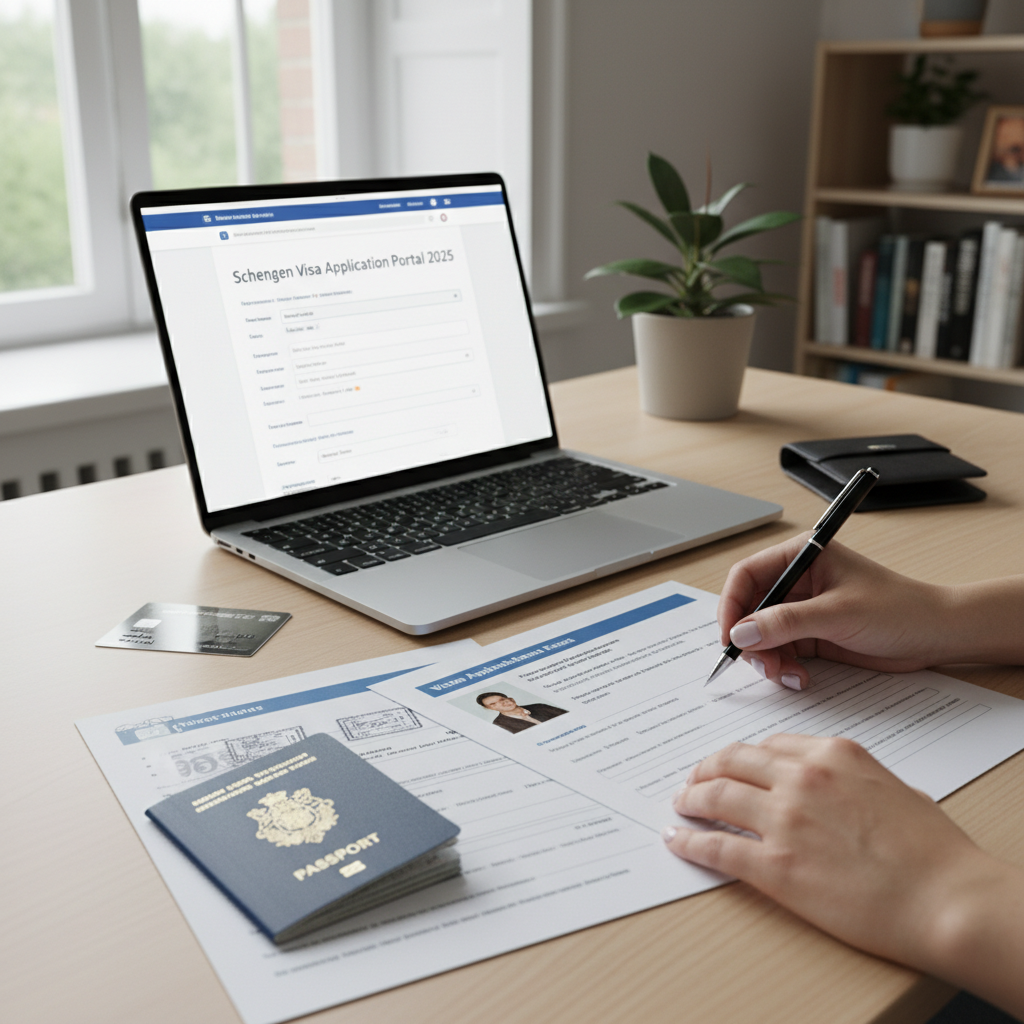
Mandatory Insurance, Fees, EES/ETIAS, and Application Tracking: What Changes in 2025
The Schengen travel insurance is a non-negotiable condition: minimum coverage of €30,000, emergency care and hospitalization, repatriation, validity in all Schengen countries, and for the entire duration of the stay. Without this document, the file is inadmissible. Moroccan companies can negotiate framework policies for their traveling teams to reduce delays and standardize compliance.
Visa fees are harmonized within the Union; children under 6 years and certain eligible persons are exempted, while those aged 6–12 years pay a reduced rate. When applying through outsourced centers, service fees are added (non-refundable in case of refusal). To limit costs, it is better to submit a robust file and avoid costly documentary gaps.
Since 2025, the EES records entries and exits at external borders for visa-required and exempt persons; it automatically calculates remaining days, reducing errors with the 90/180 rule. The ETIAS, planned for visa-exempt travelers, is set to start after 2025; it does not replace the visa but adds an electronic pre-authorization. HR professionals benefit from disseminating these updates internally to avoid “no-shows” at meetings in Europe.
- 🧾 Insurance compliant with Visa Code (Article 15) ✅
- 💳 Harmonized fees + possible service charges 🧮
- 🛰️ Active EES: flow control and remaining stays 🛂
- 🌐 Upcoming ETIAS for visa-exempt travelers 📲
- 📬 Keep proofs and receipts for any border control 🗂️
| Topic 📘 | Requirement/Key Info 🔎 | Practical Impact for Morocco 🇲🇦 | Pro Tip 💡 |
|---|---|---|---|
| Insurance | €30,000, repatriation, full validity | Essential at submission | Align exact stay dates |
| Fees | Harmonized rates + service | Budget according to center | Avoid incomplete submissions |
| EES | Biometric entry/exit | End of approximate calculations | Plan round trips |
| ETIAS | Online pre-authorization | Does not replace visa | Inform internal travelers |
Mobility teams can rely on internal solutions like “VisaMax” or external partners (France Visa Services, Visa Assistance) to consolidate insurance, slot reservations, and file quality control. Companies structuring these routines drastically reduce departure delays and indirect costs.

To facilitate preparation, tools like VisaRapide 2025 help with tracking, while “Documents & Visa” checklists ensure proper alignment between coverage dates, tickets, and accommodation. Regularity and traceability remain the best allies for frictionless professional mobility.
Moroccan Practical Cases: Multi-Country Tourism, HR Missions, and Family Visits, with Anti-Refusal Plans
Let’s imagine three typical profiles. First, Ranya, a student in Casablanca, travels for two weeks to Italy and France. Her file highlights flight bookings, cancellable hotels, proof of savings, and school enrollment certificate. She selects Italy as her main destination if she stays there longer. Then, Adil, an HR manager in Rabat, attends meetings in Madrid and Barcelona: he applies to Spain with company invitations and meeting agenda. Finally, the Idrissi family visits relatives in Lyon: hosting attestation, family link proof (LCN), and household resources structure the application.
Refusals often occur due to incoherence (insufficient budget relative to the project), doubts about return, or outdated documents. Profiles with strong employability (permanent contract, seniority, assets, enrolled children) must explain their ties to Morocco. Any third-party sponsorship must be formalized and verifiable. In case of refusal, it is possible to reapply after correction or to use appeal procedures indicated by the consulate.
Winning Strategies and Useful Resources
- 📌 Define the main destination without ambiguity ✅
- 💼 Prove ties: employment contract, HR attestations, lease, schooling 📄
- 🏦 Correlate budget and schedule: tickets, hotels, internal transport 🧮
- 🔁 Consider multiple entries for roadshows and successive fairs 🔗
- 🧭 If saturation occurs, consult tips for Spain or the BLS Rabat center 🕒
| Profile 🧑💼 | Key documents to strengthen 📂 | Common trap ❌ | Proactive solution ✅ |
|---|---|---|---|
| Student | Study certificate, budget, family support | Unjustified resources | Add legalized sponsorship |
| Manager on mission | Invitations, program, contract | Vague itinerary | Signed agenda + business proofs |
| Family | Hosting attestation, relations, insurance | Incomplete parental documents | Check signatures and copies |
| Multi-country tourist | Hotels, tickets, proof of funds | Poorly defined main destination | Distribute nights and justify |
When appointments are saturated, alternating submission cities or adjusting dates can unlock the situation. Guides such as visa-free destinations for Moroccans offer temporary options to maintain a professional or family calendar. Support from Schengen Conseil and Expert Visa Europe helps audit the file and simulate consular questions.
For HR missions, formalizing a “mobility kit” (invitation templates, list of authorized hotels, negotiated insurance, pipeline of European fairs) becomes a lever for attractiveness and performance. Aligning key documents before submission remains the number one insight to avoid delays and secure business objectives.
Practical Tools, Useful Links, and Final Check Operations to Maximize Acceptance
Efficiency comes from flawless sequence: updated documents, consistent dates, adequate insurance, reliable submission slot booking, and rigorous follow-up. Job seekers attending forums in Europe and Moroccan recruiters planning on-site interviews benefit from standardized workflows. The goal: perfect traceability to convince at first glance.
Editorial services and local guides help plan. For Spain, consult the appointment guide before high season to avoid deadlocks. In Rabat, inform yourself via the BLS center to speed up understanding of the process. Meanwhile, explore visa-free options to cover a business deadline while waiting for a consular slot.
Final Check Operations Before Submission
- 🧾 Signed form + valid passport + compliant photos ✅
- 🏠 Traceable accommodation and tickets, aligned to dates 📅
- 🏦 Sufficient funds, recent documents, sponsorship if needed 💶
- 🩺 Compliant insurance (€30,000, all countries, full duration) 🛡️
- 🔁 Multiple-entry strategy if frequent trips 🔄
| Block 📦 | To verify ✔️ | Tool/Service 🧰 | Expected gain 🚀 |
|---|---|---|---|
| Identity | Passport +3 months, 2 pages | PasseportExpress | Avoid technical refusals |
| Travel | Round-trip tickets | VisaFacile | Consistent dates |
| Accommodation | Hotels or hosting attestation | Documents & Visa | Enhanced traceability |
| Finances | Statements, salaries, sponsorship | VisaMax | Budget credibility |
| Insurance | €30,000, repatriation | France Visa Services | Acceptable file |
If a refusal occurs, analyze the reasons, fill the gaps (resources, schedule, proofs), and resubmit with a strengthened file. Those with tight schedules can reconfigure their trip — or temporarily use regional visa-free destinations — while waiting for a slot. Employment stakeholders should promote a culture of documentary compliance within mobility teams.
To deepen knowledge on Spain, review this appointment guide and the BLS Rabat instructions to secure the submission window before high season.
{“@context”:”https://schema.org”,”@type”:”FAQPage”,”mainEntity”:[{“@type”:”Question”,”name”:”What is the difference between visa validity and authorized duration of stay?”,”acceptedAnswer”:{“@type”:”Answer”,”text”:”Validity (From/Until) indicates the period during which entry into Schengen is possible. The authorized duration of stay specifies the total number of days not to be exceeded (generally 90 days within 180). Both pieces of information appear on the sticker and must be respected simultaneously.”}},{“@type”:”Question”,”name”:”Can one enter Schengen through a country different from the one that issued the visa?”,”acceptedAnswer”:{“@type”:”Answer”,”text”:”Yes, provided the itinerary and consistency with the purpose of stay can be justified. Border authorities may check proofs (accommodation, tickets, resources), especially since the activation of the EES.”}},{“@type”:”Question”,”name”:”Do minor children have specific requirements?”,”acceptedAnswer”:{“@type”:”Answer”,”text”:”Yes. In addition to usual documents, an exit authorization signed by parents/guardian, parents’ identity documents, and if necessary, court decisions. Children under 12 are exempt from fingerprint collection but must be present at submission.”}},{“@type”:”Question”,”name”:”Is travel insurance really mandatory?”,”acceptedAnswer”:{“@type”:”Answer”,”text”:”Yes. It must cover at least €30,000, include emergency care, hospitalization, and repatriation, be valid in all Schengen countries, and cover the entire stay. Without this insurance, the visa is not issued.”}},{“@type”:”Question”,”name”:”What to do in case of visa refusal?”,”acceptedAnswer”:{“@type”:”Answer”,”text”:”Analyze the reason for refusal, correct weaknesses (consistency, resources, itinerary, missing documents), and reapply. Appealing is also possible according to procedures indicated by the consulate.”}}]}What is the difference between visa validity and authorized duration of stay?
Validity (From/Until) indicates the period during which entry into Schengen is possible. The authorized duration of stay specifies the total number of days not to be exceeded (generally 90 days within 180). Both pieces of information appear on the sticker and must be respected simultaneously.
Can one enter Schengen through a country different from the one that issued the visa?
Yes, provided the itinerary and consistency with the purpose of stay can be justified. Border authorities may check proofs (accommodation, tickets, resources), especially since the activation of the EES.
Do minor children have specific requirements?
Yes. In addition to usual documents, an exit authorization signed by parents/guardian, parents’ identity documents, and if necessary, court decisions. Children under 12 are exempt from fingerprint collection but must be present at submission.
Is travel insurance really mandatory?
Yes. It must cover at least 30,000 €, include emergency care, hospitalization, and repatriation, be valid in all Schengen countries, and cover the entire stay. Without this insurance, the visa is not issued.
What to do in case of visa refusal?
Analyze the reason for refusal, correct weaknesses (consistency, resources, itinerary, missing documents), and reapply. Appealing is also possible according to procedures indicated by the consulate.

Comments are closed