FEV Maroc and the Moroccan automotive industry: news, jobs, and growth
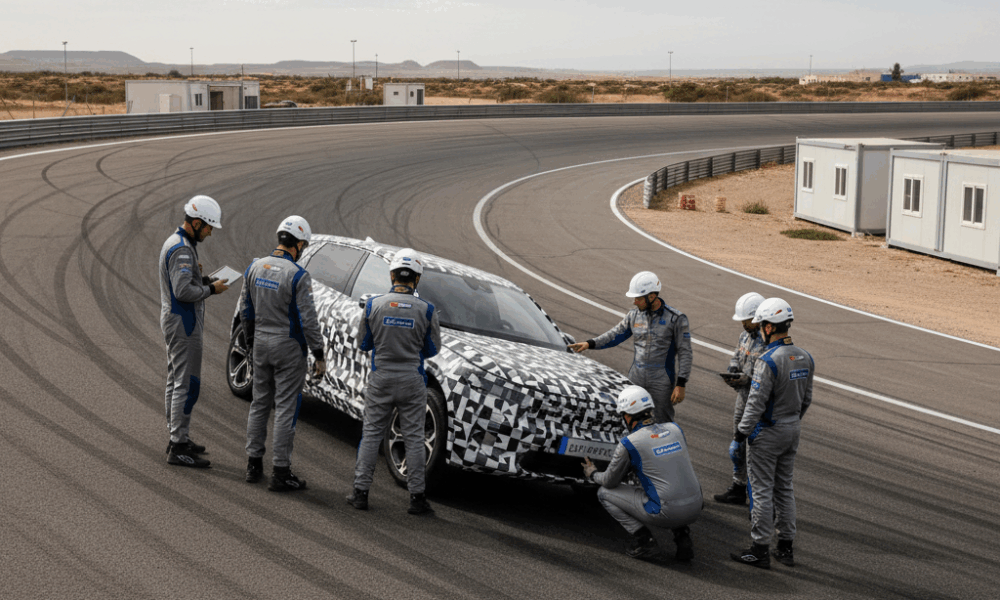
FEV Maroc stands as a key player in the Moroccan automotive industry by focusing on engineering, testing, and innovation, with strong roots in Casablanca and Oued Zem. The establishment of FEV Group in the Kingdom has reached a milestone with over 150 employees, mostly specialized engineers and technicians. The ecosystem is structured around the Morocco Mobility & Automotive Center (MMAC), a joint venture with UTAC CERAM, equipped with more than 30 km of test tracks. This site, unique in Africa, hosts campaigns for speed, braking, endurance, reliability, and slope tests, useful for manufacturers, equipment suppliers, and mobility startups.
At the heart of these Morocco News, the challenge is not only industrial but also HR-related. Multi-skilled profiles (mechanical, power electronics, embedded software, data, cybersecurity) become strategic, especially as electric and connected mobility changes product validation standards. In 2025, the focus on decarbonization and functional safety (ISO 26262) drives increased demand for certification, simulation, and rapid prototyping, areas where FEV Innovation provides a differentiating value.
The Oued Zem test center acts as a magnet for projects. European OEMs outsource part of their climatic and endurance testing to Morocco, benefiting from competitive costs, varied weather, and logistical proximity to Europe. The local impacts translate into service orders, skills transfers, and subcontracting contracts for Moroccan SMEs in mechatronics and data processing. This movement supports an upgrading of the national industry.
Economically, FEV Group displays a global turnover of several billion dollars and a presence on four continents, securing business flows for Morocco. This confidence is reflected by the multiplication of ADAS test projects, energy optimization, and electrification. The synergies with the local ecosystem (industrial zones, universities, technical centers) foster a virtuous circle between training, R&D, and industrialization.
Authorities are following to prepare cities for new mobilities. In Rabat, several public space and electric bus corridor projects are cited among the urban developments in Rabat in 2025, aiming to streamline tests of clean shuttles and support worker flows. The international dimension also counts: for missions in Europe, many professionals turn to the BLS center in Rabat for visa procedures. This short mobility strengthens the Kingdom’s integration into global value chains.
Key skills sought in the FEV Maroc ecosystem
Demand focuses on professions combining technical skills and agility. The rise of electrified, connected, and software-assisted vehicles requires transversal skills and a strong quality culture. Candidates combining specialization and intercultural communication accelerate their progression on international client projects.
- 🧠 Multiphysics simulation and digital twins for R&D optimization.
- ⚡ Power electronics and batteries for Moroccan electric mobility.
- 🛰️ Sensors, ADAS, cybersecurity, and functional safety.
- 🛠️ Testing methods, instrumentation, and data engineering.
- 🤝 Project management, technical English, quality, and supplier audits.
| 2025 Priority 🚀 | Employment impact 👩💻 | Benefits for Morocco 🇲🇦 |
|---|---|---|
| Oued Zem Testing | Upskilling of test engineers | African outreach and attractiveness 🧭 |
| Electrification | New momentum for power electronics profiles | Emission reduction 🌱 |
| Embedded software | Demand for developers and validators | Creation of local IP 💡 |
| International partnerships | Short missions and mobility | Integration into value chains 🌍 |
Morocco Mobility & Automotive Center and the FEV ecosystem symbolize a clear trajectory: industrialize innovation, support qualified employment, and position the Kingdom as an African hub for mobility technologies.

2025 trends for electric mobility in Morocco: infrastructure, taxation, and talents
2025 trends confirm the momentum of Moroccan electric mobility under the combined effect of incentivizing taxation, access to the African market, and closer ties with Europe. Professional fleets are testing zero-emission vehicles for urban deliveries, while transport operators explore bus electrification. This movement is accompanied by rapid professionalization of professions linked to charging stations, HV maintenance, and usage data management.
Success depends on infrastructure. Several corridors are planned between Casablanca, Rabat, and Tangier, in connection with port and industrial activity. Test zones near Oued Zem are used to validate performance under real conditions: topography, temperatures, stop/start cycles, and energy recovery strategy. Cities capitalize on ongoing urban works to integrate smart grids and charging spots in public parking lots, as illustrated by the infrastructure projects in Rabat.
Job creation follows. Battery maintenance, motor retrofitting, software calibration, and integration of fast charging systems are becoming widespread. Service providers develop subscription charging offers, which insurers begin to index on real usage profiles. This change leads companies to seek hybrid profiles capable of interpreting telemetry, piloting APIs, and optimizing energy costs.
Industrial policy encourages local production of wiring harnesses, converters, and battery management modules. Morocco-China partnerships in the automotive sector accelerate access to strategic components, reinforcing export competitiveness. The upgrading of national suppliers nourishes a solid base for electric platforms designed and tested in Morocco, supported by actors such as FEV Maroc.
Charging infrastructure and priority skills
The map of charging stations is expanding, but service quality remains a challenge. Between availability, waiting time, and payment methods, operators refine their models. Authorities, for their part, adapt roadways and signage to facilitate access while avoiding abusive occupation of dedicated spaces.
- ⚡ Fast chargers on highways for intercity travel.
- 🏙️ Integration into urban fabric via public parkings and multimodal hubs.
- 📊 Supervision through IoT platforms and dynamic pricing.
- 🧩 HV maintenance, software diagnostics, and user safety.
- 🛡️ Insurance, after-sales service, and professional driver training.
| Segment ⚙️ | Key skills 🎓 | 2025 Opportunity 💼 |
|---|---|---|
| Fast charge | Power electronics, cooling | Connected rest areas networks 🚗 |
| Professional fleets | Energy management, data analytics | TCO optimization for SMEs 📉 |
| Maintenance | HV diagnostics, safety, recycling | New workshop chains 🔧 |
| Software | API, cybersecurity, payment | Service ecosystems 💳 |
To accelerate employability and retraining, youth and professionals turn to opportunities such as paid internships in Morocco in 2025, especially in electronics and embedded systems. During technical missions abroad, they carry out procedures at dedicated counters, including to make appointments at the BLS Rabat center. This fluidity fosters the alliance between local skills and international standards.
Electric mobility becomes a sector of jobs and services, more than just a vehicle market, supported by an integrated and connected urban vision.
FEV Innovation and Moroccan smart cities: data, intelligent testing, and new professions
The duo FEV Innovation and Moroccan smart cities transforms mobility into a digital service. Tests are no longer limited to physical tracks: they extend to digital twins, HIL simulators (hardware-in-the-loop), and software validation in virtual conditions. This mixed approach speeds up the development of ADAS functions, charging strategies, and fleet energy management in an urban context.
Moroccan cities adopt sensors and analysis platforms to smooth traffic and optimize charging point locations. Anonymized data from test vehicles and commercial fleets feed predictive models. Transport operators prioritize the busiest corridors, while parking managers adjust pricing. The Oued Zem center provides technical backing by linking real conditions and simulations, a crucial requirement for safety.
This convergence creates new jobs. There is a rise in “data mobility engineers,” cybersecurity architects, and “vehicle-as-a-service” project managers. Companies seek profiles able to turn data sets into operational decisions, for example planning the rotation of shared vehicles or calibrating charging station power in a district.
Collaboration with universities strengthens. Work-study programs encourage the creation of joint labs where students test vision algorithms or consumption strategies. Opportunity portals facilitate access to assignments, like this useful guide to quickly find a paid internship, appreciated by technical profiles aiming at Moroccan Technology at the core of mobility.
Concrete use cases in Moroccan smart cities
There are growing pilot projects to measure impact in urban conditions. Tested solutions combine analytics, IoT, payments, and supervision, with increasing demands for data sovereignty. Decision-makers expect tangible results in fluidity, safety, and costs.
- 📶 Connected traffic lights to prioritize buses and emergency services.
- 🅿️ Smart parking with sensors, guidance, and dematerialized payment.
- 🔋 Shared charging hubs for fleets and residents.
- 🛰️ ADAS mapping for speed regulation and sensitive zones.
- 🛡️ SOC (Security Operations Center) dedicated to connected mobility.
| Use case 🧩 | Key technologies 🔬 | Citizen benefit 🙌 |
|---|---|---|
| Smart lights | AI, V2X, edge computing | Less congestion 🚦 |
| Smart parking | Sensors, API, payment | Time saved ⏱️ |
| Shared charging | IoT, load balancing | Optimized energy ⚡ |
| ADAS mapping | Vision, SLAM, GNSS | Enhanced safety 🛡️ |
The international dimension remains essential for benchmarking and certification. Technical missions in Europe are prepared through adapted arrangements; in Rabat, procedures are streamlined thanks to the BLS center in Rabat, especially useful for project teams spread across several countries. Meanwhile, large urban projects support these ambitions, as detailed by the urban developments in Rabat, which help anchor demonstrators at the neighborhood scale.
The emerging Moroccan model combines physical testing, software validation, data governance, and international partnerships to industrialize innovation without losing sight of citizen utility.

Renewable energy in Morocco and green transition: hydrogen, water, and competitiveness
The renewable energy sector in Morocco is progressing rapidly, with wind, solar, and the prospect of green hydrogen. The Kingdom consolidates its energy security by diversifying its sources and attracting investments in value chains. The green transition and sustainable development in Morocco are embedded in daily business, which adapts its processes to reduce carbon footprint and secure costs.
Green hydrogen attracts the attention of mobility industrialists. FEV and other actors work on alternative propulsion systems, from fuel cells to hydrogen engines, with test benches and simulations to optimize efficiency and safety. Morocco positions itself as an export platform to Europe, thanks to its renewable potential and ports. This ambition creates jobs in electrolyzer engineering, logistics, and standards.
Water constraints impose choices. Desalination projects multiply to alleviate agriculture and secure the resource for industry and cities. Electricity regulation reform aligns with these priorities to facilitate the integration of renewables into the grid and the emergence of long-term contracts. Companies seek profiles able to align cost, quality, and environmental impact.
Competitiveness depends on skills. Engineers must understand electricity market mechanisms, Power Purchase Agreements (PPAs), and reporting requirements. Professions in sustainable financing, impact measurement, and carbon auditing gain importance. Recent graduates train through short missions and targeted internships, with strong interest in the energy-mobility interface.
Green projects and employment impacts
Morocco’s advantage rests on sunshine, wind resource, and infrastructure investments. Industrial clusters organize with clear decarbonization goals, attracting export contracts and strengthening the “made in Morocco” brand among international clients.
- 🌞 Solar and wind platforms connected to the grid.
- 💧 Desalination coupled with renewables to secure water.
- 🟢 Green hydrogen for industry and heavy mobility.
- 📈 PPAs and capacity markets to stabilize prices.
- 🔍 Certification and carbon auditing in supply chains.
| Green project 🌿 | Required skills 🧰 | Market effect 💹 |
|---|---|---|
| Green hydrogen | Electrolysis, process safety | New exports 🚢 |
| Desalination | Processes, energy, water | Water resilience 💧 |
| Wind/solar | O&M, SCADA, networks | Reduced energy costs ⚡ |
| Storage | Batteries, EMS, grid | Renewables integration 🔗 |
Bridges between energy and mobility intensify, with charging hubs powered by renewables and fleets optimizing their total cost of ownership. For international mobility related to energy projects, procedures are facilitated by dedicated services such as the BLS center in Rabat. At the urban scale, alignment between energy and planning is visible in the urban developments in Rabat in 2025, integrating sobriety and clean mobility.
By strengthening its green competitive edge, Morocco consolidates a trajectory of qualified jobs and higher value-added exports, directly linked to the needs of mobility and the automotive sector.
Regulations, finance, and governance: how economic news affects employment
Morocco news in governance and public finance influence investment, job creation, and market confidence. Reforms in expenditure and budget management aim to better allocate resources to priorities: infrastructure, social issues, and green transition. Financing mechanisms for major projects, such as those related to international sports events, mobilize public and private capital while demanding increased transparency.
Taxation evolves to give relief to the middle class and encourage productive investment. Targeted amnesties, streamlining certain niches, and modernizing collection tools help broaden the tax base. The launch of the e-dirham and payment digitization contribute to traceability, which facilitates credit access for micro and small businesses and entrepreneurs in the long run.
The labor market restructures. Support measures foster continuous training, retraining, and youth insertion. Public and private actors promote professionalizing schemes, such as paid internships, linking talents to real business needs. Industrial hubs, notably automotive, agri-food, and digital, drive skills demand.
Pension reform, merger of social protection schemes, and expanded medical coverage strengthen cohesion and professional mobility. At the territorial level, advanced regionalization accelerates decision-making closest to the ground. Regional multiservice companies improve urban service quality, a factor of attractiveness for investors.
Economic measures with direct employment impact
Decision-makers assess each reform in terms of its impact on activity and employment. Companies seek predictability, simplification, and stability, while households expect purchasing power and quality public services. The convergence of these expectations guides public and private action.
- 💳 Payment digitization and emergence of the e-dirham.
- 📘 Budget reform for more efficient allocation.
- 🏗️ Financing infrastructure and logistics hubs.
- 🧾 Tax simplification and investment incentives.
- 🧑🎓 Insertion via work-study and professionalizing internships.
| Reform 🏛️ | Objective 🎯 | Expected employment effect 👷 |
|---|---|---|
| Tax digitization | Broaden base, transparency | Less informal work, more permanent contracts 📈 |
| E-dirham | Traceability and inclusion | Easier credit access 💳 |
| Social protection | Coverage and mobility | Easier retraining 🔁 |
| Regionalization | Faster local decisions | Grounded projects 🗺️ |
For international missions of engineers and executives, procedural fluidity remains an asset, hence the reference to the BLS center in Rabat for visas. In the city, the convergence between mobility, energy, and urban planning is reinforced thanks to the capital’s developments, supporting the overall competitiveness of the economic ecosystem.
The guiding line is clear: simplify to invest, train to recruit, and green to export.
FEV Maroc at the heart of value chains: skills, partnerships, and career paths
The rise of FEV Maroc in the Moroccan automotive industry changes career paths. Talents navigate between testing, simulation, and industrialization, with bridges toward project management, quality, and cybersecurity. Academic tracks adapt by introducing modules on batteries, embedded AI, functional safety, and data management.
Structuring partnerships with OEMs, equipment suppliers, and European institutes offer missions rich in learning. International mobility remains an accelerator, supported by simplified logistical and administrative procedures. Young professionals rely on qualifying internships and R&D assistant missions to enter testing teams, then progress to system validation and technical responsibility.
The spread of best practices strengthens the ecosystem. Teams share feedback on test benches, sensors, and software architecture. They document use cases, incidents, and action plans to continuously improve safety and performance. This quality culture is a major asset in export markets.
Cities, on their side, adapt public spaces to support new mobilities and real condition testing. This urban work, illustrated in Rabat by flagship projects, is detailed here: Rabat developments in 2025. For applications and missions in Europe, procedures remain accessible via the BLS center in Rabat, useful for multisite project teams. For insertion, a practical guide helps identify targeted paid internships to be quickly spotted by recruiters.
Cross-cutting skills and career plans
Recruiters favor profiles able to evolve between technical skills, quality, and client relations. Soft skills (communication, autonomy, time management) are a real differentiator during performance reviews. Short trainings and certifications accelerate the rise in responsibility.
- 🧭 Customer orientation and requirements management.
- 🧪 Testing rigor and safety culture.
- 🧩 System architecture and integration.
- 📚 Documentation and knowledge capitalization.
- 🌍 Technical English and multisite coordination.
| Typical path 🛤️ | Key step 🧱 | Skills to consolidate 🧠 |
|---|---|---|
| Entry | Internship/work-study | Testing, instrumentation, Python 🐍 |
| Confirmation | System validation | Quality, ISO 26262, writing 📄 |
| Senior | Project management | Planning, budget, client 📊 |
| Expert | Innovation/architecture | Design, IP, technology watch 🔎 |
At the interface between mobility, energy, and digital, careers are increasingly project-based, relying on versatility and technical curiosity, two qualities especially valued by driving actors in the sector.
{“@context”:”https://schema.org”,”@type”:”FAQPage”,”mainEntity”:[{“@type”:”Question”,”name”:”What is FEV Maroc and what is its role in the automotive sector?”,”acceptedAnswer”:{“@type”:”Answer”,”text”:”FEV Maroc is the subsidiary of an international engineering group specialized in the development and testing of vehicles and propulsion systems. In Morocco, the company operates notably through a test center in Oued Zem and R&D teams in Casablanca, supporting the upgrading of the national automotive sector.”}},{“@type”:”Question”,”name”:”Which skills are most sought after in 2025?”,”acceptedAnswer”:{“@type”:”Answer”,”text”:”Profiles in power electronics, embedded software, testing/validation, data engineering, and cybersecurity are highly in demand. Soft skills (communication, requirements management, technical English) play a decisive role in progressing towards responsibilities.”}},{“@type”:”Question”,”name”:”How to access internship or first experience opportunities?”,”acceptedAnswer”:{“@type”:”Answer”,”text”:”Young graduates can consult local resources to spot paid internships and work-study programs in automotive, energy, and digital sectors. Practical guides enable quick identification of relevant offers based on level and region.”}},{“@type”:”Question”,”name”:”Will electric mobility create sustainable jobs in Morocco?”,”acceptedAnswer”:{“@type”:”Answer”,”text”:”Yes. Electrification generates positions in fast charging, HV maintenance, supervision software, and battery logistics. It relies on transferable skills applicable to other sectors of the energy transition, securing long-term career paths.”}}]}What is FEV Maroc and what is its role in the automotive sector?
FEV Maroc is the subsidiary of an international engineering group specialized in the development and testing of vehicles and propulsion systems. In Morocco, the company operates notably through a test center in Oued Zem and R&D teams in Casablanca, supporting the upgrading of the national automotive sector.
Which skills are most sought after in 2025?
Profiles in power electronics, embedded software, testing/validation, data engineering, and cybersecurity are highly in demand. Soft skills (communication, requirements management, technical English) play a decisive role in progressing towards responsibilities.
How to access internship or first experience opportunities?
Young graduates can consult local resources to spot paid internships and work-study programs in automotive, energy, and digital sectors. Practical guides enable quick identification of relevant offers based on level and region.
Will electric mobility create sustainable jobs in Morocco?
Yes. Electrification generates positions in fast charging, HV maintenance, supervision software, and battery logistics. It relies on transferable skills applicable to other sectors of the energy transition, securing long-term career paths.

Comments are closed