2026 Recruitment Competition of the Ministry of Agriculture: 162 Positions to be Filled, Schedule and Stakes for the Moroccan Market
The 2026 Recruitment at the Ministry of Agriculture, Maritime Fisheries, Rural Development and Water and Forests, Department of Agriculture, marks a significant moment for public employment in Morocco. With 162 positions to be filled through Competition, divided between 64 State Engineers 1st grade and 98 Technicians 3rd grade, the State is strengthening key professions serving food sovereignty, sustainable water management, and support for sectors. This campaign is part of the continuity of public policies supporting the “Generation Green 2020-2030” dynamic and efforts to modernize agricultural services in the regions.
Two milestones structure this system. The application deadline is set for December 19, 2025, giving candidates an organized window to gather the necessary documents and validate their application online. The Competition will take place on January 4, 2026, a timeframe that favors methodical preparation during the year-end. This pace allows combining academic revision, regulatory monitoring, and practice of written and oral exams, especially for technical specialties (hydraulics, agronomy, plant protection, rural economy).
For the country, the impact goes beyond the simple volume of job offers. The stake is strategic: the Public Administration needs fresh skills to support projects of rational irrigation, digitalization of agricultural statistics, and product valorization. The official missions of the Department, set by decree no. 2.09.168 (amended and supplemented), cover the agricultural development policy, water rationalization, plant and animal health security, support for sectors, and agronomic research. Each recruitment strengthens this public value chain that goes from advising farmers to monitoring international markets.
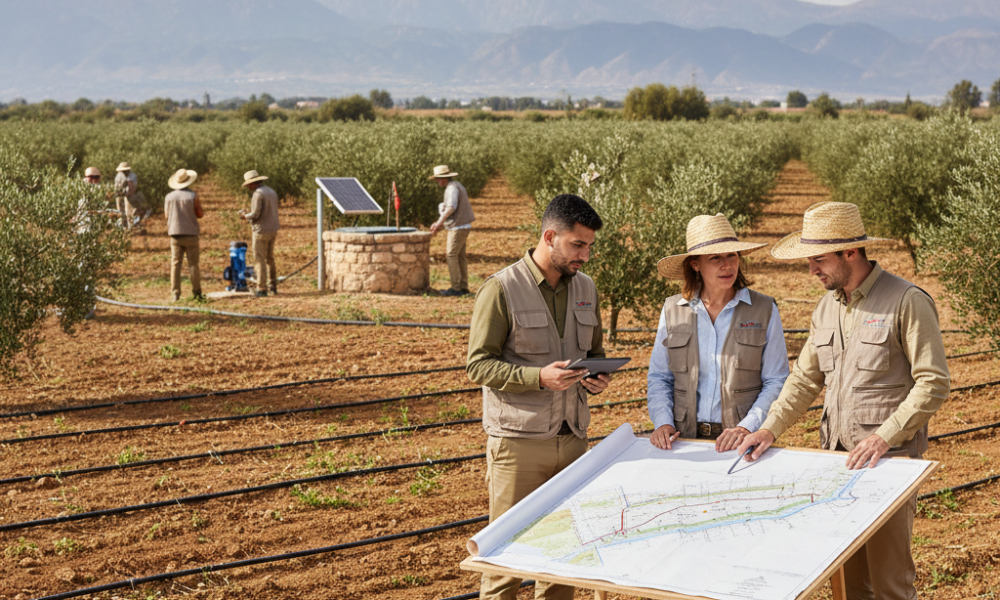
A concrete example illustrates this role. In the Souss-Massa region, technicians in localized irrigation help cooperatives reduce water losses, while engineers in agricultural economics model the impact of global price fluctuations on small producers’ incomes. This complementarity confirms that the professional opportunities of 2026 are not just jobs, but levers of collective utility.
Moroccan candidates – recent graduates, professionals changing careers, or contractual agents wishing to stabilize their status – find an attractive framework here. An Agricultural Career within the Ministry opens up concrete projects, a dense territorial network, and direct contact with field challenges. For the most ambitious, the experience accumulated in administration can also dialog with bodies like the State Secretariat for Agriculture if thematic cooperations or delegations open up in the future.
- 📌 162 Positions to be filled via Competition: 64 Engineers, 98 Technicians.
- 🗓️ Schedule: applications until 12/19/2025, exams on 01/04/2026.
- 🌱 Purpose: food sovereignty, water, health security, sectors.
- 🧭 Moroccan Market: territorial support, modernization, reliable data.
- 🚀 Professional Opportunities: varied missions, visible impact.
| Element ⚙️ | Detail 📄 | Impact 🌍 |
|---|---|---|
| Positions to be filled | 64 State Engineers 1st grade, 98 Technicians 3rd grade | Strengthening territorial technical expertise |
| Application closure | December 19, 2025 | Strict organization of the dossier for all candidates |
| Competition date | January 4, 2026 | Focused preparation during the year-end break |
| Priority fields | Water, agronomy, rural economy, health security | Direct contribution to the public Agricultural Career |
In summary, this system brings together a clear schedule, concrete needs, and public utility; a solid basis to approach the sought profiles.
Sought Profiles and Key Competencies to Join the Ministry of Agriculture in 2026
The job offers opened by the Ministry target operational profiles capable of intervening on field issues but also equipping the Public Administration with solid analyses. The State Engineers (1st grade) are expected in fields such as agricultural hydraulics, agroeconomics, plant protection, zootechnics, geomatics, and digitization of agricultural data. The Technicians (3rd grade) cover expert execution missions: site monitoring, sampling and controls, support to farms, animation of rural support programs.
Versatility is a common trait. An agricultural development engineer must liaise with local authorities, manage a call for tenders, and understand the maintenance challenges of irrigation networks. A laboratory technician masters analysis protocols while raising awareness among cooperatives about health security. These two levels of responsibility connect to deliver measurable results in the provinces.
Expected Technical and Behavioral Skills
Technical skills include mastery of scientific fundamentals (pedology, agronomy, hydraulics), use of digital tools (GIS, advanced spreadsheets, data collection platforms), as well as knowledge of regulatory frameworks related to inputs, traceability, and standards. On the behavioral side, public service demands rigor, ethics, listening to beneficiaries, and the ability to work in an interdisciplinary team. The missions stated by the Ministry – statistical collection, market monitoring, prospective studies, health security – require profiles with quick judgment and a sense of priorities.
- 🧪 Technical: GIS, hydraulics, agronomy, rural economy, biosecurity.
- 🤝 Soft skills: territorial communication, team spirit, user orientation.
- 🧭 Regulatory: national texts, health security standards, procedures.
- 📊 Data: agricultural statistics, dashboards, performance indicators.
- 🌾 Field: participatory diagnosis, monitoring sectors, advising producers.
| Specialty 🎓 | Associated missions 🧭 | Examples of actions 🛠️ |
|---|---|---|
| Agricultural hydraulics | Development and management of irrigation | Flow calculations, monitoring pumping stations, efficiency audits |
| Plant protection | Phytosanitary surveillance | Sampling, border controls, awareness raising in cooperatives |
| Agroeconomics | Prospective studies and markets | Price analysis, cost modeling, policy notes |
| Geomatics/GIS | Mapping and spatial monitoring | Land use maps, monitoring irrigated perimeters |
| Technology/lab | Quality control and biosecurity | Laboratory tests, traceability, standardized reports |
Concrete illustration: in Béni Mellal-Khénifra, a team combining GIS engineer and irrigation technician optimized water distribution by associating satellite images and field visits. Result: reduced losses, increased yields, and better scheduling of watering rotations. Such an initiative foreshadows the daily work of a 2026 Competition laureate, called to embed innovation at the heart of rural territories. This understanding of sought profiles naturally prepares the registration process.
Registration Procedure for the Competition and Application File: Practical Steps and Good Practices
Candidates are invited to follow a digitalized, clear, and secure procedure. Registration is done via official State platforms, notably the public employment portal, and the channels of the Ministry of Agriculture. Respecting deadlines is imperative: the file must be validated by December 19, 2025. Invitations then specify the practical details of the Competition on January 4, 2026 (center, schedule, documents to present).
The quality of the file relies on three pillars: accuracy of information, documentary compliance, and profile coherence with the position. A date error or poorly scanned diploma may delay eligibility. It is recommended to name files in a standardized way (LASTNAME_Firstname_Diploma.pdf) and verify readability on computer and mobile.
Concrete steps for stress-free registration
- 🧭 Create/update your account on the dedicated portal and verify email address.
- 📂 Gather documents: ID card, diplomas, transcripts, resume, letters, certificates.
- 🖨️ Scan cleanly as PDF (color or readable B&W), size limited by platform.
- 🧾 Verify eligibility (grade, specialty) and choose the appropriate competition.
- 🗓️ Submit before 12/19/2025 and keep proof of submission.
| Step 📌 | Action to perform 🛠️ | Practical advice 💡 |
|---|---|---|
| Candidate account | Creation/login and profile update | Activate email/SMS authentication if available |
| Digital file | Upload PDF documents | Check file clarity and size |
| Choice of Competition | Engineer or Technician, specialty | Read the notice fully to avoid unsuitable application |
| Validation | Submission and receipt | Keep a copy in the cloud and on USB drive |
| Invitation | Download and print | Plan route to the center in advance |
Use case: Yasmine, a technician in plant production in Oujda, structured her file into three digital folders (Identity, Diplomas, Experiences). She reread the Competition notice and validated the consistency between her specialty and the targeted grade. Result: a submission without rejection and a calm preparation of the written test. This level of method also facilitates revision organization.

Before addressing career development and benefits, it is useful to imagine how these positions fit into a long-term path, between territorial missions and thematic mobility.

Evolution Perspectives and Benefits of Public Agricultural Employment for 2026 and Beyond
Joining the Public Administration through the 2026 Competition means entering an ecosystem that values competence, service mission, and mobility. Professional opportunities include grade progression, mission diversification, and access to continuous training. Engineers can advance to roles of service chief or regional project manager, while experienced technicians lead field teams and become references on specialized topics (irrigation, biosecurity, agricultural data).
The Ministry’s added value lies in its structuring projects: water security, valorization of plant and animal productions, modernization of statistics, support to young farmers. Agents also participate in prospective studies on sector competitiveness and climate adaptation, which feeds an intellectually stimulating Agricultural Career. Legal frameworks are clear and guarantee structured paths, respecting the attributions decree and the general public service status texts.
Mobility, Training, and Skills Recognition
Geographical mobility allows exploring varied contexts, from Oriental to Laâyoune-Sakia El Hamra. Functional mobility opens bridges to statistics, regulation, investment program animation, or interinstitutional coordination (including possible interactions with the State Secretariat for Agriculture if jointly managed systems exist). Continuous training focuses on GIS, project management, data analysis, and team management.
- 🎯 Progression: increased responsibilities, supervision, project management.
- 🌍 Mobility: varied regions and missions, rapid skill development.
- 📚 Training: technical, regulatory, and digital modules.
- 🤝 Partnerships: cooperatives, offices, institutes, donors.
- 💼 Stability: public service framework and long-term prospects.
| Career stage 🚀 | Examples of roles 🧭 | Skills strengthened 📈 |
|---|---|---|
| Entry grade | Technician/Engineer in territorial unit | Procedures, field, user service |
| Mid-path | Thematic reference, team leader | Management, planning, reporting |
| Confirmation | Service chief/regional project manager | Leadership, budgets, partnerships |
| Cross-cutting expertise | Prospective studies, regulation | Strategic analysis, public influence |
In practice, a technician assigned to quality control in Fès-Meknès can, after three years, become a biosecurity reference and train new recruits. For his part, an agro-economics engineer will lead a study on milk production costs in three provinces, then be commissioned to support a price monitoring platform. These trajectories illustrate the value of cumulative experience and recognition through responsibility. This general framework naturally leads to exam preparation methods.
Competition Preparation Tips: Methodology, Resources, and Practice Cases Anchored in the Moroccan Context
Effective preparation combines targeted revision, exam practice, and knowledge of the institutional framework. Written tests may require knowledge of national agricultural policies, technical basics (water, agronomy, biosecurity), and applied analysis skills to Moroccan cases. Oral exams assess clarity of expression, thought structuring, and ability to propose realistic solutions for a service or regional direction.
The safest guiding thread consists of building a revision plan in three parts: technical foundations, regulation, and sector news. Reading previous Competition notices, ministerial reports, and orientation notes is strongly recommended, as is practicing writing reasoned answers within time limits. A candidate who can mobilize both texts and field knowledge scores points.
Action plan and useful resources
- 📚 References: decrees, strategies (Generation Green), technical guides.
- 📝 Practice: sample topics, summary sheets, oral simulations.
- 🛰️ Tools: QGIS/GIS, spreadsheets, agricultural data monitoring.
- 📰 Monitoring: markets, climate, sector innovations.
- 🤲 Case studies: drip irrigation, phytosanitary control, valorization.
| Preparation axis 🧩 | Objective 🎯 | Examples of activities 📌 |
|---|---|---|
| Technical | Master fundamentals and applications | Hydraulic problems, crop diagnostics |
| Regulation | Understand frameworks and procedures | Reading of attribution decree, sanitary standards |
| News | Link issues and policies | Notes on price volatility, climate adaptation |
| Communication | Structure and convince | Mock oral, document synthesis |
| Digital | Use data and maps | Creation of GIS maps, dashboards |
Example: for a topic on water rationalization in irrigated perimeters, a pertinent plan will articulate diagnosis (resource, losses), solutions (watering schedule, sensors, maintenance), governance (role of offices, cooperatives), and evaluation (indicators, costs). The candidate who illustrates with a real case – for example the introduction of smart meters in a pilot commune – demonstrates the ability to transpose theory to the Moroccan context. A lively preparation also involves targeted video resources.

Constant training, anchored in reality and open to digital tools, turns exam stress into operational confidence; it is the best ally for the big day.
Strategic Role of the Ministry and Link with Territories: Missions, Sectors, and Citizen Service
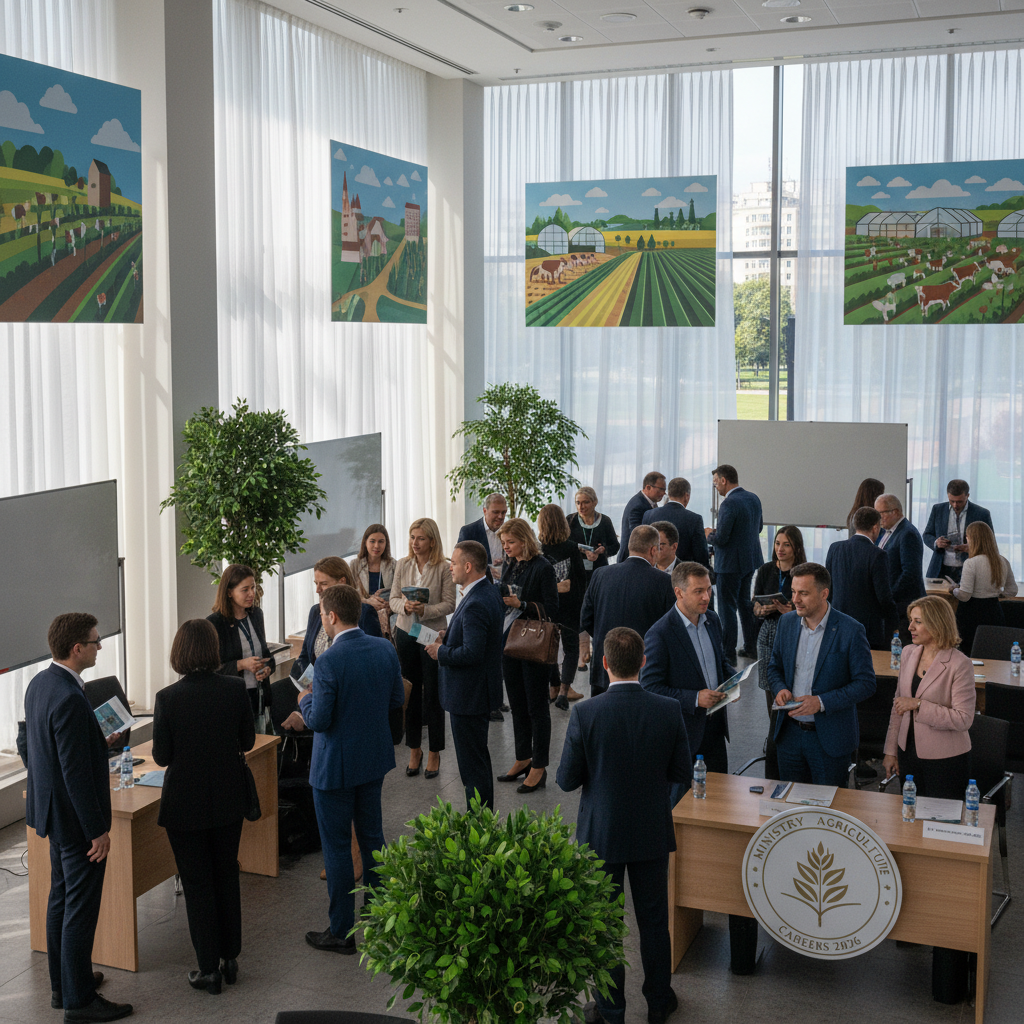
Beyond recruitment, the Ministry’s value lies in the coherence of its missions: designing and implementing agricultural policy, improving sector structures, optimizing water usage, modernizing professional organizations, and promoting investment. The collection, analysis, and dissemination of agricultural statistics provide decision-makers and producers with a reliable vision, essential for managing sectors and anticipating hazards. Plant, animal, and food health security forms an essential line of defense, notably at border posts.
The strength of the Moroccan model is the link between central level and local rooting. Regional and provincial directorates translate strategies into action plans adapted to local realities. An engineer in Guelmim-Oued Noun faces different priorities than a technician in Tangier-Tetouan-Al Hoceima; yet all contribute to agricultural system resilience and equal access to public service. The 2026 recruitments strengthen this network.
From Strategy to Impact: Sectors and Markets
Monitoring national and international markets, observing prices and production costs, supporting transformation/valorization of plant and animal products: all levers to increase local added value. Prospective studies identify remunerative outlets, guiding investments toward promising niches. These actions create a virtuous circle between sectoral plans, competitiveness, and rural household purchasing power.
- 🏞️ Territories: differentiated diagnostics, local priorities, municipal partnership.
- 🛡️ Health: surveillance, control, raising awareness of best practices.
- 📈 Markets: price monitoring, costs, export opportunities and short circuits.
- 🏭 Valorization: transformation, quality, labels, and local products.
- 🤝 Coordination: offices, institutes, cooperatives, international partners.
| Strategic mission 🧭 | Public action 🛠️ | Expected effect ✅ |
|---|---|---|
| Water management | Irrigation programs and maintenance | Water savings, increased yield |
| Health security | Controls, standards, border posts | Quality and consumer confidence |
| Agricultural statistics | Collection, analysis, dissemination | Decisions based on data |
| Sectors and market | Studies, price monitoring, export support | Income and competitiveness |
| Rural development | Participatory projects and inclusion | Social cohesion and local employment |
From Rabat to the most isolated provinces, this public architecture places the citizen at the center. It gives concrete meaning to the Positions to be filled in 2026: serve, modernize, and build robust sectors. These markers complement the already detailed technical and administrative preparation.
{“@context”:”https://schema.org”,”@type”:”FAQPage”,”mainEntity”:[{“@type”:”Question”,”name”:”What are the key dates of the 2026 Recruitment Competition?”,”acceptedAnswer”:{“@type”:”Answer”,”text”:”Application deadline on December 19, 2025 and exams on January 4, 2026. It is recommended to submit the file at least one week before the deadline.”}},{“@type”:”Question”,”name”:”Which profiles are concerned by the 162 positions to be filled?”,”acceptedAnswer”:{“@type”:”Answer”,”text”:”64 positions for State Engineer 1st grade and 98 positions for Technician 3rd grade. Specialties include hydraulics, agronomy, plant protection, rural economy, geomatics, and sanitary controls.”}},{“@type”:”Question”,”name”:”How to register and where to submit the file?”,”acceptedAnswer”:{“@type”:”Answer”,”text”:”Registration is done through the official public employment and Ministry of Agriculture platforms. Documents must be scanned in PDF, readable, and compliant with Competition notice requirements.”}},{“@type”:”Question”,”name”:”What benefits does the public agricultural administration offer?”,”acceptedAnswer”:{“@type”:”Answer”,”text”:”A structured career framework, varied missions, continuous training, mobility within regions, and opportunities to advance to managerial responsibilities.”}},{“@type”:”Question”,”name”:”Does the State Secretariat for Agriculture intervene in recruitment?”,”acceptedAnswer”:{“@type”:”Answer”,”text”:”Recruitment is managed by the Department of Agriculture of the Ministry. Coordinations may exist according to themes, but the procedure and notices fall under the Ministry in charge.”}}]}What are the key dates of the 2026 Recruitment Competition?
Application deadline on December 19, 2025 and exams on January 4, 2026. It is recommended to submit the file at least one week before the deadline.
Which profiles are concerned by the 162 positions to be filled?
64 positions for State Engineer 1st grade and 98 positions for Technician 3rd grade. Specialties include hydraulics, agronomy, plant protection, rural economy, geomatics, and sanitary controls.
How to register and where to submit the file?
Registration is done through the official public employment and Ministry of Agriculture platforms. Documents must be scanned in PDF, readable, and compliant with Competition notice requirements.
What benefits does the public agricultural administration offer?
A structured career framework, varied missions, continuous training, mobility within regions, and opportunities to advance to managerial responsibilities.
Does the State Secretariat for Agriculture intervene in recruitment?
Recruitment is managed by the Department of Agriculture of the Ministry. Coordinations may exist according to themes, but the procedure and notices fall under the Ministry in charge.

Comments are closed