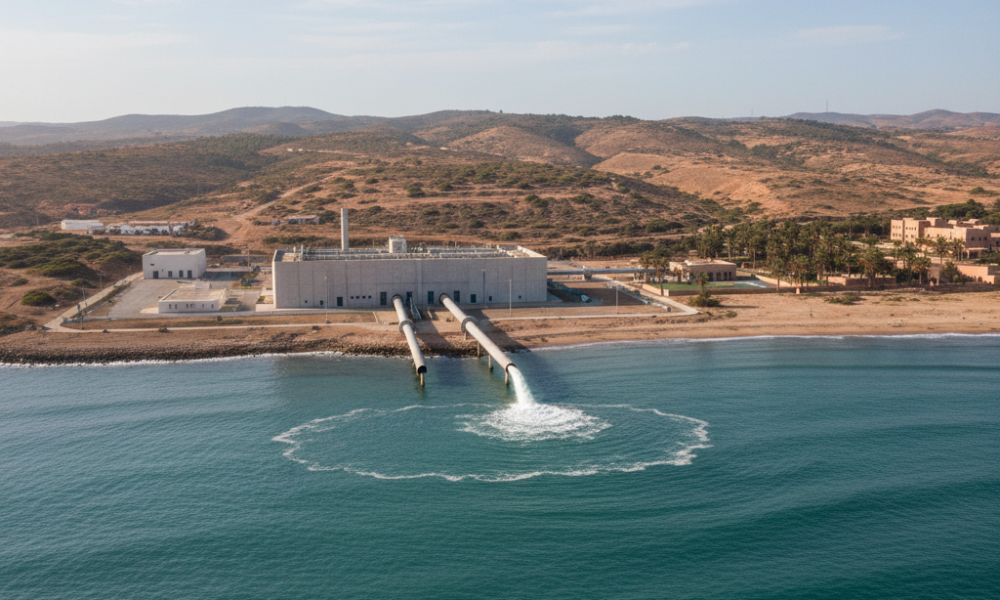
Desalination in Morocco: a strategic milestone to cover 60% of water needs by 2030
Morocco’s water trajectory is scaling up. After seven years marked by drought and irregular rainfall, the Kingdom is accelerating the use of desalination to cover 60% of its drinking water needs by 2030, compared to approximately 25% today according to statements from the Minister of Equipment and Water. This orientation follows a logic of water security and proactive management of water resources, complementing dams, inter-basin transfers, and wastewater reuse.
The national desalination program aims to mobilize about 1.7 billion m³ per year by 2030. Major coastal urban centers – Casablanca, Rabat-Salé, Agadir, Safi, El Jadida, Laâyoune, Dakhla – concentrate the first wave of investments, with hybrid energy schemes integrating renewable energy to lower costs and stabilize supply. The challenge goes beyond the technical: securing drinking water, relieving irrigation in sensitive areas, and safeguarding economic activity in industry, tourism, and services.
Planning takes into account the state of reservoirs and climate variability. In this regard, monitoring the evolution of dams and precipitation makes it possible to adjust commissioning schedules and blended volumes (desalinated water + surface water) to optimize water management continuously. Trade-offs concern both investment and tariff acceptability, energy sobriety, and environmental footprint (brine discharges, marine withdrawals, coastal biodiversity).
Objectives, timetable, and expected effects
Authorities have structured a progressive capacity ramp-up, with PPPs, concessions, and public utilities depending on territories. The expected effects are multiple: urban water resilience, visibility for the agri-food and tourism industries, and creation of qualified jobs along the entire chain (engineering, operation, maintenance, digital monitoring). A concrete example: the Casablanca–Mohammedia–Rabat corridor, where water transport infrastructures will secure summer demand peaks.
- 💧 Key objective: cover 60% of drinking water via desalination by 2030.
- ⚙️ Target capacity: 1.7 billion m³/year cumulative production.
- 🌞 Energy coupling: integration of renewable energy to reduce costs.
- 📈 Benefits: water security, service continuity, economic attractiveness.
- 🧭 Governance: adjustments via the National Water Plan and territorial management.
| Deadline 📆 | Urban/industrial area 🏙️ | Target capacity 💧 | Associated energy 🔌 | Employment effect 👷 |
|---|---|---|---|---|
| 2025-2026 | Agadir–Chtouka | Gradual reinforcement | Photovoltaic/wind 🌬️ | Operators and technicians |
| 2026-2028 | Casablanca–Mohammedia | Very large scale | Grid mix + renewable 🌞 | Process engineers, safety |
| 2028-2030 | Dakhla, Laâyoune | Ramp-up | Priority wind | Advanced maintenance |
The hydrological component remains interdependent on reservoirs. Regular syntheses on the state of dams and precipitation help decision-makers calibrate the supplementary share needed in desalination, limiting tariff shocks and rationing risks. This structural base opens the way to transforming professions and new employment opportunities, a theme addressed in the next section.

Skills, jobs, and reskilling around desalination in Morocco
The rise of desalination triggers a labor market dynamic aligned with Morocco’s priorities. The demand extends from engineering profiles (process, hydraulics, electromechanics) to operational professions (reverse osmosis operators, membrane maintenance, automation), not forgetting cybersecurity and data management. This value chain creates direct jobs on sites and indirect jobs in logistics, civil engineering, instrumentation, and services.
Skills needs are evolving: the scaling-up of coastal sites requires a safety culture, strengthened QHSE standards, and knowledge of marine environments. HR teams focus on mapping critical skills, building reskilling pathways for technicians from other sectors (electricity, mining, oil & gas), and structuring attractiveness for young graduates from Moroccan schools.
Jobs in tension and training pathways
In an engineering SME in Safi, a group of operators was trained in reverse osmosis, cathodic protection, and water quality testing. This type of program illustrates the rapid evolution of skills, with short modules, on-site mentoring, and third-party certifications. Market trends confirm this shift: the 2025 employment market trends analysis highlights the growth of impactful technical jobs driven by infrastructure and the energy transition.
- 🧑🔧 Profiles sought: reverse osmosis operators, electromechanics technicians, automation specialists, data analysts.
- 📚 Training: industrial maintenance, hydraulics, control-command, industrial cybersecurity.
- 🌿 Cross-cutting skills: QHSE, risk management, environmental compliance.
- 🤝 Soft skills: teamwork, crisis management, continuous improvement.
- 🚀 Mobility: coastal assignments, on-call teams, light offshore interventions.
| Job 🔎 | Key skills 🧠 | Certification/Asset 🎓 | Career progression 📈 |
|---|---|---|---|
| Desalination operator | Reverse osmosis, water analyses 💧 | QHSE level 1 | Team leader ➜ Supervisor |
| Electromechanic | High-pressure pumps, VFD ⚙️ | Certified electrotechnician | Maintenance manager |
| Automation/SCADA | PLC, cybersecurity 🔐 | ISA/IEC preferred | Systems engineering |
| Water data analyst | Modeling, predictive AI 🤖 | DataOps/Cloud | Senior data engineer |
To strengthen employability, public and private actors multiply partnerships with schools and OFPPT. Pathways are created to certify on-site experience and to integrate renewable energy and energy performance modules into curricula. HR also monitors weak signals through barometers: the 2025 employment outlook confirms the growing interest of youth in green jobs and Industry 4.0, which fuels the talent pool in water.
This social and economic dynamic consolidates at the pace of construction sites. Meanwhile, the crucial question of funding models determines the long-term viability of projects, analyzed in the next section.
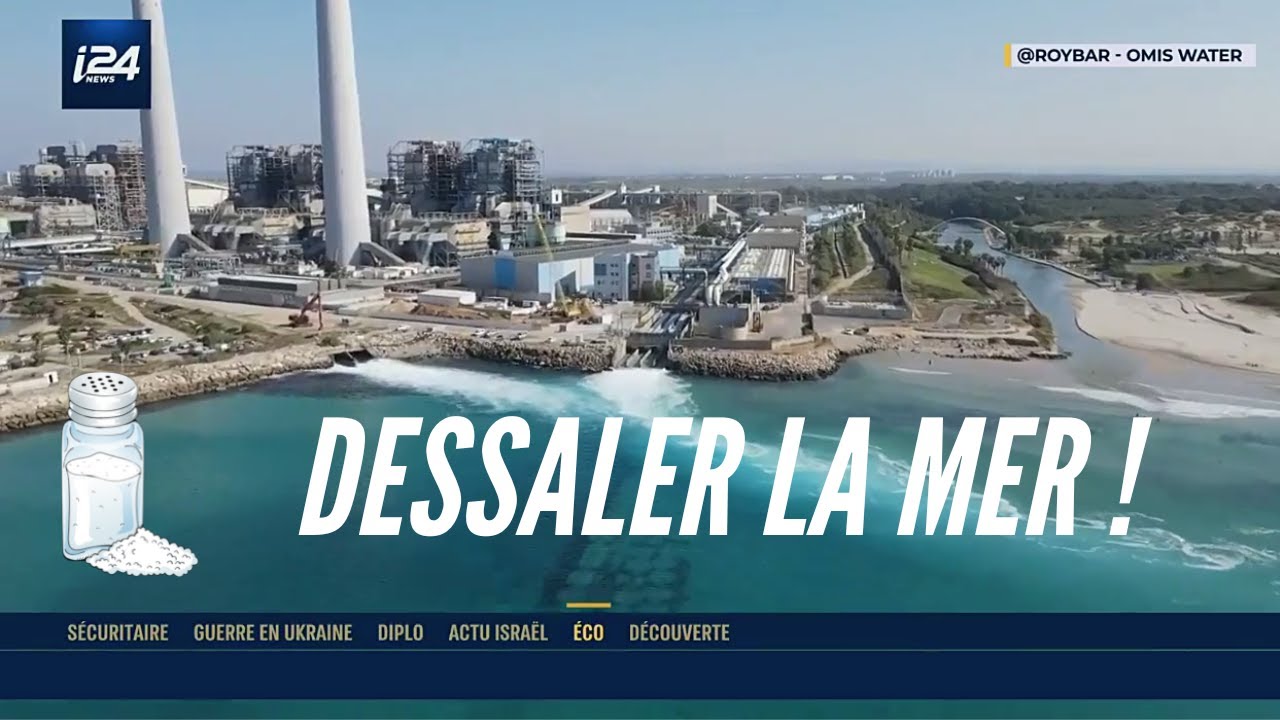
To illuminate technical aspects, an explanatory resource on reverse osmosis and its energy impacts can also serve as a pedagogical basis for upskilling teams.
Economic models, costs, and partnerships for water security
The success of desalination in Morocco relies on a balance: sustainable costs, competitive energy, and contracts offering visibility. Schemes are oriented toward PPPs and concessions, with availability commitments, quality penalties, and incentives for energy efficiency. Regulatory stability and the bankability of projects reassure financiers, while preserving sustainability for households and businesses.
The cost per cubic meter mainly depends on energy, salinity, membrane technology, and site scale. The integration of renewable energy – solar and wind – amortizes the bill, with integrated or back-to-back PPA contracts. Innovations (energy recovery, pump optimization, control AI) can reduce overall cost and carbon footprint, making the option more resilient to fuel price volatility.
Comparison of hosting schemes
Public and private operators share risks depending on the local configuration. In highly urbanized zones, predictable demand favors large-scale investments. In more scattered territories, modular and smart connections with dams optimize flows. Analyses on hydrological evolution serve as a basis for adjustment clauses in contracts, to guarantee the best cost-effective water management.
- 📊 Cost levers: energy efficiency, unit size, predictive maintenance.
- 🔌 Solutions: renewable PPAs, storage, incentive pricing.
- 🧩 Contracts: PPP, concession, public utility with performance.
- ⚖️ Equity: social pricing, protection of vulnerable households.
- 🌍 Environment: brine control, monitoring of marine ecosystems.
| Scheme 🤝 | Advantages ✅ | Points of vigilance ⚠️ | Mobilized HR profiles 👥 |
|---|---|---|---|
| PPP | Private capex, innovation 🌟 | Contractual complexity | Lawyers, risk managers |
| Concession | Operational risk transfer | Strict quality monitoring | Quality control, QHSE |
| Efficient public utility | Alignment with public service | Budget capex | Public planning, procurement |
Tariff calibration must remain transparent. Public information and regular publication of indicators reinforce trust. A combined reading of the 2025 skills barometers and hydrological data from dam levels helps anticipate demand peaks, operational reinforcement needs, and major maintenance planning.
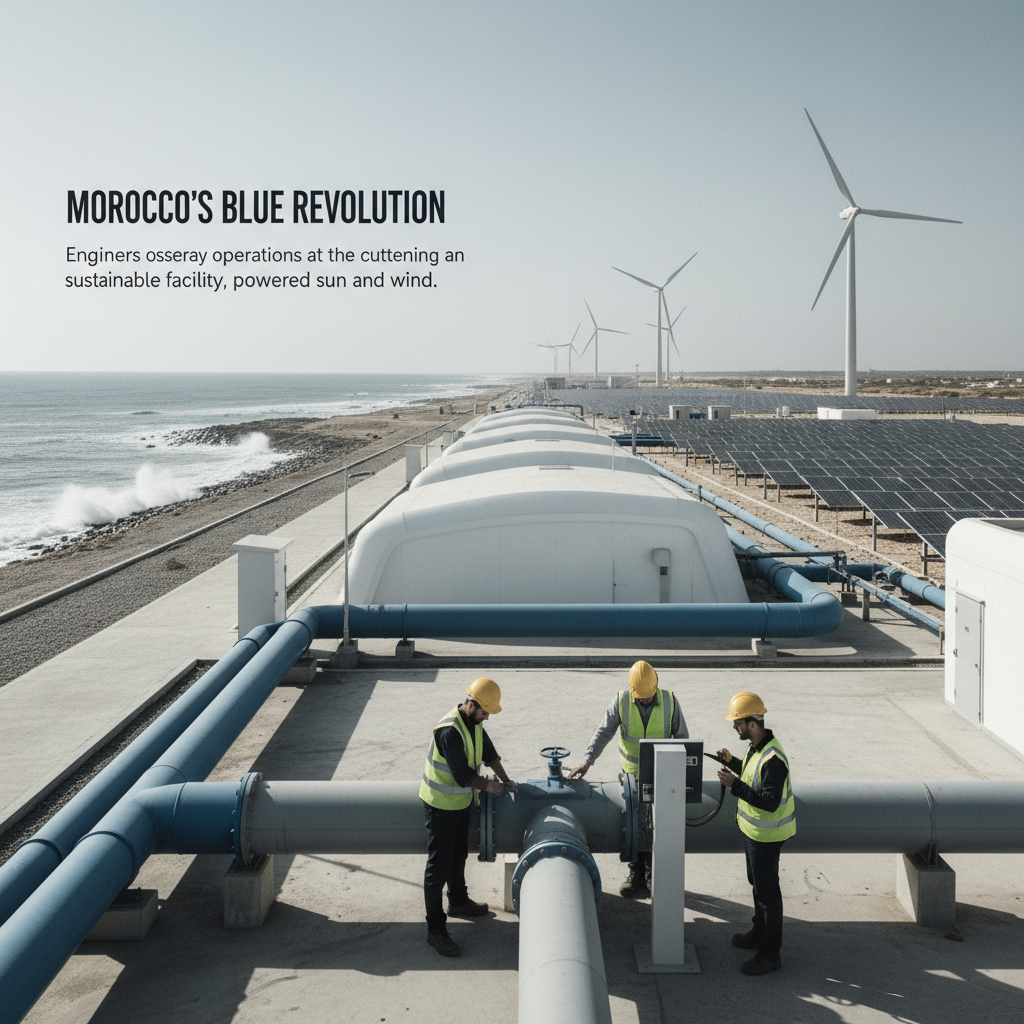
The thus consolidated economic framework prepares for territorial expansion and social inclusion, crucial for the national success of the program.
Territorial integration, equitable access, and articulation with dams
The deployment of desalination is accompanied by a fine-grained territorial approach. Coastal cities directly benefit from production units, while inland areas take advantage of interconnections and network reinforcements. Diversifying sources – desalination, dams, controlled drilling, reuse – balances volumes and secures supply year-round.
On the Atlantic coast, supply pipelines connect plants to urban reservoirs, with low-consumption pumping stations. Inland, water mixes (desalinated water + dam water) are used to optimize costs and quality. Transparency on reservoir status – via public syntheses on the state of dams – facilitates planning and user education. Treated wastewater reuse for green spaces and peri-urban irrigation completes the system.
Concrete examples of integration
In Agadir, capacity expansion supports tourism and agro-industry, alongside efficiency efforts in hotels (flow reducers, rainwater recovery). In Dakhla, coupling with wind favors low-carbon production. On the Casablanca–Rabat corridor, backup desalination when dam levels are low limits service interruptions and stabilizes economic activity.
- 🏭 Coastal cities: main supply through desalination, optimized energy mix.
- 🚰 Inland cities: controlled blending with dam water to manage tariffs.
- 🌿 Reuse: watering, non-food industry, experimental aquifer recharge.
- 🛰️ Remote management: real-time control, loss reduction, quality alerts.
- 👨👩👧 Equitable access: social pricing and household support.
| Region 🗺️ | Main source 💦 | Dam support 🏞️ | Equity measures ⚖️ |
|---|---|---|---|
| Casablanca–Rabat | Desalination + network | Strategic interconnections | Targeted social tariffs |
| Agadir–Souss | Mixed desalination | Support dams | Anti-loss programs |
| Dakhla–Oued Eddahab | Desalination + wind 🌬️ | Low dependence | Targeted subsidies |
This territorial architecture is accompanied by an awareness component: sobriety at home, reuse in industry, and modernization of irrigation networks. Communities, businesses, and citizens share the responsibility of water management daily. To support this transformation, digital innovations and upskilling become crucial.
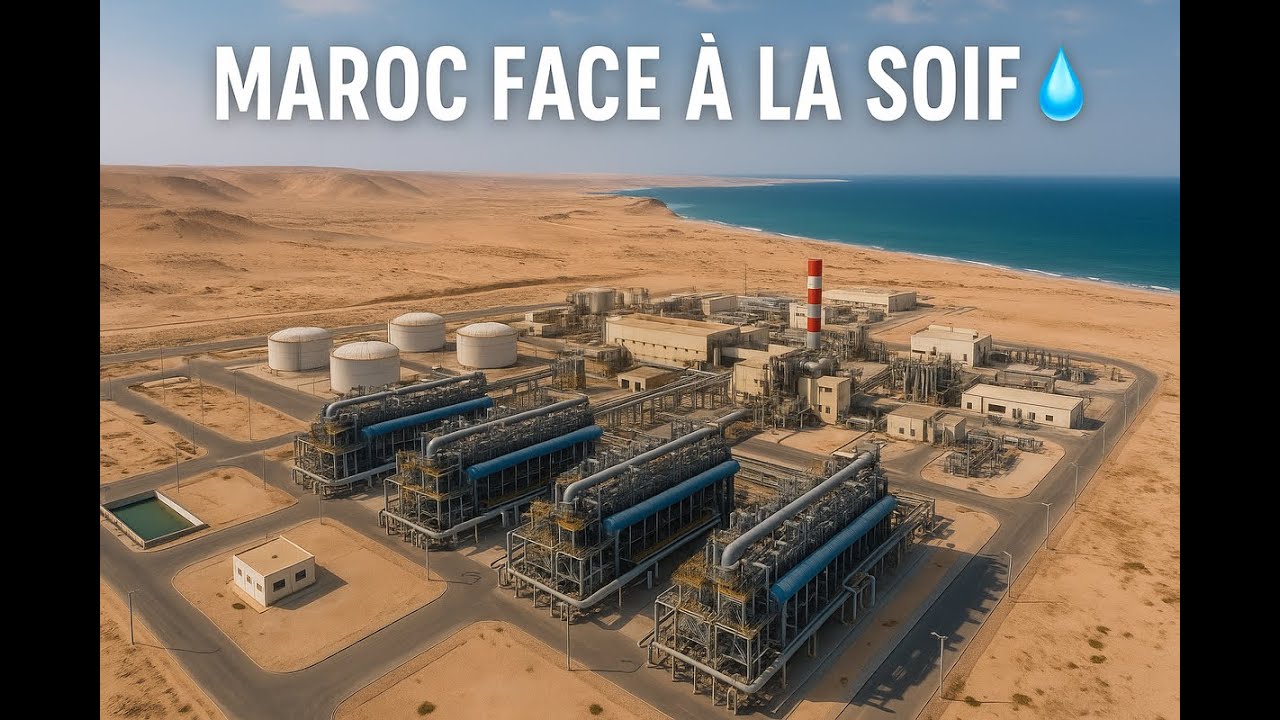
These audiovisual resources facilitate understanding of technical principles, useful for continuing education and local awareness campaigns.
Innovation, digital, and HR management to succeed in the water transition
Desalination plants increasingly rely on digital twins, optimization algorithms, and online sensors. Dashboards drive decisions: deactivating modules during off-peak hours, predictive membrane maintenance, and continuous monitoring of parameters (turbidity, conductivity, pH). This operational intelligence reduces costs and enhances the sanitary quality of water.
On the human level, operators must navigate an environment that is both industrial and environmentally sensitive. HR policies include career plans, certified training, workplace well-being, and inclusion of youth and women. The goal is clear: a competent and motivated employment ecosystem to sustain Morocco’s water security.
Data governance and continuous improvement
Authorities encourage data standardization and measured opening of key indicators to reinforce trust among citizens and investors. Innovation agreements with Moroccan universities stimulate R&D on membranes, anticorrosion, and brine valorization (minerals, chemistry). Benchmarks from the 2025 trends confirm convergence between green jobs, data, and maintenance 4.0.
- 🧪 R&D: low-pressure membranes, energy recovery, anti-fouling.
- 📡 Data: IoT sensors, secure SCADA, predictive AI.
- 👩🏫 Training: professional academies, apprenticeships, QHSE certifications.
- 🔄 Quality: regular audits, feedback, standardization.
- 🌊 Environment: monitoring of brine and marine water intakes.
| KPI indicator 📍 | 2030 goal 🎯 | Management tool 🛠️ | HR impact 👔 |
|---|---|---|---|
| Cost per m³ | Continuous reduction | Energy optimization ⚡ | Energy training |
| Availability rate | > 95% | Predictive maintenance 🤖 | 24/7 team |
| Sanitary quality | Strict compliance with standards | Online analyses 🧫 | Qualified laboratory technicians |
| Carbon footprint | Sustained decrease | Renewable PPA 🌞 | Green skills |
By linking innovation, governance, and talent management, Morocco equips itself to reach the objective of covering 60% of drinking water via desalination. This technical and human coherence is grounded in ongoing hydrological and economic monitoring, fueled by public resources such as the monitoring of precipitation and dams and labor barometers such as the 2025 national employment trends.
Local value chain, Moroccan SMEs, and opportunities for territories
Beyond major construction sites, a major opportunity lies in the local anchoring of the supply chain. Moroccan SMEs position themselves in prefabrication of piping, stainless steel welding, electrical stations, instrumentation, spare parts, and metrology. This gradual industrialization creates sustainable jobs and reduces import dependence, while improving intervention times.
Consortia associating national companies and international partners facilitate technology transfer and upgrading. Financing and guarantee mechanisms, combined with local purchasing commitments, support this ecosystem. Meanwhile, public procurement and operators encourage quality compliance, supplier cybersecurity, and traceability, all essential in a critical sector.
SMEs, territories, and inclusive employment
In the Souss region, a maintenance company doubled its workforce to meet service contracts for desalination plants by recruiting technicians from local schools. In El Jadida, an instrumentation workshop certifies its processes to respond to tenders. These trajectories, multiplied nationwide, contribute to qualified employment and the raising of industrial standards.
- 🏗️ Local subcontracting: piping, skids, electrical assembly.
- 🧰 Services: inspection, metrology, calibration, pressure testing.
- 📒 Quality: ISO, document control, OT cybersecurity.
- 🌐 Partnerships: clusters, universities, testing centers.
- 💼 Employment: youth insertion, female skill upgrading.
| Value chain link ⛓️ | Opportunity in Morocco 🇲🇦 | Quality requirement ✅ | Territorial impact 🏘️ |
|---|---|---|---|
| Skid fabrication | Expanding local workshops | Pressure tests, traceability | Industrial jobs |
| Instrumentation | Integrators and calibration | Metrology certification | Technical skills |
| Maintenance | Multi-site contracts | QHSE, response times | Territorial SMEs |
| Green energy | Solar/wind PPAs | Grid compliance | Local decarbonization |
Developing a national industrial fabric around desalination strengthens water security and employment, while spreading quality standards. This dynamic relies on key cyclical information – such as dam levels – and on the 2025 skills barometers to anticipate talent needs and adapt training supply.
{“@context”:”https://schema.org”,”@type”:”FAQPage”,”mainEntity”:[{“@type”:”Question”,”name”:”What is the timeline to reach 60% of drinking water from desalination?”,”acceptedAnswer”:{“@type”:”Answer”,”text”:”The ramp-up is progressive until 2030, with staggered commissioning in coastal areas (Casablanca, Agadir, Dakhla, Laâyoune) and interconnections towards the interior. Volumes adjust based on dam availability and demand.”}},{“@type”:”Question”,”name”:”How much does desalinated water cost for the user?”,”acceptedAnswer”:{“@type”:”Answer”,”text”:”The final cost depends on energy and contractual choices. Integrating renewable energy, pump efficiency, and site scale help contain the bill. Social pricing mechanisms protect vulnerable households.”}},{“@type”:”Question”,”name”:”What jobs are created by the desalination program?”,”acceptedAnswer”:{“@type”:”Answer”,”text”:”Needs cover engineering, operation, maintenance, automation/SCADA, water quality, industrial cybersecurity, and data. Accelerated training paths and certifications facilitate youth integration and reskilling.”}},{“@type”:”Question”,”name”:”Is desalination compatible with the marine environment?”,”acceptedAnswer”:{“@type”:”Answer”,”text”:”Yes, under conditions. Water intakes are designed to limit impact on fauna and flora, and brine discharges are diluted and controlled. Environmental monitoring and innovations (energy recovery, discharge optimization) reduce the footprint.”}},{“@type”:”Question”,”name”:”What is the role of dams in this new model?”,”acceptedAnswer”:{“@type”:”Answer”,”text”:”Dams remain essential for water balance. They complement desalination during demand periods and serve as buffers. Public monitoring of reservoir levels helps manage blends and maintenance planning.”}}]}What is the timeline to reach 60% of drinking water from desalination?
The ramp-up is progressive until 2030, with staggered commissioning in coastal areas (Casablanca, Agadir, Dakhla, Laâyoune) and interconnections towards the interior. Volumes adjust based on dam availability and demand.
How much does desalinated water cost for the user?
The final cost depends on energy and contractual choices. Integrating renewable energy, pump efficiency, and site scale help contain the bill. Social pricing mechanisms protect vulnerable households.
What jobs are created by the desalination program?
Needs cover engineering, operation, maintenance, automation/SCADA, water quality, industrial cybersecurity, and data. Accelerated training paths and certifications facilitate youth integration and reskilling.
Is desalination compatible with the marine environment?
Yes, under conditions. Water intakes are designed to limit impact on fauna and flora, and brine discharges are diluted and controlled. Environmental monitoring and innovations (energy recovery, discharge optimization) reduce the footprint.
What is the role of dams in this new model?
Dams remain essential for water balance. They complement desalination during demand periods and serve as buffers. Public monitoring of reservoir levels helps manage blends and maintenance planning.

Comments are closed