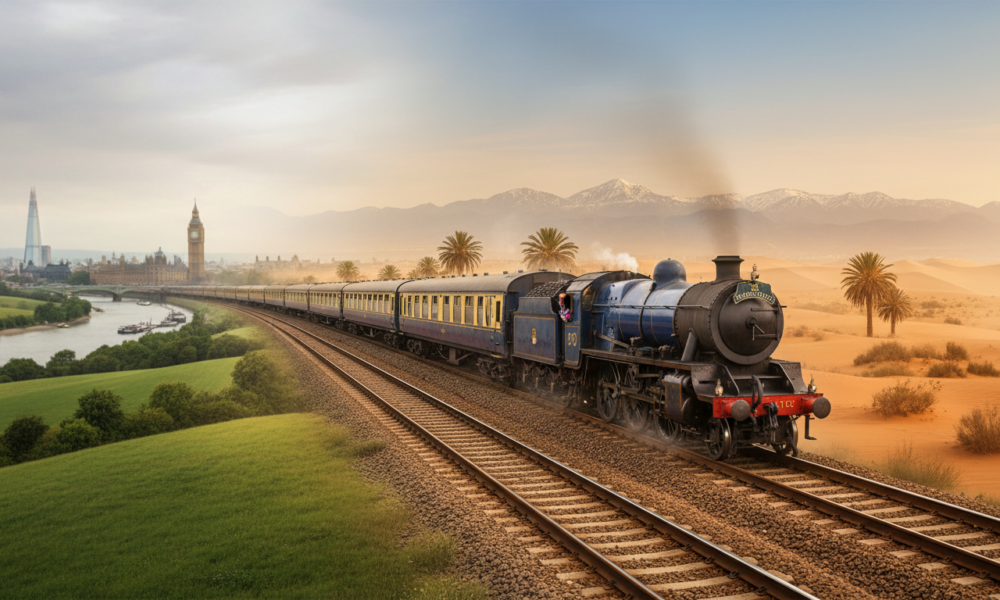
Crossing borders, seeing landscapes transform and rediscovering long time spans: such is the promise of an adventure that connects two worlds. Far from the frenzy of airports, the rail journey from London to the gates of the Moroccan desert imposes itself in 2025 as a favored alternative for professionals seeking meaning and sustainability. This trip is not just a geographical displacement; it is a dive into the heart of the infrastructures that shape economic mobility between Europe and the Kingdom.
A strategic rail odyssey: from the City to the Kingdom’s economic hubs
Connecting the British financial capital to Morocco’s dynamic metropolises without ever taking a plane is today an initiatory experience. For executives and decision-makers, this route embodies Slow Travel, a trend that values the quality of the journey as much as the destination. The classic itinerary starts at St Pancras International station, crosses France via high-speed lines, dives towards Spain, before crossing the Mediterranean.
This rail adventure offers a smooth transition between the London climate and Moroccan heat. It is a unique opportunity to see how European networks interconnect with national infrastructures, thus facilitating commercial and cultural exchanges. For those looking for last-minute options for families, this type of journey requires some anticipation but offers unparalleled flexibility in terms of stops.
Crossing Europe: a lesson in interconnection
The business traveler observes, mile after mile, the fluidity of European corridors. From London to Paris, then towards Barcelona, the train becomes a mobile office. Tinuke Oyediran, expert in connected travel, highlights the importance of staying operational: a good Wi-Fi connection and suitable workspaces turn these travel hours into productive time or strategic reflection.
Arriving in southern Spain, at Algeciras, the maritime transition to Tangier marks the return to African soil. This passage is not insignificant; it symbolizes the unbreakable link between the two continents, a vital axis for the Moroccan economy, both for freight and tourism. It is often the perfect moment to plan a spontaneous getaway to northern Morocco before continuing south.
High-speed Morocco: infrastructure and 2030 ambition
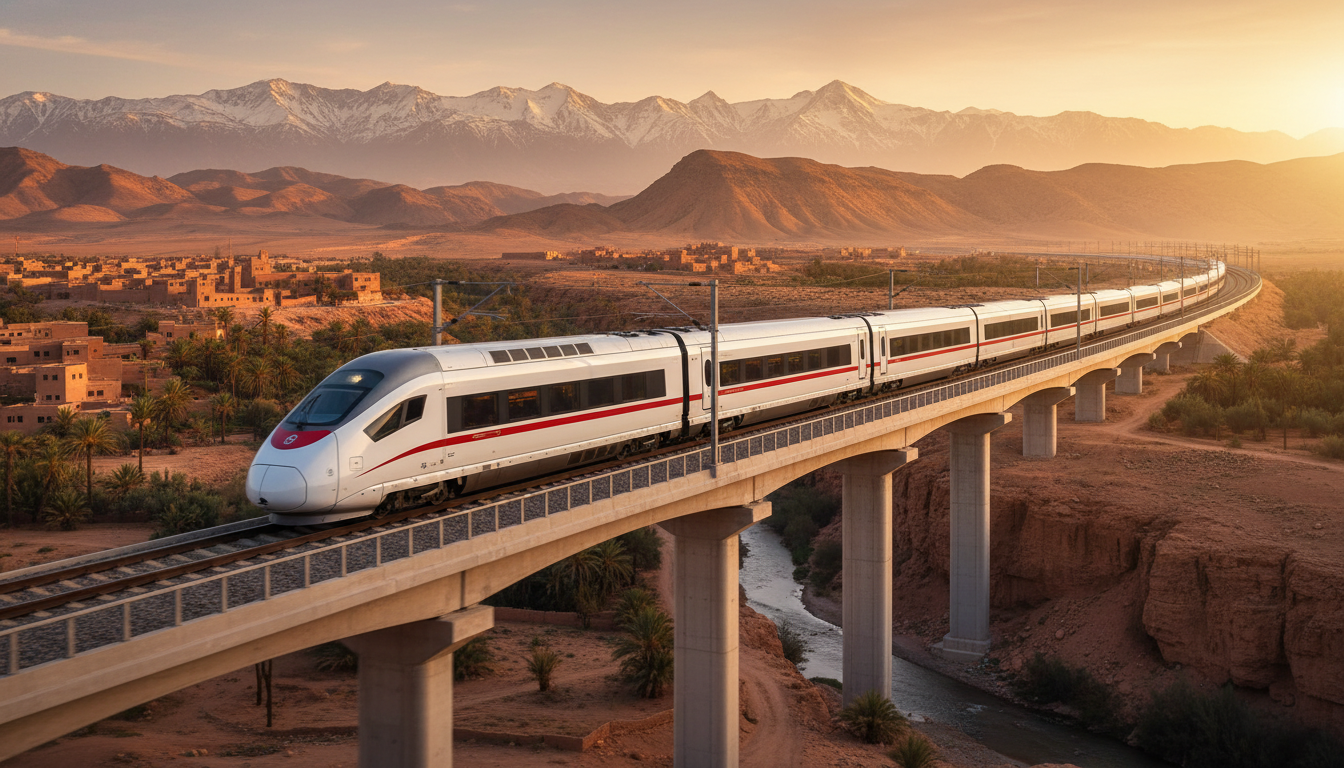
Once disembarked in Tangier, the contrast of modernity is striking. Morocco, with its strategic vision, has developed a rail network that competes with international standards. The arrival of the Al Boraq TGV revolutionized internal mobility, drastically reducing travel times between major economic hubs like Tangier, Rabat, and Casablanca.
This land rail cruise allows you to touch the country’s economic reality. Landscapes pass by, from Mediterranean coasts to Atlantic plains, offering a panorama of the geographical diversity that enriches national tourism. In 2025, the progressive extension of the network to the south and inland confirms the Kingdom’s ambition to open up regions and stimulate local investment.
Impact on tourism and the local economy
Rail development does not only benefit daily commuters. It opens up landscapes and destinations previously difficult for international and local tourists to access. This increased accessibility fosters the emergence of new regional markets and supports local crafts in imperial cities.
For a leader wishing to offer a memorable trip to employees or partners, the train provides a secure, comfortable setting conducive to informal exchanges. It is a showcase of the “Morocco that moves forward,” combining hospitality tradition and technological rigor.
Comparison: Why choose rail to reach Morocco?
In a context where Corporate Social Responsibility (CSR) is at the heart of concerns, the choice of transport becomes an activist act. The table below illustrates the major differences between plane and train for this emblematic journey, emphasizing the overall experience.
| Criterion 📊 | Plane (London-Marrakech) ✈️ | Train + Ferry (London-Morocco) 🚄 |
|---|---|---|
| Carbon Footprint | High (Significant impact) | Low (Reduction up to 90%) |
| Travel time | Fast (4-5 hours flight) | Slow (2 to 3 days immersion) |
| Productivity | Low (Interruptions, controls) | High (Quiet spaces, connection) |
| Cultural experience | None (Pure transport) | Rich (Continuous cultural discovery) |
Choosing rail means accepting to slow down to better appreciate the economic and social environment. It also means seizing this rare opportunity for relaxation in a busy schedule, allowing mental disconnection before tackling new professional challenges.
Preparing your journey: essentials for the informed traveler
Embarking on this long-distance train trip requires logistical preparation, although the adventure is worthwhile. Unlike a single plane ticket, the rail itinerary is built in stages, allowing modulation of the journey according to business appointments or discovery desires.
Here are the key elements for a successful crossing:
- 💼 Connectivity: Plan eSIM solutions to ensure smooth data transition between the UK, the EU, and Morocco.
- 🎫 Advance bookings: Tickets for Eurostar and Al Boraq must be booked early to guarantee the best rates and seats.
- 🕰️ Time management: Integrate transfer times (stations, port) as moments of pause and not stress.
- 🌍 Adaptability: Sometimes, leaving on a whim for an unexpected stopover in Cordoba or Tangier enriches the overall experience.
This mode of travel resonates particularly with the values of authenticity and sustainability promoted by many Moroccan companies today. It is no longer just about reaching the destination, but about understanding the journey traveled.
{“@context”:”https://schema.org”,”@type”:”FAQPage”,”mainEntity”:[{“@type”:”Question”,”name”:”How long does it take to travel from London to Morocco by train?”,”acceptedAnswer”:{“@type”:”Answer”,”text”:”The journey generally takes between 2 and 3 days, depending on the number of stops chosen in France and Spain. It is a ‘Slow Travel’ experience that prioritizes discovery over pure speed.”}},{“@type”:”Question”,”name”:”Is it possible to work efficiently during this trip?”,”acceptedAnswer”:{“@type”:”Answer”,”text”:”Absolutely. European and Moroccan high-speed trains (Al Boraq) offer Wi-Fi and comfortable spaces, turning the carriage into an ideal mobile office for professionals.”}},{“@type”:”Question”,”name”:”What is the ecological impact of this journey compared to flying?”,”acceptedAnswer”:{“@type”:”Answer”,”text”:”Traveling by train significantly reduces the carbon footprint, emitting up to 90% less CO2 per passenger compared to a direct flight, which perfectly aligns with companies’ CSR policies.”}},{“@type”:”Question”,”name”:”Is a visa required for stops in Europe during this trip?”,”acceptedAnswer”:{“@type”:”Answer”,”text”:”For Moroccan nationals, a Schengen visa is required to transit through France and Spain before reaching Morocco. It is crucial to check the validity of documents before departure.”}}]}How long does it take to travel from London to Morocco by train?
The journey generally takes between 2 and 3 days, depending on the number of stops chosen in France and Spain. It is a ‘Slow Travel’ experience that prioritizes discovery over pure speed.
Is it possible to work efficiently during this trip?
Absolutely. European and Moroccan high-speed trains (Al Boraq) offer Wi-Fi and comfortable spaces, turning the carriage into an ideal mobile office for professionals.
What is the ecological impact of this journey compared to flying?
Traveling by train significantly reduces the carbon footprint, emitting up to 90% less CO2 per passenger compared to a direct flight, which perfectly aligns with companies’ CSR policies.
Is a visa required for stops in Europe during this trip?
For Moroccan nationals, a Schengen visa is required to transit through France and Spain before reaching Morocco. It is crucial to check the validity of documents before departure.

Comments are closed