
2025 AREF Taalim Recruitment Competition: 19,000 Teaching Positions and Employment Challenges in Morocco
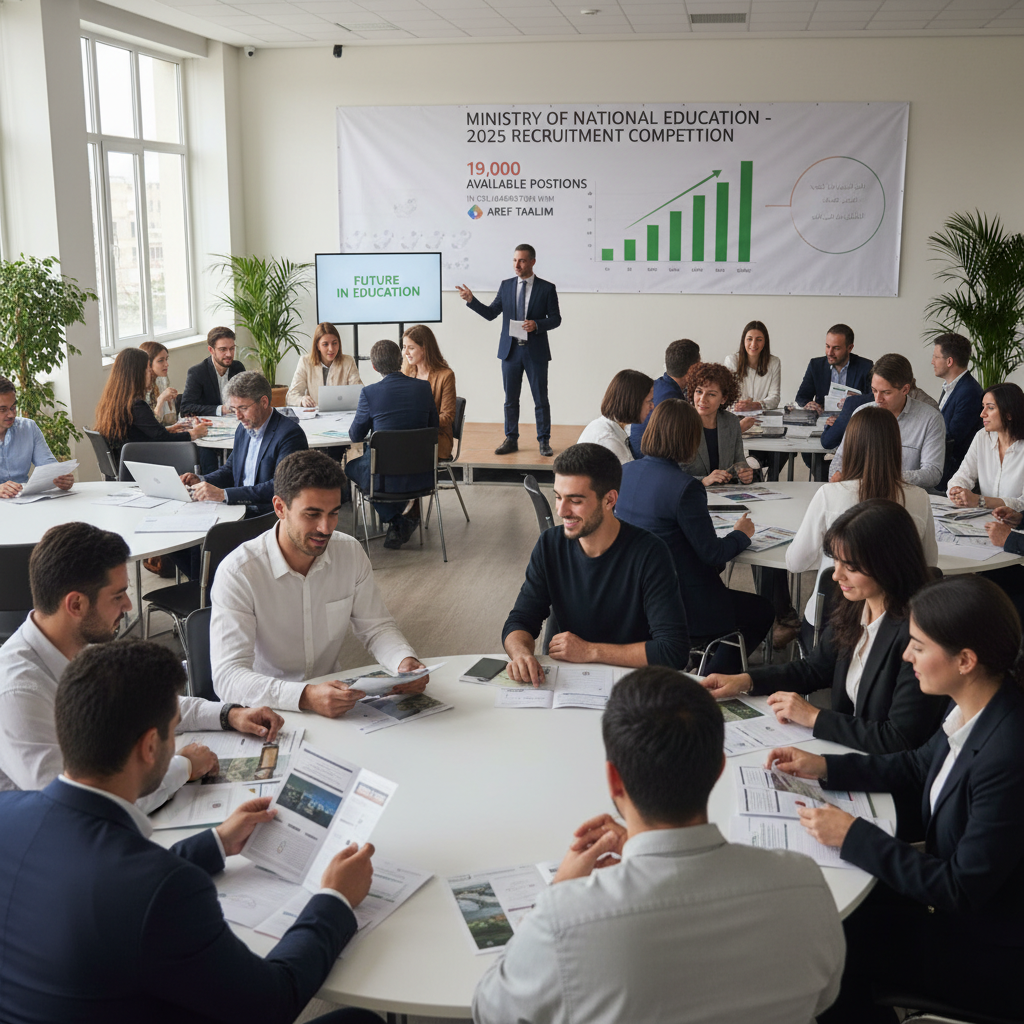
The Ministry of National Education, Preschool and Sports is launching a national-scale Recruitment Competition, aligned with the modernization of National Education and the dynamics of the public sector. With 19,000 teaching positions to be filled within the AREFs, this campaign represents one of the largest Career Opportunities for university graduates ready to engage in public education. The needs cover primary, middle school, and higher secondary cycles, with an emphasis on scientific, linguistic disciplines, and physical education, reflecting national priorities in skills.
Beyond the numbers, the challenge is qualitative. The Moroccan school is transforming: active pedagogies, digital education, bilingualism, and inclusion. Future laureates join a mission of general interest framed by clear objectives: reduce inequalities, strengthen fundamentals, support Amazigh, and consolidate scientific fields to better connect youth to growing sectors. This coherence between pedagogical and economic needs also appears in other national campaigns, as highlighted by analyses on optimizing public and semi-public recruitments, such as the suggestions for better efficiency in recruitment strategies.
The 2025 framework formalizes a clear distribution. Primary school welcomes Amazigh and bilingual profiles. Middle school concentrates the majority of positions to strengthen fundamentals (Arabic, French, English, mathematics) and scientific and technological disciplines. Higher secondary looks for expertise such as philosophy, history-geography, economics-management, and computer science. This structure allows the absorption of diverse university cohorts while preparing the school for tomorrow’s challenges, linked to innovation and international openness, themes highlighted by other leading sectors, for instance the industrial transitions described in recent industrial innovations.
For many candidates, the question is not just “how to pass the competition,” but “how to build a sustainable career path.” The AREF provides professional training supported by the Regional Centers for Education and Training Professions, with alternating field-theory, continuous assessment, and support. Laureates then move to stable positions, opening perspectives for advancement to pedagogical coordination, school management, or inspection. Meanwhile, the schedule is tight and requires methodical preparation, supplemented by useful online resources, including practical guides such as the MEN registration steps, very helpful to secure the file on time.
Social reserves reflect the inclusive commitment of the public sector. 25% of positions are reserved for beneficiaries (children of resistance fighters, veterans, wards of the Nation, and military personnel) and 7% for persons with disabilities, subject to regulatory conditions. This attention to diversity, combined with competence requirements, reinforces the legitimacy of the competition. Similarly, candidates often compare schedules and procedures with other sectoral competitions to harmonize their applications, as synthesized in references like health competition information.
- 🎯 Central objective: select and train teachers ready for classroom and fieldwork.
- 🧭 National coverage: positions open in all AREFs, for regional anchoring.
- 📈 Employment impact: major lever for graduates’ integration and national skills development.
- 📚 Key pedagogies: assessment, differentiation, digital education, inclusive care.
- 🤝 Equity: reserved quotas and respect for public sector rules.
| Cycle 🧩 | Main specialties 🧑🏫 | Estimated openings 🔢 |
|---|---|---|
| Primary | Amazigh, Bilingual | 3,383 (including 1,000 Amazigh) ✅ |
| Middle school | Arabic, French, English, Math, Life Sciences, Physics-Chemistry, Computer Science, Physical Education, Technology | 12,926 🚀 |
| Higher secondary | Philosophy, History-Geography, Economics-Management, Languages, Sciences | 2,691 🎓 |
In short, the 2025 campaign condenses a unique window of access to sustainable Career Opportunities, with a clear framework and explicit expectations in professionalism. The following section details the conditions, the “Taalim” procedure, and the official schedule.
Eligibility Conditions, Taalim Procedure and Official Schedule of the Ministry of National Education
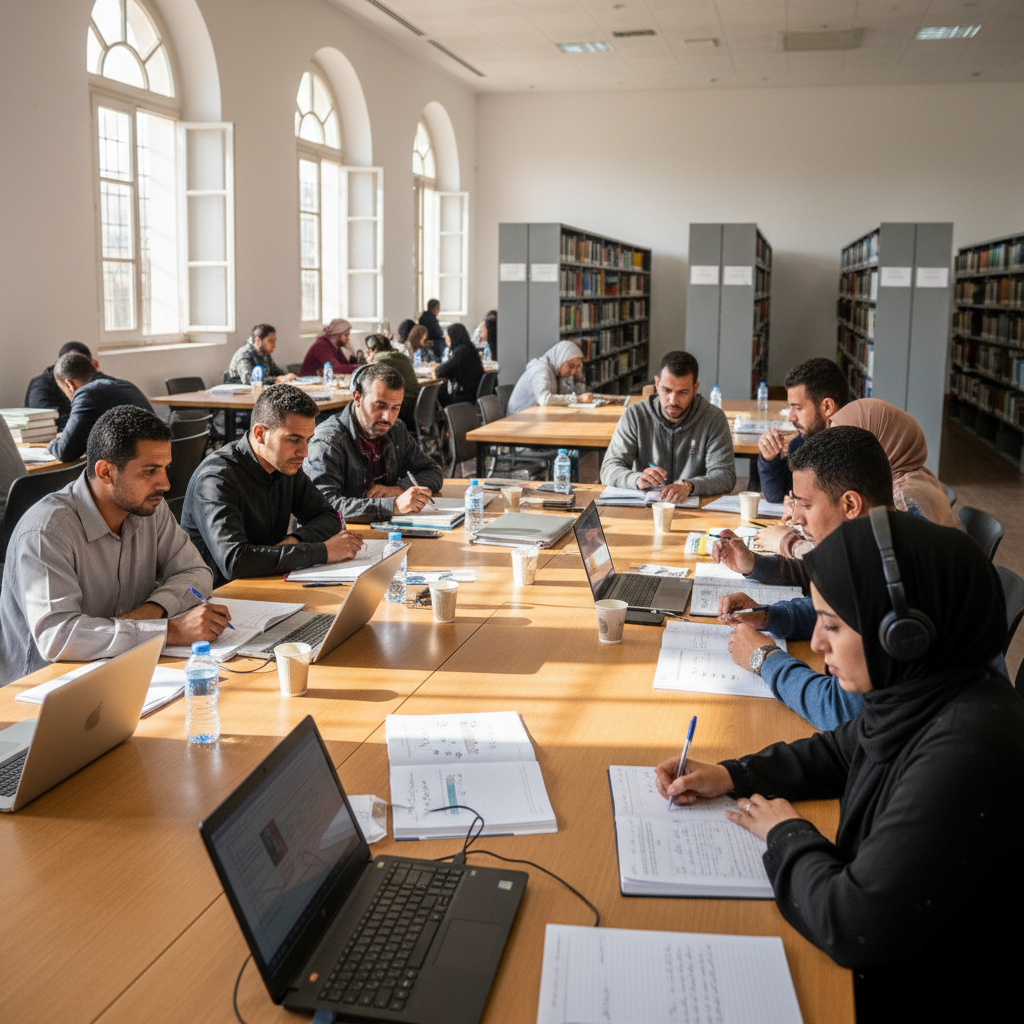
The competition is open to candidates of Moroccan nationality, holders of a bachelor’s degree or equivalent, meeting the legal conditions for access to qualification cycles (primary, middle school, higher secondary). Applications are submitted exclusively online via the ministry’s portal and the dedicated Taalim platform (Wolouj), with electronic validation before the deadline. Any incomplete or late application is automatically rejected.
The schedule revolves around tight milestones. The announcement is published at the end of October, the application deadline falls in mid-November, the written exams are held at the end of November, followed by results, oral exams, and enrollment of admits. Training begins at the end of December in regional centers. A meticulous review plan is essential, focusing on written tests (subjects, pedagogical culture, assessment systems) and oral preparation (lesson simulation, posture, classroom management).
Practical steps follow a standardized path. Registration opening is followed by document verification (ID card, degrees, certificates), discipline selection, information confirmation, and printing convocations. The platform displays the lists of candidates qualified for the written tests and publishes results at each phase. To minimize errors, many candidates rely on detailed step-by-step guides, such as those shared in this MEN registration guide, very useful to secure document submission and monitor notifications.
- 🗓️ Application deadline: November 13, 2025 at 16:30.
- ✍️ Written exams: November 22, 2025.
- 🏃♂️ Practical tests (PE): November 24–26, 2025.
- 📣 Written results: November 27, 2025.
- 🗣️ Orals: December 2–11, 2025; final results: December 16, 2025.
- 🧭 Enrollment at CRMEF: December 18–20, 2025; training start: December 22, 2025.
| Step 📍 | Window ⏱️ | Practical advice 💡 |
|---|---|---|
| Announcement publication | October 29 📢 | Read the full announcement and check eligibility ✅ |
| Document submission | Oct. 30 – Nov. 13, 16:30 📤 | Scan documents correctly, proper format and size 🧩 |
| Eligible candidates list for written exams | Nov. 15–17 📝 | Check exam center and schedule ⏰ |
| Written exams | Nov. 22 ✍️ | Arrive early with ID, convocation, backup pens 🧷 |
| Oral exams | Dec. 2–11 🎤 | Prepare a mini-lesson and an evaluation quiz 🎯 |
Concrete example: “Salma,” a mathematics graduate, planned her November by blocking thematic revision slots, registering as soon as possible, and practicing oral simulators with peers. She avoids information overload and focuses on essentials: curricula, assessment, didactics, and practice with typical topics. This progressive organization offers a real advantage on the exam day.
Candidates applying for other public competitions often organize their schedule in parallel. Practices from other institutions, such as those listed on Casa Transport recruitments or CNSS procedures, provide useful references on completeness criteria and expected administrative discipline. Procedural rigor makes a difference everywhere.
Distribution of Disciplines and Expected Competencies by Public Education Cycle
The distribution of Teaching Positions highlights a massive effort at the middle school level, where the scientific and linguistic bases for further paths are formed. Assignments are structured to ensure coverage of language needs (Arabic, French, English), sciences (math, life sciences, physics-chemistry), technology, computer science, physical education, and humanities at the higher secondary level (philosophy, history-geography, economics-management). The AREF will tailor training so laureates arrive in class with concrete didactic strategies and solid assessment skills.
In primary, Amazigh and bilingual focus on linguistic consolidation and cultural diversity. The bilingual profile relies on communicative approaches and gradual literacy development. In middle school, the focus is on structuring knowledge, initiation to scientific reasoning, methodological rigor, and introduction to digital education. Higher secondary requires pedagogical maturity: problematizing, arguing, linking knowledge and Moroccan current affairs, preparing for higher education or integration.
For example, a future life sciences teacher can build a sequence on public health in partnership with local scientific resources, aligned with national initiatives evoked by the Institut Pasteur of Morocco. In technology and industrial sciences, concrete pathways to orientation can rely on the above-mentioned industrial transitions. In the health professions field, knowledge of paramedical training paths, detailed in this IFPS guide, can help guide students toward high-demand sectors.
- 🧠 Cross-cutting skills: classroom management, differentiation, formative assessment.
- 🖥️ Digital skills: pedagogical use of ENT, open resources, multimedia scripting.
- 🌍 Cultural skills: valuing Morocco’s languages, education for citizenship and living together.
- 🔬 Scientific skills: investigative approach, problem-solving, interdisciplinarity.
- 🏃 Sports skills (PE): safety, inclusivity, psychomotor development, team spirit.
| Discipline 📚 | Key Competencies 🧩 | Examples of Classroom Tasks 🏫 |
|---|---|---|
| Mathematics | Modeling, logical reasoning | Guided problem solving, rubric-based formative assessment ✅ |
| Languages | Comprehension/production, differentiation | Oral workshops, portfolios, thematic debates 🎤 |
| Life Sciences / Physics-Chemistry | Scientific approach, lab safety | Experiments, reports, local projects 🔬 |
| Computer Science / Technology | Algorithmics, responsible use | Simple coding, digital projects, data visualization 🖥️ |
| Philosophy / History-Geography | Problem-setting, argumentation | Essays, case studies, mind maps 🗺️ |
“Youssef,” a future French teacher, designs a progression integrating analytical reading, oral and written expression, and a media education module to develop critical thinking, a crucial skill in an information-saturated environment. This approach, coordinated with his history-geography and philosophy colleagues, structures a coherent and motivating learning experience. After mastering expectations, the question becomes: how to prepare effectively until exams? Time for strategy.
Preparation Strategies: Method, Local Resources and Time Management up to Orals
The window between the close of applications and oral exams is short. The challenge: prioritize. Successful candidates follow a three-part plan: disciplinary consolidation (typical subjects, summary sheets), didactics (objectives, assessment, differentiation), and oral training (posture, timing, classroom scenarios). All fits into a schedule calibrated to official dates. Weekly follow-up with a partner or small group accelerates progress and maintains motivation.
To adapt the daily rhythm, many rely on their city’s cues and schedule sessions during optimal concentration moments. Local cues can be helpful to structure the day. For example, consulting daily slots on prayer times in Settat, Errachidia, or El Jadida helps some candidates break revision into stable blocks. This time discipline combines with sparing digital use, like what is expected tomorrow in classrooms.
Regarding resources, past papers and typical topics remain a foundation. Videos, podcasts, and MOOCs offer supplements. Candidates aiming at sciences and PE combine sources: official texts, frameworks, evaluation guides, feedback. As with all recruitment, documentary quality outweighs quantity, a logic also found in other organized sectors, for instance the career structuring described for telecom in this focus on tech recruitment.
- 🧭 3-week plan: targeted revisions + simulations + active rest.
- 🎤 Oral: 10-minute presentation + 10–15 minutes of discussions; work on clarity and time management.
- 📚 File: check names, dates, documents; keep a secure digital copy.
- 🤝 Peer group: cross-check corrections, shared evaluation grids, immediate feedback.
- 🧘 Stress management: square breathing, micro-breaks, short walk before exam.
| Week ⏳ | Priorities 🎯 | Deliverables ✅ |
|---|---|---|
| W-3 | Programs, key concepts, typical subjects | 1-page summary sheets per concept 📄 |
| W-2 | Didactics, assessment, differentiation | Criterion grids, 45-minute lesson plan 🧩 |
| W-1 | Oral and written simulations, recovery | 2 mock orals, 2 written exams in real time ⏱️ |
“Omar,” a life sciences candidate, divides his evenings into 90-minute blocks and reserves a morning for mock orals. He rests his eyes 10 minutes every 50 minutes, disconnects from screens the day before, and reviews morning reminders of objectives and instructions. Another detail: set an extra alert two days before the deadline to avoid network issues. Similar references exist for candidates in other regions, such as prayer times in Khémisset, useful to schedule study routines.
AREF Training Path, Assignment and Progression in the Public Sector
After the publication of final results, enrollment takes place at regional centers during the indicated period, then training begins on December 22. The model combines pedagogy fundamentals, disciplinary didactics, internships in schools, and reflective feedback. Assessments mark the path and conclude with skills validation, ensuring responsibility entry. The AREF supports onboarding and adaptation within public education.
The first position opens the way to a progressive career within National Education. Typical trajectories go from novice teacher to lead teacher, then to coordination roles, peer training, school management, or inspection, depending on experience and internal competitions. Intermediate bridges include school projects, participation in digital hubs, or inclusion initiatives. These progression options fit within a transparent evaluation framework and mobility regulated by the public sector.
Professional integration benefits from contacts with the local ecosystem: hospitals, associations, industries, cultural actors. Education–health synergies, for example, generate transversal projects on prevention or hygiene, resonating with field initiatives like health services in Rabat or IFPS career paths. On the sciences side, occasional collaboration with institutions and external experts enriches sequences and orientation. The classroom becomes an anchor point for the territory.
- 🛠️ Training: theory, practice, feedback, continuous assessment.
- 🏫 Assignment: adjusted to regional needs; mobility possible following current rules.
- 📈 Progression: internal competitions, pedagogical responsibilities, team leadership.
- 🤝 Partnerships: health, culture, industry actors to contextualize learning.
- 🌐 Citizenship: media education, critical thinking, responsible engagement.
| Career Stage 🪜 | Objective 🎯 | Key Actions 🗂️ |
|---|---|---|
| Year 0–1 | Installation, classroom routines | Mentoring, peer observation, evaluation planning 📅 |
| Years 2–4 | Consolidation | Interdisciplinary projects, ongoing training, school club 📘 |
| Year 5+ | Responsibilities | Coordination, internal competitions, mentoring newcomers 🧑🏫 |
The role of school also takes place in a shifting social context where Moroccan youth seek meaning and prospects. The teacher is a landmark and mediator. Debates on expectations and generational behaviors invite work on socio-emotional skills and citizenship at school, as shown by some views on the relationship between youth and public space discussed in this insight on Generation Z. A stable, demanding, and open school remains the best lever for cohesion and employability.
Finally, throughout their career, teachers keep informed about evolutions of related professions to guide students toward thriving sectors. Links with health, research, industry, digital, and urban services enrich orientation culture and preparation of youth for market realities.
Practical Summary: Volumes, Quotas, Disciplines and Access to the Taalim Platform
To secure their application, it is useful to summarize major information at a glance: volumes by cycle, reserved quotas, specialties, key dates, and useful sources. Candidates rely on checklists to avoid omissions while keeping an eye on official announcements. Access is through the ministry’s portal and the Wolouj platform (“Taalim”), ensuring each step is completed before the registration window closes. In case of procedural doubt, reference content like this MEN registration guide highlights critical points.
The table below groups key elements. It can be printed and checked off as you go. Note: the application deadline and exam day are non-negotiable. It is best to aim to send the file 48 hours before the deadline to avoid any unforeseen events. Disciplines must be chosen in accordance with the diploma and expected cycle.
- ✅ Positions open: 19,000 total (primary, middle school, higher secondary).
- 🧑💼 Reserves: 25% beneficiaries; 7% persons with disabilities.
- 🗓️ Essential deadlines: 11/13 (submission), 11/22 (written exams), 12/16 (final results).
- 📍 Procedure: online submission, lists, written exams, practicals (PE), orals, CRMEF enrollment.
- 🔎 Disciplines: languages, sciences, PE, technology, philosophy, history-geography, economics-management.
| Section 🧾 | Essential Detail 🔎 | Useful Reference 🧭 |
|---|---|---|
| Volume | 19,000 positions | Primary 3,383 | Middle 12,926 | Higher 2,691 📊 |
| Quotas | 25% beneficiaries, 7% disability | Respect documents and conditions 📎 |
| Dates | Deadline: 11/13 – 16:30 | Exams: 11/22 | Send file 48h in advance ⏱️ |
| Discipline | Choice must match diploma | Read full notice of local AREF 📌 |
| Resources | Guides and updates | Also see training references and sector calendars 🧰 |
Final advice: reserve a weekly slot to monitor regulatory updates and announcements from regional AREFs. This routine avoids surprises and ensures a compliant application until final validation.
{“@context”:”https://schema.org”,”@type”:”FAQPage”,”mainEntity”:[{“@type”:”Question”,”name”:”What are the academic conditions to apply for the AREF Taalim competition?”,”acceptedAnswer”:{“@type”:”Answer”,”text”:”The 2025 Recruitment Competition is open to Moroccan nationals holding a bachelor’s degree (or equivalent). The choice of discipline must be consistent with the diploma and the targeted cycle (primary, middle school, higher secondary).”}},{“@type”:”Question”,”name”:”How to correctly register via the Taalim (Wolouj) platform?”,”acceptedAnswer”:{“@type”:”Answer”,”text”:”Registration is exclusively online via the ministry’s portal and the Wolouj platform. You must create an account, complete the form, upload the documents in the correct format, validate, and follow notifications. To secure the step, relying on a step-by-step guide such as the MEN registration advice can help.”}},{“@type”:”Question”,”name”:”What are the key dates to remember for 2025?”,”acceptedAnswer”:{“@type”:”Answer”,”text”:”The application deadline is set for November 13 at 16:30. Written exams are on November 22, oral exams from December 2 to 11, and the final results are published on December 16. Enrollment in regional centers is scheduled from December 18 to 20 and training starts on December 22.”}},{“@type”:”Question”,”name”:”Are quotas reserved for certain groups?”,”acceptedAnswer”:{“@type”:”Answer”,”text”:”Yes. 25% of positions are reserved for beneficiaries (children of resistance fighters, veterans, wards of the Nation, and military personnel) and 7% for persons with disabilities, provided they meet regulatory conditions and submit the required documents.”}},{“@type”:”Question”,”name”:”Where to find inspiration to build your pedagogical project?”,”acceptedAnswer”:{“@type”:”Answer”,”text”:”Inspire yourself from local practices (health-school projects, cultural partnerships, scientific clubs), national scientific resources, and recognized training guides. Sector references from other professions (health, telecom, urban mobility) can also help design sequences rooted in Moroccan reality.”}}]}What are the academic conditions to apply for the AREF Taalim competition?
The 2025 Recruitment Competition is open to Moroccan nationals holding a bachelor’s degree (or equivalent). The choice of discipline must be consistent with the diploma and the targeted cycle (primary, middle school, higher secondary).
How to correctly register via the Taalim (Wolouj) platform?
Registration is exclusively online via the ministry’s portal and the Wolouj platform. You must create an account, complete the form, upload the documents in the correct format, validate, and follow notifications. To secure the step, relying on a step-by-step guide such as the MEN registration advice can help.
What are the key dates to remember for 2025?
The application deadline is set for November 13 at 16:30. Written exams are on November 22, oral exams from December 2 to 11, and the final results are published on December 16. Enrollment in regional centers is scheduled from December 18 to 20 and training starts on December 22.
Are quotas reserved for certain groups?
Yes. 25% of positions are reserved for beneficiaries (children of resistance fighters, veterans, wards of the Nation, and military personnel) and 7% for persons with disabilities, provided they meet regulatory conditions and submit the required documents.
Where to find inspiration to build your pedagogical project?
Inspire yourself from local practices (health-school projects, cultural partnerships, scientific clubs), national scientific resources, and recognized training guides. Sector references from other professions (health, telecom, urban mobility) can also help design sequences rooted in Moroccan reality.

Comments are closed