Morocco penalizes more than 2,400 people: timeline, legal frameworks, and challenges of JusticeMaroc
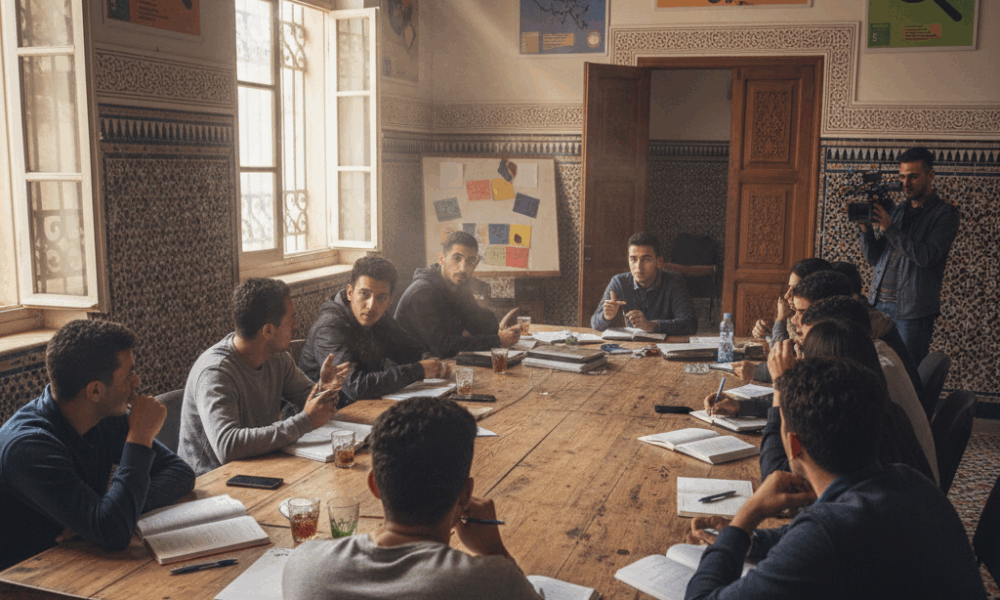
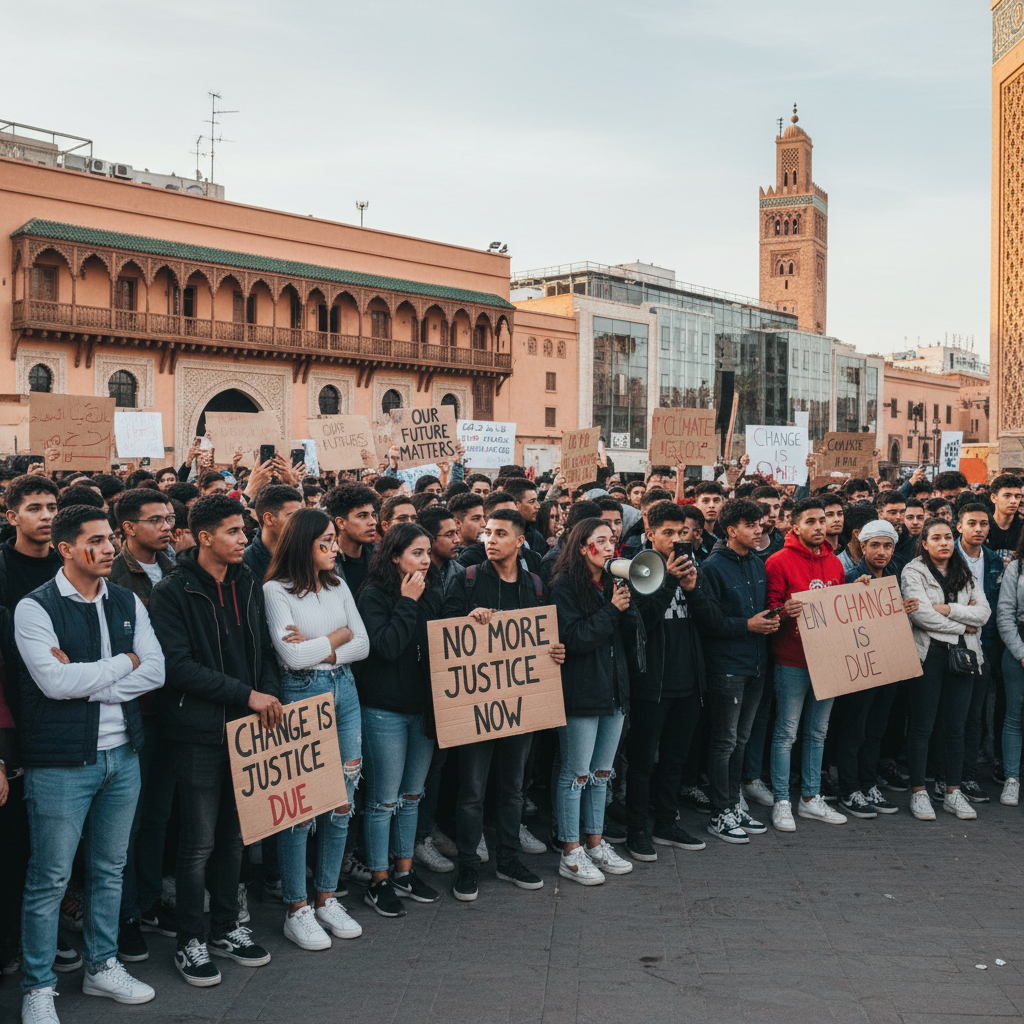
Prosecutions against more than 2,400 people following mobilizations linked to Generation Z mark a decisive step in balancing public order and freedoms. According to information relayed by several sources, more than 1,400 preventive detentions were carried out after gatherings that began peacefully, before episodes of clashes and damage in some cities. The main demand concerned the improvement of public services, notably education and health, driven by a MouvementSocialMaroc that is digital and agile.
This context requires examining the texts mobilized by the JusticeMaroc and the practices of PoliceSécurité. The most cited charges include rebellion in a group, contempt, violence, and property damage. The security logic responds to the need to preserve physical integrity and property, but poses a proportionality challenge. Public debate has expanded around LibertéExpressionMA and the limits of demonstrations when violence emerges on the margins.
Reading of charges and procedural principles
Criminal proceedings rely on the materiality of facts, respect for the presumption of innocence, and the right to defense. The central issue lies in distinguishing between peaceful participants and perpetrators of criminal acts, to avoid confusion. Mass qualification, if perceived as rapid, is then refined through individual files, notably via video surveillance, testimonies, and technical expertise.
Several organizations have called for impartial investigations into the most serious incidents and the methods of arrest. The authorities, for their part, emphasize the extent of the damage and the number of injured among law enforcement. This duality recalls the importance of effective judicial oversight and stronger transparency in public information, in order to reduce polarization around Répression2024.
- 🔎 Key principles at stake: proportionality, presumption of innocence, right to information.
- 🧭 Social challenges: expectations of JeunesseMarocaine, territorial equity, access to services.
- 🛡️ Security: intervention doctrine, training of PoliceSécurité units, de-escalation.
- 🧩 Cohesion: management of misinformation, prevention of radicalizations, civil dialogue.
| Indicator 🧮 | Estimate 📊 | Analysis angle 🧭 |
|---|---|---|
| People prosecuted | ≈ 2,400 ➕ | Sorting facts and individualizing responsibilities |
| Placed in detention | ≈ 1,400 🟠 | Proportionality of preventive measures |
| Initial arrests | 400+ 🚓 | Timing of arrest waves |
| Reported deaths | 2–3 according to sources ⚠️ | Investigation and transparency expected |
In this dynamic, one question crosses the public debate: how to reconcile sovereign firmness with the youth’s aspiration to be heard without sliding towards Répression2024? The answer will come from a joint effort of legal education, ethics of intervention, and rigorous public restitution of facts.
Beyond the numbers, the continuation unfolds on the socio-economic ground where concrete solutions can reduce conflict and support the aspirations highlighted by Manifestations2024.
JeunesseMarocaine, DroitsGénérationZ and employment: what economic and HR responses after Manifestations2024?
The observed social pressure is fueled by a combination of economic factors: insertion difficulties, precariousness, mismatch between skills and business needs. The JeunesseMarocaine, ultra-connected, carries demands linked to DroitsGénérationZ: quality public services, transparency, and future prospects. The labor market must respond with smooth pathways, clearer bridges, and reinforced orientation.
Immediate levers exist to transform anger into opportunities. For example, the education system has announced massive needs in human resources. Detailed information on competitions and access routes is available via resources such as recruitment competitions in education, offering concrete short-term perspectives. Private companies also seek to attract digital, commercial, and technical profiles, as illustrated by initiatives such as recruitment of new talents at a telecom operator.
Accelerate employability and secure career beginnings
Two key projects: skills certification and industrializing the transition to employment. Internships must become integration gateways with high hiring potential. In this regard, clarification of selection, support, and evaluation conditions is essential, as described in the guide on pre-hire internships. The challenge is to secure first experiences, reduce turnover, and establish a culture of responsible performance.
In a neighborhood of Kenitra, an association supported 120 young people to obtain IT support skill badges. In four months, 65 were recruited through local job-dating events. Such initiatives demonstrate that public policies and businesses can jointly meet the structuring expectations of JeunesseMarocaine.
- 🚀 Immediate priorities: active orientation, soft skills, school-business partnerships.
- 🛠️ Effective methods: bootcamps, micro-certifications, corporate tutoring.
- 🤝 Inclusion: targeting underprivileged regions, mobility, and temporary accommodation.
- 📈 Impact: insertion rates, entry salary, 12-month stability.
| Action lever 💡 | Expected result 🎯 | Support example 🤝 |
|---|---|---|
| Education competitions | 19,000 positions 🟢 | Access to modalities |
| Telecom talents | Qualified jobs 🛰️ | Apply |
| Pre-hire | Rapid integration ⚙️ | Practical guide |
| Employer brand | Attraction of young people 🌟 | Local references |
To transform Manifestations2024 into a progress dynamic, a job and training architecture aligned with territorial needs is the keystone. The next step questions the role of employers and HR in this recomposition.
Companies, HR, and governance: reconciling LibertéExpressionMA, risk prevention, and attractiveness
Moroccan companies are evolving in a context where citizen expression intensifies. LibertéExpressionMA enters the workplace through social media, and employers must prevent reputational risks without silencing internal speech. Structured policies of social dialogue, ethical alert, and mediation become essential, as does monitoring trends related to MouvementSocialMaroc.
In the HR field, three levers produce results: training managers in sensitive conversations, clear governance of online communities, and revision of digital usage charters. Employers who integrate these mechanisms reduce absenteeism, protect cohesion, and continue to attract demanding profiles. Rankings and feedback, such as those linked to best employers in Morocco, stimulate useful benchmarks.
Case studies: from an incident to a structured policy
An industrial SME in Settat saw a conflict arise following a viral post about workshop hours. Management established an internal anonymous feedback channel and a monthly workload review. In two quarters, tensions decreased and productivity improved by 7%. This trajectory illustrates the value of a listening protocol and an internal PoliceSécurité committee for prevention, distinct from disciplinary action.
Large employers, on their side, strengthen their responsible recruitment and equal access measures. Targeted campaigns, like those in the telecom sector mentioned above, show that transparency of criteria and pedagogy on career paths better retain JeunesseMarocaine.
- 🧩 Useful tools: social charters, whistleblowing, mediation, HR analytics.
- 🛡️ Prevention: mapping social risks, de-escalation protocol, dialogue training.
- 📣 Attractiveness: authentic storytelling, mentoring, targeted upskilling.
- 🤝 External impact: partnerships with training centers, associations, and local authorities.
| HR Dimension 🧭 | Concrete action 🔧 | Expected effect 📈 |
|---|---|---|
| Social dialogue | Mixed monthly committee | Restored trust 🤝 |
| Reputation | Social media usage charter | Fewer crises 🔇 |
| Attraction | Young talent program | Qualified applications ✨ |
| Retention | Mentoring and mobility | Turnover decrease 📉 |
The social maturity of Moroccan companies is a shock absorber during sensitive times. The next chapter questions security standards and the place of non-violent RésistanceCivile in an open society.
PoliceSécurité, Répression2024, and RésistanceCivile: intervention standards and rights education
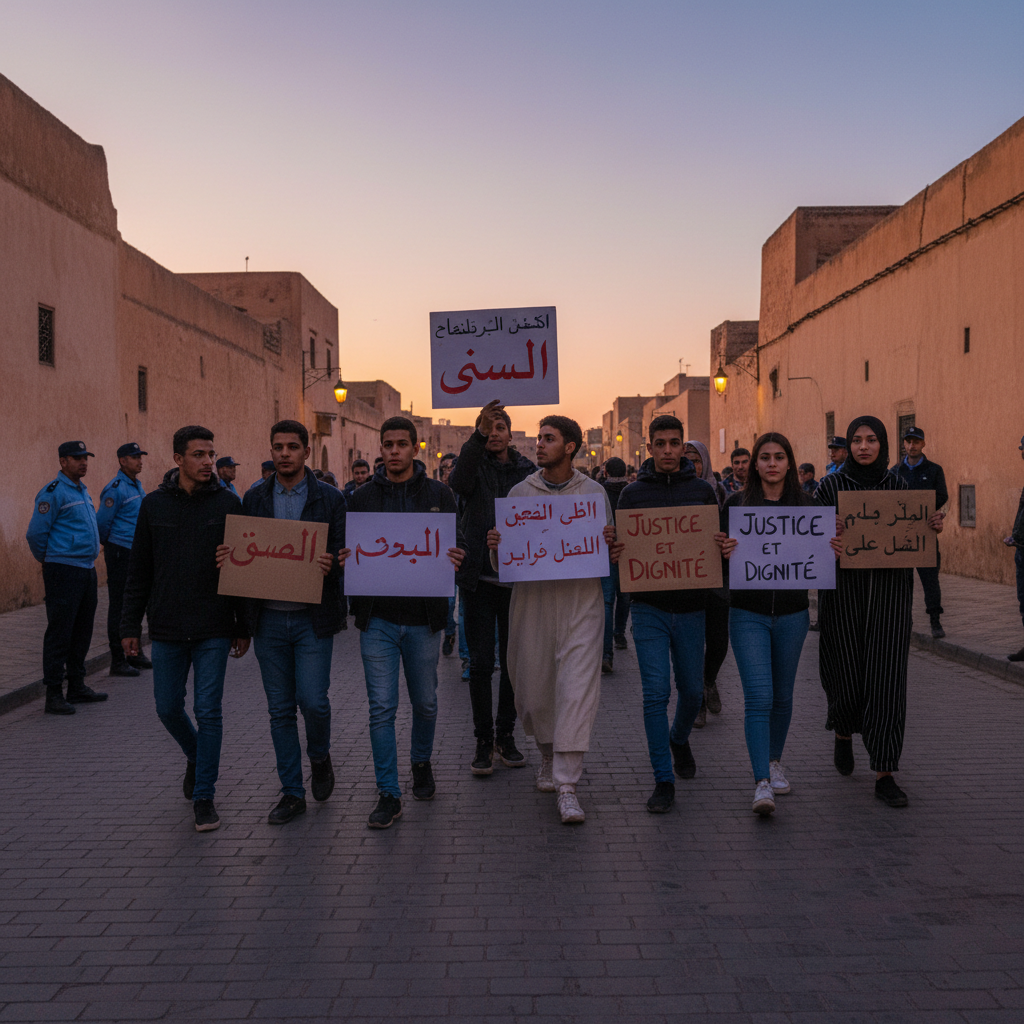
Recent mobilizations reveal an issue of intervention doctrine. For PoliceSécurité, the objective is to protect people and property while respecting the freedom of peaceful assembly. Controversies related to Répression2024 show the need for structural dialogue between authorities, civil society, and academics. Rights education, traceability requirements, and independent incident review mechanisms foster trust.
International cooperation also provides benchmarks. Exchanges of best practices in law enforcement and urban violence prevention are developing. An overview of the geopolitical and security dimension can be explored through this focus on trilateral cooperation, such as Morocco – Thailand – France and security. Experience feedback inspires a de-escalation doctrine and proportionate recourse to coercive means.
Educate on peaceful demonstration and DroitsGénérationZ
Practical civic education is a pillar. School modules and NGO workshops can explain how to organize a gathering, declare a route, protect vulnerable people, and interact with law enforcement. Non-violent RésistanceCivile relies on concrete gestures: identified mediators, anti-rumor instructions, and rejection of any instrumentalization by violent actors.
Universities and incubators can host legal clinics on LibertéExpressionMA. These tools strengthen rights appropriation by JeunesseMarocaine, while reminding of legal limits related to damage or physical harm.
- 🕊️ Good practices for peaceful gatherings: coordination, mediation, documentation.
- 🛡️ Shared duties: respecting instructions, protecting third parties, rejecting weapons.
- 👁️ Transparency: responsible video recording, respect for privacy, useful evidence.
- 📚 Education: campus modules, legal clinics, researcher-NGO partnerships.
| Theme ⚖️ | Good practice ✅ | Purpose 🎯 |
|---|---|---|
| Declaration | Clear route and schedule | Operational predictability ⏱️ |
| Mediation | Dedicated visible team | Rapid de-escalation 🧯 |
| Traceability | Incident log | Shared accountability 🗂️ |
| Training | Rights and duties workshops | Durable civic culture 🌱 |
To emerge positively, a common grammar of rights and responsibilities is needed. The field of international mobility and public statistics also offers opportunities and trust levers.
Mobility, public data, and opportunity bridges for SolidaritéJeunesMA
Rebuilding trust requires diverse paths. First, mobility: some young people seek experiences abroad to return with sought-after skills. Hence the interest of practical and transparent information, such as those related to consular services, available via visa center in Rabat. The goal is to streamline legal, safe, and reversible pathways, serving SolidaritéJeunesMA.
Next, quality public data is the basis of informed dialogue. The dissemination of employment statistics, salaries, and sector needs helps arbitrate policies. Professional resources detail how to optimize recruitment and analysis, as presented in this good practices guide on data-driven recruitment. Ecosystem actors can thus better align offers and skills.
Focus on territories and investment
Creating local jobs relies on territorial dynamism. Agri-food, logistics, and industrial projects are expanding in regions, with international cooperations strengthening value chains. An example of openness can be seen in the news about agricultural partnerships and exchanges, illustrated by contents such as investing in a farm in Brittany to understand standards, certifications, and markets. Learning these sectors can inspire win-win cooperations in Morocco.
Young graduates, often driving digital initiatives, can valorize these value chains through traceability, B2B platforms, and exports. Mobility, when chosen and prepared, becomes an employability accelerator and not default exile.
- ✈️ Controlled mobility: international internships, planned returns, recognition of acquired skills.
- 📊 Useful data: employment barometers, skills mapping, salary transparency.
- 🏞️ Territories: agro sectors, sustainable tourism, regional logistics hub.
- 🤲 Community: diaspora mentoring, alumni networks, structured SolidaritéJeunesMA.
| Pillar 🔗 | Tool/resource 🧰 | Direct benefit ✅ |
|---|---|---|
| Mobility | Visa info | Secure pathways 🛂 |
| Data | HCP Guide | Informed decisions 💡 |
| Investment | Case studies | Knowledge transfer 🌍 |
| Networks | Diaspora mentoring | Opportunity access 🚀 |
Civic trust grows when information is accessible, mobility horizons are clear, and the local economy offers concrete levers. It remains to structure a shared, visible, and measurable action plan.
Action plan to transform the crisis into opportunities: governance, skills, and quality jobs
To stabilize the public space while responding to expressed aspirations, a three-part action plan can guide the collective effort. Part 1, governance: independent incident review mechanisms, quarterly reporting on legal follow-ups, and liaison committees with civil society around JusticeMaroc. Part 2, skills: relaunch of continuing education, targeted micro-certifications, and strengthened orientation platforms. Part 3, jobs: acceleration of public and private recruitment, support for TPE/SMEs, and support for territories.
Employers can value their employer brand through transparency, inclusion, and internal progression. Labels and benchmarks, such as those presented in national rankings, stimulate alignment with best practices. A sectoral focus shows the interest of telecom, industrial, and community services initiatives providing concrete solutions to young school leavers.
Mapping actions and monitoring indicators
The guiding thread must remain clear and measurable, with shared indicators. For example, semi-annual targets on youth insertion, objectives of feminizing recruitment in strained jobs, and maintenance commitments for profiles from peripheral regions. A growing presence of local job centers, linked to associations, may triple access to useful information within twelve months.
The link with civic education remains central. Promoting non-violent RésistanceCivile, understanding DroitsGénérationZ and recognizing LibertéExpressionMA in the workplace create a climate of trust benefiting all, including companies seeking talents.
- 📅 0–6 months: targeted public recruitments, territorial employment-training pacts, social mediation.
- 🧭 6–12 months: scaled micro-certifications, national mentoring, multisectoral job-dating.
- 🏗️ 12–24 months: regional sector hubs, interregional mobility, export sectors.
- 💬 Continuous: quarterly reports, citizen panels, shared indicators.
| Part 🧱 | Priority action 🎯 | Key indicator 📊 |
|---|---|---|
| Governance | Independent review committee | Published reports 📄 |
| Skills | Targeted micro-certifications | Insertion rate 🔁 |
| Employment | Accelerated competitions | Positions filled ✅ |
| Dialogue | Youth-authorities panels | Recommendations adopted 🗳️ |
A shared, quantified, and transparent plan is the best defense against a settling crisis. It is also the foundation of inclusive, sustainable growth focused on the future of JeunesseMarocaine.
{“@context”:”https://schema.org”,”@type”:”FAQPage”,”mainEntity”:[{“@type”:”Question”,”name”:”What are the main charges mentioned in prosecutions related to the demonstrations?”,”acceptedAnswer”:{“@type”:”Answer”,”text”:”The most cited charges concern rebellion in a group, contempt, violence, and damage. JusticeMaroc must individualize responsibilities to distinguish peaceful participants from offenders.”}},{“@type”:”Question”,”name”:”What quick levers exist to improve youth integration?”,”acceptedAnswer”:{“@type”:”Answer”,”text”:”Competitions in education, better supervised pre-hire internships, micro-certifications, and school-business partnerships. Initiatives such as sector recruitments and practical guides facilitate transition to employment.”}},{“@type”:”Question”,”name”:”How to reconcile public security and freedoms?”,”acceptedAnswer”:{“@type”:”Answer”,”text”:”Through proportionality of PoliceSécurité interventions, independent review mechanisms, better rights education, and clear declaration and mediation procedures.”}},{“@type”:”Question”,”name”:”Is international mobility a brain drain?”,”acceptedAnswer”:{“@type”:”Answer”,”text”:”Not necessarily: well prepared, it acts as a skills accelerator. The aim is to encourage useful back-and-forths and an anchoring in local value chains, linked to SolidaritéJeunesMA.”}}]}What are the main charges mentioned in prosecutions related to the demonstrations?
The most cited charges concern rebellion in a group, contempt, violence, and damage. JusticeMaroc must individualize responsibilities to distinguish peaceful participants from offenders.
What quick levers exist to improve youth integration?
Competitions in education, better supervised pre-hire internships, micro-certifications, and school-business partnerships. Initiatives such as sector recruitments and practical guides facilitate transition to employment.
How to reconcile public security and freedoms?
Through proportionality of PoliceSécurité interventions, independent review mechanisms, better rights education, and clear declaration and mediation procedures.
Is international mobility a brain drain?
Not necessarily: well prepared, it acts as a skills accelerator. The aim is to encourage useful back-and-forths and an anchoring in local value chains, linked to SolidaritéJeunesMA.

Comments are closed