Investing in a farm in Brittany in 2025: situation, ecological transition and leverage effects
The 2025 context outlines a rare window of opportunity for rural investment in Brittany. The region combines a rich agricultural tradition, a solid agri-food industrial base, and a growing demand for products derived from sustainable agriculture. Public policy direction favors the energy efficiency of agricultural buildings, water preservation, and valorization of local products, all of which reduce long-term risk and strengthen operational profitability. For a Moroccan investor, this positioning aligns with the major transformations in the Moroccan employment market and the new consumer demands regarding traceability and quality.
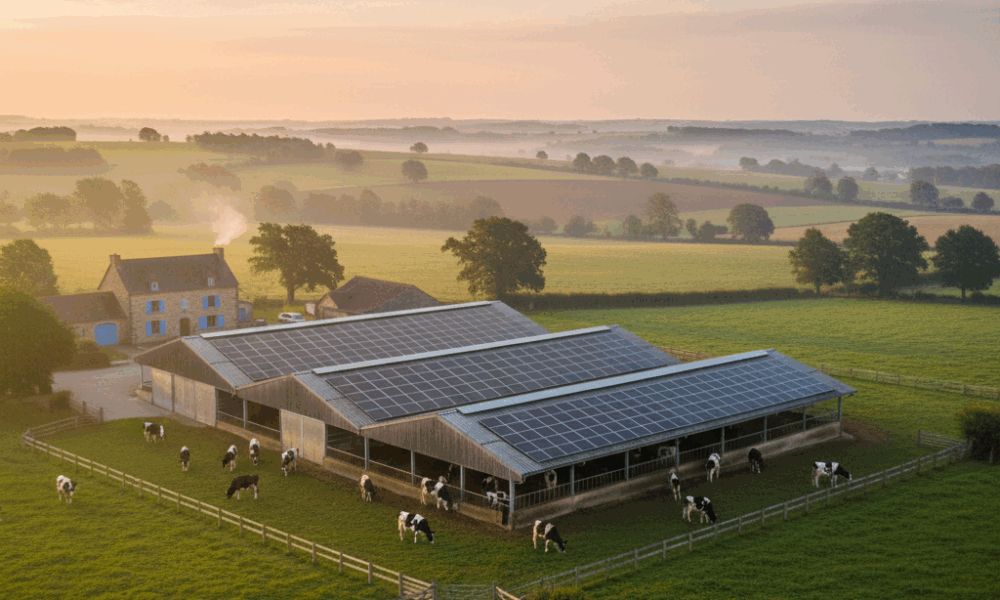
Brittany, historically focused on dairy production, meat, vegetables, and agri-food, has established itself as a laboratory for ecological transition applied on the ground. Farms that modernize their production tools (milking robotization, water recovery, photovoltaic energy) observe a decrease in fixed costs and an improvement in animal welfare, supporting the ESG performance sought by investors. This dynamic fits into a European movement for securing supplies, where food sovereignty is no longer a theoretical concept but a management criterion for value chains.
A Moroccan investor can also capitalize on human and technical bridges between the two shores. The improvement of logistical corridors and discussions on the feasibility of a Morocco–Europe tunnel illustrate growing interest in smoother exchanges over the next decade. At the same time, the rising skills of talents in Morocco, documented by the 2025 panorama of the best Moroccan employers, open perspectives for co-development, exchanges of agricultural interns, and knowledge diffusion.
The tangible assets of farms (land, buildings, livestock, equipment) can incorporate low-carbon materials. Low-carbon innovations for the construction or renovation of barns and sheds reduce environmental footprint and facilitate access to green financing. Moreover, the expertise of urban planners, as shown by the role of Novec in planning, inspires coherent implantation schemes: circulation, water management, landscape integration, and security.
Key 2025 factors for a performing Breton farm
- 🌱 Sustained demand for short supply chains (Rennes, Vannes, Brest) and for certified organic farms.
- 🔌 Access to renewable energy equipment (solar roofs, local-scale methanization) making sites more resilient.
- 🧭 Stability of regulatory framework encouraging watershed protection and input efficiency.
- 🧑🌾 Qualified labor pool thanks to European mobility and Morocco–France training synergies.
- 📈 Professionalization of direct sales (rural e-commerce, basket subscriptions, farm brand) offering higher margins.
| Parameter 🔎 | Situation 2024 ↔ 2025 📆 | Potential effect on the farm 💡 |
|---|---|---|
| Energy ⚡️ | Incentives for self-production increasing | Decrease in cost per liter of milk 🐄 / kg of vegetables 🥕 |
| Local markets 🛒 | More visible conscious consumption | Price premium via valorization of local products 🌾 |
| Financing 💶 | Green orientation prioritized | Facilitated access to loans and grants 🌍 |
| Logistics 🚚 | Optimized routes toward Rennes and coast | Freshness retained, waste reduced 🍎 |
Overall, the combination of market signals, public policy, and construction innovations creates an equation conducive to thoughtful agricultural investment in Brittany starting now.
Breton sectors with high potential: dairy, organic, seaweed and local specialties
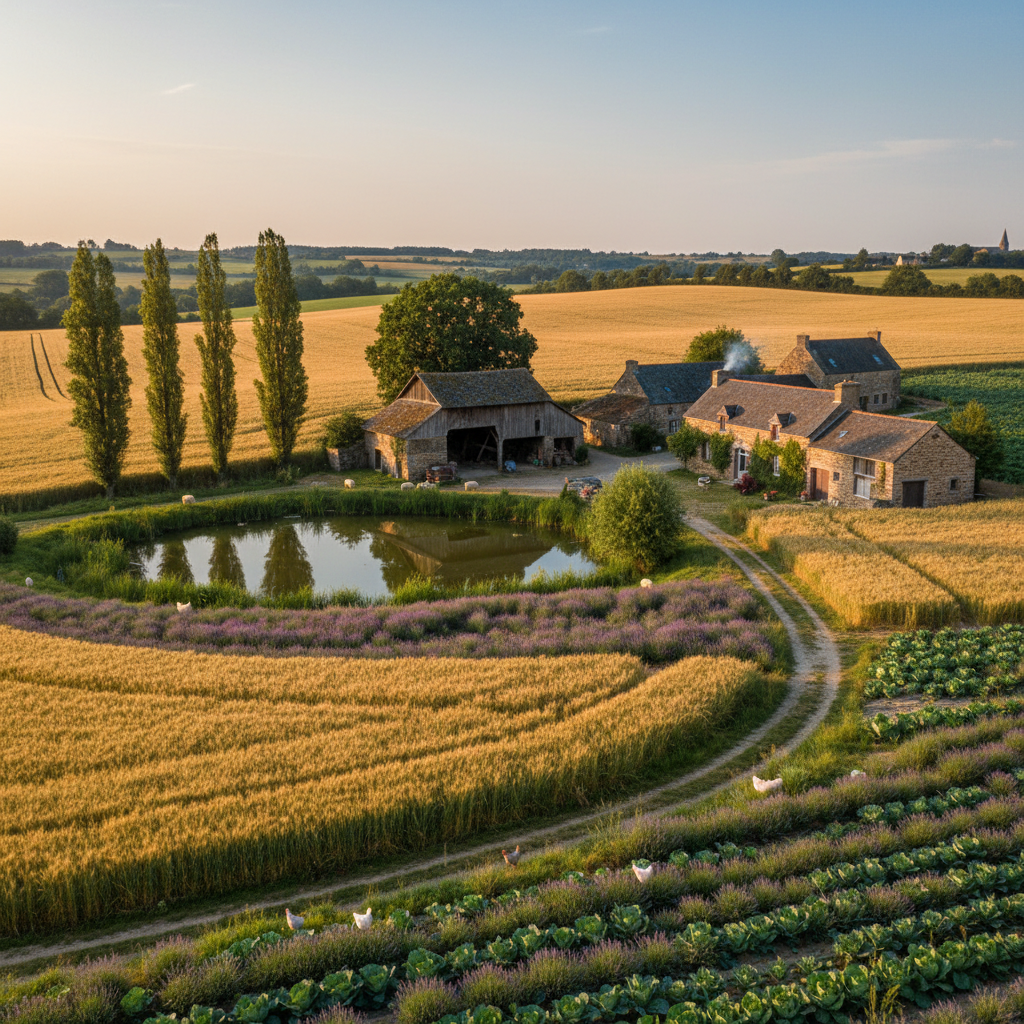
Brittany stands out by the density and diversity of its sectors. Dairy production remains a backbone: high-performing genetics, experienced cooperatives, cheese transformation workshops rooted in tradition. Added to this are rapidly expanding segments: organic open-field vegetables, aromatic herbs, spirulina and seaweed, free-range poultry, cider, and apple juices from old varieties. This mosaic reduces dependence on a single market and supports differentiation strategies.
In a realistic scenario, a mixed farm near Rennes can coordinate three pillars: grass-milk, organic vegetables, and farm hospitality. With well-managed pastures, a moderately sized herd, and a transformation workshop (yogurts, tommes), added value grows thanks to short supply chains. Seasonal vegetables sold in AMAP, urban markets, and subscription baskets stabilize cash flow. The “local” ranges (locally aged cheese, cider from old orchard trees) anchor valorization of local products in a recognizable story and landscape.
This orientation meets consumers’ appetite for traced, minimally processed products grown according to sustainable agriculture principles. It also answers the ambitions for food sovereignty, a strategic theme in Europe and Morocco. Moroccan actors, familiar with export requirements (quality, certification), can bring a beneficial culture of processes, as observed in other economic sectors, from risk analyses to site security, similar to subjects discussed in this international security analysis.
Product positioning ideas in 2025
- 🧀 Milk and meadow cheeses: transparent communication on animal welfare and grazed grass.
- 🥬 Organic market gardening: weekly baskets, included recipes, “anti-waste” option at a gentle price.
- 🌊 Seaweed and spirulina: local dietary supplements, partnerships with coastal restaurants.
- 🍏 Orchard-cidery: batch by plot, storytelling on old varieties.
- 📦 Rural e-commerce: grouped delivery in Rennes and neighboring municipalities Saturday mornings.
| Sector 🌿 | Competitive advantage 🏅 | Priority channel 📦 | Morocco–Brittany synergy 🤝 |
|---|---|---|---|
| Milk 🐄 | Abundant grass, know-how | Farmstead cheeses directly | Cross-training teams 🇲🇦🇫🇷 |
| Organic vegetables 🥕 | Clear seasonality | AMAP and basket subscriptions | Irrigation and seed optimization |
| Seaweed 🌊 | Coastal proximity | Restaurants and health stores | Cosmetics co-development |
| Cider 🍎 | Strong regional identity | Short chain and gourmet grocery stores | Premium niche export |
To deepen understanding of the ecosystem, monitoring coastal developments and economic hubs is relevant; comparisons with Moroccan corridors such as the Tangier–Asilah axis highlight the importance of connectivity for the flow of local products.
The robustness of these sectors relies on authentic stories, technical rigor, and consistent quality; it is this balance that consolidates a Breton farm in the medium term.
Winning economic models: agrotourism, education and income diversification
Farms combining production and experience stand out. Near the Rennes basin, urban demand leans towards short stays in rural settings, transformation workshops, and educational tours. With a calibrated offer, agrotourism becomes a second income engine, while strengthening the farm’s brand image. This repositioning relies on relational skills, “light” logistics (shop, workshop room, sanitary facilities), and local partnerships (schools, tourist offices, restaurateurs).
Well-connected municipalities to Rennes city center and railway axes offer a regular client base. Villages like Bruz, Chantepie, Cesson-Sévigné, or Pacé are already associated with a prized quality of life; urban proximity feeds short supply chains and weekend bookings. Coastal farms, from Saint-Malo to Quiberon, capture strong seasonality ideal for launching farmer “pop-ups” and summer tastings focused on valorization of local products.
Concrete examples of diversification
- 🏡 Farm guest rooms: sober scenography, 100% local breakfast, showcasing sustainable agriculture.
- 🧑🍳 Cheese and sourdough bread workshops: entry ticket, additional sales in the shop.
- 👨👩👧 Family tours “from meadow to yogurt pot”: education and loyalty building.
- 🧳 Team seminars in nature: room rental, catering, field discovery.
- 🎟️ Online ticketing for guided tours: seasonal calendar, gift vouchers.
| Income pillar 💼 | Initial investment 🧱 | Income frequency 🔁 | Marketing asset ⭐️ |
|---|---|---|---|
| Direct sales 🛒 | Low to medium | Weekly | Local loyalty 🤝 |
| Agrotourism 🏞️ | Medium | Seasonal | Memorable experience 📸 |
| Educational workshops 🎓 | Low | Monthly | Social impact 🌍 |
| E-commerce 📦 | Medium | Recurring | Regional reach 🚀 |
For inspiration, Moroccan peri-urban trajectories, as presented in these opinions on Skhirat–Témara, show how controlled urbanization can support a proximity economy, from crafts to farm products. The logic is comparable: capturing an urban clientele seeking authenticity less than an hour’s drive away.
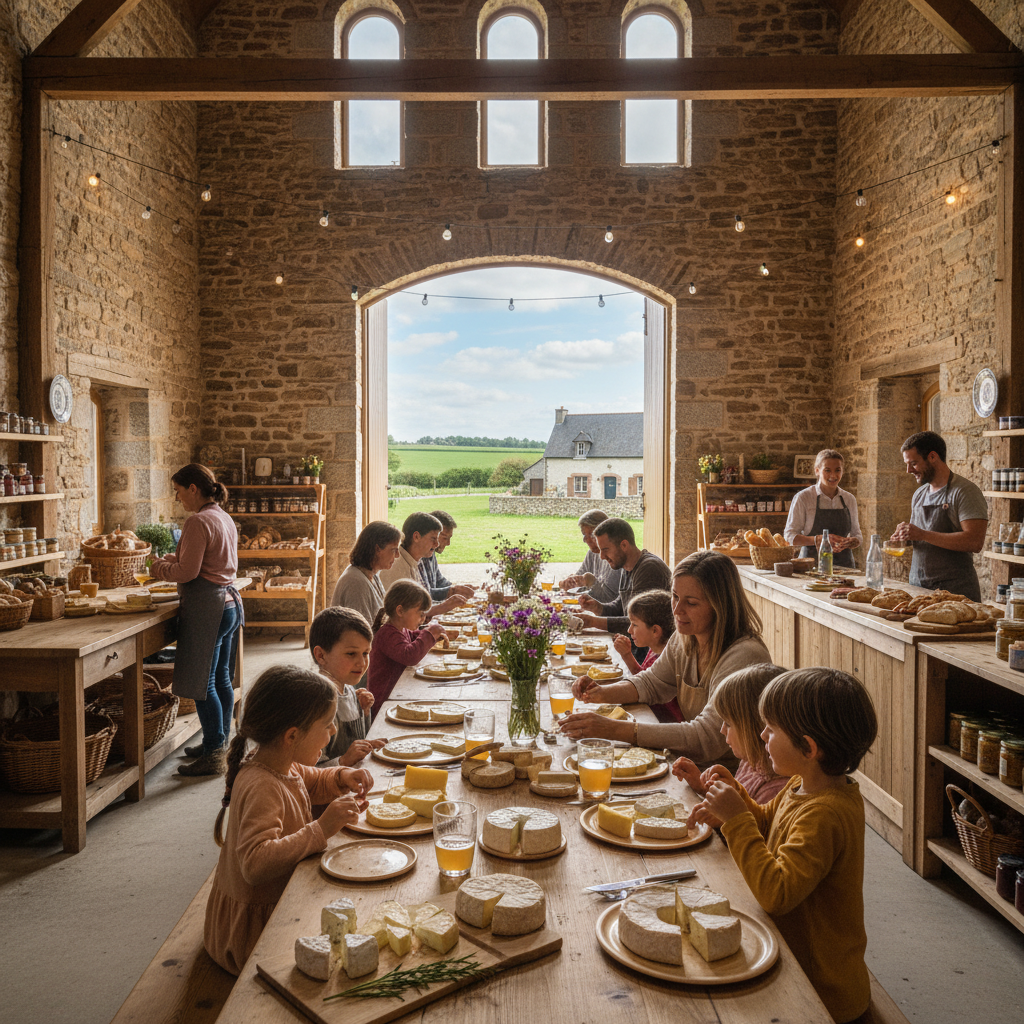
Successful diversification is measured as much in turnover as in relational capital; it is a sustainable entry barrier against generic competition.
Financing, HR and operations: structuring a robust agricultural project in Brittany
Building a solid model relies on a triptych: financing, talent management, and operational excellence. Financially, arrangements focused on ecological transition favor projects integrating renewable energies, water efficiency, and organic farming. Banks look favorably upon farms able to contract downstream (AMAP, collective catering) to secure cash flow. Green subsidies and loans complement the equity and improve capital cost.
On the HR side, performing farms adopt a responsible employer approach: training plan, safety, decent housing, transparent governance. Moroccan market tools and methods can inspire these processes; feedback on how to optimize a hiring process is transferable, from job descriptions to onboarding. Attracting and retaining versatile profiles (livestock, market gardening, customer reception) helps smooth seasonality and improve service quality.
Morocco–Brittany synergies can go further: agronomy engineering internships, cheese companioning, apprentice exchanges. Administrative bridges exist for temporary mobility; practical information, such as from the visa center in Rabat, helps plan schedules and documents. In other sectors, opportunity openings, such as those from SMEIA in Morocco, remind how investment in skills fuels a virtuous circle of productivity and employability.
Levers for financial and HR structuring
- 💶 Green financing: subsidized loans for solar roofs, water recovery, building insulation.
- 📊 Stable contracts: basket subscriptions, local collective catering, gourmet grocery stores.
- 🧑🌾 HR policy: continuous training, QWL, customer culture, employer branding inspired by Moroccan references.
- 🔄 Process: standardize harvesting, processing, sales; measure costs per workshop.
- 🧰 Maintenance: preventive plan on milking robots, cold rooms, and irrigation.
| Aspect 🧩 | Priority action 🚀 | Expected result 🎯 |
|---|---|---|
| Financing 💳 | Green loan + grant | Optimized capex 🌿 |
| Sales 🛍️ | Recurring contracts | Smooth cash flow 💧 |
| HR 👥 | Versatile training | Quality and agility 🔁 |
| Quality 🧪 | Digital traceability | Customer trust 📈 |

Note: consolidating the employer image requires daily attention; sectorial or cross-sector benchmarks, from technical recruitment to mobility policies, accelerate professionalization.
Where to locate your farm in Brittany: basins, market access and risks to monitor
Location choice determines 70% of success. Ille-et-Vilaine and Morbihan offer a good compromise between agricultural land, proximity to Rennes, and access to the coast. Well-served peri-urban municipalities by roads and train station facilitate direct sales and public reception. Areas close to university hubs stimulate demand for workshops and visits, while facilitating recruitment of student profiles for seasonal peaks. Coastal territories value marine products and summer agrotourism.
Mapping must include water, soil quality, wind exposure (for hay drying), environmental history, and proximity to sensitive zones. Regulations on nitrates impose precise practices; they are compatible with organic farming and ecological transition if the farm anticipates its rotation, cover crops, and storage. Ports (Saint-Malo, Lorient) and logistics platforms open outlets for niche processed products. Comparisons with structuring Moroccan corridors, such as Tangier–Asilah, highlight the strategic value of good export and tourism connectivity.
Rigorous due diligence is essential: quality of networks (water/electricity), flood risks, easements, building condition, sanitary compliance. Use of more sober materials and processes is an advantage for both safety and reputation; the profession considers best international practices and geopolitical debates affecting supply chains, up to discussions within the UN as seen in this diplomatic insight and its transatlantic corollary in this American initiative, useful for understanding the macro environment, even when the horizon is local.
Decision criteria for land and product flow
- 🛤️ Access: travel time to Rennes or an active town; visibility for the farm shop.
- 💧 Water resource: storage, rainwater recovery, compatibility with chosen crops.
- 🌬️ Local climate: wind for hay, humidity for drying, sunshine for photovoltaics.
- 🛡️ Risks: flooding, neighbors, easements; appropriate insurance.
- 🧭 Ecosystem: cooperatives, slaughterhouse, cheese factory, markets, tourist offices.
| Area 🗺️ | Ideal profile 👤 | Main asset 🧲 | Watch out ⚠️ |
|---|---|---|---|
| Ille-et-Vilaine | Dairy + direct sales | Proximity to Rennes 🏙️ | Land pressure 📐 |
| Morbihan | Market gardening + agrotourism | Tourist flows 🧳 | Seasonality ⏳ |
| Côtes-d’Armor | Mixed livestock–forage | More accessible land 🌿 | Logistics toward large centers 🚚 |
| Finistère | Seaweed + specialties | Coastline and ports ⚓️ | Humid climate 🌧️ |
Finally, observing health and service infrastructures around the farm is pragmatic; local benchmarks, up to quality analyses of establishments like this clinic ranking, remind that territorial attractiveness goes beyond land alone. A well-located farm combines outlets, talents, and quality of life.
For an international investor, it is useful to follow local urbanism and mobility policies, for which Moroccan experiences provide operational references.
Operational roadmap: from due diligence to valorization of local products
Moving from intuition to project requires a precise roadmap. Technical due diligence assesses soil, buildings, water, machinery; commercial due diligence validates local demand and partnerships. A 180-day timeline is typical: audit, financing, asset transfer, re-start, light processing, launch of direct sales. The ambition is to align the economic model with the site’s DNA to accelerate valorization of local products and customer loyalty.
On the communications side, a clear farm identity (name, discreet logo, authentic photos) and minimal digital presence (website, social networks, newsletter) suffice initially. Educational content reassures: manufacturing processes, sustainable agriculture practices, commitments to food sovereignty. On governance, formalizing roles (production, quality, customer relations, finance) helps avoid bottlenecks and increase site capacity without losing rigor.
International comparisons enrich decision quality. Economic or mobility dynamics in Morocco, such as those mentioned in this generational analysis, help anticipate expectations of young audiences seeking meaning and immersive experiences. Similarly, the role of coastal infrastructures and corridors reminds of the importance of location choices, like the lessons learned from Tangier–Asilah.
6-month implementation checklist
- 🗂️ Months 1–2: soil-water-buildings audits, local market study, HR and safety plan.
- 💵 Months 2–3: preparation of green financing files, insurance, choice of high-performance materials.
- 🏗️ Months 3–4: targeted renovation (cold, dairy, shop), solar installation.
- 🛒 Months 4–5: pre-sales, AMAP partnerships, school catering contracts.
- 🎉 Months 5–6: public opening, educational workshops, e-commerce launch.
| Step ⏱️ | Key KPI 📊 | Success threshold ✅ |
|---|---|---|
| Audit | Quantified action plan | Capex < 10% of target turnover 💶 |
| Financing | Effective overall rate | Coverage > 70% of capex 🧱 |
| Direct sales | Basket subscriptions | 100–200 recurring clients 🛍️ |
| Agrotourism | Occupancy rate | > 50% in season 🌞 |
Success depends on execution and coherence: a well-designed agricultural project becomes a hub of local development creating jobs, education, and positive territorial impact.
{“@context”:”https://schema.org”,”@type”:”FAQPage”,”mainEntity”:[{“@type”:”Question”,”name”:”Quel budget pru00e9voir pour reprendre une ferme en Bretagne ?”,”acceptedAnswer”:{“@type”:”Answer”,”text”:”Le budget varie selon le foncier, le cheptel, les bu00e2timents et lu2019u00e9quipement. Un montage type combine apport personnel, pru00eat bancaire orientu00e9 transition u00e9cologique et aides locales. La rentabilitu00e9 se renforce avec des revenus diversifiu00e9s (vente directe, ateliers, agrotourisme) et une mau00eetrise des cou00fbts u00e9nergu00e9tiques.”}},{“@type”:”Question”,”name”:”La conversion en ferme biologique est-elle indispensable ?”,”acceptedAnswer”:{“@type”:”Answer”,”text”:”Elle nu2019est pas obligatoire mais devient un avantage concurrentiel fort. La bio aligne pratiques, image et accu00e8s aux circuits courts. La conversion se planifie (sols, rotations, du00e9bouchu00e9s) et peut bu00e9nu00e9ficier du2019aides selon le territoire.”}},{“@type”:”Question”,”name”:”Comment su00e9curiser la main-du2019u0153uvre en milieu rural ?”,”acceptedAnswer”:{“@type”:”Answer”,”text”:”Un plan RH clair, des logements du00e9cents, la formation continue et une marque employeur cohu00e9rente facilitent lu2019attraction. Les partenariats avec u00e9coles, CFA et u00e9changes Marocu2013Bretagne complu00e8tent le vivier pour les pics saisonniers.”}},{“@type”:”Question”,”name”:”Quelles sont les filiu00e8res les plus robustes en Bretagne ?”,”acceptedAnswer”:{“@type”:”Answer”,”text”:”La production laitiu00e8re, le marau00eechage bio, les spu00e9cialitu00e9s cidricoles et certaines valorisations du2019algues. La robustesse vient de la demande locale, de la possibilitu00e9 de transformer sur place et de la force du ru00e9cit de terroir.”}},{“@type”:”Question”,”name”:”Lu2019agrotourisme est-il compatible avec lu2019u00e9levage ?”,”acceptedAnswer”:{“@type”:”Answer”,”text”:”Oui, u00e0 condition du2019amu00e9nager des espaces du00e9diu00e9s et de respecter lu2019hygiu00e8ne et la su00e9curitu00e9. Des parcours pu00e9dagogiques, des ateliers et une boutique fermiu00e8re cru00e9ent des revenus complu00e9mentaires sans perturber le troupeau.”}}]}What budget should be planned to take over a farm in Brittany?
The budget varies depending on land, livestock, buildings, and equipment. A typical arrangement combines personal contribution, bank loans oriented towards ecological transition, and local aids. Profitability is strengthened with diversified incomes (direct sales, workshops, agrotourism) and control of energy costs.
Is conversion to organic farming mandatory?
It is not mandatory but becomes a strong competitive advantage. Organic farming aligns practices, image, and access to short supply chains. Conversion is planned (soil, rotations, outlets) and can benefit from aids depending on the territory.
How to secure labor in rural areas?
A clear HR plan, decent housing, continuous training, and a coherent employer brand facilitate attraction. Partnerships with schools, vocational training centers, and Morocco–Brittany exchanges complete the pool for seasonal peaks.
What are the most robust sectors in Brittany?
Dairy production, organic market gardening, cider specialties, and some seaweed valorization. Robustness comes from local demand, the possibility to process on site, and the strength of the terroir story.
Is agrotourism compatible with livestock farming?
Yes, provided dedicated spaces are arranged and hygiene and safety are respected. Educational tours, workshops, and a farm shop create additional incomes without disturbing the herd.

Comments are closed