
CLINIQUE RABAT ZAER: medical services and specialties in 2025
At the heart of the health corridor on Mohammed VI Avenue, Clinique Rabat Zaer is part of a territorial dynamic where quality of care, versatility of specialties, and responsiveness of teams shape the patient experience. In 2025, the challenge is no longer just to offer technical acts, but to orchestrate a continuum of care from screening to rehabilitation. Private clinics in Rabat thus compete in advanced imaging, minimally invasive surgery, and management of chronic pathologies. In this landscape, Clinique Rabat Zaer attracts with its cardiac, digestive, and endocrine-metabolic centers, with strengthened coordination between emergency, hospitalization, and consultations.
Moroccan patients, often multi-insured and demanding transparency, express strong expectations regarding appointment delays, confidentiality, and clear explanations. The clinic highlights standardized pathways for orthopedics, ENT, and obesity, inspired by best practices observed at Clinique Agdal, Polyclinique des Oudayas, and Clinique Les Nations. This convergence of standards directly benefits users: preparatory exams anticipated, streamlined admission, and digitalized results delivery. A typical case is an active employee, operated on an ambulatory hiatal hernia, returning to work within a few days thanks to coordinated care between a nutritionist, gastroenterologist, and surgeon.
Reference specialties in Rabat also rely on partnerships. For oncology and radiotherapy (VMAT), several institutions collaborate with high-level imaging platforms, including sites equipped with PET scan and brachytherapy. The model is clear: a center of excellence internalizes the medical decision and outsources, if necessary, part of the heavy technical platform to trusted partners. Clinique Universitaire Rabat or Centre Médical Ibn Sina may intervene in complex pathways without the patient losing track of their file.
Practically speaking, what the population expects from Clinique Rabat Zaer is a clear range of services, reachable doctors, and smooth logistics. Hence the rise of communication channels based on secure messaging, callback calls, and tele-expertise for cases requiring multidisciplinary advice. Spontaneous comparisons with Clinique Yasmine, Clinique Jerrada Souissi, or Clinique Ziraoui (for patients navigating between Rabat and Casablanca) reflect increased health mobility, driving continuous improvement.
Structuring specialties and key equipment
The most requested clinical departments share three markers: clinical relevance, local visibility, and technological integration. The emphasis is on interventional cardiology, gastroenterology (including care for NASH and IBD), endocrinology-diabetology, and ENT. On the technical side, the spread of contrast ultrasound, blocks equipped for advanced laparoscopy, and polyvalent resuscitation strengthen team autonomy. This scaling meets the needs of an active urban population and a business fabric valuing quick returns to work, framed by precise medical certificates and ergonomic follow-up.
- 🫀 Cardiology and rhythmology for rhythm disorders and heart failure.
- 🧠 Neurology and chronic pain, with a pathway for mild strokes.
- 🧪 Endocrino-diabetology for metabolic assessments and therapeutic education.
- 🧫 Gastroenterology and hepatology, including diagnostic and therapeutic endoscopy.
- 👂 ENT and ambulatory surgery for sinusitis, tonsillectomies, and recurrent otitis.
- 🦴 Orthopedics–traumatology with accelerated rehabilitation protocols.
- 🧑⚕️ Adult resuscitation and continuous monitoring for complex cases.
| Department 🧭 | Main acts/care ⚕️ | Key equipment 🛠️ | Patient benefit ✅ |
|---|---|---|---|
| Cardio | ECG, ultrasound, effort assessment | High-frequency ultrasound devices 🩺 | Early risk screening ❤️ |
| Gastro | Gastroscopy, colonoscopy | HD endoscopes 🔬 | Rapid diagnosis, minimally invasive procedures ⏱️ |
| Endocrino | Diabetes assessment, education | Glycemic sensors 📊 | Increased therapeutic autonomy 🙌 |
| ENT | Ambulatory surgery | Micro-instruments 🎯 | Same-day discharge 🏠 |
To navigate this ecosystem, several public and private references contribute to health monitoring and prevention. Innovations and vaccination campaigns follow research news, usefully synthesized in the file dedicated to the Institut Pasteur of Morocco. This combination of scientific monitoring and clinical practice accelerates the adoption of relevant protocols.
Final insight: a well-orchestrated bouquet of specialties, coupled with smooth logistics, makes the difference for Clinique Rabat Zaer in a competitive market.
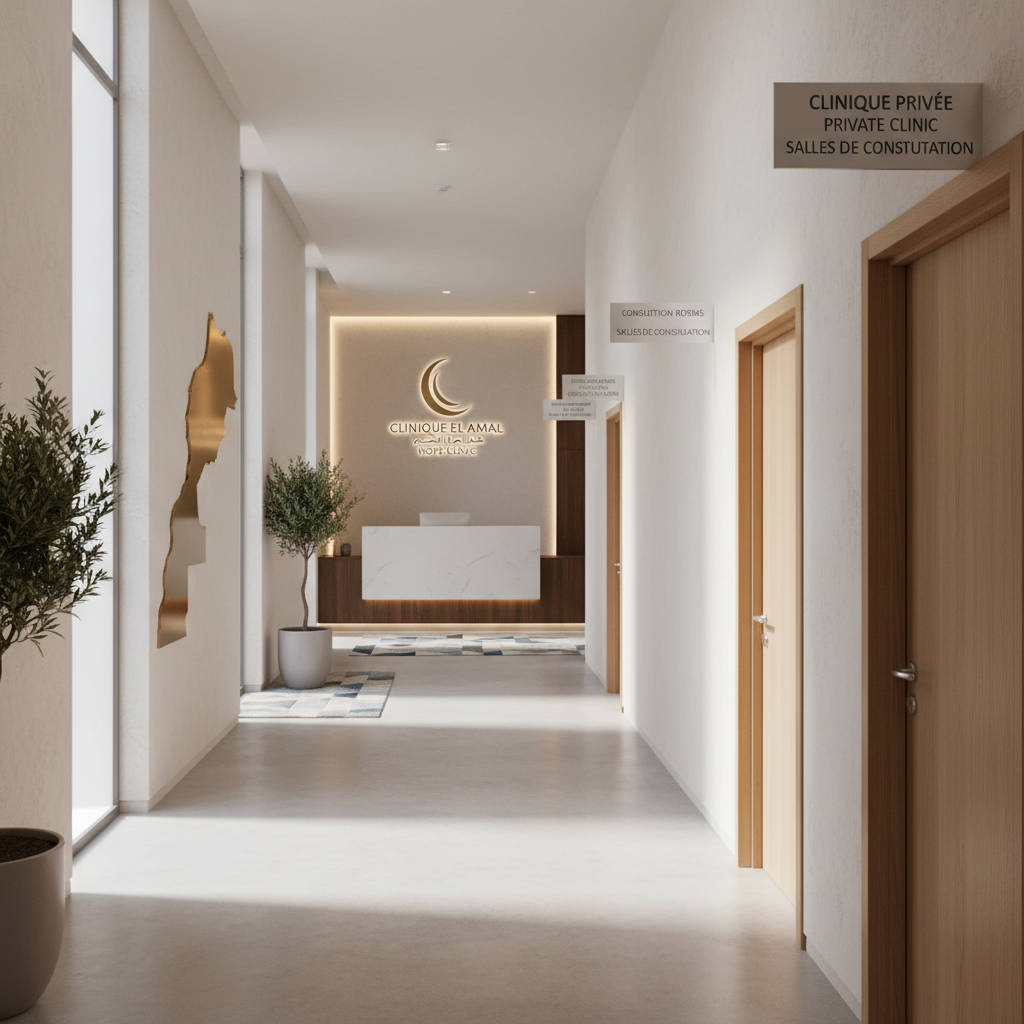
Before addressing the patient pathway and appointment procedures, it is useful to understand how Rabat clinics harmonize reception, insurance, and informed consent.
CLINIQUE RABAT ZAER: patient pathway, appointments, and administrative practices
The patient pathway in 2025, at Clinique Rabat Zaer as in reference institutions in Rabat, follows codified steps to simplify the experience. The initial request (phone, form, or messaging), pre-admission (documents, consents, verification of coverage), the act (consultation or intervention), and follow-up (report, work stoppage, rehabilitation) are integrated into a homogeneous process. The major clinics in the capital — such as Clinique Agdal or Polyclinique des Oudayas — have contributed to generalizing these standards, pushing the entire market towards greater readability and shortened delays.
Administrative aspects are critical in a country where medical coverage is segmented between private insurance, mutuals, and RAMED/AMO. It should be noted that some establishments require payment of medical fees before patient discharge, or even an initial deposit before any care. This practice, far from anecdotal, is linked to the insurance framework and control of unpaid bills. Medical secretariats here play an educational role to avoid misunderstandings and intervention postponements.
How to properly prepare your visit to the clinic
Organized patients reduce their waiting time and risk of administrative incidents. A simple checklist suffices: ID card, insurance card, prescriptions, prior imaging, employer’s contact details for work stoppages. Medical directory platforms facilitate contact, and more and more practitioners offer teleconsultation slots to validate indications and synchronize preliminary exams.
- 📅 Book appointments early for heavy exams (scanner, endoscopy).
- 🧾 Prepare insurance proofs and possible guarantee check.
- 📲 Confirm by message the day before and report any contraindications.
- 🧑💼 Inform the employer in case of foreseeable work stoppage.
- 🧑⚕️ Request a written post-operative follow-up plan.
| Establishment 🏥 | Appointment channel 📞 | Average delay ⌛ | Particularities 🌟 |
|---|---|---|---|
| Clinique Rabat Zaer | Phone, messaging | 48–72 h | Guided pre-admission pathway ✅ |
| Clinique Agdal | Switchboard + schedule | 24–48 h | Developed ambulatory care 🏃 |
| Polyclinique des Oudayas | Platform + secretariat | 72 h | Versatile technical platform 🛠️ |
| Clinique Les Nations | Call + SMS callback | 48 h | Multidisciplinary coordination 🤝 |
For patients requiring medical evacuation or a visa, the coordination with consular procedures is crucial. Delays and requirements can be consulted via local resources, such as the BLS Rabat visa center, useful for planning a treatment stay abroad or a planned return to Morocco after treatment.
The digitalization of consents and follow-up complies with the Moroccan law on the protection of personal data. Credible establishments communicate clearly on the collection and use of data, access to files, and rights of opposition. This rigor reflects positively on employer image and patient trust.
Final insight: a transparent and anticipated patient pathway reduces delays, secures billing, and improves the overall experience.
CLINIQUE RABAT ZAER: professions, recruitment, and key health skills
The dynamism of Clinique Rabat Zaer lies in its ability to attract and retain rare medical and paramedical profiles. In 2025, three trends dominate: rise of specialties (rhythmology, hepatology, clinical nutrition), hybridization of skills (care–data–relationship), and quality culture. Recruitment combines clinical expertise and service attitude, in a context where patient relationship has become a strategic lever.
The talent pool is fed through national channels. IFPS training in Morocco is the golden path for nurses and health technicians, with modules now oriented towards simulation, risk management, and e-health. On the public side, ministry of Health competitions structure careers and feed, in the medium term, the private sector through intersectoral mobility. Institutions like the Institut Médical International Rabat contribute to this skill elevation, through seminars and continuous training partnerships.
Sought profiles and transversal skills
The most sought-after profiles mix technicality and relational sense. Experience in ambulatory care, mastery of ERAS protocols (enhanced recovery), or the ability to document traceability make the difference. Healthcare managers support team upskilling, manage indicators, and cultivate a continuous improvement culture inspired by international standards.
- 🧑⚕️ Anesthetic and operating room nurses, with laparoscopic experience.
- 🧪 Imaging and endoscopy technicians, focused on quality and hygiene.
- 🧠 Pain/neurology specialists for complex post-op pathways.
- 🗂️ Medical secretaries trained in local GDPR and law 09-08.
- 🤝 Case managers to coordinate pre-admission–insurers–employers.
| Function 👔 | Major skills 🧩 | Tools/tech 💻 | Added value 🌱 |
|---|---|---|---|
| Operating room nurse | Asepsis, check-lists, ERAS | Electronic patient record 🗃️ | Fewer complications 📉 |
| Imaging tech | Image quality, radiation protection | PACs/RIS 🖼️ | Reliable diagnostics 🔎 |
| Healthcare manager | Management, indicators | Dashboards 📊 | Durable quality culture 🌿 |
| Case manager | Coordination, pedagogy | Patient CRM 📞 | Smooth pathway 🚀 |
Aware of prevention and biosafety is progressing, supported by national and international resources. Useful insight is offered by the overview of Institut Pasteur of Morocco, complementing internal infectious risk control policies. This culture extends to service architecture (clean/dirty routes, locker rooms, sterilization areas), where Moroccan hospital engineering has matured.
Final insight: the competitive advantage in private health derives from the combination of talents–processes–technology, more than a single flagship equipment.
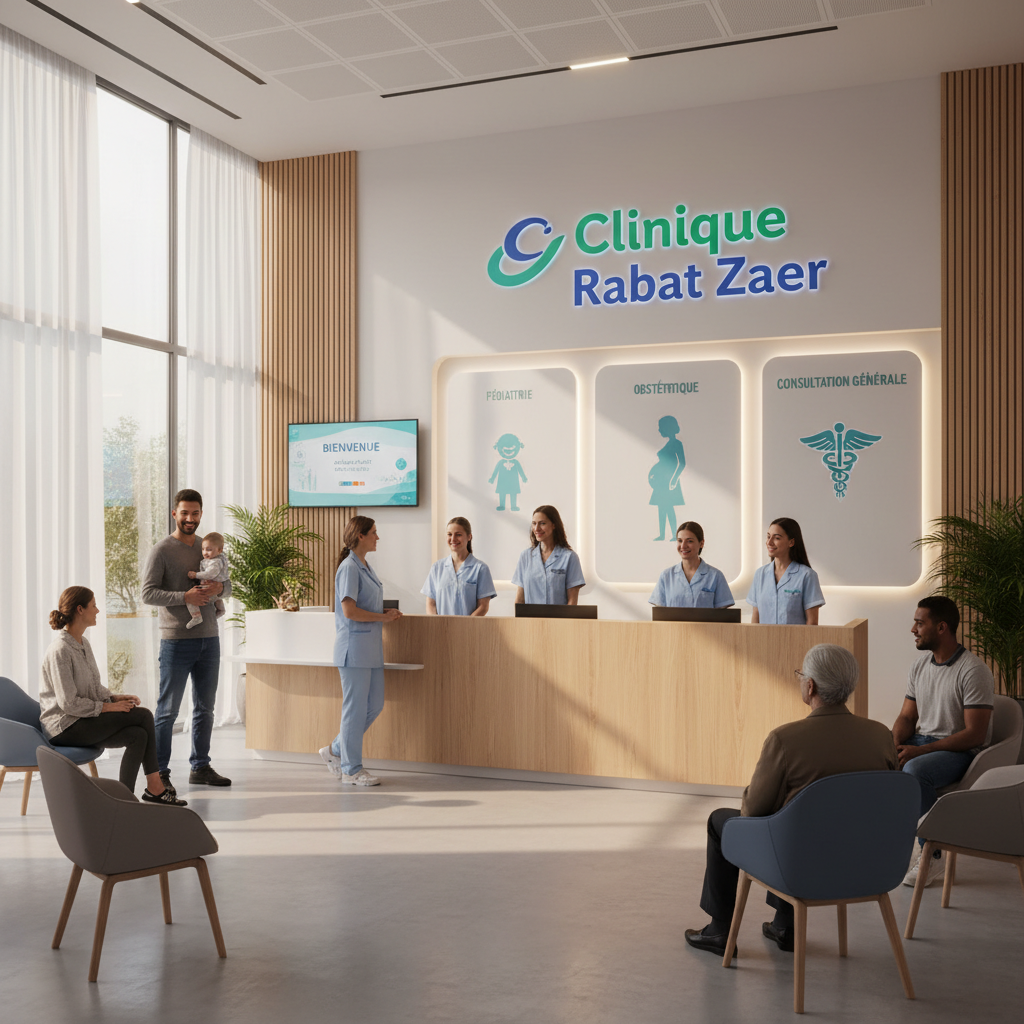
The quality and safety of care are the natural extension of this HR dynamic. Let’s move on to concrete commitments and indicators followed by Rabat clinics.
CLINIQUE RABAT ZAER: quality, safety, data, and ethics of care
Patient trust is earned through evidence. At Clinique Rabat Zaer, as with recognized peers in Rabat — Clinique Les Nations, Clinique Agdal, Clinique Universitaire Rabat, Centre Médical Ibn Sina — safety of care relies on standardized and measured procedures. Block checklists, identity vigilance, radiation protection, and pharmacovigilance form a foundation. Added to this are hygiene audits, indicators of healthcare-associated infections, and feedback shared with teams.
The data component has become central. Electronic patient records, secure messaging, and tele-imaging operate in compliance with law 09-08 related to personal data protection. Transparency, consent, and right of access are explained to the patient, and system architecture aims for robustness (backups, logging, access control). Lessons from epidemiological monitoring and vaccination, documented by actors such as the Institut Pasteur of Morocco, feed seasonal prevention and risk management.
Concrete risk management measures
Concretely, three families of actions structure safety: prevention (protocols, training, PPE), detection (traceability, audits, indicators), response (M&M reviews, action plans, communication). The patient perceives tangible benefits: better controlled waiting time, honest information, fewer complications. Client companies (occupational health contracts) appreciate document compliance and traceability of work stoppages.
- 🧼 Hygiene: validated sterilization chain and scheduled biological controls.
- 📋 Checklists: WHO Surgical Safety adapted to the Moroccan context.
- 🔐 Data: nominative access policies and encrypted exchanges.
- 📣 Information: clear patient sheets, explicit informed consent.
- 🔄 Improvement: feedback and traced action plans.
| Risk 🎯 | Barrier 🛡️ | Indicator 📈 | Patient effect 🌟 |
|---|---|---|---|
| Infection | Asepsis procedures | Quarterly HAI rate | Fewer complications 😊 |
| Identity vigilance error | Bracelet + double check | Incidents tracked | Compliant acts ✔️ |
| Data breach | Access control | Security tests | Enhanced trust 🔒 |
| Treatment delay | Prioritized pathways | Triage–act delay | Improved prognosis ⏱️ |
Quality is not limited to care. The hotel experience (rooms, catering, comfort) contributes to recovery. Building engineering plays a major role: natural lighting, acoustics, flow, and energy efficiency. In this regard, industrial initiatives, like LafargeHolcim innovations in 2025, influence Moroccan hospital construction towards more sustainable and resilient structures, beneficial for patients and operating costs.
Final insight: perceived safety by the patient results from countless mastered, visible and invisible gestures, orchestrated by trained teams.
CLINIQUE RABAT ZAER: practical benchmarks to compare Rabat clinics
Choosing a clinic in Rabat requires balancing specialties, delays, proximity, and costs. Clinique Rabat Zaer positions itself on specialized pathways while maintaining versatility appreciated by families. For a second opinion, many compare with Clinique Agdal, Polyclinique des Oudayas, Clinique Les Nations, Clinique Yasmine, Clinique Jerrada Souissi, and, when travel permits, Clinique Ziraoui. Criteria are best made explicit: evaluate the technical platform, post-op coordination, bed availability, and quality of medical communication.
Rankings and feedback, even if concerning other cities, clarify the decision. Thus, the ranking of clinics in Oujda highlights transferable factors: patient relationship, pricing transparency, emergency management, appropriateness of acts. These criteria guide families as well as companies referencing clinics for their employees.
Useful comparative criteria
A comparative table helps objectify the choice. It does not replace consultation but reveals service gaps. Establishments benefit from publishing their indicators (readmission rates, delays, satisfaction) and formalizing simple commitments: call back any patient not seen within 48 hours, provide a standardized report, and offer follow-up teleconsultation.
- 📍 Location and accessibility (parking, transport, travel time).
- 🛠️ Technical platform (imaging, operating room, resuscitation, endoscopy).
- 🧑⚕️ Presence of multi-specialties for comorbid cases.
- 💬 Quality of communication (clarity of prescriptions, quick responses).
- 💼 Agreement with employers and insurers to smooth care management.
| Clinic 🏥 | Strengths 🌟 | When to choose ❓ | Patient benchmark 👍 |
|---|---|---|---|
| Clinique Rabat Zaer | Coordinated pathways 🤝 | Metabolic follow-up + minimally invasive surgery | Controlled delays ⏱️ |
| Clinique Agdal | Ambulatory ⚡ | Fast scheduled acts | Same-day discharge 🏠 |
| Polyclinique des Oudayas | Versatility 🧩 | Cases requiring imaging + ICU | Comprehensive care 🛡️ |
| Clinique Les Nations | Multidisciplinarity 🧠 | Pathologies with comorbidities | Multidisciplinary consultation 📚 |
For patients considering care outside Morocco, document logistics (translations, medical file, certificates) must be prepared early. Support from the BLS Rabat visa center can condition delays, especially during high demand periods. Conversely, a return to Rabat after treatment abroad must be anticipated with a clear follow-up plan and secure sending of reports.
Final insight: comparing is not opposing, but finding the best option for a specific need, at a given time, with reliable information.
CLINIQUE RABAT ZAER: local health economy and employment impact in Rabat
Private health in Rabat is an engine for qualified jobs and service innovations. Clinique Rabat Zaer, linked with surrounding actors, contributes to a multiplier effect on direct employment (caregivers, administrative staff, hospitality) and indirect (biomedical maintenance, catering, security, IT). Economic fallouts exceed the clinic premises: nearby rentals, transport, pharmacies, partner laboratories. This value chain attracts young graduates and transitioning profiles, while senior practitioners disseminate their expertise.
The growing demand for scheduled care, rehabilitation, and chronic disease follow-up creates new positions: pathway coordinators, therapeutic educators, flow managers, health data analysts. Dialogue with training structures and public institutions is key to adjusting the skill offer. IFPS train field professions, while Health competitions structure hospital careers, with bridges to private sector. Exchanges with the Institut Pasteur of Morocco feed the culture of prevention and biosafety.
Jobs, skills, and cooperations
To maximize local impact, clinics promote on-site learning (mentorship), clinical simulation, and practice evaluations. The use of more efficient and sustainable hospital buildings — supported by LafargeHolcim innovations — contributes to reducing operating costs and more comfortable work environments, boosting HR attractiveness. At the Greater Rabat scale, the plural offer (from Clinique Jerrada Souissi to Clinique Yasmine) supports a dynamic job market, where customer service and quality demands are common denominators.
- 🏗️ Indirect jobs: biomedical maintenance, facility management, energy.
- 🎓 Skill development: simulation, e-learning, internal certification.
- 🤝 Partnerships: universities, institutes, laboratories, and e-health startups.
- 📈 HR indicators: retention, engagement, continuous training.
- 🌿 Work environment: ergonomics, natural light, sustainable materials.
| Lever 🔑 | Action 🛠️ | Effect on employment 👥 | Patient benefit 🌟 |
|---|---|---|---|
| Training | Certified pathways | Durable skills 📚 | Better standardized care ✔️ |
| Innovation | Digital tools | New jobs 💡 | Smoother pathways 🚀 |
| Infrastructure | Efficient buildings | HR attractiveness 🧲 | Comfort and safety 🛡️ |
| Partnerships | Universities/Institutes | Qualified talent pool 🌱 | Comprehensive care 🧩 |
Finally, regional openness encourages comparing practices. Lessons from the Oujda ranking remind that reputation is built on evidence and consistency over time: reliable service today is a sustainable employability asset tomorrow.
Final insight: the economic impact of private clinics is primarily human — growing skills that secure patient trust.
CLINIQUE RABAT ZAER: use cases, prevention, and patient orientation
To realize the benefits of a plural offer, nothing beats use cases. An active senior, monitored for type 2 diabetes, benefits from an integrated pathway: endocrinologist for therapeutic adjustment, dietitian for eating habits, and therapeutic education with glycemic sensors. Clinique Rabat Zaer offers this type of modular assembly, in coordination with local general practitioners. A teen suffering from chronic ENT issues is oriented towards planned ambulatory treatment outside school exam periods, an organization inspired by best practices of Clinique Agdal and Clinique Les Nations.
Prevention extends to companies. HR directors seek partners able to absorb health assessments, run sleep–nutrition workshops, and provide anonymized dashboards. These services help reduce absenteeism and improve quality of work life. Projects integrating vaccination and health monitoring rely on national resources, like syntheses from the Institut Pasteur of Morocco, which help adjust campaigns and messages.
Pragmatic orientation advice
The plurality of actors in Rabat is an asset. Besides Clinique Rabat Zaer, alternatives exist depending on needs: Polyclinique des Oudayas for integrated technical pathways, Centre Médical Ibn Sina to coordinate specialized opinions, Clinique Universitaire Rabat for cases requiring academic consultation. For scheduled interventions, Clinique Yasmine and Clinique Jerrada Souissi offer proximity options.
- 🧭 Identify the objective: diagnosis, treatment, second opinion, or rehabilitation.
- 🧾 Request a written estimate: acts, stay, devices, follow-up.
- 🧑⚕️ Prefer a coordinated pathway when comorbidities exist.
- 🔎 Check availability of specialists and required equipment.
- 📣 Demand a clear follow-up plan and post-discharge contact channels.
| Needs 🎯 | Option in Rabat 🏥 | Major asset 🌟 | Useful remark 📝 |
|---|---|---|---|
| Fast ambulatory care | Clinique Agdal / Clinique Yasmine | Same-day return 🏠 | Anticipate the accompanier 🚗 |
| Complex pathway | Polyclinique des Oudayas | Versatile platform 🛠️ | Multidisciplinary coordination 🤝 |
| Second opinion | Clinique Les Nations / Univ. Rabat | Cross expertise 🧠 | Transmit HD imaging 📀 |
| Metabolic follow-up | Clinique Rabat Zaer | Therapeutic education 📚 | Sensors and coaching 📲 |
For families considering an international care pathway, early preparation of procedures remains key. Besides medical coordination, visa and logistic aspects must be integrated upstream via BLS Rabat. For inspiration and interregional comparison, syntheses like the Oujda overview help question good practices and demand the same transparency in Rabat.
Final insight: the best orientation aligns the right place, the right moment, and the right need — with a written follow-up plan.
{“@context”:”https://schema.org”,”@type”:”FAQPage”,”mainEntity”:[{“@type”:”Question”,”name”:”Quels sont les pu00f4les les plus sollicitu00e9s u00e0 la Clinique Rabat Zaer ?”,”acceptedAnswer”:{“@type”:”Answer”,”text”:”Cardiologie, gastro-entu00e9rologie, endocrinologie-diabu00e9tologie, ORL et orthopu00e9die concentrent lu2019essentiel des demandes, avec une montu00e9e de lu2019ambulatoire et de la ru00e9u00e9ducation coordonnu00e9e.”}},{“@type”:”Question”,”name”:”Faut-il avancer des frais avant une prise en charge u00e0 Rabat ?”,”acceptedAnswer”:{“@type”:”Answer”,”text”:”Certains u00e9tablissements demandent un du00e9pu00f4t ou un paiement avant la sortie, selon les contrats du2019assurance. Il est recommandu00e9 de valider les modalitu00e9s lors de la pru00e9-admission.”}},{“@type”:”Question”,”name”:”Comment u00e9valuer la qualitu00e9 du2019une clinique privu00e9e ?”,”acceptedAnswer”:{“@type”:”Answer”,”text”:”Regarder la clartu00e9 du parcours, la disponibilitu00e9 des spu00e9cialistes, la transparence tarifaire, et la communication des indicateurs (du00e9lais, satisfaction, ru00e9admissions). Les retours patients sont complu00e9mentaires.”}},{“@type”:”Question”,”name”:”Quelles ressources pour les professionnels de santu00e9 ?”,”acceptedAnswer”:{“@type”:”Answer”,”text”:”Les formations IFPS, les concours du ministu00e8re de la Santu00e9, et les synthu00e8ses de lu2019Institut Pasteur du Maroc constituent des repu00e8res solides pour du00e9velopper sa carriu00e8re et sa pratique.”}}]}What are the most requested departments at Clinique Rabat Zaer?
Cardiology, gastroenterology, endocrinology-diabetology, ENT, and orthopedics concentrate the majority of requests, with a rise in ambulatory care and coordinated rehabilitation.
Is an advance payment required before care in Rabat?
Some establishments require a deposit or payment before discharge, depending on insurance contracts. It is recommended to validate modalities during pre-admission.
How to evaluate the quality of a private clinic?
Look at the clarity of the pathway, availability of specialists, pricing transparency, and communication of indicators (delays, satisfaction, readmissions). Patient feedback complements these.
What resources exist for health professionals?
IFPS training, Ministry of Health competitions, and syntheses from the Institut Pasteur of Morocco provide solid references to develop careers and practice.

Comments are closed