Walking today through our Moroccan metropolises often means crossing history without realizing it. Every day, we pass blue plaques, hurried by meetings or business lunches, without taking the time to decipher the names they bear. Yet, stopping for a moment on Allal Ben Abdellah Street is diving into the heart of a fascinating story that mixes individual courage and collective destiny. In this year 2026, as our cities continue to transform, this name still resonates as a powerful symbol of selflessness.
Whether in Rabat, where the heroic act took place, or in Casablanca, where the artery pulses with commercial activity, understanding this place means understanding an essential part of our identity. Far from being a simple address for headquarters or shops, this urban street embodies the indissoluble link between the colonial past and our dynamic present. 🇲🇦
The man behind the plaque: the “Samurai” of the resistance
Before being a commercial or administrative street, Allal Ben Abdellah was a man of rare humility and determination. Born in 1916 in Guercif, into a modest family, he worked as a craftsman painter. Nothing predestined this craftsman, later settled in the Akkari neighborhood of Rabat, to become one of the most emblematic figures of the national resistance. What strikes in his path is the striking contrast between a simple life and an extraordinary destiny.
The decisive turning point happened on Friday, September 11, 1953. While the protectorate authorities thought they had quelled the rebellion by exiling the late SM Mohammed V on August 20 of the previous year, Allal Ben Abdellah proved otherwise. His objective? The official convoy of the “false sultan” Mohamed Ben Arafa, who was heading to the Ahl Fès mosque for prayer. 🕌

A sacrifice engraved in collective memory
Allal Ben Abdellah’s act was not just a simple news event but a true political shock. Charging the convoy, he broke the myth of submission. Although security agents and colonial forces ended his life with eight bullets, his gesture breathed new energy into the resistance cells. This martyr is sometimes nicknamed “the Samurai” for his frontal courage and absolute sense of honor.
Today, commemorating this event each year reminds us that the freedom we enjoy, including in our economic and professional sphere, rests on heavy sacrifices. The memory of this heroic act transcends generations and reminds us that sovereignty is the foundation of all future development. It is a lesson in leadership and commitment that can, in a way, inspire today’s managers and decision-makers: knowing how to take risks for a cause greater than oneself.
From Clock Street to the modern strategic axis
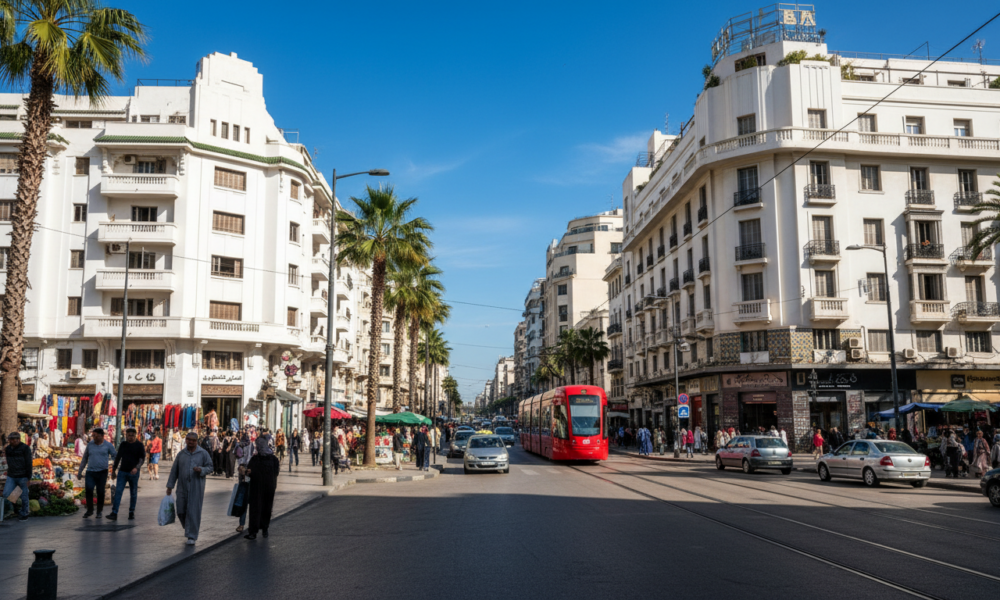
If the man belongs to national history, the street that bears his name, especially in Casablanca, tells another facet of Morocco: its urban and architectural evolution. Formerly known as “Clock Street,” this artery is a true open-air museum. It bears witness to the urban planning genius of the early 20th century, often associated with Henri Prost’s plans, aimed at linking the old medina to the new city.

Architecture and secrets of a changing neighborhood
The architecture of Allal Ben Abdellah Street is an eclectic mix that fascinates heritage lovers. One finds Art Deco facades alongside more modern buildings, symbolizing the smooth transition between eras. It is not only a traffic lane; it is a space where urban culture is lived daily. 🏢
By observing the details on balconies or the entrances of buildings, one discovers the secrets of a time when each construction had a soul. Today, these buildings house offices, medical practices, and shops that vibrate with the local economy. The street has maintained its prestige while adapting to the demands of modern business in 2026. It remains a nerve center for transport and access to services, facilitating the lives of thousands of Casablanca residents who use it every day.
To better understand the duality between the man and the place, here is a comparison illustrating how history is anchored in stone:
| Historical Aspect (The Man) 📜 | Urban Aspect (The Street in 2026) 🏙️ |
|---|---|
| Origin: Born in Guercif, modest craftsman painter. | Origin: Colonial layout (ex-Clock Street), Henri Prost’s vision. |
| Action: Brave act on September 11, 1953. | Action: Dynamic commercial axis and transport hub. |
| Symbolism: Resistance, patriotism, sacrifice. | Symbolism: Continuity, architectural heritage, economic vitality. |
Cultural and economic impact today
Beyond stone and memory, Allal Ben Abdellah Street is a living ecosystem. It perfectly illustrates how Morocco values its traditions while projecting toward the future. For a recruiter or professional working nearby, this neighborhood offers a particular atmosphere, mixing the buzz of surrounding markets with the rigor of office spaces.
This artery is also a privileged witness to the evolution of retail trade and services. Historic brands like “A la ville de Paris” (formerly owned by the Attia family) have given way to new dynamics, but the commercial spirit remains intact. It is this mixture that makes our city centers rich.
Here are some notable facts and curiosities related to this emblematic axis:
- 📍 Strategic connection: In Casablanca, it serves as a vital link between the old medina and the modern city center, just steps from Place des Nations Unies.
- 🎨 Artistic roots: The martyr Allal Ben Abdellah was a craftsman painter, a profession requiring precision and patience, qualities he transposed into his political commitment.
- 🗓️ Key date: September 11 is not just a commemorative date but the day that sealed the unbreakable link between the Throne and the people.
- 🚗 Accessibility: In 2026, the street remains a model of transport integration, facilitating mobility at the heart of the metropolis.
- 🗣️ Nickname: The term “Samurai” attributed to the martyr reflects popular admiration for his nearly suicidal yet highly symbolic attack.

A source of inspiration for Moroccan youth
It is crucial for young talents walking these sidewalks, CV in hand or project in mind, to realize they are following in the footsteps of giants. The story of Allal Ben Abdellah Street teaches us that boldness is a driver of change. In today’s economic context, where innovation and entrepreneurship are valued, remembering this patriotic boldness can serve as a catalyst for our own professional ambitions.
Who was Allal Ben Abdellah?
Allal Ben Abdellah was a Moroccan resistant born in 1916 in Guercif. A craftsman painter by trade, he is famous for attempting to assassinate the false sultan Mohamed Ben Arafa on September 11, 1953, a heroic act that marked the struggle for independence and the return of the late SM Mohammed V.
Where is the best-known Allal Ben Abdellah street located?
Although many Moroccan cities have a street named after him, one of the most emblematic is located in Casablanca. Formerly called Clock Street, it connects the old medina to the modern city center and is a major commercial and architectural axis.
Why is this event celebrated every year?
The families of former resistants and the Moroccan people commemorate this event to honor sincere patriotism and ultimate sacrifice. It is a way to perpetuate the memory of resistance against colonialism and to recall the values of loyalty to the nation and the Throne.
What is the architectural style of Allal Ben Abdellah street in Casablanca?
The street features a fascinating mix of early 20th-century colonial architecture, including Art Deco and neo-classical buildings, integrated within a dense and modern urban fabric. It was developed as part of the urban plans by the planner Henri Prost.

No responses yet