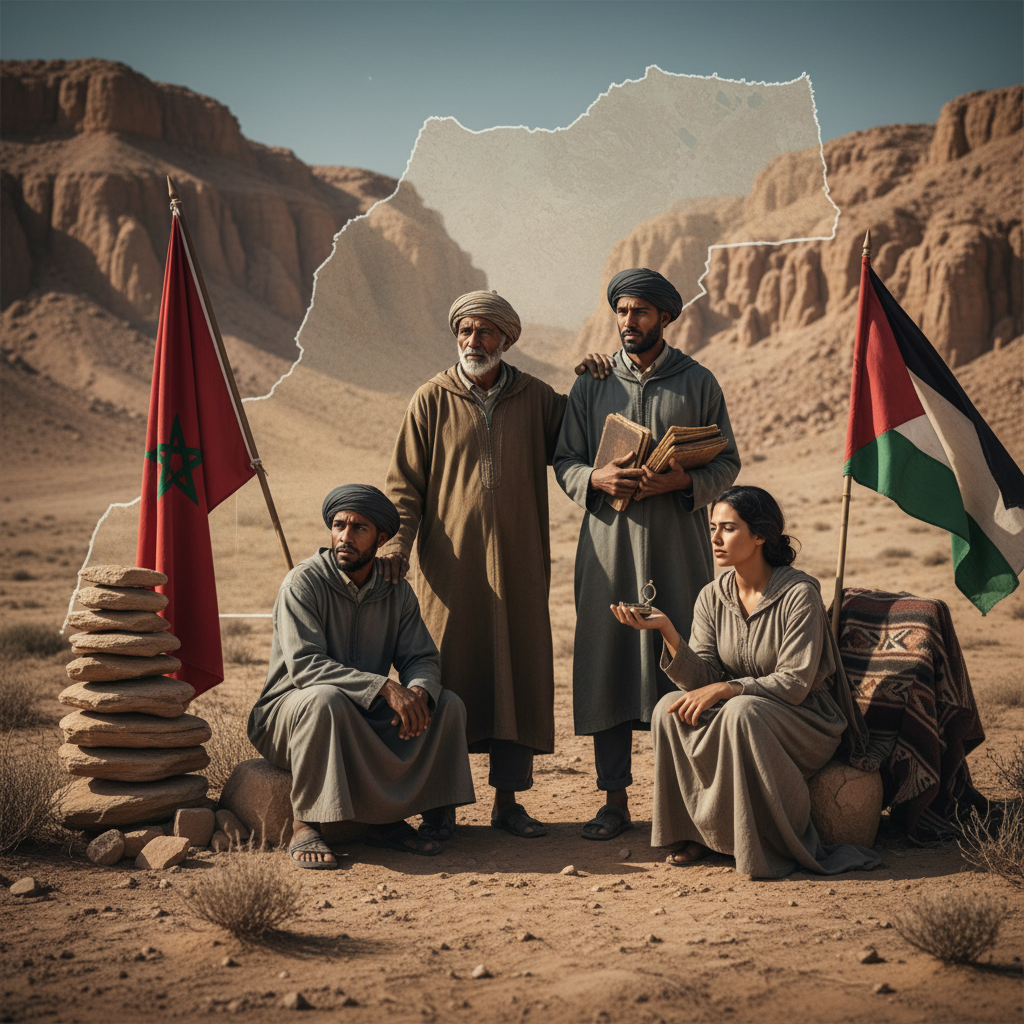
Fifty years of refusals and conflicting ambitions: key milestones of the Saharan conflict and impacts on employment
The Western Sahara remains, according to the UN, a non-self-governing territory since the 1960s, even though Morocco administers most of the area and offers a plan for autonomy. Fifty years after the advisory opinion of the International Court of Justice in 1975 on self-determination, political and economic lines have shifted, but the central equation remains unchanged: how to reconcile regional stability, independence aspirations advocated by the Polisario Front, and the socio-economic integration of local populations within a sustainable employment dynamic? This tension, often viewed solely through a geopolitical lens, has concrete repercussions on investor confidence, labor market organization, and skills mobility between Rabat, Laâyoune, and Dakhla.
Historically, the 1975 ICJ opinion, the Green March, agreements made between the powers of that time, and the creation of MINURSO in 1991 continue to frame the debate. More recent episodes — resumption of tensions in 2020, U.S. recognition in 2020 later maintained, and Security Council resolutions reaffirming the search for a “realistic and mutually acceptable” solution — confirm an international framework where the words “referendum,” “autonomy,” and “final status” coexist without resolution. For employment professionals, this ambiguity entails adaptive HR plans, contractual clauses of due diligence, and a graduated implantation strategy.
Diplomatic milestones and signals for the labor market
UN decisions do not act only in the symbolic domain. Each stance influences risk premiums, investment calendars, and the availability of international financing. Thus, episodes where the Security Council reaffirms the relevance of a political solution have often coincided with announcements of infrastructure and jobs in the Southern provinces. Conversely, phases of military tension impact logistics and the perception of external talents, especially those relocating with their families.
- 📌 1975: ICJ opinion and launch of the Green March — a structuring reference for collective memory and political legitimization.
- 🧭 1991: creation of MINURSO — anchoring the “process” and awaiting the self-determination referendum.
- 💼 2000s-2020: rise of infrastructure projects — logistics, fishing, energies, services, and ripple effects on employment.
- 🌍 Recent UN decisions: reiterated support for a “realistic” outcome — an opportunity window for locally impactful investments.
- 🧩 Strategic risk: the autonomy/referendum duality remains open — need to scenario-plan HR consequences.
To deepen the diplomatic aspect, several analyses underline the weight of international positions and UN mediation. The news surrounding the support for the Moroccan autonomy plan illustrates a ratchet effect for investors, while the American recognition initiative of 2020 hardened some lines while accelerating other cooperations. In this context, Morocco also staged its political reading of UN votes, as evidenced by the celebratory episode linked to the UN, to foster a narrative of trust and continuity.
| Key parameter 🔎 | Signal for employment 💼 | HR implication 🤝 |
|---|---|---|
| Security Council resolutions | Increased visibility on stability 🌤️ | Phased recruitments and continuity clauses 📑 |
| Renewed tensions | Logistical delays, cost increases ⚠️ | Attraction/retention policies with mobility bonuses 💸 |
| Major infrastructures | Creation of direct and indirect jobs 🚧 | Accelerated training and OFPPT partnerships 🎓 |
Within this framework, employment actors monitor both geopolitical signals and project pipelines. An effective HR policy relies on a nuanced reading of these two horizons, a condition for controlled scale-up.
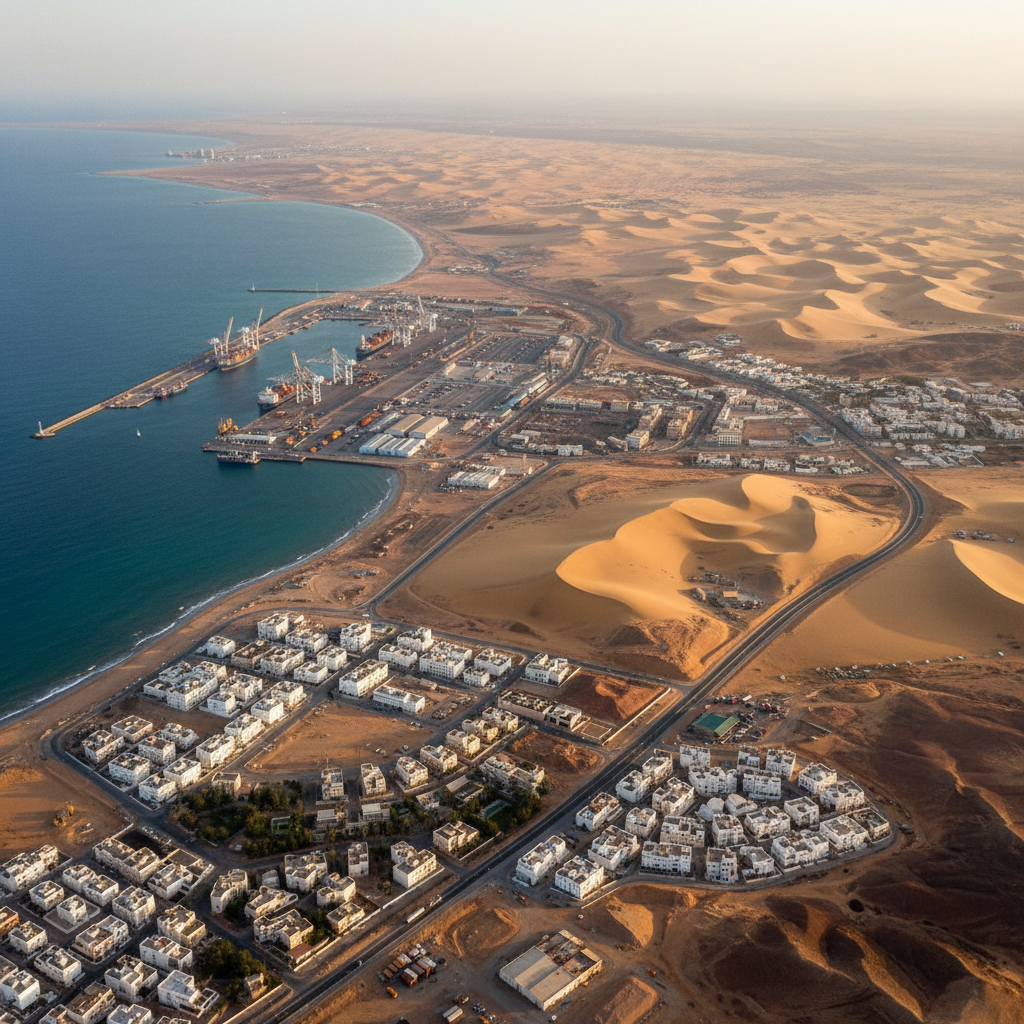
Economy and jobs in the Southern provinces: investments, skills, and value chains
Beyond slogans, the economic boom in the Southern provinces is evident in projects: coastal roads, logistic bases, port extension, and renewable energy projects. The Dakhla Atlantic port complex, fisheries valorization, cold logistics, offshore services, as well as the phosphate chain (Bou Craa) support thousands of direct jobs and a core of induced services (transport, maintenance, business tourism). Companies establishing themselves seek versatile profiles: energy technicians, maintenance agents, machine operators, logisticians, data analysts for flow optimization.
Local data, cross-checked with national trends, confirm an upgrading of skills. The demand for “hybrid” jobs — technical skills plus soft skills (safety, coordination, inter-site communication) — is strong. Training institutions, notably OFPPT, have multiplied courses in industrial maintenance and electromechanics, while university centers are expanding their offerings in project management and geomatics.
Regional value chains and professional mobility
The dynamics of Dakhla and Laâyoune rely on three axes. First, the sea, with fishing and processing, which require qualified operators for quality and traceability. Next, infrastructure: construction, operation, and maintenance open up sustainable careers. Finally, energy, with wind and solar, promotes emerging green jobs focused on efficiency and monitoring. The “south-north” mobility intensifies: some technicians start in the South, upskill, then lead teams in other regions of Morocco.
- 🚀 Fisheries: quality controllers, cold technicians, export logisticians.
- 🔧 Infrastructures: site managers, surveyors, machine operators.
- 🌞 Renewable energies: O&M operators, safety officers, data analysts.
- 🧭 Services: business hospitality, collective catering, facility management.
- 💻 Digital: multi-site IT support, GIS, data for supply chain.
Job surveys also highlight the necessity of integration programs adapted to newcomers: housing, safety, access to healthcare, schooling for children. The “life package” becomes a decisive element to stabilize teams and reduce turnover. Some employers have thus instituted subsidized weekly shuttles and quarterly retention bonuses.
For a synthetic overview of economic stakes, a useful resource presents sectoral impacts and future prospects: economy and investments in the Sahara. Public communication has also helped to pace these stages by combining national narrative and structuring facts: the reference to the fiftieth anniversary has, for example, highlighted several projects and their social impacts.
| Sector 🧩 | Functions in tension 👷 | Priority HR lever 🔧 |
|---|---|---|
| Fisheries | Quality control, industrial refrigeration ❄️ | Certified HACCP training 🎓 |
| Infrastructures | Surveying, machine operation 🚜 | Work-study apprenticeship 🤝 |
| Energies | Wind/solar O&M 🌬️☀️ | Continuous safety & upskilling 🦺 |
In this very “field” reality, the quality of the HR base — recruitment, onboarding, health and safety, development — determines both job sustainability and productivity. Employers winning the talent race are those who take the onsite living experience seriously.

By combining value chains and attention to people, companies secure their workload plans. The next section will continue with the regulatory and compliance dimensions, increasingly decisive for international investors.
International law, “non-self-governing territory,” and HR compliance: acting between autonomy and referendum
The status of Western Sahara as a non-self-governing territory raises compliance issues for legal, procurement, and HR departments. Organizations exposed to international standards (ESG, human rights, due diligence) must clarify their contractual practices: traceability of flows, working conditions, consultation of local stakeholders, and grievance mechanisms. Funders require enhanced due diligence when the political-legal context is discussed at the UN — which has been the case here for decades.
In practice, employers observe two guidelines. On one hand, align with Moroccan law applicable in the administered provinces and national social rules (contracts, minimum wage, safety). On the other, integrate recognized voluntary standards (ILO, UN guiding principles, sectoral norms) to reduce the perception gap among stakeholders. This dual approach, well documented in due diligence, reassures partners and secures international recruitments.
What the UN timeline changes for companies
The cycle of Security Council resolutions and Secretary-General reports influences the timing of certain company announcements. As UN meetings approach, external communication becomes more cautious, while HR teams accelerate the preparation of evidence elements (audits, job descriptions, risk assessments). Leaders know that a gap between rhetoric and practice exposes them to controversies, especially if the question of self-determination or referendum resurfaces in public debate.
- 🧪 Traceability: map sites and document supply chains.
- 🛡️ Prevention: formalize reporting and remediation procedures.
- 🤝 Dialogue: establish listening spaces for Saharan employees.
- 📚 Evidence: build independent social audit files.
- 🧭 Anticipation: scenario-plan impacts of UN positions on activity.
In public debate, some structuring reminders frequently return, notably the UN support for a political solution deemed “realistic,” often associated with debates around the autonomy plan. Internationally, political decisions from major capitals have also reconfigured security and economic cooperation parameters, as demonstrated by the American initiative.
| Compliance Requirement ✅ | Operational Action 🛠️ | HR Indicator 📊 |
|---|---|---|
| Due diligence duty | Third-party audit on working conditions 🧾 | Rate of corrective actions implemented 🔄 |
| ILO standards | Revamp of HSE procedures 🦺 | LTI/MTI accidents per million hours ⛑️ |
| Social dialogue | Joint committees and mediation 🤝 | Turnover, absenteeism, satisfaction 😊 |
The robustness of these systems allows companies to operate with confidence, whatever the state of political discussions. A clear compliance framework becomes a competitive advantage to attract qualified profiles.
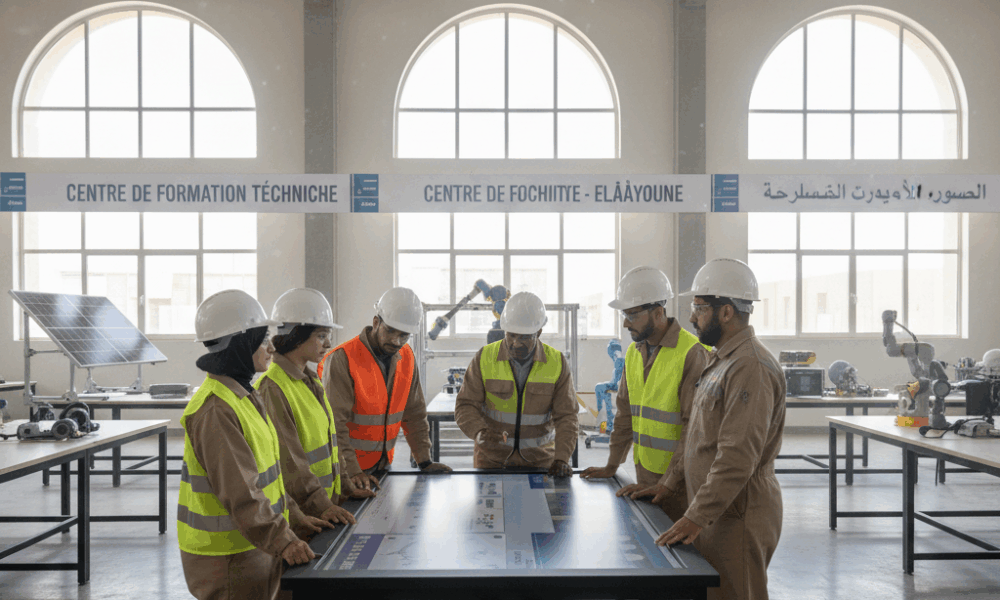
Saharan human capital, training and mobility: from youth to centers of excellence
The labor market dynamic in the South relies on a key factor: the development of competitive local human capital. Young people from Saharan cities aspire to qualified jobs and visible career paths. In companies met, two issues overlap: aligning skills with projects (wind, port, fisheries, construction) and retaining talent through attractive living conditions. A recruiter from Dakhla talks about “block promotions” to retain teams for 24 to 36 months.
Targeted initiatives stand out. A logistics group launched a 12-week “bootcamp” for versatile technicians, with an 80% hire rate. In a maintenance SME, an employee from Laâyoune, Imane, progressed from technician to team leader on a wind farm thanks to a certification path and cross-site mentoring. These increasingly frequent stories nourish a virtuous circle: the more visible upward mobility is, the greater the attractiveness grows.
Skills in demand and training schemes
The most sought-after fields combine technical and digital skills. O&M operators must handle CMMS and safety culture. In fisheries, mastery of standards (IFS, BRC) extends to digital traceability. Port projects require surveying, machine operation, and multi-lot coordination. OFPPT and universities strengthen work-study programs, short modules (60-120 hours), and mixed certifications (safety + technical + soft skills) to match needs.
- 🎯 Priority fields: industrial maintenance, refrigeration, surveying, HSE, applied data.
- 🧑🏫 Pedagogy: work-study, practical workshops, simulators.
- 🔁 Employability: apprenticeship contracts leading to permanent jobs.
- 🌐 Digital: CMMS, GIS, supply chain dashboards.
- 🏡 On-site living: housing, catering, transport, sports club.
The link between individual ambitions and structuring projects of Morocco in the South is at the core of local public policies. Communication around UN votes sometimes serves as a spur to accelerate certain integration schemes, as during moments when Rabat highlighted positive UN signals. For young people, the message is clear: “opportunities exist, provided you train quickly and well.”
| Path 🎓 | Average duration ⏱️ | Employment outcome 💼 |
|---|---|---|
| Maintenance + HSE bootcamp | 10-12 weeks | Placement 70-80% 🚀 |
| Cold logistics work-study | 12-18 months | Permanent contracts onsite 60-75% ❄️ |
| Supply chain data certif. | 8-10 weeks | Regional mobility 50% 📈 |
Saharan talents, valued through visible pathways and support schemes, become the best business card of the Southern provinces. Skill upgrading creates a solid base for economic diversification.

Looking ahead to the next few years, the key lies in anticipation. The following section proposes scenarios to assess the impact on employment depending on political evolution.
Scenarios 2025-2030: consolidated autonomy, referendum revived, or status quo? Effects on employment and investment
What would happen to employment in the South according to the outcome of the Saharan conflict? Three realistic scenarios emerge, all closely linked to the discussions at the UN and the positions of capitals. On one side, a progressive consolidation of the autonomy plan promoted by Morocco, supported by partners and relayed across several diplomatic arenas. On the other, the less likely short-term hypothesis of an effective self-determination referendum. Between the two, an extension of the status quo, punctuated by phases of calm and tension.
On the ground, employers do not wait for the final outcome to act. They build risk matrices, prepare flexibility clauses, and invest in training. Structuring infrastructures — ports, energy, logistics — would continue to absorb qualified labor in all scenarios, to varying degrees. The most sensitive sectors (fish exports, origin labeling, European financing) would depend more on legal and international commercial signals.
Labor market impact comparator
The table below illustrates possible magnitudes, to be refined according to the evolution of UN resolutions and public funding. The figures are indicative, designed as a reflection tool for HR departments, investors, and territorial decision-makers.
| Scenario 🔭 | Net recruitments 2025-2030 (trend) 📈 | Operational risk ⚠️ | Skills focus 🧠 |
|---|---|---|---|
| Consolidated autonomy | High (infrastructure, energy, services) 🚀 | Moderate (regulated by compliance frameworks) 🛡️ | O&M, logistics, HSE, applied data 📊 |
| Effective referendum | Variable (investment pause, then resumption) 🔄 | High short term (political transition) ⏳ | Change management, governance, legal ⚖️ |
| Status quo | Medium (project-based progress) ➕ | Intermittent (tension peaks) 🌡️ | Maintenance, supply chain, site security 🔐 |
- 🧭 Flexibility clause: adapt recruitment plans to UN milestones.
- 🏗️ Project pipeline: prioritize lots with high local employment intensity.
- 🧑🔧 Upskilling: maintain a continuous flow of certifications.
- 🌐 Partnerships: consolidate OFPPT-universities-business links.
- 🛰️ Monitoring: track risk mapping and funder signals.
Recent diplomatic signals have encouraged positive anticipations, notably when actors have highlighted support for a “realistic” approach (see the dedicated section on the Moroccan autonomy plan). However, caution remains necessary: a political shift can temporarily redraw recruitment schedules. HR teams benefit from structuring backup plans to ensure operational continuity.
In this perspective, public communication and economic diplomacy play a key role. Celebrations of political or symbolic milestones — like those mentioned in the commemoration analysis — help anchor market confidence and unite teams around shared goals. The essential, for talents as well as investors, lies in the clarity of the path.
Local governance, compliance chain and territorial attractiveness: the method to secure employment
On a daily basis, the success of a project lies in an alchemy of governance, compliance, and support for people. Employers structure steering committees combining site management, HR, HSE, worker representatives, and local public partners. This body arbitrates sensitive topics: accommodation, transport, medical coverage, work-life balance. It guarantees alignment with legal obligations and international standards, an indispensable margin of maneuver in a context where the question of self-determination and referendum remains present in narratives.
Territorial attractiveness also plays out in daily life. Sports complexes, cultural centers, more frequent air connections, and modernized student residences are assets to attract skilled profiles. Skills volunteering programs, involving senior engineers and young Saharan graduates, strengthen knowledge transfer and local anchoring. Companies measuring social impact (local shopping, female inclusion, subcontracting to Saharan units) derive tangible reputational benefits.
HR roadmap for 24 months
Planning over two years combines staff ramp-up, site security, and skill consolidation. A typical calendar alternates hiring sprints, integration phases, audit cycles, and training waves. HR directors share these milestones with their teams and local authorities to streamline recruitments and avoid bottlenecks.
- 📅 T0-T6: social diagnosis, skills mapping, first recruitments.
- 🧩 T6-T12: enhanced onboarding, HSE, stabilization of living conditions.
- 📈 T12-T18: ramp-up, technical certifications, internal mobility.
- 🔍 T18-T24: external audit, adjustments, anchoring of local leaders.
- 🤝 Ongoing: social dialogue, inclusion, and career visibility.
Sources of information and influence play a significant role in framing this method. Notable are analyses addressing international support to the autonomy plan and economic impacts, widely commented upon in files like this synthesis on the Sahara’s economy. Meanwhile, the geopolitical dimension remains a red thread, illuminated by decipherings related to the UN positioning and the American stances.
| Pillar 🏛️ | Target indicator 🎯 | Proof mechanism 📂 |
|---|---|---|
| Site governance | Monthly meetings, documented decisions 📝 | Minutes, action plans, social KPIs 📊 |
| Compliance | Zero critical non-compliance 🚫 | Independent audits, remediation 🔁 |
| Attractiveness | Time-to-hire less than 45 days ⌛ | Recruitment dashboards 📈 |
The well-conducted method anchors quality jobs durably. It allows enduring political uncertainties while improving employee life. It is the best guarantee of robust development of the Southern provinces, whatever changes lie ahead.
{“@context”:”https://schema.org”,”@type”:”FAQPage”,”mainEntity”:[{“@type”:”Question”,”name”:”Is Western Sahara internationally recognized as a non-self-governing territory?”,”acceptedAnswer”:{“@type”:”Answer”,”text”:”Yes. The UN keeps Western Sahara on the list of non-self-governing territories and considers that the question of final status remains to be resolved by a political process consistent with the principle of self-determination.”}},{“@type”:”Question”,”name”:”What does the autonomy plan promoted by Morocco propose?”,”acceptedAnswer”:{“@type”:”Answer”,”text”:”The autonomy plan aims to grant expanded powers to local populations under Moroccan sovereignty, with dedicated governance institutions and mechanisms. It is regularly mentioned in UN discussions as a “realistic” option by several actors.”}},{“@type”:”Question”,”name”:”Is the self-determination referendum still current?”,”acceptedAnswer”:{“@type”:”Answer”,”text”:”The referendum remains a historical reference point within the UN process. However, no date is set, and the debate now focuses on a negotiated political solution, while keeping this principle in the reference framework.”}},{“@type”:”Question”,”name”:”What concrete impact on jobs in the Southern provinces?”,”acceptedAnswer”:{“@type”:”Answer”,”text”:”Major projects (ports, energy, fisheries, construction) create thousands of direct and indirect jobs. Companies look for technical profiles and proximity managers. HR performance depends on training quality, onboarding, and living conditions onsite.”}},{“@type”:”Question”,”name”:”Where to follow diplomatic signals that influence investment?”,”acceptedAnswer”:{“@type”:”Answer”,”text”:”Security Council resolutions, Secretary-General reports, and announcements from key partners provide the framework. Accessible analyses address UN support for the autonomy plan and American or European positions.”}}]}Is Western Sahara internationally recognized as a non-self-governing territory?
Yes. The UN keeps Western Sahara on the list of non-self-governing territories and considers that the question of final status remains to be resolved by a political process consistent with the principle of self-determination.
What does the autonomy plan promoted by Morocco propose?
The autonomy plan aims to grant expanded powers to local populations under Moroccan sovereignty, with dedicated governance institutions and mechanisms. It is regularly mentioned in UN discussions as a “realistic” option by several actors.
Is the self-determination referendum still current?
The referendum remains a historical reference point within the UN process. However, no date is set, and the debate now focuses on a negotiated political solution, while keeping this principle in the reference framework.
What concrete impact on jobs in the Southern provinces?
Major projects (ports, energy, fisheries, construction) create thousands of direct and indirect jobs. Companies look for technical profiles and proximity managers. HR performance depends on training quality, onboarding, and living conditions onsite.
Where to follow diplomatic signals that influence investment?
Security Council resolutions, Secretary-General reports, and announcements from key partners provide the framework. Accessible analyses address UN support for the autonomy plan and American or European positions.

Comments are closed