Moroccan Mint Tea: Centuries-Old Tradition, Identity, and Moroccan Hospitality
Mint Tea stands out as a Centuries-Old Tradition that tells the story of a diverse Morocco, Berber and Arab, urban and rural. Inherited from caravan exchanges and refined by generations of artisans, the drink is often nicknamed by visitors as “Berber whisky,” non-alcoholic of course, to emphasize its omnipresence in homes and gatherings. The expression has been adopted with humor, as it perfectly illustrates a convivial ritual where the drink serves as a pretext for exchange and respect. Anthropologists note that the Tea Ceremony balances between the intimate and the public: a cultural hinge where people share, negotiate, welcome, and celebrate.
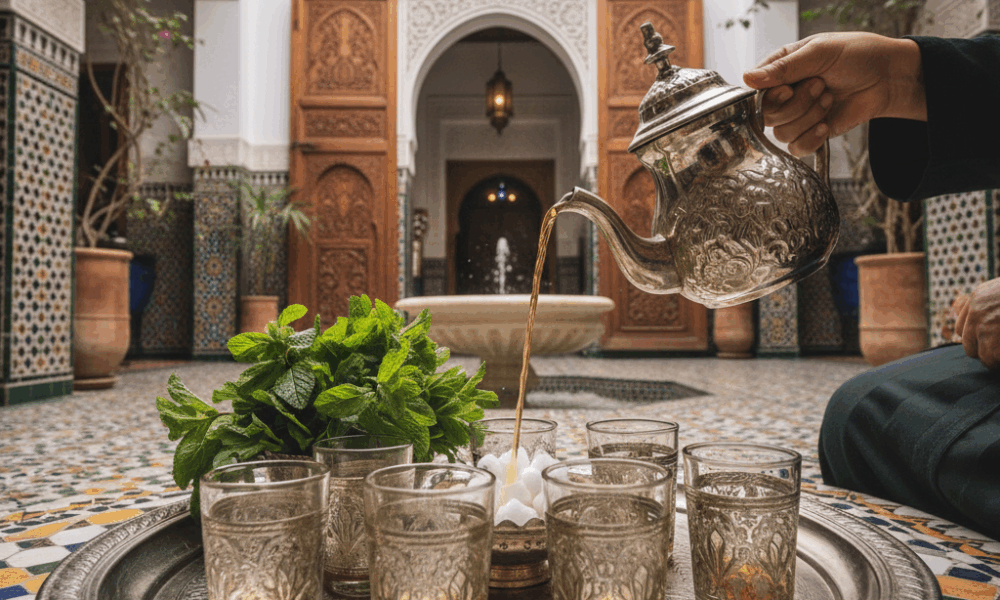
In the riads of Marrakech as well as in the apartments of Salé, Moroccan Hospitality is expressed with a silver tray, engraved glasses, and long-necked Moroccan teapots. The symbolism goes beyond tasting: it places the invited person within a reciprocal relationship. Moroccan companies draw inspiration from this, making tea service a moment of integration for new recruits or a soothing gesture during tense meetings. The drink thus becomes a gentle lever of cohesion, particularly appreciated in multidisciplinary teams.
In the Atlas hotels, tea masters share precise gestures: rinsing the leaves, aeration by high pouring, sugar dosing, gradual addition of Mint Leaves. In Asni, a recognized expert, after over twenty years of experience in hospitality, transmits this heritage daily. The scene is not performative: it works like a non-verbal language that reassures and opens dialogue. This informal pedagogy now inspires tourism schools, training centers, and reception teams of administrations.
The link to the labor market is seen in hospitality, sales, and catering professions. Recruiters value the ability to embody the Moroccan Ritual: punctuality in service, precise gestures, client attention. Candidates appropriate these codes to express professionalism and cultural pride. In 2025, this cultural dimension aligns with HR trends: employee experience, employer branding, benevolent management.
- 🍃 Key symbol: Moroccan Hospitality and respect for the visitor.
- 🫖 Social tool: creating a trust space before negotiation.
- 🤝 Professional reflex: welcome, listen, serve consistently.
- 🏙️ Territorial influence: from souk to corporate headquarters, the same language of politeness.
| Ritual Aspect 🍵 | Meaning 🤲 | Professional Use 💼 |
|---|---|---|
| Tray and glasses | Respect and order | Onboarding of employees |
| High pouring | Noble gesture | Customer experience in store |
| Fresh mint | Freshness Flavor | Relaxation during meetings |
| Three glasses | Progressive sharing | Workshop/training pace |
Many economic players rely on this cultural capital. The distinction of companies as best employers in Morocco illustrates the importance of the welcoming culture, which has become a competitive advantage in the job market.
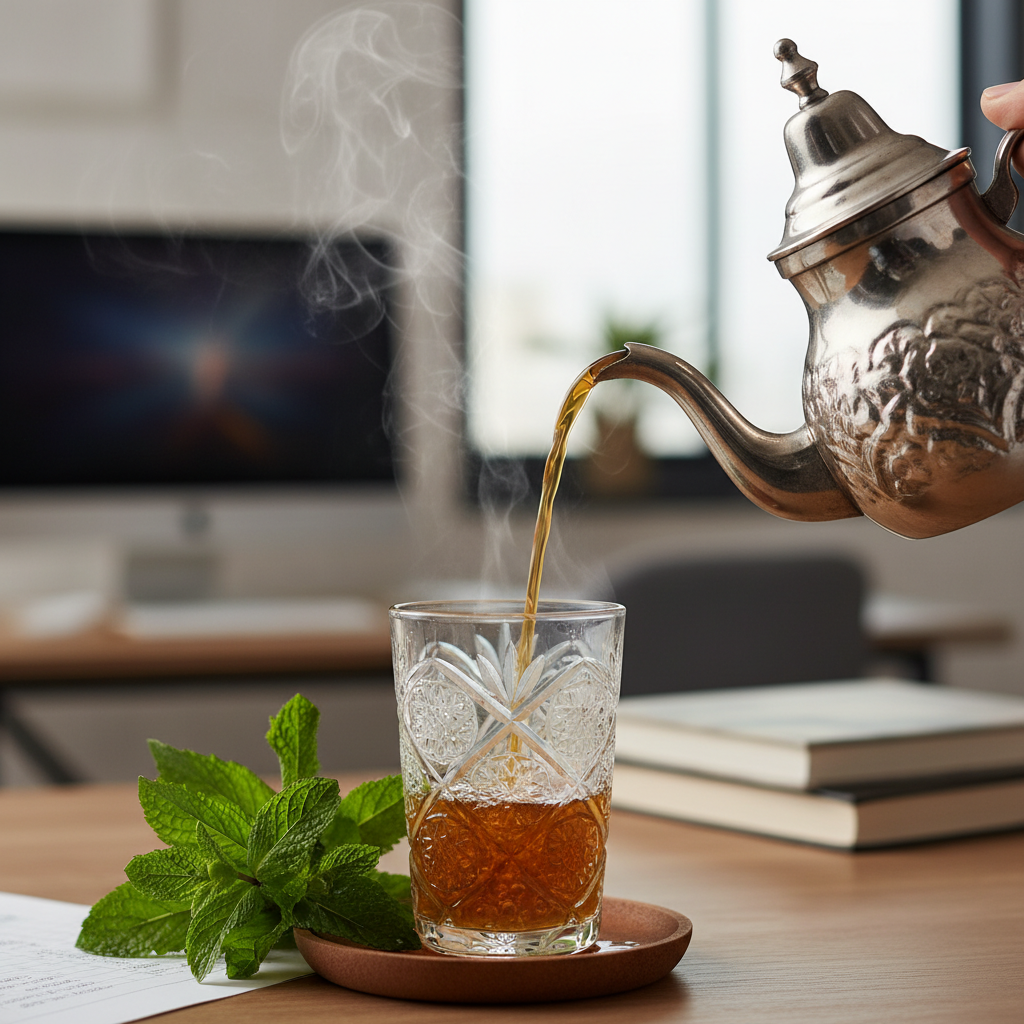
The ritual does not freeze the present: it opens the door to preparation methods and learning by doing, an entry point to technique.
Moroccan Ritual Preparation: Moroccan Teapots, Mint Leaves, and Freshness Flavor
The traditional preparation is based on a green tea type “gunpowder,” often called Maghrebi Green Tea in commerce, abundant Mint Leaves, sugar, and simmering water. Moroccan Teapots, metallic and robust, tolerate direct flame or embers. The objective: extract aromas without astringency, then aerate by high pouring that creates a light foam. The expected result is a clear Freshness Flavor, never aggressive, that perfumes the entire space.
In some Atlas establishments, the tea is reheated on charcoal, which rounds the mouthfeel. The thicker engraved glasses retain heat. The initial rinsing of the tea removes bitterness. Then, the infusion lasts a few minutes before introducing sugar and mint. The sugar level varies by region: stronger in the South, milder on the coast. An experienced tea master insists: the time is not rushed, as the Tea Ceremony educates the gesture and attention to others.
- 🧯 Step 1: rinse the tea to soften the taste.
- 🔥 Step 2: controlled infusion to avoid astringency.
- 🍬 Step 3: adjust sugar according to context and audience.
- 🍃 Step 4: gently incorporate fresh mint.
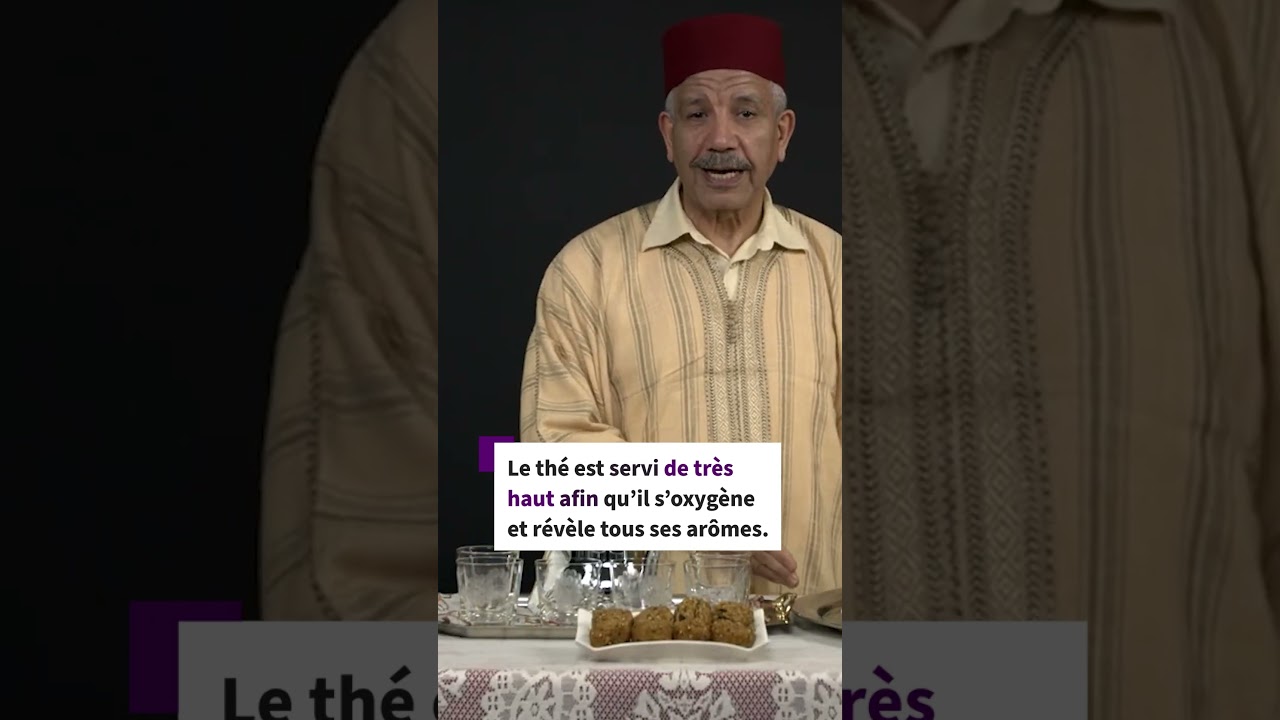
- 🫗 Step 5: pour from height to oxygenate and homogenize.
| Parameter ⚙️ | Taste Effect 😋 | Pro Tip 💡 |
|---|---|---|
| Temperature | Hotter, more extraction | Pre-infuse for 20-30 sec to test |
| Variety of mint | Peppery or mild note | Mix 2 mints 🍃 |
| High pouring | Foam and aeration | Height of 15-20 cm 🫗 |
| Sugar | Round texture | Adapt for children 👨👩👧 |
These gestures form a precise grammar transferable to hospitality professions: standardize without rigidifying, control without losing the soul. Some tourist companies integrate a “tea service” module in their initial training, like dynamic recruitment programs such as Excelo Maroc campaigns that value attention to detail throughout the customer chain.
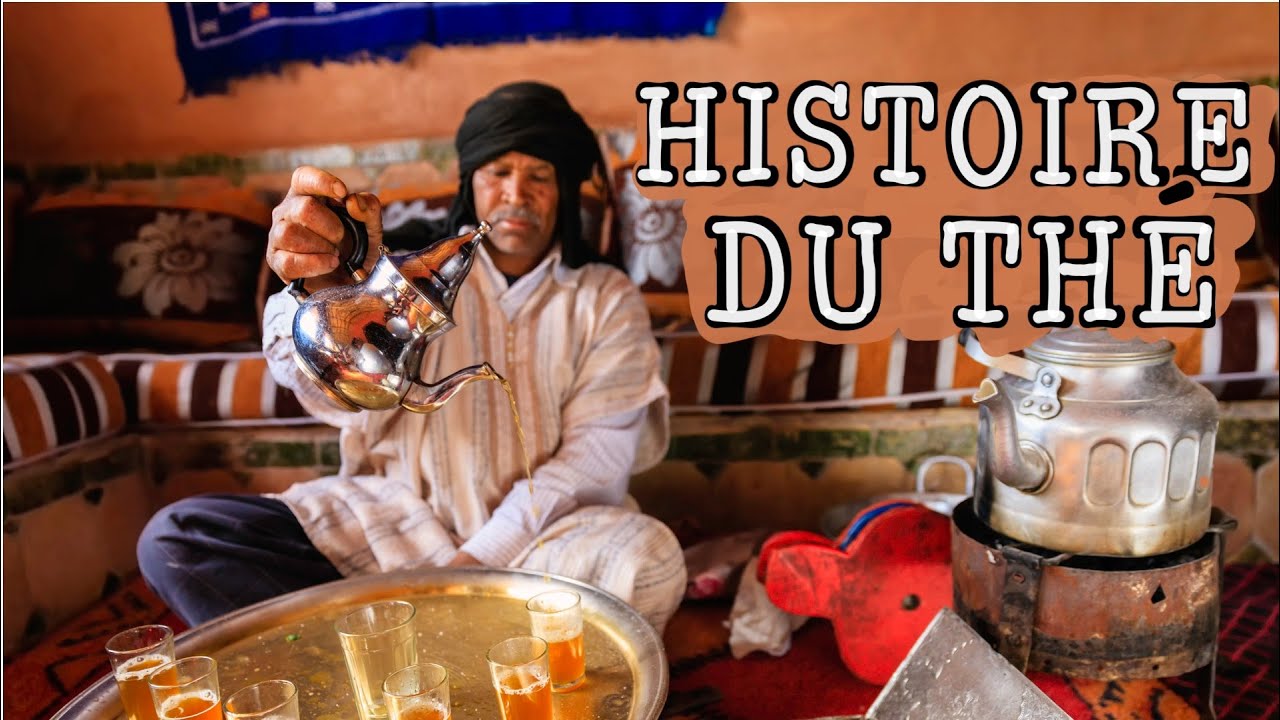
Visual learning accelerates mastery. Demonstration videos show the synchronization of movements, useful for training multicultural teams in hospitality and catering.
A Natural Digestive and an Ally for Well-being at Work
Mint Tea is recognized as a Natural Digestive. Peppermint brings aromatic compounds that promote digestive relaxation after a heavy meal, while green tea catechins contribute to a mild tonic effect, without the agitation of excessive caffeine. Served warm, the beverage soothes and recenters, an asset in a fast-paced professional daily life. Moroccan nutritionists recommend measured sugar and fresh Mint Leaves to preserve balance.
In open spaces and sales points, a well-thought-out tea service creates a mental “transition.” A frequently observed example in Casablanca: support teams establish a ten-minute tea break after the midday rush. Feedback reports a reduction in tension and better concentration in the afternoon. This micro-ritualization, inspired by the Tea Ceremony, acts as a low-cost occupational health measure.
Another real case: a receptive agency in Fès introduced sugar-free options and complementary herbs (verbena, orange blossom) to diversify the offer. International clients appreciate the adaptable authenticity, while teams gain professional pride. The presence of tea in meetings also facilitates active listening: the hand occupied by the glass slows the pace, normalizes productive silences, and reduces interruptions.
- 🧘 Benefit 1: digestive and mental relaxation after meals.
- 🧪 Benefit 2: antioxidants from green tea for steady energy.
- 🧂 Benefit 3: sugar control for managed metabolic impact.
- 🫱 Benefit 4: support for soft skills (listening, patience, politeness).
| Time of Day ⏰ | Health Objective 🩺 | Practical Advice ✅ |
|---|---|---|
| Morning | Gentle awakening | Less sugar, more mint 🍃 |
| After lunch | Natural Digestive | Serve warm for calming |
| Late afternoon | Peaceful closure | Add verbena 🌿 |
| Meeting | Calm setting | Small glasses for rhythm 👌 |
Organizations investing in well-being reap loyalty gains. For example, quality of work life policies highlighted by distinguished players such as talent recruitment at Maroc Telecom show how gestures of attention—including tea service—strengthen employer brand and internal satisfaction.
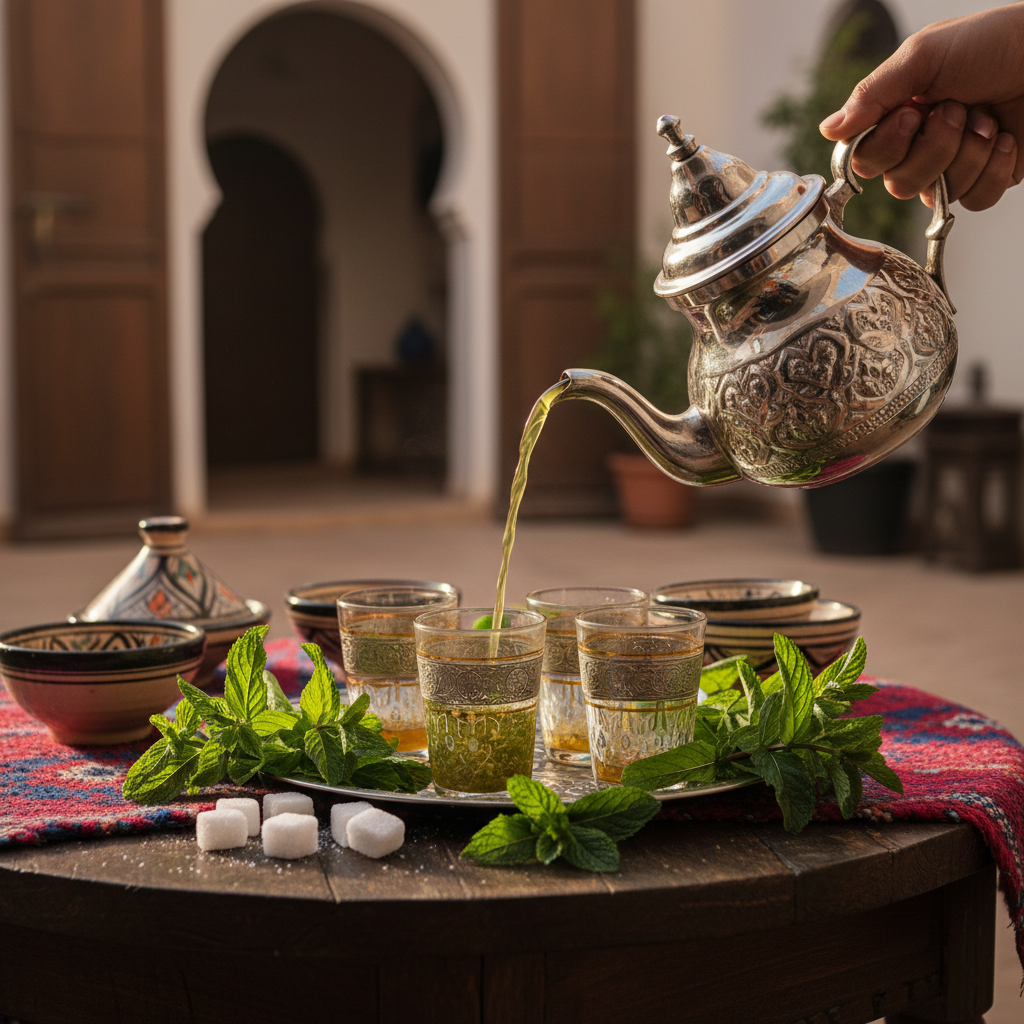
Well-being is not a luxury: it supports collective performance. Tea is a cultural lever, accessible and unifying, ready to inspire internal policies.
The Mint Tea Economy: Local Agriculture, Imports, and Employment in 2025
The economy of Mint Tea connects several links: cultivation of Mint Leaves in irrigated perimeters, import of green tea type “gunpowder” from Asia, manufacturing of trays and glasses in Kénitra or Fès, and distribution through cafés, hotels, and local shops. This chain provides income to thousands of families, from small producers to dining room servers. In 2025, professionalization is accelerating: traceability, sustainable packaging, cold logistics for mint, training in service and regional storytelling.
Cooperatives are structuring to stabilize prices, improve irrigation, and certify responsible practices. Artisans of Moroccan Teapots innovate with lighter alloys and insulating handles, facilitating prolonged service. Hospitality schools integrate the Tea Ceremony into their modules, as tourist demand remains strong. Young graduates see it as a field of excellence, combining technique and relational skills.
Skills needs range from cultivation to customer relations. Universities and businesses are getting closer: the announcement of new openings at the International University of Rabat confirms the rise of transversal professions (supply chain, product design, data for distribution). Tourism, catering, and FMCG also recruit, as seen in visible campaigns this year. International mobility processes, facilitated by dedicated agencies like BLS Rabat, visa center, support the movement of head waiters and tea masters for events abroad.
- 🌱 Upstream: mint agriculture, irrigation, local varieties.
- 🚢 Midstream: tea import, quality control, storage.
- 🏭 Downstream: processing, packaging, metal craftsmanship.
- 🏨 Market: hospitality-catering, retail, e-commerce.
| Link 🔗 | Key Professions 👷 | Skills 2025 🧠 |
|---|---|---|
| Farm | Market gardener, agronomist | Efficient irrigation 💧 |
| Import/QA | Buyer, controller | Traceability, standards 📑 |
| Workshop | Artisan, metalworker | Ergonomic design 🛠️ |
| Service | Waiter, tea master | Hospitality and languages 🌍 |
Companies that get ahead stand out in HR rankings. Initiatives such as Excelo recruitment campaigns and attention to academic and technical careers, visible at the UIR, strengthen an ecosystem where service culture and innovation coexist. This dynamism supports quality hospitality, the beating heart of the Moroccan offer.
The tea economy illustrates an inclusion model: terroirs, workshops, and hotels participate in the same story, bringing jobs and local pride.
Tea Ceremony and Soft Skills: Hospitality, Service, and Management
The Tea Ceremony teaches behavioral skills sought by recruiters: attention, consistency, listening, time management. In a congress center in Rabat, a ritualized “tea break” structures exchanges: HR managers and candidates align expectations and rhythms, without haste. This format reinforces Moroccan Hospitality as a managerial signature: proximity without familiarity, respect without rigidity.
Sales professionals draw inspiration from the gesture: presenting the product, “pouring” it carefully (demonstration), then leaving the client space to taste and decide. In training, instructors compare the trajectory of the tea stream to a commercial pitch: high enough to capture attention, precise enough to avoid dispersion. Maghrebi Green Tea becomes a metaphor for a clear value proposition, while mint symbolizes the sensory “extra mile.”
The cultural anchor dialogues with current events. The strengthening of Morocco–Thailand–France cooperations, recently mentioned in regards to security, also relies on soft power: receiving, explaining, weaving links. In this context, tea service often serves as a prelude to work sessions. This ability to establish an atmosphere of trust is sought after in public relations, protocol, MICE, and consulting.
- 🧭 Soft skill 1: time management – infusion, rest, service.
- 🗣️ Soft skill 2: non-verbal communication – posture and gaze.
- 🪞 Soft skill 3: listening – adjusting sugar, mint, temperature.
- 🧩 Soft skill 4: adaptability – local or international audience.
| Service Step 🍵 | Associated Skill 🎯 | Job Application 💼 |
|---|---|---|
| Rinsing | Methodical preparation | Meeting briefing |
| Infusion | Active patience | Commercial negotiation |
| High service | Clarity and impact | Client presentation |
| Tasting | Feedback | Continuous improvement 🔁 |
These landmarks also live in HR policies: distinguished companies like best employers in Morocco reinforce relational training, diversity of profiles, and internal mobility paths. Candidates mastering this hospitality language stand out in customer relations, events, reception, and luxury professions. Tea becomes a skills workshop as much as a tradition.
Prepare, Serve, Transmit: Operational Guide for Teams and Reception Venues
The transition from tradition to operational requires clear organization: choice of ingredients, appropriate equipment, service protocol, continuous training. In a Chefchaouen riad, a team leader built a standard sheet: quality of Maghrebi Green Tea, freshness of Mint Leaves, sugar control, daily cleaning of Moroccan Teapots. Newcomers quickly appropriate the method, then propose local variations (seasonal nana mint, pine nuts, orange blossom) depending on the audience.
Hotel and coworking space management develop a dedicated monthly mini-budget. Suppliers ensure stock continuity, while reception teams have reserved time for the Tea Ceremony. A double tray system—one in service, one in preparation—avoids waiting and favors a calm pace. This setup is transferable to administrative counters or training rooms, with hygiene and safety adjustments.
The employment-training link is direct. In a pilot program in Agadir, young people in integration were trained in an “all-in” tea offer: storytelling, hygiene, gesture, service, client feedback. This integrated approach strengthens employability in roles such as receptionist, waiter, guide, or shop assistant. Bridges to other sectors exist, from retail to subscriber relations. In this regard, announcements like the recruitment of ten talents at Maroc Telecom set the tone for a market where quality of service makes the difference.
- 🧾 Equipment checklist: teapot, glasses, tray, sugar bowl, tongs.
- 🧼 Hygiene: rinsing, drying, airy storage.
- 📋 Procedures: infusion time, service height, glass order.
- 🎓 Training: junior-senior pair, feedback, micro-evaluations.
| Resource 🧺 | Estimated Cost 💵 | Buying Advice 🛒 |
|---|---|---|
| Teapot | Medium | Insulating handle 🔥 |
| Green tea | Medium | Consistent quality ✅ |
| Mint | Variable | Fresh local supply 🍃 |
| Glasses | Low | Thickness + engraving ✨ |
Beyond tourist sites, service companies adopt a “tea corner” in visitor reception. Public and private initiatives, sectoral recruitments to mobility procedures (see processes via BLS Rabat), accelerate the internationalization of hospitality expertise. Morocco thus capitalizes on a living and useful heritage, benefiting employment and relational quality.
{“@context”:”https://schema.org”,”@type”:”FAQPage”,”mainEntity”:[{“@type”:”Question”,”name”:”Quels ingru00e9dients sont indispensables pour un Thu00e9 u00e0 la Menthe authentiqueu202f?”,”acceptedAnswer”:{“@type”:”Answer”,”text”:”Un thu00e9 vert type gunpowder (souvent appelu00e9 Thu00e9 Vert Maghrebin), des feuilles de menthe frau00eeches, de lu2019eau fru00e9missante et du sucre ajustu00e9 au gou00fbt. La frau00eecheur de la menthe et la qualitu00e9 du thu00e9 du00e9terminent la Saveur Frau00eecheur.”}},{“@type”:”Question”,”name”:”Pourquoi verser le thu00e9 en hauteur lors de la Cu00e9ru00e9monie du Thu00e9u202f?”,”acceptedAnswer”:{“@type”:”Answer”,”text”:”Le service en hauteur oxygu00e8ne lu2019infusion, homogu00e9nu00e9ise sucre et aru00f4mes et cru00e9e une lu00e9gu00e8re mousse. Ce geste est aussi un signe du2019u00e9lu00e9gance et de mau00eetrise du Rituel Marocain.”}},{“@type”:”Question”,”name”:”Le thu00e9 u00e0 la menthe est-il vraiment un Digestif Naturelu202f?”,”acceptedAnswer”:{“@type”:”Answer”,”text”:”Oui. Les composu00e9s aromatiques de la menthe et les catu00e9chines du thu00e9 vert favorisent une sensation de lu00e9gu00e8retu00e9 apru00e8s le repas. Il est conseillu00e9 de modu00e9rer le sucre.”}},{“@type”:”Question”,”name”:”Comment intu00e9grer le service du thu00e9 dans un contexte professionnelu202f?”,”acceptedAnswer”:{“@type”:”Answer”,”text”:”Pru00e9voir un coin u00e9quipu00e9 (thu00e9iu00e8re, verres, menthe), du00e9finir des temps de service (accueil, apru00e8s-du00e9jeuner), former les u00e9quipes au geste et u00e0 lu2019hygiu00e8ne, et utiliser le moment pour cru00e9er un climat serein.”}},{“@type”:”Question”,”name”:”Ou00f9 se former aux gestes du thu00e9 au Marocu202f?”,”acceptedAnswer”:{“@type”:”Answer”,”text”:”Dans les u00e9coles hu00f4teliu00e8res, des maisons du2019hu00f4tes, des ateliers touristiques ou au sein du2019entreprises qui structurent lu2019accueil. Les initiatives du2019employeurs et les recrutements publiu00e9s, comme ceux du2019Excelo ou des universitu00e9s, tu00e9moignent du2019un u00e9cosystu00e8me formateur.”}}]}What ingredients are essential for an authentic Mint Tea?
A green tea type gunpowder (often called Maghrebi Green Tea), fresh mint leaves, simmering water, and sugar adjusted to taste. The freshness of the mint and the quality of the tea determine the Freshness Flavor.
Why pour tea from height during the Tea Ceremony?
Pouring from height oxygenates the infusion, homogenizes sugar and aromas, and creates a light foam. This gesture is also a sign of elegance and mastery of the Moroccan Ritual.
Is mint tea really a Natural Digestive?
Yes. The aromatic compounds of mint and the catechins of green tea promote a feeling of lightness after the meal. It is advised to moderate sugar.
How to integrate tea service in a professional context?
Provide an equipped corner (teapot, glasses, mint), define service times (welcome, after lunch), train teams on gesture and hygiene, and use the moment to create a serene atmosphere.
Where to train in tea gestures in Morocco?
In hospitality schools, guesthouses, tourist workshops, or within companies structuring reception. Employer initiatives and published recruitments, such as those from Excelo or universities, demonstrate a training ecosystem.

Comments are closed