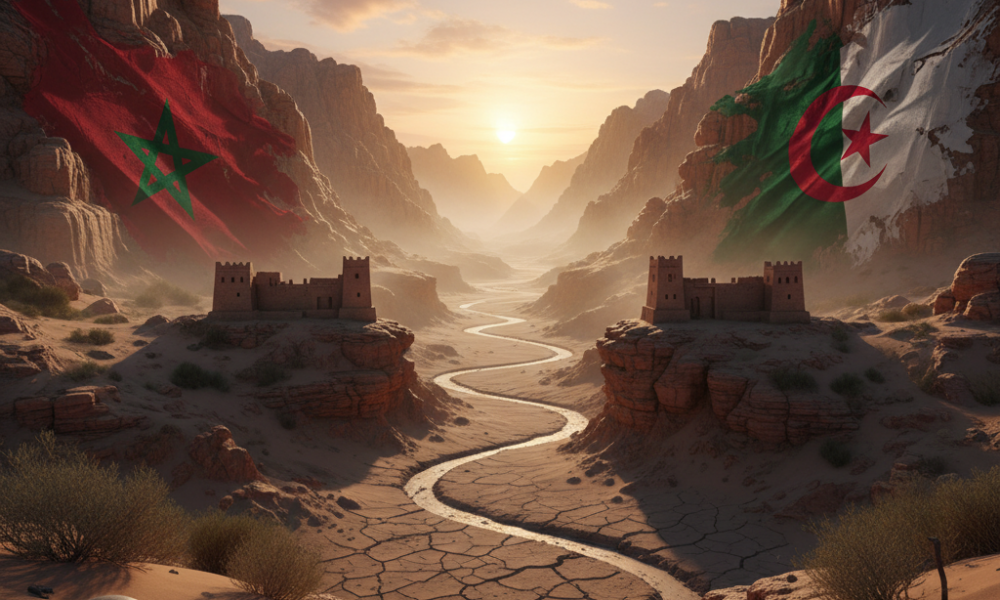
The relations between Rabat and Algiers are going through an unprecedented period of turbulence, marked by a verbal, diplomatic, and military escalation. Far from being a simple neighborhood dispute, this dynamic directly impacts the regional economic stability and development prospects of the Maghreb. For observers and actors in the Moroccan market, understanding the nuances of this conflict is essential to anticipate risks and seize opportunities in a complex geopolitical environment in 2025.
The multiple dimensions of the confrontation between Morocco and Algeria
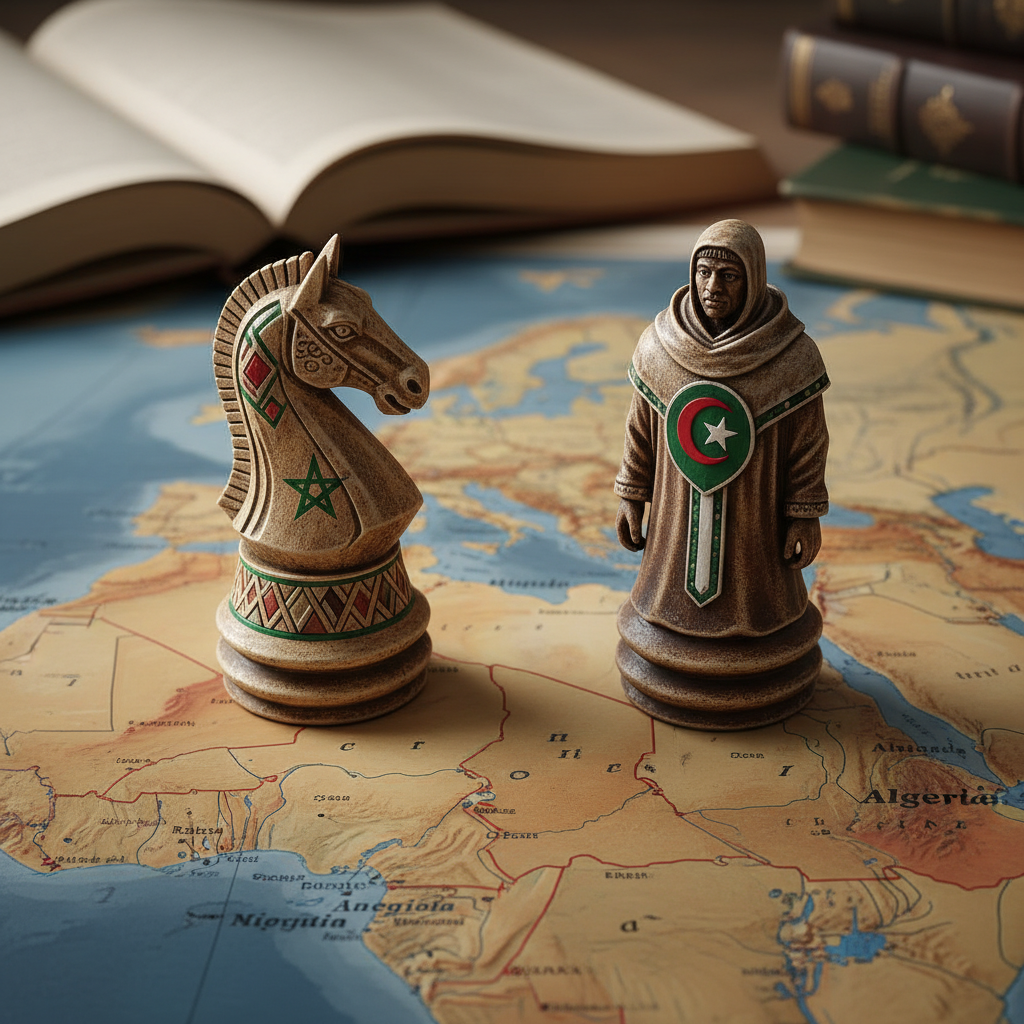
Beyond the land borders closed since 1994, the rivalry has shifted to intangible but equally strategic arenas. Morocco and Algeria are today engaged in a fierce battle on the media and cybernetic fronts. This “war of narratives” aims to influence international opinion and consolidate their respective internal fronts.
The information war and cyberspace
State media and social networks have become powerful vectors for spreading antagonistic discourses. Algiers regularly broadcasts narratives contesting the territorial integrity of the Kingdom, while Rabat retaliates by highlighting its diplomatic successes and economic development. This tension is palpable even in digital cartographic representation, where platforms like Google Maps and the Sahara borders become subjects of intense symbolic discord.
This digital confrontation is not limited to words; it also includes cyberattacks targeting critical infrastructures. Vigilance is therefore necessary for Moroccan companies, which must strengthen their IT security in the face of these diffuse threats. Mastery of information has become a lever of power as crucial as conventional military arsenal.
- 📡 Media propaganda: Intensive use of official press agencies to spread mutual accusations.
- 💻 Cyber-offensive: Denial of service (DDoS) attacks and intrusion attempts into government systems.
- 📱 Social influence: Mobilization of “bots” and influencers to steer debates on social networks.
- 🌍 Diplomatic battle: Intense lobbying with international organizations to isolate the adversary.
Comparison of influence strategies
The following table illustrates the distinct approaches adopted by the two nations to assert their positions on the regional and global stage.
| Field of action | Moroccan Strategy 🇲🇦 | Algerian Strategy 🇩🇿 |
|---|---|---|
| Diplomacy | Pragmatic approach, diversified alliances (USA, Israel, EU, Africa) | Focus on historic third-worldism and support for separatist movements |
| Economy | FDI attraction, hub towards Africa, industrial diversification | Dependence on hydrocarbons, centralized economy |
| Discourse | Emphasis on development, stability, and historical legitimacy | Anti-colonial rhetoric, focus on self-determination |
| Military Alliances | Cooperation with NATO, the United States, and acquisition of advanced technologies | Strong historic partnership with Russia for heavy equipment |
The crucial issue of Western Sahara and the arms race
The Western Sahara file remains the cornerstone of the tensions. The recognition of Moroccan sovereignty by major powers, including the United States and Israel, has profoundly changed the balance of power. This diplomatic dynamic, consolidated in 2025, places Algeria in a defensive position, exacerbating its will to maintain the status quo through support for the Polisario Front.
Increasing militarization of the region
The fear of direct confrontation is pushing the two neighbors to significantly increase their defense budgets. This arms race diverts precious resources that could be allocated to social development and infrastructure. For Morocco, securing the territory is an absolute priority, justifying massive investments in surveillance and air defense. Meanwhile, international support is intensifying, as evidenced by the commitment of the Gulf monarchies in support of Moroccan Sahara, strengthening Rabat’s position.
This atmosphere of Maghreb “cold war” has direct repercussions on the business climate. Investors closely monitor the security of the borders, although Morocco has successfully sanctuarized its key economic zones. The impact is also felt on regional trade, which is almost nonexistent.
- 🚀 Drones and surveillance: Massive acquisition of unmanned technologies for border control.
- 🛡️ Air defense: Strengthening systems to counter any ballistic threat.
- 💰 Defense budget: Continuous increase in military spending at the expense of social sectors.
- 🤝 Military cooperation: Frequent joint exercises with Western allies (African Lion).
Power indicators and regional stability
This table puts into perspective the forces in play and factors influencing the stability of the area.
| Indicator | Impact on Morocco | Impact on Algeria |
|---|---|---|
| International Support | Growing (USA, France, Spain, Arab countries) | Limited, relative diplomatic isolation |
| Internal Stability | Strong national cohesion around the sacred cause | Political fragilities and persistent social unrest |
| Risk of conflict | Controlled management, defensive doctrine | Bellicose rhetoric, risk of accidental escalation |

Economic consequences and future prospects
The cost of a non-Maghreb is exorbitant for the region’s economies. The absence of economic integration, due to closed borders and political disputes, deprives both countries of significant growth points. Yet, Morocco continues to move forward, seeking alternatives via the Atlantic and Sub-Saharan Africa.
Impact on employment and opportunities
Despite this tense context, the Moroccan job market shows resilience. The defense and security sectors are recruiting, but it is especially the infrastructure that drives the economy. Large-scale projects, such as those requiring civil engineering, continue to flourish, offering opportunities as seen with employment at Jet Contractors in civil engineering. The necessity to bypass Algeria for trade has also boosted the logistics and maritime sectors.
However, the permanent tension affects some potential cross-border investments. Relations with European partners, notably Spain, have become crucial to compensate for the loss of the regional market, as illustrated by interactions between the Spaniards and the conflict with Morocco, where Madrid plays a role of economic and diplomatic balancing.
- 📉 GDP loss: The lack of integration costs the Maghreb countries approximately 2 to 3 percentage points of GDP per year.
- 🚧 Infrastructure: Forced development of North-South axes at the expense of East-West axes.
- ✈️ Transport: Mandatory aerial and maritime detours, increasing logistical costs.
- 💼 Opportunities: Emergence of new sectors related to strategic autonomy (military industry, energy).
Analysis of opportunities despite the deadlock
The table below summarizes the sectors which manage to thrive or adapt in the face of this lasting diplomatic rupture.
| Sector | Status in 2025 | Outlook |
|---|---|---|
| Logistics & Transport | Reorientation towards the Atlantic and Europe | Sustained growth (Tangier Med, Dakhla Atlantic) |
| Tourism | Focus on classical and new source markets | Stability, despite the absence of regional tourists |
| Energy | Massive investment in renewables for autonomy | Export of green energy to Europe |
| Construction | Large national infrastructure projects | Constant demand for skilled labor |
In this climate of uncertainty, official documentation and understanding of geographic issues are paramount. To delve deeper into these aspects, it is useful to consult resources on Morocco and Western Sahara, to grasp the legitimacy of Moroccan positions. Furthermore, administrative management of borders remains strict, and for those navigating these complex zones, understanding procedures via services like VFS Global appointment booking is often a necessary step for international mobility from the Kingdom.
{“@context”:”https://schema.org”,”@type”:”FAQPage”,”mainEntity”:[{“@type”:”Question”,”name”:”What are the real risks of an open war between Morocco and Algeria in 2025?”,”acceptedAnswer”:{“@type”:”Answer”,”text”:”Although the tension is at its peak with an arms race and aggressive rhetoric, experts agree that a total direct conflict remains unlikely due to the devastating consequences for both regimes and international pressure to maintain stability in the Mediterranean.”}},{“@type”:”Question”,”name”:”How does the conflict affect the Moroccan economy on a daily basis?”,”acceptedAnswer”:{“@type”:”Answer”,”text”:”The main impact lies in the lost opportunities of regional integration (growth loss) and the weight of military spending in the State’s budget. However, Morocco has diversified its economic partners towards Europe, Africa, and America to compensate for the closure of the Algerian market.”}},{“@type”:”Question”,”name”:”Is it currently possible to travel between Morocco and Algeria?”,”acceptedAnswer”:{“@type”:”Answer”,”text”:”Land borders have been closed since 1994. Since the diplomatic rupture in 2021 and the closure of Algerian airspace to Moroccan planes, direct travel is impossible. Travelers must transit through a third country (such as France or Tunisia).”}},{“@type”:”Question”,”name”:”What is the role of foreign powers in this conflict?”,”acceptedAnswer”:{“@type”:”Answer”,”text”:”The United States, France, and Israel increasingly openly support Morocco’s position on the Sahara (autonomy plan). Russia and Iran maintain close ties with Algeria, internationalizing tensions in a context of polarized global geopolitics.”}}]}What are the real risks of an open war between Morocco and Algeria in 2025?
Although the tension is at its peak with an arms race and aggressive rhetoric, experts agree that a total direct conflict remains unlikely due to the devastating consequences for both regimes and international pressure to maintain stability in the Mediterranean.
How does the conflict affect the Moroccan economy on a daily basis?
The main impact lies in the lost opportunities of regional integration (growth loss) and the weight of military spending in the State’s budget. However, Morocco has diversified its economic partners towards Europe, Africa, and America to compensate for the closure of the Algerian market.
Is it currently possible to travel between Morocco and Algeria?
Land borders have been closed since 1994. Since the diplomatic rupture in 2021 and the closure of Algerian airspace to Moroccan planes, direct travel is impossible. Travelers must transit through a third country (such as France or Tunisia).
What is the role of foreign powers in this conflict?
The United States, France, and Israel increasingly openly support Morocco’s position on the Sahara (autonomy plan). Russia and Iran maintain close ties with Algeria, internationalizing tensions in a context of polarized global geopolitics.

Comments are closed