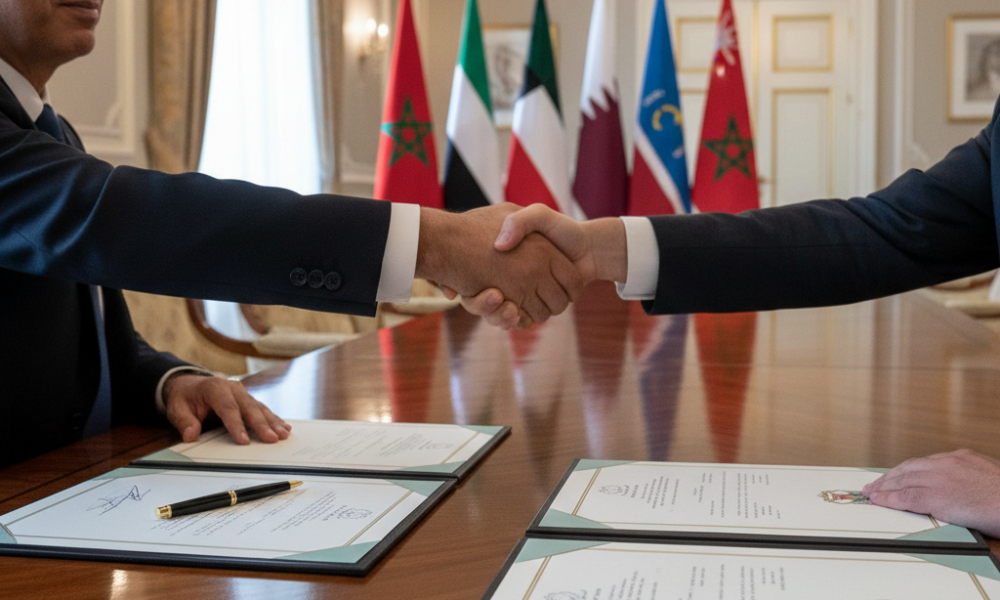
Strengthening strategic alliances plays a decisive role in the economic and geopolitical stability of the Kingdom. In a constantly changing global context, the strength of diplomatic relations is measured by the consistency of support received on vital issues. Recently, the Gulf countries once again expressed their clear and unified position regarding Morocco’s territorial integrity, sending a strong signal to the markets and the international community.
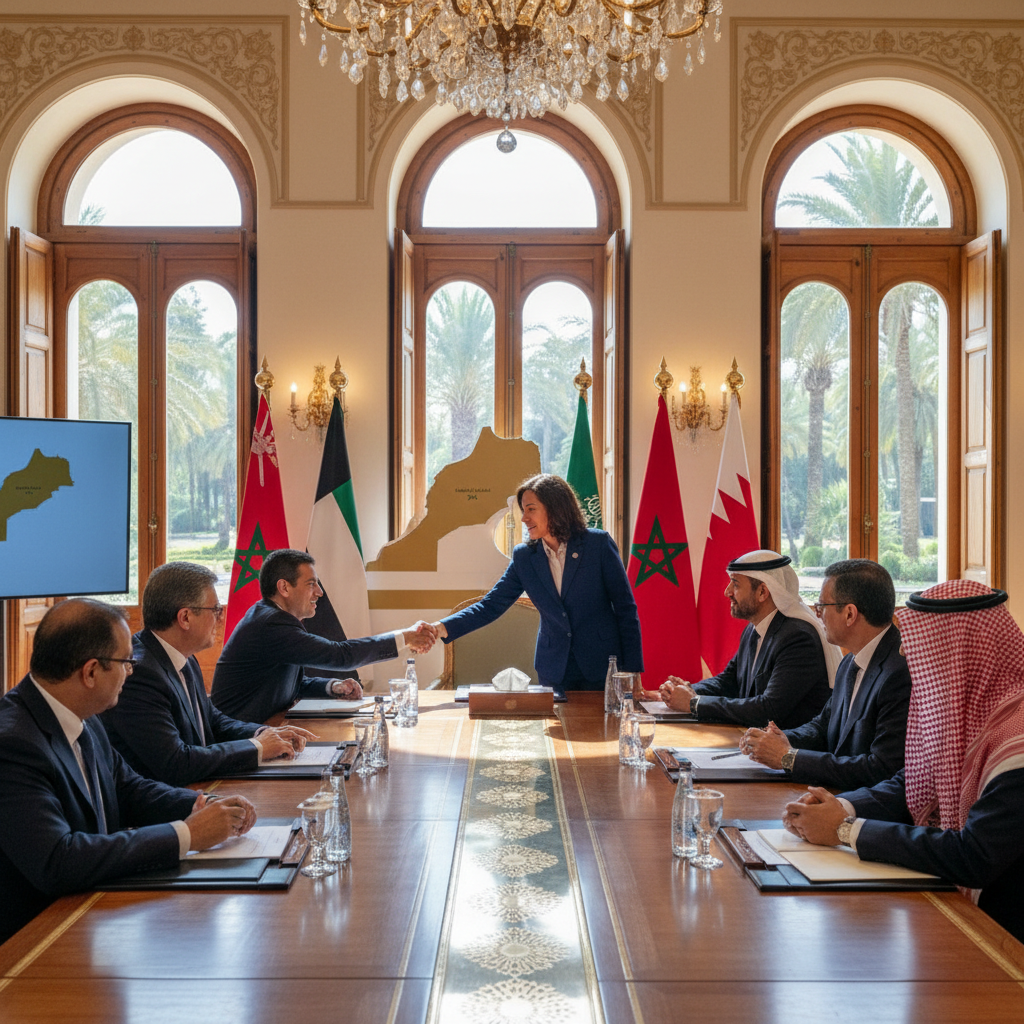
A strategic alliance for national sovereignty
The relationship between Morocco and the members of the Gulf Cooperation Council (GCC) goes beyond a simple diplomatic framework; it is part of a vision of brotherhood and sustainable economic partnership. During recent high-level sessions, notably the 46th session of the Supreme Council, these nations reiterated unequivocal support for the Moroccan sovereignty over the Sahara. This stance is not new, but its reaffirmation in 2025 takes on a special significance as the Kingdom consolidates its status as a continental hub.
For economic observers, this joint declaration is a guarantee of security for foreign investments in the southern provinces. Indeed, Saudi Arabia, the United Arab Emirates, Qatar, Kuwait, Bahrain, and Oman consider the security and stability of Morocco as inseparable from their own. This unwavering stance strengthens the credibility of the Autonomy Plan proposed by Rabat, qualified by the UN Security Council as a serious and credible basis for resolving the dispute.
It is interesting to note that this diplomatic momentum aligns with other major international supports. For example, the American position continues to positively influence the dossier, as seen with the American initiative on Sahara autonomy, which converges towards the same logic of pragmatism and development.
The pillars of the GCC declaration
The final declaration resulting from the work in Manama and relayed during the sessions of the Committee of 24 (C24) in New York highlights several crucial points for the future of the region:
- 🌍 Rejection of outdated solutions: The text makes no mention of unfeasible referenda options, aligning with the reality on the ground and recent UN resolutions.
- 🤝 Territorial unity: The defense of Morocco’s sovereignty over Western Sahara is presented as a red line and a constant principle of Gulf foreign policy.
- 📅 Symbolic recognition: The establishment of October 31 as the “Unity Day” is hailed as a strong historical marker.
- 🏗️ Support for development: Explicit backing for structuring projects launched by King Mohammed VI in the region.
This diplomatic cohesion offers indispensable visibility for economic actors. It allows anticipating a calm business climate, conducive to launching major projects, such as those observed in the primary sector where the 2026 agriculture recruitment promises to be dynamic in these provinces.
| GCC Countries 🏳️ | Nature of expressed support 📢 | Direct economic impact 📈 |
|---|---|---|
| United Arab Emirates | Opening of consulates, direct investments | Financing of energy and port projects |
| Saudi Arabia | Political declaration at C24 and UN | Support for regional development funds |
| Qatar | Support for territorial integrity | Partnerships in infrastructure and tourism |
| Bahrain & Kuwait | Constant diplomatic solidarity | Strengthened bilateral cooperation |
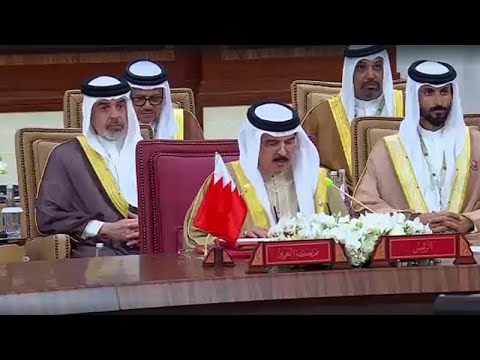
The impact on regional geopolitics and markets
Beyond the declarations, it is the entire map of regional geopolitics that is being redrawn. The artificial conflict around the Sahara, a legacy of the 1975 Spanish decolonization, finds less and less resonance in the face of the reality of development on the ground. The separatist front, supported by Algeria, hits a growing diplomatic wall, illustrated by the position of the Gulf countries. For Morocco, this means an increased capacity to focus on its internal growth and African influence.
This political stability is the engine of Morocco’s attractiveness. International companies, reassured by these solid alliances, no longer hesitate to establish themselves. We also observe a diversification of partnerships, ranging from defense to technology. The acquisition of advanced equipment and the modernization of the army, illustrated by the fact that Morocco orders next-generation helicopters, testify to a desire to secure this territory and ensure the peace necessary for commerce.
Towards global and definitive recognition
The support of the Gulf Cooperation Council acts as a catalyst within international bodies. During debates at the UN, the voice of these six nations carries weight and influences other geopolitical blocs. It is a diplomacy of influence that validates the Moroccan strategy. In parallel, the Kingdom continues to celebrate its progress, and events such as those where Morocco celebrates Western Sahara recall the unwavering popular attachment to this cause.
Employment opportunities naturally follow this political trend. The engineering and industrial sectors are booming. International groups are strengthening their presence, as shown by the analyses on FEV Morocco and 2025 trends, showing that Morocco is becoming an essential hub for technological talents.
- 📈 Investor confidence: Legal and territorial security is guaranteed.
- 🚀 Infrastructure boom: Roads, ports, and renewable energies in the South.
- 💼 Job creation: Increased demand for qualified profiles (technicians, engineers, managers).
- 🌐 Influence: Morocco as a stable gateway to Africa for Gulf capital.
| Key Indicator 📊 | Situation in 2025 🚀 | Outlook 🔭 |
|---|---|---|
| Foreign Direct Investments (FDI) | Constant increase in the South | Diversification towards tech and green hydrogen |
| Diplomatic recognition | Unanimous GCC support and growing in Europe | Consolidation at the Security Council |
| Regional development | Dakhla as a logistics hub | Increased connection with sub-Saharan Africa |
Finally, it is essential to understand that this dynamic is not limited to classic borders. It encompasses innovative sectors. Proof of this is the evolution of regulatory frameworks and the attraction of international talents, which are at the heart of priorities, as shown by the new Morocco digital and innovation visa system, designed to attract digital nomads to a stable and open country.
Which Gulf countries support the Moroccan sovereignty of the Sahara?
The six member countries of the Gulf Cooperation Council (GCC): Saudi Arabia, the United Arab Emirates, Qatar, Kuwait, Bahrain, and the Sultanate of Oman, have all reaffirmed their unwavering support for Morocco’s sovereignty.
What is the impact of this support on the Moroccan economy?
This diplomatic support strengthens the political stability of the Kingdom, a key factor to reassure foreign investors (FDI) and stimulate economic development, particularly in the southern provinces.
What is the autonomy initiative proposed by Morocco?
It is a solution proposed by Morocco to resolve the Sahara dispute, offering broad autonomy to local populations under Moroccan sovereignty. It is qualified as serious, credible, and realistic by the UN Security Council and the Gulf countries.
Why is the 46th session of the GCC Supreme Council important?
During this session, the Gulf leaders not only reiterated their political position but also praised the development initiatives of King Mohammed VI, thereby consolidating the strategic alliance between Morocco and the GCC.

Comments are closed