Canadian digital visa in Morocco: accelerator of mobility and showcase of innovation
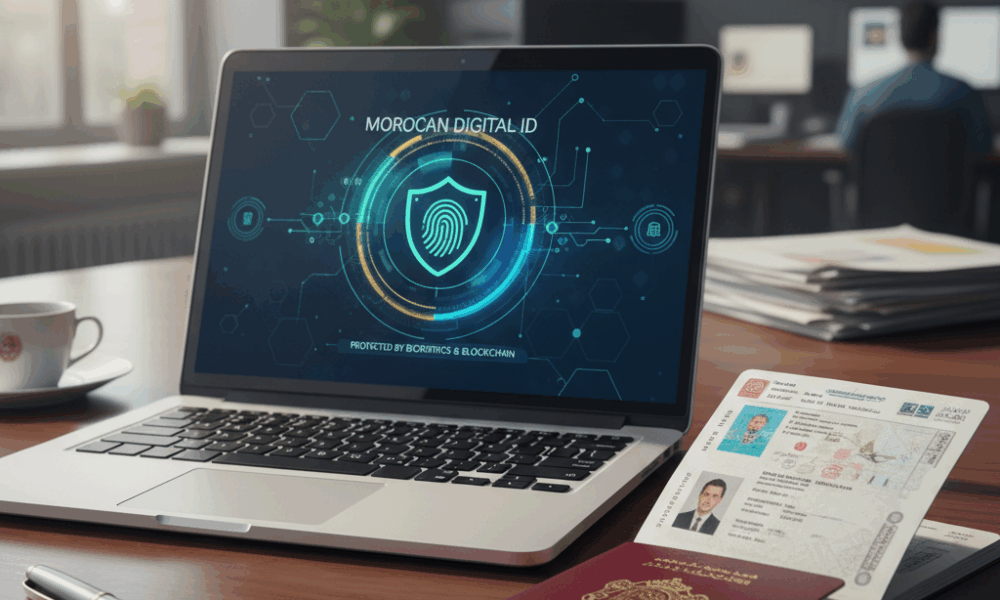
Morocco becomes the first country in the world to pilot the Canadian Innovation of the Digital Visa, a milestone that redefines the travel experience for visitors and employers. The pilot project led by IRCC replaces the physical sticker with a securely stored electronic Visa, synchronized with carrier standards and border systems. The process is simplified, fast, and controlled: online application, automated checks, notification, then secure issuance. The major benefit is measured in time saved and digital security, without sacrificing compliance.
The choice of the Kingdom is explained by a dense bilateral flow, an active diaspora, and a rapidly growing digital ecosystem. For a Moroccan traveler already holding a Canadian visitor visa, this pilot offers a secure digital duplicate alongside the traditional sticker, to test the digitalization of visas in real conditions. User feedback feeds continuous service improvement, before potential extension to other countries. This approach aligns with the global digital transformation of mobility, comparable to dematerialized boarding passes and digital identities.
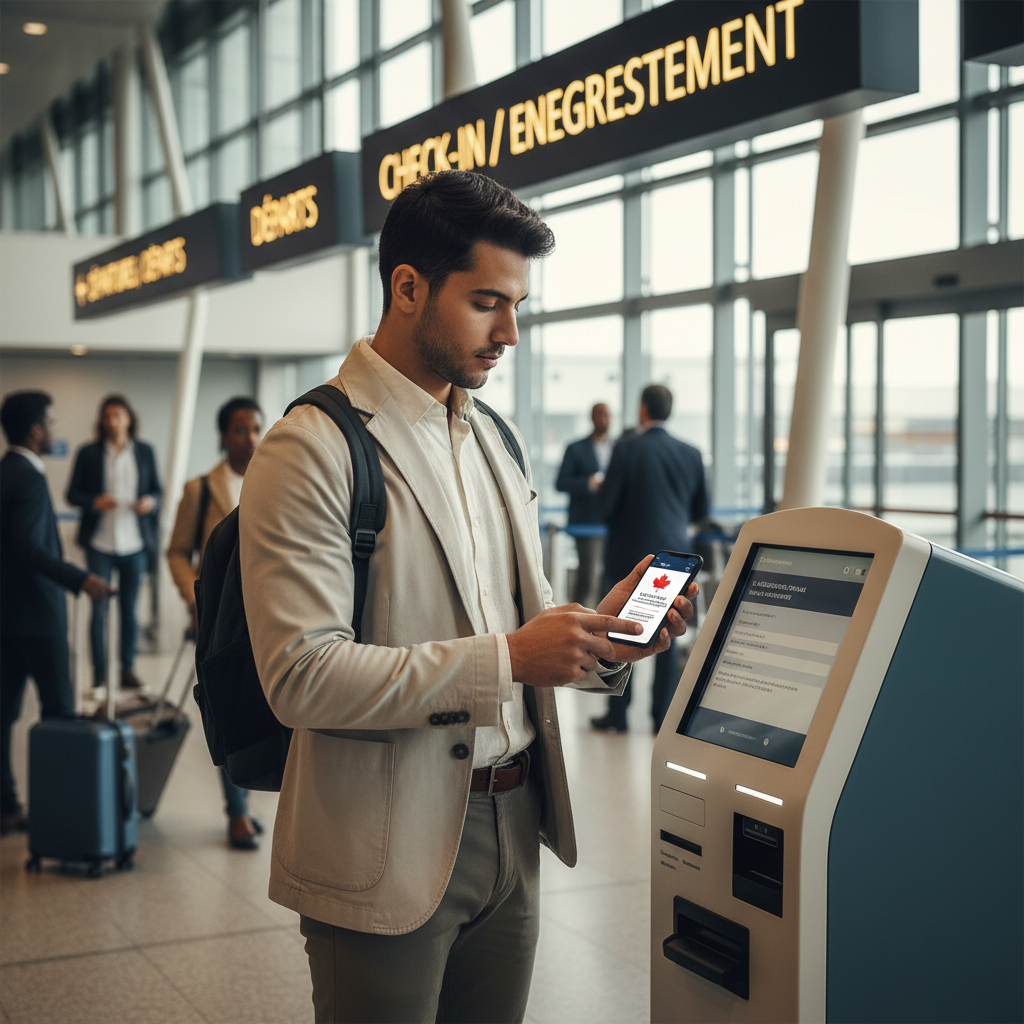
Practically, the travel experience gains in fluidity. Less paper, fewer trips to centers, and a travel technology that strengthens traceability. An example: a family from Casablanca traveling to Montreal for a short tourist stay can track the status of their electronic authorization, receive notifications, and present a verification code at the airport. Meanwhile, enhanced controls (fingerprints, background checks, risk scoring) increase the process’s reliability.
At the macro level, this pilot catalyzes impacts on the job market. Moroccan companies positioned in TravelTech, cybersecurity, or outsourced services can develop software modules, audit data flows, and create skilled jobs. The positive externality is notable: the more robust the procedure, the more intense the tourist, academic, and economic exchanges. To enlighten readers comparing entry regimes in multiple destinations, this overview of visa-free countries for Moroccans illustrates the tectonics of migration policies.
The pilot’s implementation is also part of an international sequence. Canada has simultaneously expanded eTA eligibility for certain travelers, while Gulf States have adjusted their visa policies. Pedagogically, local resources already offer comparative benchmarks on procedures, for example for the France visa process. These information bridges support the autonomy of candidates for fast and well-prepared travel.
- 🚀 Key benefit: reduced delays thanks to full digitalization.
- 🛡️ Major asset: enhanced digital security through cryptography and verifications.
- 🌍 Network effect: facilitated and more predictable international mobility.
- 📲 User comfort: real-time tracking of application steps.
- 🤝 Cooperation: tests in Morocco to calibrate future global deployment.
| Criterion ✈️ | Paper Visa 🧾 | Electronic Visa 💻 | Winner 🏆 |
|---|---|---|---|
| Delays | Variable, depending on appointments | Optimized by digital processing | Electronic Visa 💻 |
| Traceability | Sometimes opaque steps | Real-time tracking and notifications | Electronic Visa 💻 |
| Security | Risk of physical loss | Encryption and access control | Electronic Visa 💻 |
| Experience | Trips to centers | Remote procedures | Electronic Visa 💻 |
In summary, the combination of Digital Visa + strict data governance introduces a new mobility standard, without compromising consular rigor.
Employment, recruitment and skills: how the pilot reshapes Morocco’s HR ecosystem
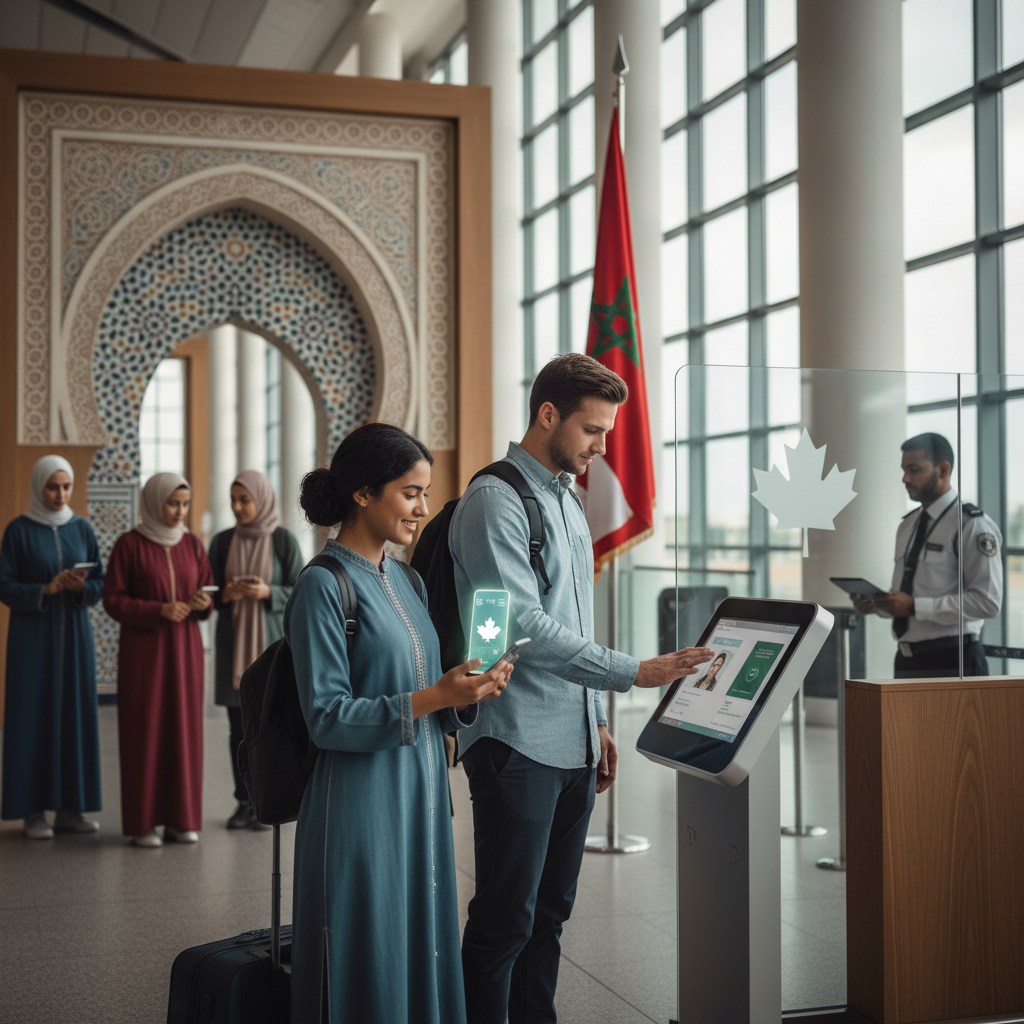
The modernization of mobility towards Canada has an immediate effect on talent dynamics. Fast travel to Canadian hubs streamlines short missions, conferences, and university exchanges. Local recruiters already anticipate an increase in bilingual profiles circulating between Casablanca, Rabat, and Montreal, generating a learning capital reinjected into companies in Morocco. This movement fits into a logic of opportunities for recent graduates and transitioning professionals.
HR actors see three areas of impact. First, planning: more reliable deadlines, better-paced onboarding, accelerated international projects. Then, attractiveness: the Canadian Innovation signal reassures about process quality. Finally, skills development: cybersecurity, data compliance, digital identity management become sought-after expertise. To explore concrete leads, the finding a job in Morocco section compiles useful trends and offers.
In the public and semipublic sector, digital service projects intensify. National competitions and recruitments offer gateways to identity management and data protection. For example, the ANRT strengthens the culture of digital regulation, while health institutions such as the CHU of Casablanca align their clinical and administrative IT systems to high standards. These developments permeate the entire employment ecosystem.
In tourism and aviation, travel technology is essential. Company and agency managers reconfigure their CRM and DCS to integrate new proof of authorization. Initial and ongoing training becomes strategic, with calls for applications such as the tourism competitions renewing skills around reception, digital control, and traveler data protection.
- 📈 Growing skills: cybersecurity, data privacy, digital identity.
- 🗺️ Relevant professions: ground agents, developers, compliance managers.
- 🤝 Partnerships: schools, universities, HR Tech companies.
- 🔄 Boomerang effect: experience feedback Canada → Morocco.
- 💼 Tools: offer platforms like Wadif 2025 for effective applications.
| Sector 💼 | Effect of Electronic Visa 🌐 | Winning profiles 🧑💻 | Market signal 📊 |
|---|---|---|---|
| Travel & Aviation | Integration of digital authorizations | DCS agents, data officers | Strong demand 🚀 |
| Health | Administrative interoperability | IT Directors, digital archivists | Ongoing transformation 🔧 |
| HR & BPO | Accelerated international onboarding | Talent acquisition, lawyers | Increased competition 🏁 |
| Education | Facilitated academic mobility | International officers | Global opening 🌍 |
This HR realignment, driven by Digital Transformation, confirms that the visa is no longer a simple document: it is a lever of territorial competitiveness.
Digital security and sovereignty: technical guarantees and traveler advice
The promise of the Digital Visa relies on a robust technical foundation. End-to-end encryption, strong authentication, timestamping, and audit logs govern every step. To reduce attack vectors, sensitive data do not transit through unsecured channels, and partners (carriers, airports) use certified interfaces. The issuance model favors data minimization and limited retention, consistent with international privacy protection standards.
Digital security also benefits from clear governance. In Morocco, the institutional ecosystem is equipping itself: regulatory authorities, CERT, telecom players, and universities work towards a common framework. Public digital competitions and recruitments create a pool of skills, notably via the ANRT. Support centers for traditional procedures remain useful in hybrid situations, such as the BLS center in Rabat, even if the flow shifts towards full digital.
On the user side, some habits protect effectively: verify the platform URL, activate two-factor authentication, avoid public Wi-Fi when submitting documents, and keep encrypted offline copies. Notifications must come from official channels. In case of doubt, it is better to go through an institutional guide or an authorized center, and report any phishing attempts. Simple education drastically reduces fraud exposure.
Data sovereignty rightly raises questions. Where is the information hosted? Who accesses it? The Canadian pilot responds with access control mechanisms, strict contractual clauses, and regular audits. Morocco, ranked as an innovation overperformer in the Global Innovation Index, has assets to develop local verification solutions compatible with international platforms. These technical cooperations nurture trust and model replicability.
- 🔐 Good habit: activate 2FA and update passwords.
- 🧭 Verify official sources before any submission.
- 📵 Avoid public Wi-Fi when uploading documents.
- 🧾 Keep an encrypted copy of the electronic visa.
- 🚨 Report any phishing to competent authorities.
| Risk ⚠️ | Prevention 🛡️ | Tools 🧰 | Reduction level 📉 |
|---|---|---|---|
| Phishing | Verify URL and sender | 2FA, anti-spam filters | High ✅ |
| Interception | HTTPS connections and VPN | Certified VPN | Medium to high 🔒 |
| Loss of access | Password manager | Secure backup | High 💪 |
| Data leakage | Data minimization | AES-256 encryption | High 🧠 |
Trust arises from a balance: rigorous protection, process transparency, and traveler empowerment form a solid triptych.
Innovation, international rankings and Moroccan assets in Canada–Morocco cooperation
The experimentation of the Digital Visa in Morocco fits into an upward trajectory of national innovation. The Kingdom has improved its ranking in the Global Innovation Index and now appears among the most dynamic economies in scientific and technological ecosystems. This status as an innovation overperformer legitimizes Morocco’s selection as a test ground: improving infrastructures, polyglot talents, IT hubs in Rabat, Casablanca, and Fès with strong activity.
Economically, the digital transformation of public services and private value chains benefits from sustained investments, framed by successive budgetary laws, as illustrated by the detailed architecture of the 2023 Finance Law which provided visibility to digital projects. Canada, for its part, is modernizing its immigration services and experimenting with interoperable standards that will be exchangeable with other countries.
This synchronization extends to tourism, higher education, health, and agro-industry. Technical bodies such as the IRAT participate in modernizing sectors, while public competitions and recruitments renew skills (ex.: CNOPS). At the international mobility scale, the eTA perimeter for Moroccans already holding a past Canadian visa or a valid US non-immigrant visa illustrates the trend towards visa digitalization and easing formalities for low-risk profiles.
The geopolitical context remains fluid. Exemption and facilitation policies evolve by regional blocks and reciprocity, as shown by updates on visas to Russia for Moroccans. National information platforms accompany these transitions to avoid misinformation and hidden costs. Thus, the practical sheet dedicated to Canadian electronic visas serves as an educational bridge.
- 🏗️ Infrastructures: data centers, fiber optics, public/private cloud.
- 🎓 Talents: engineering schools, cybersecurity bootcamps, AI programs.
- 🤝 Diplomacy: mutual trust Canada–Morocco and best practice transfers.
- 📚 Regulation: interoperability standards and compliance.
- 🌐 Outreach: positioning the Kingdom as an African hub.
| Indicator 🔎 | Tendency 📈 | Effect on mobility 🌍 | Opportunity 💡 |
|---|---|---|---|
| Innovation ranking | Notable progress | Increased credibility | R&D partnerships 🤝 |
| Digital public | Acceleration | Online procedures | Local GovTech 🖥️ |
| Skills | Upskilling | Expert flows | Targeted training 🎯 |
| Regulation | Structuring | Enhanced security | Market trust 🔐 |
The Canadian pilot is a revealer: international trust follows the ability to execute quickly and well, with a solid protection framework.
Practical user guide: from electronic Visa to eTA, scenarios and tips for Moroccan travelers
Success of an application starts with a clear understanding of available channels. The Electronic Visa from the Canadian pilot concerns a targeted group of already approved Moroccan travelers. They receive the digital version in addition to the sticker, to experiment with real usage. Meanwhile, some eligible Moroccans can apply for an eTA for short stays when they meet criteria: having held a Canadian visitor visa in the last decade or holding a valid US non-immigrant visa.
Two use cases illustrate the process. Salma, product manager in Rabat, must attend a fair in Toronto. She checks her eTA eligibility, uses secure online payment, and receives her confirmation quickly. Youssef, engineer in Fès, participates in a bootcamp in Montreal; he benefits from the pilot: his traditional visa is doubled by a digital format, accessible via a secure portal. In both situations, carriers verify the authorization via interconnected systems, speeding up boarding.
Travelers will benefit from staying informed through specialized resources. To compare entry conditions in other destinations, updates on visa-free countries for Moroccans are useful, as are operational guides on visas, including for Europe, like this page on the France visa. On the Canada side, a dedicated spotlight on electronic visas will help avoid frequent mistakes and anticipate delays.
- 🧭 Step 1: verify eligibility (pilot, eTA, classic visa).
- 📑 Step 2: prepare documents and proofs in digital format.
- 💳 Step 3: pay via secure payment and keep proof.
- 📬 Step 4: monitor notifications and quickly correct any omissions.
- 🧳 Step 5: sync the authorization with ticket and passport.
| Scenario 🗺️ | Entry option 🎫 | Key conditions ✅ | Practical tip 💡 |
|---|---|---|---|
| Short business trip | eTA | Past Canadian visa or valid US visa | Plan 72h ahead ✈️ |
| Family tourism | Pilot Digital Visa | Already approved visitor | Scan documents in HD 📸 |
| Short studies | eTA or visa | Proof of admission | File in advance 🎓 |
| Technical mission | Visa + digital duplicate | Invitation letter | Synchronize with HR 🧑💼 |
Final tip: keep an eye on centers and national competitions related to travel and administration, such as the prefecture competitions in Agadir, useful to understand documentary expectations, or logistical information on stadiums and major infrastructures for international events, like the World Cup stadiums that stimulate the tourism–mobility ecosystem. A well-prepared file remains the best guarantee of fluidity.
Territorial multiplier effects: tourism, health, agriculture and public services in the era of full digitalization
The dematerialization of travel authorizations acts as a multiplier on several local value chains. In tourism, reduced administrative frictions boost visitor arrivals, energize hotels, land transport, and cultural experiences. This rebound translates into needs for multilingual front-office, identity management, and quality control, hence the interest in ongoing training initiatives and sectoral competitions.
In health, medical mobility improves: expertise exchanges, conference participation, clinical internships. Moroccan hospital establishments professionalize their HR management and IT systems to capture these flows and benefit. Recruitment announcements in regional structures such as the CHU of Oujda and information on the CHU of Oujda competition illustrate the growing needs for digital professions applied to patient pathways and administration. This organizational maturity reflects in cooperation with international partners.
Agriculture and territories are not left behind. Offices and research centers integrate Digital Transformation to better manage agronomic data, climate risks, and traceability. The role and missions of ORMVAM illuminate water coordination and local project management. Easier circulation of experts and investors strengthens modernization programs, fostering the dissemination of smart irrigation and agri-data solutions.
The informational framework must remain clear amid international tensions and rumors. Readers will benefit from distinguishing conjunctural issues from structural trends, especially when the news covers sensitive topics, such as relations with Mediterranean partners. Only under this condition will the digitalization of visas strategy maintain its readability and social acceptability, serving households as well as companies.
- 🏨 Tourism: rise of digital hospitality standards.
- 🩺 Health: interoperability and practitioner mobility.
- 🌾 Territories: data serving water and crops.
- 🧑🏫 Training: cyber certifications and compliance.
- 🧭 Governance: clarity of rules and pathways.
| Value chain 🔗 | Impact of Digital Visa 🌐 | Required skills 🧠 | Perspectives 📅 |
|---|---|---|---|
| Hospitality | Smoother check-in | CRM, KYC | Improved quality ⭐ |
| Transport | Less waiting | DCS interoperability | Customer satisfaction 😊 |
| Health | Expert exchanges | IT directors, security | Clinical networks 🤝 |
| Agriculture | Access to funds/tech | Agronomic data | Resilience 🌱 |
Value is created at the intersection of sectors: tourism, health, and agriculture mutually strengthen when international mobility becomes simpler, safer, and fully digital.
{“@context”:”https://schema.org”,”@type”:”FAQPage”,”mainEntity”:[{“@type”:”Question”,”name”:”Who can benefit from the Canadian digital visa pilot departing from Morocco?”,”acceptedAnswer”:{“@type”:”Answer”,”text”:”The project targets a group of Moroccan travelers already approved for a visitor visa. They receive a secure digital duplicate alongside the traditional sticker, to test its real-world use and provide feedback.”}},{“@type”:”Question”,”name”:”What is the difference between the Electronic Visa and the eTA for Moroccans?”,”acceptedAnswer”:{“@type”:”Answer”,”text”:”The pilot’s Electronic Visa is a digital version of an already granted visa, intended for operational tests. The eTA is an electronic authorization for short stays, accessible to certain profiles (e.g., holders of a previous Canadian visa or a valid US visa), according to current conditions.”}},{“@type”:”Question”,”name”:”How to protect against fraud during the application?”,”acceptedAnswer”:{“@type”:”Answer”,”text”:”Use only official platforms, activate two-factor authentication, avoid public Wi-Fi, verify emails, and keep an encrypted copy of authorization. In case of doubt, contact an authorized center or institutional source.”}},{“@type”:”Question”,”name”:”Does the digital visa really speed up processing times?”,”acceptedAnswer”:{“@type”:”Answer”,”text”:”Yes. Digitalization reduces queues, document transport, and allows real-time tracking. Times remain variable depending on profile, but technology reduces frictions and improves predictability.”}},{“@type”:”Question”,”name”:”What are the impacts on the Moroccan job market?”,”acceptedAnswer”:{“@type”:”Answer”,”text”:”Modernization of migration processes drives demand for skills in cybersecurity, compliance, data, and TravelTech, creates opportunities in tourism, aviation, health, and consolidates Morocco’s position as an innovation hub.”}}]}Who can benefit from the Canadian digital visa pilot departing from Morocco?
The project targets a group of Moroccan travelers already approved for a visitor visa. They receive a secure digital duplicate alongside the traditional sticker, to test its real-world use and provide feedback.
What is the difference between the Electronic Visa and the eTA for Moroccans?
The pilot’s Electronic Visa is a digital version of an already granted visa, intended for operational tests. The eTA is an electronic authorization for short stays, accessible to certain profiles (e.g., holders of a previous Canadian visa or a valid US visa), according to current conditions.
How to protect against fraud during the application?
Use only official platforms, activate two-factor authentication, avoid public Wi‑Fi, verify emails, and keep an encrypted copy of the authorization. In case of doubt, contact an authorized center or institutional source.
Does the digital visa really speed up processing times?
Yes. Digitalization reduces queues, document transport, and allows real-time tracking. Times remain variable depending on profile, but technology reduces frictions and improves predictability.
What are the impacts on the Moroccan job market?
Modernization of migration processes drives demand for skills in cybersecurity, compliance, data, and TravelTech, creates opportunities in tourism, aviation, health, and consolidates Morocco’s position as an innovation hub.

Comments are closed