Morocco’s New Stadiums Shake Up the Participation of Spanish Arenas for the 2030 World Cup
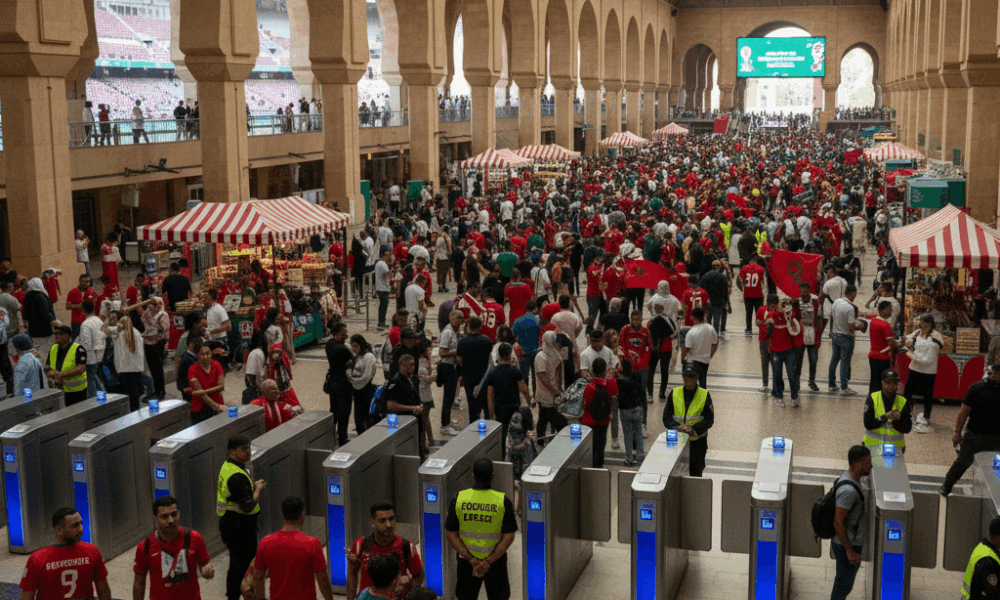
The momentum initiated by Morocco’s New Stadiums is reshuffling the cards within the host trio of the 2030 World Cup. Between the upgrading of infrastructure in Morocco and the legitimate ambitions of Spain, the competition is no longer played solely on the pitch. The Iberian media have even admitted to a certain embarrassment in the face of Moroccan appetite, notably regarding the potential final. The prospect of a great event at the future Hassan II Stadium in Casablanca disrupts the traditional centrality of Spanish arenas such as the Santiago Bernabéu.
The renovation of the Grand Stadium of Tangier – Ibn Battuta illustrates this scale shift. The capacity raised to 75,600 seats, the addition of around 5,800 VIP seats, removal of the athletics track, and a redesigned roof in 69 days showcase a well-controlled industrial execution. Lighting standards now calibrated for ultra-high-definition broadcasting confirm the ambition to play with the very best. This upgrade logically strengthens Morocco’s participation in major matches, from quarter-finals to semi-finals, potentially at the expense of certain Iberian venues.
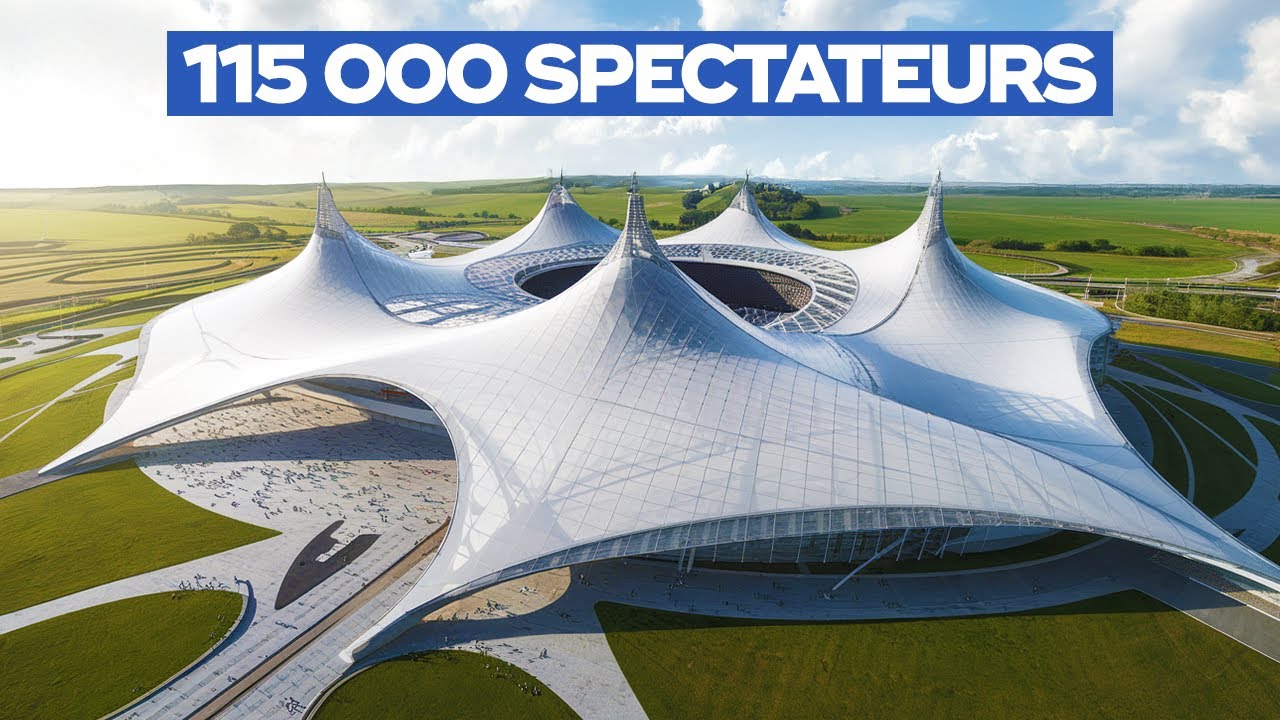
In this reshuffling, recent history is not neutral. Tangier already hosted the 2018 Spanish Super Cup between Barcelona and Sevilla, the first Spanish national final held outside the territory. This precedent, now a media reference, reminds that the kingdom masters large formats. The ongoing upgrades in Rabat, Marrakech, Agadir, Fès, and Casablanca, combined with the Benslimane project (announced at 115,000 seats), heighten the scale effect. This network of ready-to-use stadiums for a global sporting event places Moroccan organization in a high attractiveness position.
Beyond engineering, the sporting trajectory consolidates the country’s credibility. The 2022 World Cup semi-final run, the Olympic momentum, and the quality of training (academies, scouting, dual-national talents) form a foundation that the Iberian press observes with respect. At the moment when FIFA will decide the allocation of matches, the equation goes beyond raw capacity. It includes quality of reception, operational reliability, and the long-term projected socio-economic legacy.
Instant Comparative Overview of Iconic Arenas
To understand the productive tension between parties, a synthetic comparative look sheds light on the current power dynamics. The goal is not to oppose but to measure what each venue can offer in 2030.
| 🏟️ Stadium | 🧩 Status 2025 | 📏 Capacity | 🎯 Expected Positioning | 🌍 Geopolitical Signal |
|---|---|---|---|---|
| Ibn Battuta (Tangier) 🇲🇦 | Renovated, optimized roof | 75,600 | Quarterfinals / Semis ⚽ | Co-hosting assumed 🌟 |
| Prince Moulay Abdellah (Rabat) 🇲🇦 | Advanced modernization | Approx. 65,000 | High level / robust logistics | Administrative capital 🏛️ |
| Hassan II (Casablanca/Benslimane) 🇲🇦 | Flagship project | Up to 115,000 | Potential final 🏆 | Panafrican ambition 🚀 |
| Santiago Bernabéu (Madrid) 🇪🇸 | Premium renovation | Approx. 85,000 | Final / ceremony | European centrality 🇪🇸 |
In this grid, Spain retains obvious strengths. But Moroccan execution power rebalances the top-level game, a dynamic that FIFA will take into account in its decisions.
- 🏁 Qualitative growth of Moroccan infrastructure
- 🧭 Proven operational references
- 🎥 Compliance with media and broadcasting standards
- 🤝 Complementarity rather than head-to-head competition
Final insight of the section: the positive pressure on Spanish arenas stimulates upward alignment, beneficial for the entire tournament.
Employment, Skills and Local Sectors: The Multiplying Effect of Stadium Projects in Morocco
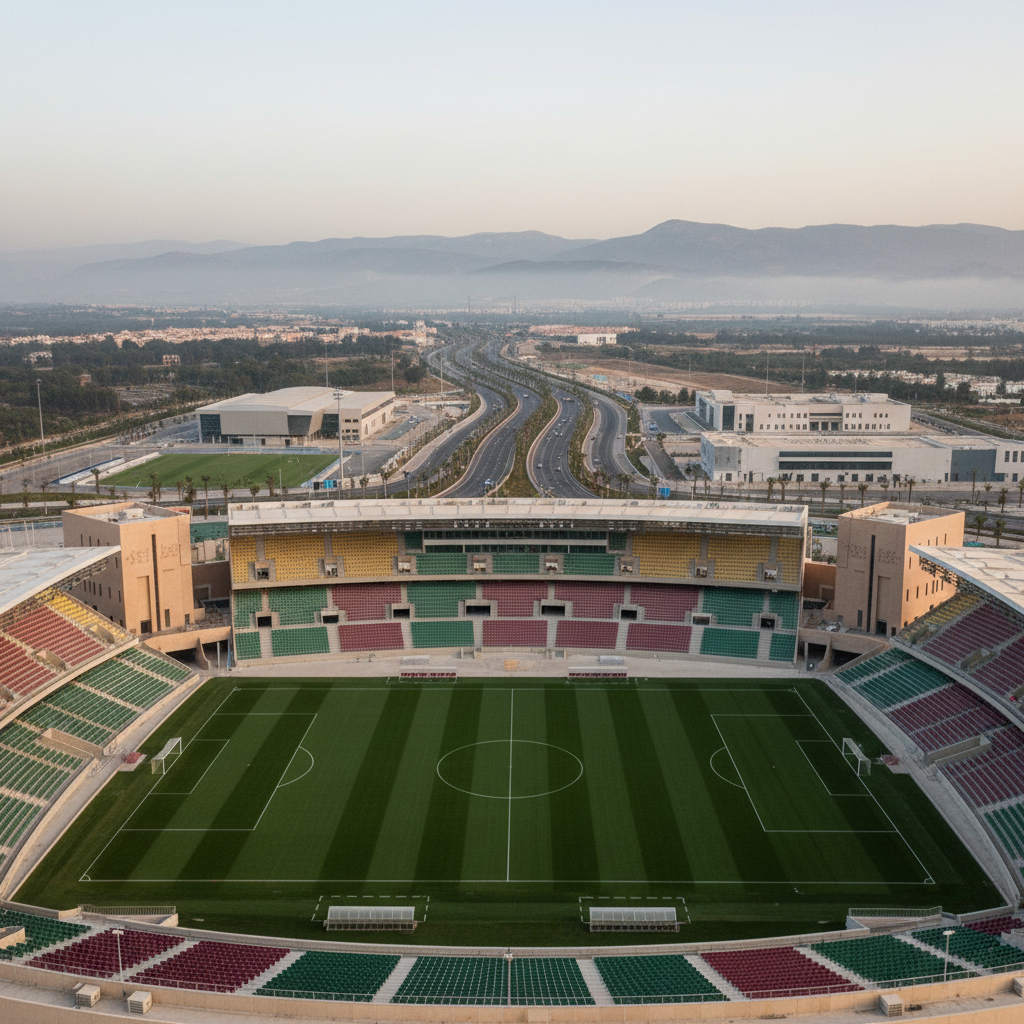
The economic ripple effect of stadium projects is particularly felt in employment and skills development. Around Ibn Battuta, Rabat, or the Benslimane project, the chain extends from design offices to prefabrication workshops, from HVAC SMEs to digital content studios. Order books feed thousands of direct and indirect jobs, with a peak during construction followed by a sustainable plateau in operations, maintenance, security, and commercial animation.
The case of Samira, a structural engineer in Tangier, illustrates this rebound. Her firm has doubled its staff in two years thanks to tenders linked to the 2030 World Cup and the Africa Cup of Nations. Recruitment targeted BIM profiles, 5D quantity surveyors, as well as field technicians trained in safety and quality control. This mix of technical profiles and local jobs strengthens the national production base while avoiding bottlenecks.
Some unexpected segments are also growing: merchandising, hospitality, catering, event logistics, audiovisual production. The “fans and brands” sector creates varied missions, from collection design to sales data analysis. Along these lines, the collective memory around the 2022 jersey has awakened an entire ecosystem of design, retail, and e-commerce, heralding sustainable jobs and a creative upgrade.
Mapping of Key Jobs and Skills
Grouping needs by job families helps candidates and recruiters position themselves. The positions below deploy from the Africa Cup of Nations and stabilize until 2030.
| 💼 Family | 👥 Estimated Staff | 🧠 Critical Skills | 📈 Opportunities 2025-2030 |
|---|---|---|---|
| Construction / Civil Engineering 🏗️ | 8,000 – 12,000 | BIM, prefabrication, HSE | Major stadium/road projects |
| Operations / Maintenance 🛠️ | 2,500 – 4,000 | Building management systems, energy, acoustics | Multi-year contracts |
| Security / Reception 🔒 | 3,000 – 5,000 | Crowd control, safety, first aid | Matchdays and events |
| Digital / Media 🎥 | 1,500 – 2,500 | Broadcast, AR, fan data | Content and monetization |
| Hospitality / Retail 🍽️ | 2,000 – 3,000 | VIP experience, merchandising | Suites, shops, e-commerce |
To amplify this impact, several HR levers find consensus: pooling training centers, rapid certification through bootcamps, bridges between construction and operations, and post-event retraining programs. Moroccan companies see this as an export competitiveness accelerator, notably towards West Africa.
- 📚 Job bootcamps oriented on “smart stadium”
- 🤝 School–business cooperation for massive internships
- 🌱 Green jobs: energy efficiency, sorting, reuse
- 🧭 Inclusion programs for first-time job seekers
Final insight of the section: the stadium construction is a driver of sustainable employment if accompanied by targeted training and the service industrialization of sport.
2025 Africa Cup of Nations as a Dress Rehearsal: Ticketing, E-Visas and Justice in Stadiums
The 2025 Africa Cup of Nations in Morocco serves as a dress rehearsal before the 2030 World Cup. Three pillars emerge: access to the country, ticket management, and integrated security. The introduction of electronic visas for fans simplifies flows while improving document control. On the revenue and experience side, innovations in ticketing test dynamic pricing, smart seat assignment, and anti-fraud efforts via secure QR codes.
The upgrade does not stop there. Authorities have announced on-site judicial mechanisms to curtail incivilities and speed up the processing of offenses within venues. This system, designed as a safeguard, works alongside supporter education campaigns and soft mobility plans. Implicitly, the confidence of families and international visitors depends on this perceived security.
Operational Pilots and Success Indicators
Test, measure, correct: the approach is inspired by major sporting event organizations. The pilots below structure the ramp-up.
| 🧪 Pilot | 🎯 Objective | 🧭 Key Indicator | ⚠️ Risk |
|---|---|---|---|
| E-visas 🌍 | Smooth entry | Approval rate D-10 | Demand peaks |
| Ticketing 🎫 | Maximize occupancy | Occupancy > 92% | Fraud / resale |
| In-stadium courts ⚖️ | Rapid response | Average delay < 2h | Case overload |
| Fan zones 🎉 | Safe experience | Satisfaction > 4.5/5 | Overcapacity |
| Mobility 🚆 | Staggered arrival | Delay rate | Traffic jams |
The success of e-visas and smart tickets is only valid if the entire ecosystem follows: hotels, transport, catering, cultural mediation. This is where public-private coordination and accelerated front-office staff training come in. The Africa Cup of Nations offers the opportunity to align all players before 2030 and document best practices for the benefit of the joint organization.
- 🗺️ Multilingual signage integrated into apps
- 🔋 Energy-efficient equipment powered by renewables
- 👮 Standardized anti-incivility protocols
- 🧾 Transparency of pricing and digital queues
Final insight of the section: the spectator experience will be won in operational details, from the e-visa to the assigned seat, passing through visible and deterrent justice.
Along these pilots, system reliability increases become a comparative advantage for Morocco, including compared to more mature markets.
Football Geopolitics: FIFA Arbitration and the Role of Spanish Arenas
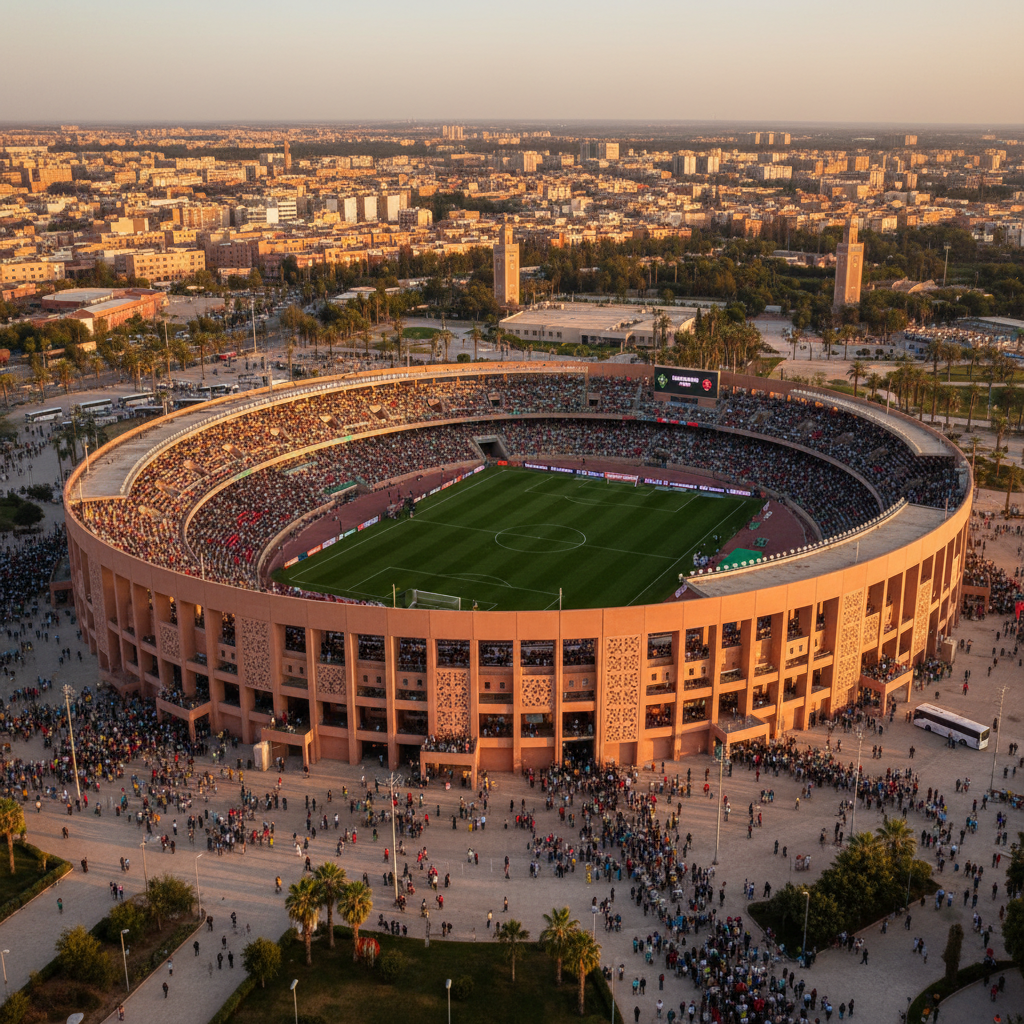
The allocation of key matches carries symbolic and economic weight. A final or a semi-final attracts not only global audience but also flows of investments, sponsors, and innovations. Spain relies on the prestige of its Spanish arenas, with a modernized Bernabéu and a reconfiguring Camp Nou, while Morocco projects an iconic stadium in Casablanca. The FIFA decision will be guided by logistical robustness, security, commercial neutrality, and measurable heritage.
Sports governance is also scrutinized. Arbitrational or disciplinary controversies, sometimes echoed on other continental stages, remind us of the importance of consistent decision-making. For example, media sensitivity around the Super Eagles dispute illustrated how perceived fairness influences public and partner trust. For 2030, anticipating controversies and procedural transparency will count as much as available seats.
Key Match Allocation Scenarios
Two major scenarios are emerging for the showcase of major fixtures. Each will produce distinct image and market effects.
| 🧭 Scenario | 🇲🇦 Effects for Morocco | 🇪🇸 Effects for Spain | 🏁 FIFA Reading |
|---|---|---|---|
| Final in Casablanca 🏆 | Strengthened legacy, African hub 🌍 | Consolation via semis/ceremonies 🎤 | South-North balance, message of openness |
| Final in Madrid 🏆 | Semis and premium matches ⚽ | European centrality confirmed 🌐 | Viewership and hospitality optimization |
In both cases, collaboration will be decisive. Flows of supporters, VIP pathways, international media management, and sponsor integration require flawless choreography. Each country has an interest in the other: Moroccan infrastructure brings capacity and modernity, while Spain offers a tradition of hosting major events and a seasoned hotel network.
- 🛰️ Interoperability of ticketing and accreditation systems
- 🧳 Synchronized traveler routes airports–stations
- 🎙️ Shared media pool, bilingual sets
- 💡 Joint innovation on fan experience
Final insight of the section: arbitration should not oppose but maximize the tournament’s positive footprint for the entire Euro-Maghreb block.
Sustainable Legacy: Mobility, Civism, and Benefits for Moroccan Youth
The promise of the 2030 World Cup in Morocco is measured by its legacy. The expected legacy is not just sporting: it touches urban mobility, tourism, the circular economy, and civic education. Transport corridors to Tangier, Rabat, Casablanca, and Marrakech benefit from welcomed prioritization: modernized stations, bus-tram hubs, dedicated access roads on match days, temporary pedestrian zones. This approach improves experience while reducing carbon footprint.
Safety and public health are also part of the debate. The respectful management of stray animals near venues, for example, is already subject to action plans. Recommendations shared within the local ecosystem draw from initiatives like those concerning stray dogs during the World Cup period, focusing on prevention, sterilization, and municipal coordination. The quality of reception relies on these invisible details when all goes well but fundamental when there is a problem.
For youth, the legacy is dual: local infrastructure and career pathways. Satellite academies, refurbished training fields, and school programs around football and digital skills feed a generation comfortable with event management, sports business, and technical trades. Amateur clubs benefit from better equipment, supervision, and structured calendars, which elevates practice and opens professionalization prospects.
Structuring Legacy Axes 2025–2030
To set priorities, an impact matrix clarifies where to focus effort and how to sustain positive effects beyond the tournament.
| 📌 Axis | 🔑 Key Measure | 🧮 Indicator | 🌱 Long-Term Impact |
|---|---|---|---|
| Mobility 🚆 | Stations and park-and-ride lots | +20% public transport | Less emissions and traffic jams |
| Civism 🤝 | Anti-incivility campaigns | Decline in incidents | Family-friendly and safe stadiums |
| Youth 🧒 | Academies and neighborhood fields | +30% supervised practice | Durable talent pipeline |
| Local economy 💶 | “2030 supplier” label | Local share > 50% | More competitive SMEs |
Tourism, hotel, and cultural companies must align. Seasonality can be softened thanks to sports festivals, heritage circuits, and combined match + discovery offerings. The goal: bring visitors back after the event, turning a peak into a sustainable plateau for the territorial economy.
- 🧭 Thematic stadium–city–craft itineraries
- 🛎️ “Sports hospitality” training for teams
- 🍃 Green standards for providers and caterers
- 🎒 School engagement programs around sport
Final insight of the section: true success will be measured by the audience returning to Morocco for reasons beyond the initial match.
Competitiveness and International Alignment: From the Field to the Real Economy
Morocco’s ambition should not be evaluated in isolation. It fits within a logic of regional integration and global upgrading. Aligned with FIFA and broadcaster expectations, venue modernization must also be readable by the general public: simple tickets, reliable transport, inclusive services. This is the condition for massive and proud participation of Moroccans across all generations.
Trust is built on transparency and coherence. Whether it concerns competition protocol, video arbitration, or crisis management, the challenge is to be impeccable. Legitimate sports debates must rely on clear procedures. Controversies, when they arise elsewhere in Africa or Europe, remind us of the importance of a robust framework to protect the tournament’s image and the value of national assets.
Strategic Indicators to Pilot Morocco’s Advantage
To move from intention to results, governance relies on shared indicators, useful for ministries, host cities, and clubs.
| 📊 Pillar | 🎯 KPI | 🛠️ Tools | 🏅 Expected Result |
|---|---|---|---|
| Infrastructure 🏗️ | Availability > 98% | CMMS, IoT | Matches without interruption |
| Fan Experience 🎫 | NPS > 65 | Apps, e-wallet | Increased revenue per seat |
| Security 🔒 | Incidents < 0.3‰ | Video analytics, briefings | Family confidence |
| Local impact 💼 | Local employment rate | Supplier label | SMEs pulled upwards |
Finally, the supporter ecosystem becomes an industrial asset. Between ticketing, mobility, content, and merchandising, the value chain broadens. Innovations tested during the Africa Cup of Nations will serve as a matrix. The calibration of public policies, from taxation to training, will accompany this transformation. The common goal is clear: deliver an exemplary tournament and leave a positive legacy without diluting Morocco’s distinctiveness.
- 🧩 Clear public-private governance
- ⚙️ Standardization of inter-city processes
- 📡 Resilient digital infrastructures
- 🏟️ Year-round active venue network
Final insight of the section: sporting and economic competitiveness feed each other when the citizen experience remains central.
To conclude this operational overview of the season, a practical dimension must be recalled: planning of flows and public protection require 360° vigilance. What applies to ticketing also applies to mobility and cultural mediation; a weak link compromises the whole.
{“@context”:”https://schema.org”,”@type”:”FAQPage”,”mainEntity”:[{“@type”:”Question”,”name”:”Who will decide the stadium for the 2030 World Cup final?”,”acceptedAnswer”:{“@type”:”Answer”,”text”:”The decision belongs to FIFA, based on technical criteria (capacity, security, media), operational criteria (access, flows, continuity), and strategic criteria (balance between hosts, legacy, audience). Morocco and Spain present complementary strengths to host the ultimate final.”}},{“@type”:”Question”,”name”:”What new jobs are emerging around Moroccan stadiums?”,”acceptedAnswer”:{“@type”:”Answer”,”text”:”The projects generate positions in civil engineering, security, operations, audiovisual, and hospitality. Added to these are data, merchandising and e-commerce jobs, notably energized by the popular momentum observed since 2022.”}},{“@type”:”Question”,”name”:”How does the 2025 Africa Cup of Nations serve as a dress rehearsal?”,”acceptedAnswer”:{“@type”:”Answer”,”text”:”It tests e-visas, secure ticketing, in-venue justice, mobility, and supporter experience. Results will calibrate standards for 2030, with quick adjustments where necessary.”}},{“@type”:”Question”,”name”:”What civism and security measures are planned around stadiums?”,”acceptedAnswer”:{“@type”:”Answer”,”text”:”Anti-incivility campaigns, secure pedestrian routes, respectful management of stray animals, and in-stadium courts will reinforce safety and serenity of the public.”}},{“@type”:”Question”,”name”:”Will Spanish arenas remain central in 2030?”,”acceptedAnswer”:{“@type”:”Answer”,”text”:”Yes, their historical weight and recent renovations carry significant influence. But the rise of new Moroccan venues redistributes the allocation of major matches, in a balance FIFA will seek to optimize.”}}]}Who will decide the stadium for the 2030 World Cup final?
The decision belongs to FIFA, based on technical criteria (capacity, security, media), operational criteria (access, flows, continuity), and strategic criteria (balance between hosts, legacy, audience). Morocco and Spain present complementary strengths to host the ultimate final.
What new jobs are emerging around Moroccan stadiums?
The projects generate positions in civil engineering, security, operations, audiovisual, and hospitality. Added to these are data, merchandising and e-commerce jobs, notably energized by the popular momentum observed since 2022.
How does the 2025 Africa Cup of Nations serve as a dress rehearsal?
It tests e-visas, secure ticketing, in-venue justice, mobility, and supporter experience. Results will calibrate standards for 2030, with quick adjustments where necessary.
What civism and security measures are planned around stadiums?
Anti-incivility campaigns, secure pedestrian routes, respectful management of stray animals, and in-stadium courts will reinforce safety and serenity of the public.
Will Spanish arenas remain central in 2030?
Yes, their historical weight and recent renovations carry significant influence. But the rise of new Moroccan venues redistributes the allocation of major matches, in a balance FIFA will seek to optimize.
Additional useful resources to prepare your fan and professional experience: Africa Cup of Nations e-visa procedure, 2025 Africa Cup of Nations ticketing information, stray dog management, experience feedback on the dispute, 2022 jersey economy.

Comments are closed