The chiaroscuro atmosphere of the AFCON in Morocco: between popular fervor and economic rigor
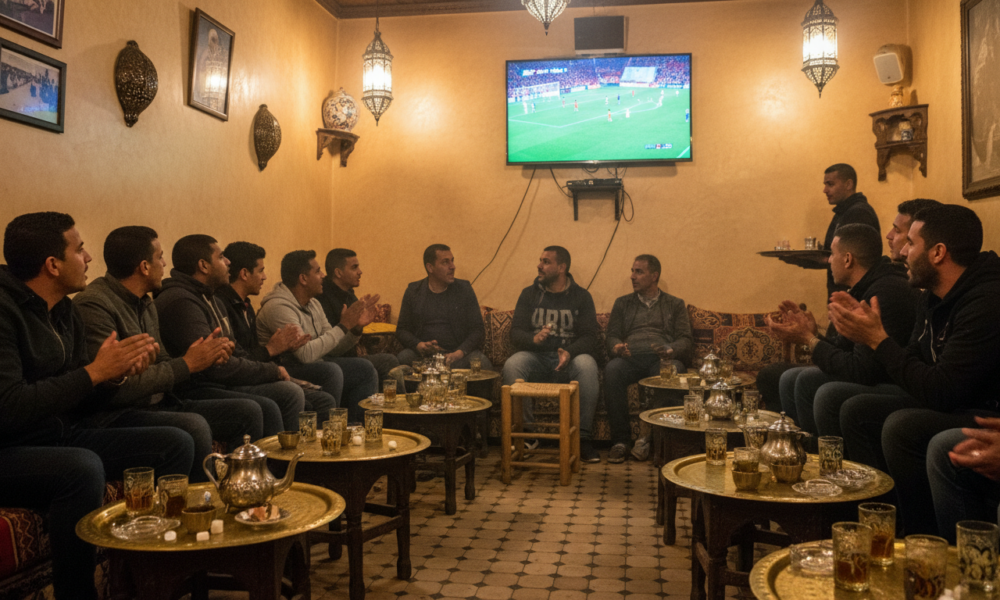
Hosting the Africa Cup of Nations by the Kingdom represents much more than just a series of matches; it is a large-scale test for organizational capabilities and the local economy. While the excitement is palpable in the historic alleys, it manifests differently inside the sports arenas. In Marrakech, far from the VIP stands, it is in the heart of the medina, near the Grand Hôtel Tazi, that the true pulse of the competition beats. The atmosphere there is intoxicating, not because of alcohol, absent from the tables, but due to the extreme concentration of men glued to television screens, commenting on every refereeing decision with visceral passion.
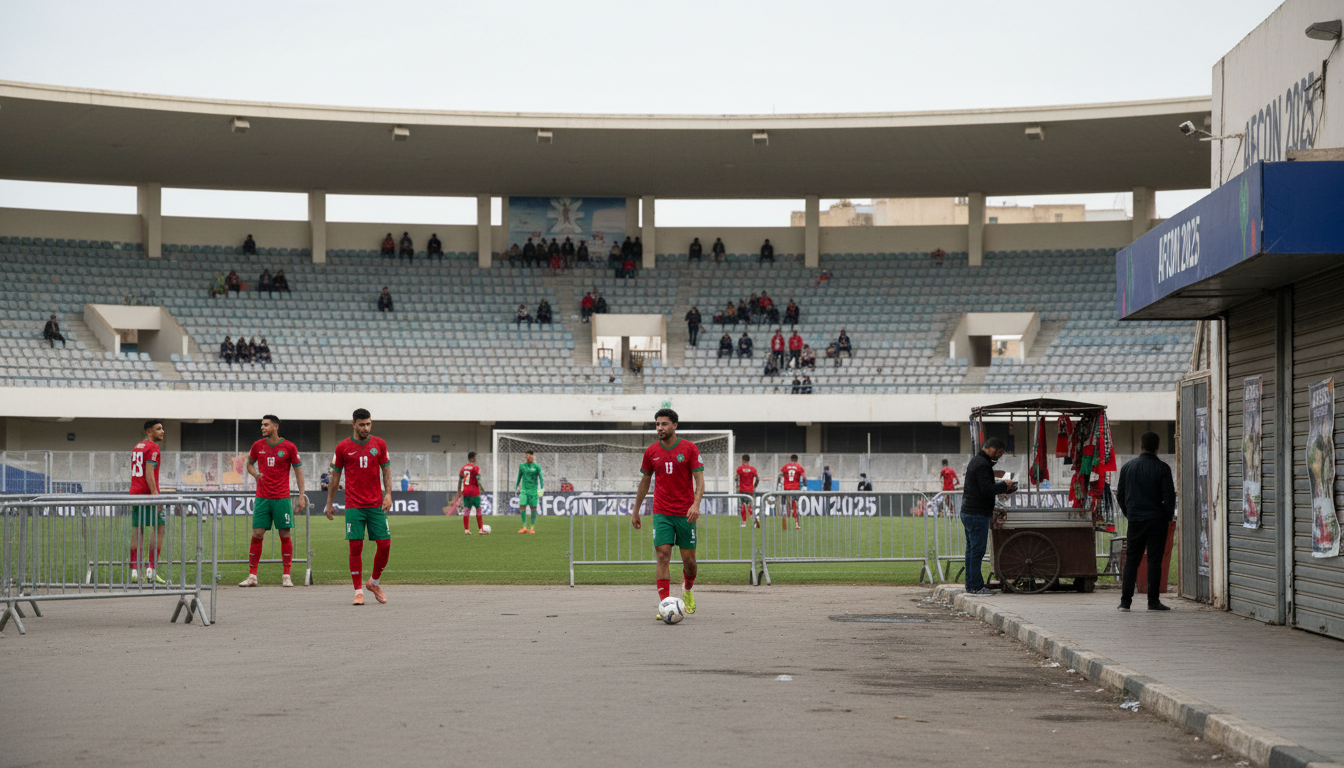
This fervor, captured by The Athletic, contrasts sharply with the sometimes sterilized atmosphere of stadiums during matches not involving the Atlas Lions. In places like Café Roxe, the celebration of a Moroccan goal spreads in waves, creating a collective enthusiasm that makes the walls vibrate. This is where the true soul of Moroccan football resides: an experience lived as a religion, where the spectator, though a mere observer, feels part of the national destiny. However, this street passion sometimes struggles to fully transfer into the stands of the brand-new stadiums, revealing a gap between popular fervor and accessibility or enthusiasm for “neutral” matches.
An organization under the banner of “Business” efficiency 💼
Unlike the previous edition in Ivory Coast, which resembled a permanent festival like “Glastonbury” with orange jerseys flooding the streets, AFCON 2025 in Morocco adopts a decidedly more serious tone, almost comparable to the World Economic Forum. For the host country, it is not just about participating in a celebration, but about validating a massive investment strategy. The final victory is seen less as potential joy than as an imperative necessity to justify the efforts made. This pressure for results transforms the atmosphere: one breathes relief more than pure joy when the national team scores.
The organization has bet on high standards, guaranteeing top-quality fields and hotel infrastructures worthy of the biggest European clubs. This “clinical” approach ensures undeniable logistical fluidity, where everything unfolds according to the established plan, without the chaotic surprises that sometimes charm or haunt other editions. Foreign supporters, though less visible in Marrakech’s dense tourist crowd, benefit from these facilities, even if the “fan zones” like the one at Bab Jdid only truly ignite on Morocco matchdays.

The climatic and social challenge: An unprecedented winter tournament
An unexpected factor redefined the experience for spectators and players: the weather. Held during the North African winter, this edition could remain in memories as the “Big Coat AFCON”. With cool temperatures and rainy episodes in Tangier or Rabat, the climate dictated a different energy, far from the usual tropical warmth of the competition. While Madonna was able to appear in Marrakech under a winter sun, the general atmosphere in the open stadiums was sometimes cooled by this weather, influencing attendance and fan comfort.
On the social level, the tournament takes place in a particular context. The colossal investments in the stadiums have sparked debates, notably highlighted by protest movements a few months before kickoff, demanding more funds for public services. For the authorities and organizers, the success of AFCON 2025 is therefore crucial to ease these tensions and demonstrate that the return on investment, both in image and economic fallout, justifies the billions of dirhams spent. It is a complex equation where the sports performance of the Atlas Lions becomes a lever for social stability.
The contrast is striking between recent editions, illustrating two distinct hosting philosophies:
| Criterion | Ivory Coast (2023) 🇨🇮 | Morocco (2025) 🇲🇦 |
|---|---|---|
| General atmosphere | Festive, popular carnival style | Serious, focused on “Business” and efficiency |
| Weather | Tropical heat | Wintery, cool and rainy (“Big Coat AFCON”) |
| Pitch quality | Variable | Excellent, European standards 🇪🇺 |
| Pressure on host | Hope for victory | Obligation of results to validate investments |
Sports compliance serving the Moroccan strategy ⚽
On the green rectangle, the competition followed an implacable logic, devoid of the crazy surprises that marked the previous edition (such as Ivory Coast’s rout in the group stage). The favorites held their rank, giving the tournament an orderly aspect that perfectly suits Morocco’s desire for control. This absence of sporting chaos reinforces the image of control and professionalism the country aims to project internationally, especially with the 2030 World Cup in sight.
Players competing in Europe, accustomed to temperate climates and perfect pitches, found ideal playing conditions in the Kingdom, favoring technical and fast football. While the spectacle gains technical quality, it perhaps loses a bit of the glorious uncertainty that is the spice of African football. For the local market, this demonstration of organizational competence is a strong signal sent to investors: Morocco knows how to deliver complex projects with rigor.
Here are the key elements that define this singular edition:
* 📢 Duality of venues: Intense fervor in popular cafes vs. sometimes sparse stadiums for neutral matches.
* ❄️ Climatic factor: A winter tournament that changes fans’ habits and the atmosphere in the stands.
* 🏗️ State-of-the-art infrastructure: Hotels and training fields that meet elite global requirements.
* 💰 Economic stake: Immense pressure to make infrastructural investments profitable through sporting and image success.
* 🛡️ Security and order: A meticulously organized setup avoiding disturbances, for a “safe” image benefiting tourism.
Why do stadiums sometimes appear empty during AFCON 2025?
Despite encouraging official ticketing numbers, actual attendance for matches not involving the host country is variable. This is explained by the dispersion of tourists, the cost of tickets for locals, and a football culture that is largely experienced in cafes and fan zones rather than in the stadium for neutral matches.
What is the impact of the weather on this edition in Morocco?
Organized in winter (December-January), the competition faces lower temperatures and rain, unlike Sub-Saharan editions. This earned the tournament the nickname ‘Big Coat AFCON’, influencing the festive outdoor atmosphere but favoring the play of footballers accustomed to European climates.
How does the Moroccan organization differ from that of Ivory Coast?
Morocco adopted a more ‘corporate’ and rigorous approach, focused on demonstrating its infrastructural capabilities ahead of the 2030 World Cup. Where Ivory Coast relied on an exuberant popular celebration, Morocco prioritizes efficiency, pitch quality, and security, creating a tensed yet logistically superior atmosphere.

No responses yet