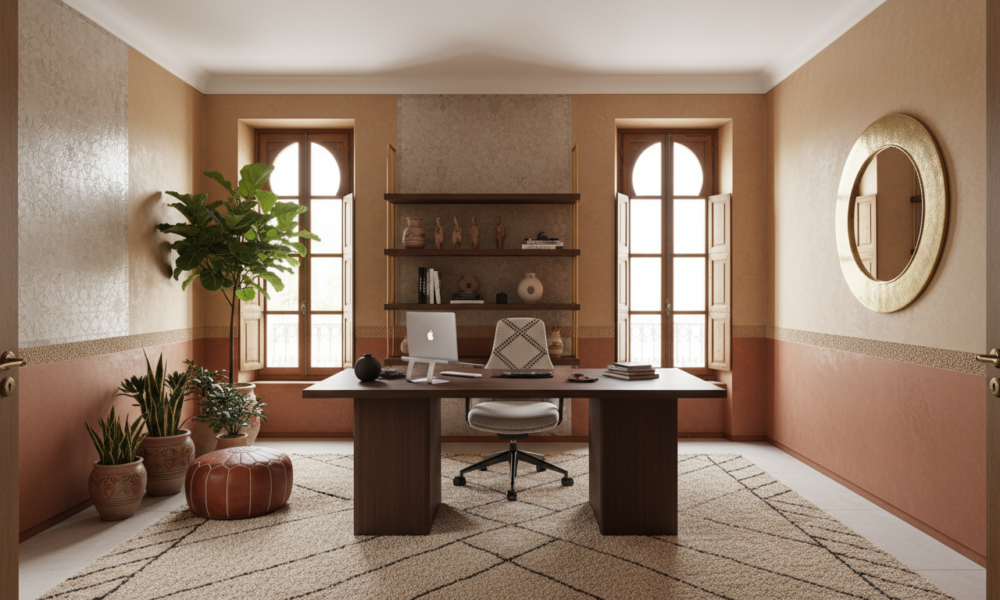
The dynamic evolution of the work environment in Morocco
The year 2025 marks a decisive turning point for the professional world in the Kingdom. Beyond the simple arrangement of tables and chairs, the Morocco office becomes a true lever of performance and attractiveness. Companies, whether located in the business districts of Casablanca, Tangier, or in the technology parks of Rabat, are redesigning their premises to meet a dual requirement: productivity and human well-being.
This transformation takes place in a vibrant economic context where the economy of Morocco and the Sahara is experiencing significant growth, attracting investors and talents. Workspaces are no longer mere production sites but social hubs fostering innovation and collaboration.
The hybrid office: an essential standard
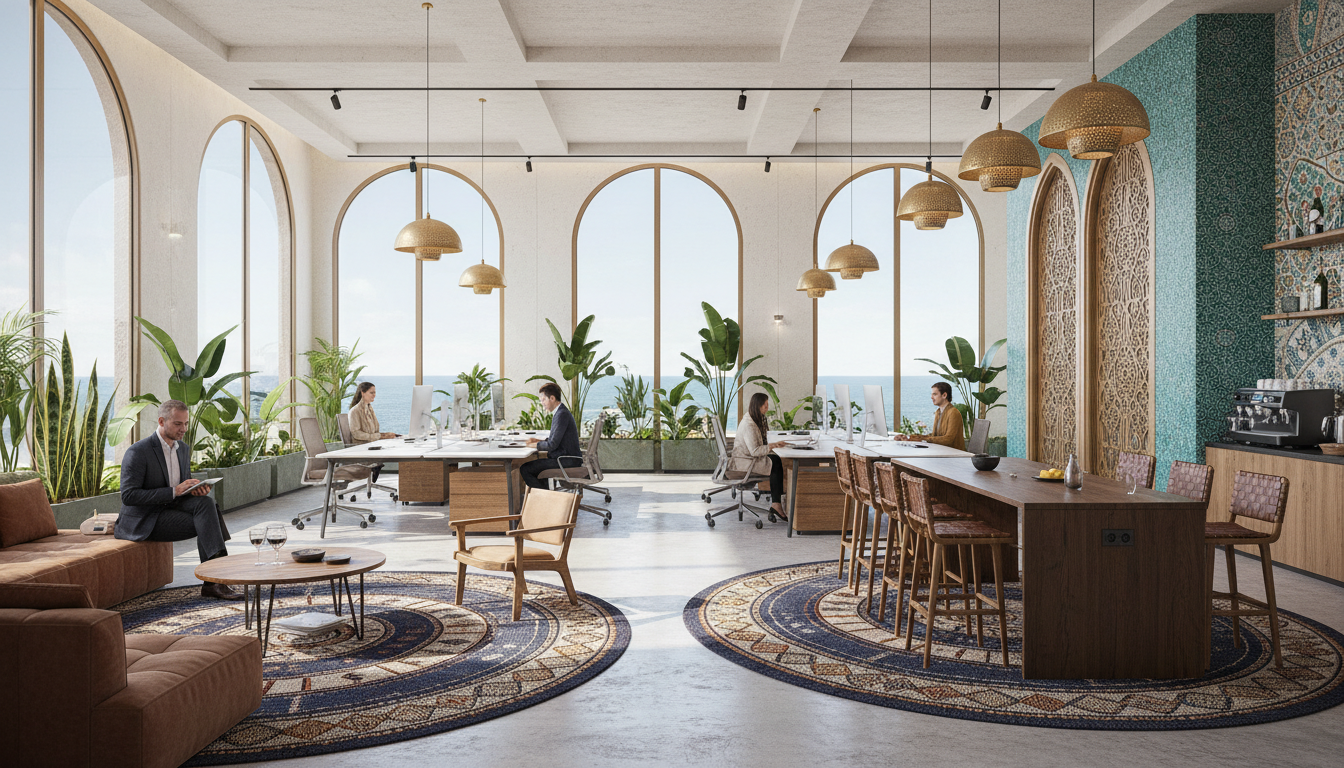
Flexibility is no longer an option; it is the cornerstone of the office trends 2025. The organization of work has definitively integrated the hybrid mode, alternating between on-site and remote work. This results in a reduction in assigned workstations in favor of *Hot Desking* (shared desks). This approach not only optimizes real estate costs but also breaks the monotony.
Employees, when they move to headquarters, primarily seek interaction. The layout must therefore prioritize modular zones. There is a significant increase in coworking spaces Morocco within companies themselves, facilitating informal exchanges and creativity. To attract talents accustomed to this flexibility, it is also crucial to care for the employer brand image, an aspect often emphasized by any expert recruitment firm in Rabat or Casablanca.
Technologies and Smart Office: intelligence at the service of use
The integration of digital is total. Tomorrow’s office is connected, intelligent, and responsive. Home automation solutions now allow management of lighting, temperature, and even booking of meeting rooms via mobile apps. The use of interactive screens and integrated videoconferencing systems smooths exchanges with remote teams.
This technological upskilling requires adapted profiles, trained on new digital tools, such as those from ITA and OFPPT programs in 2025. The goal is to remove technical frictions so each employee can focus on their added value.
Well-being and ergonomics: putting humans at the center
Employee health has become a strategic priority. Office furniture is no longer chosen solely from a catalog based on price but for its ergonomic benefits. The prevention of musculoskeletal disorders (MSDs) involves the widespread adoption of sit-stand desks and high-quality adjustable chairs.
Here are the key elements for a office layout focused on health:
* 🪑 Dynamic seating: Encourages movement and supports the lower back.
* 💡 Circadian lighting: LED lights that mimic the sun’s natural cycle to reduce visual fatigue.
* 🔇 Careful acoustics: The use of acoustic panels and soundproof cabins to guarantee concentration.
* 🧘 Decompression zones: “Zen” or fitness spaces to relieve stress.
The importance of biophilia and eco-responsibility
The return to nature is a major trend. Biophilia, or the art of integrating living elements into architecture, transforms gray office floors into inspiring indoor gardens. Green walls, potted plants, and natural materials like wood or local stone are popular. This approach is often inspired by the major urban development projects led by Novec, which aim to reconcile construction and sustainability.
On the environmental front, office layout advice for 2025 systematically includes reflection on carbon footprint. Durable, recycled, or upcycled furniture is favored, along with rigorous energy management, following sustainable initiatives by LafargeHolcim and its innovations in the construction sector.
Comparison: The evolution of professional spaces
To better visualize these changes, here is a comparison table between the traditional office and the standards expected this year.
| Aspect | Traditional Office (2015-2020) | Modern Office Morocco (2025) |
|---|---|---|
| Space | Closed offices or noisy open space | Hybrid spaces, quiet zones and collaboration areas |
| Furniture | Standardized, fixed, poorly ergonomic | Advanced office ergonomics, adjustable and flexible furniture |
| Decoration | Neutral, impersonal, artificial | Biophilic 🌿, soothing colors (sage green, terracotta), strong identity |
| Technology | Fixed workstation, bulky cabling | Wireless, Cloud, Smart Office, booking via App 📱 |
| Priority | Maximizing density | Office productivity through well-being |
Brand identity and space personalization
Workspace design has become a powerful branding tool. Premises must tell the company’s story, reflect its values and culture. The clinical white is gone; place is given to warm colors that evoke Moroccan hospitality, revamped artisanal touches, and inspiring wall graphics.
This personalization strengthens the teams’ sense of belonging. A proud employee of their work environment naturally becomes a brand ambassador. It is a powerful engagement driver, especially for new generations seeking meaning.
Innovation at the service of collaboration
Office innovation does not only lie in gadgets but in the ability to create “positive friction points.” These are passage places like a cafeteria reimagined as a lounge or widened corridors equipped with whiteboards that encourage spontaneous meetings. It is often during these informal exchanges that the best ideas are born.
What are the trending colors for an office in Morocco in 2025?
Trends favor natural and soothing shades. Sage green and olive green dominate for their reminder of nature, accompanied by terracotta and beige tones for warmth. Blue remains a safe value to promote concentration and serenity.
How to reduce noise in a modern open space?
Acoustics are crucial. Installing wall or hanging acoustic panels, using absorbent carpets, and integrating soundproof cabins (phone booths) for calls are very effective solutions to limit noise disturbances.
Is it cost-effective to invest in ergonomic furniture?
Absolutely. Although the initial cost is higher, the return on investment is real. Ergonomic furniture reduces absenteeism related to back pain, improves concentration, and demonstrates the company’s consideration for its employees, which helps retain teams.
What is the concept of biophilia in the office?
Biophilia consists of integrating natural elements into the work environment to reconnect occupants with nature. This includes green plants, vegetated walls, optimizing natural light, and using materials such as wood and stone.

Comments are closed