
Strategic partnership to boost Es-Semara and make Western Sahara an African economic hub
The new Tripartite Memorandum seals a clear ambition: to transform Es-Semara into an economic and logistical gateway to the Sahel and Sub-Saharan Africa. Signed between the African Chamber of Commerce and Services (CACS), the French Chamber of Commerce and Industry of Morocco (CFCIM), and the Es-Semara City Council, the agreement reinforces a dynamic of regional integration aligned with the vision of sustainable growth for the southern provinces. Public, diplomatic, and economic actors have welcomed a roadmap focused on innovation, investment, and employment.
The agreement provides for the establishment in Es-Semara of a dedicated CACS branch for South-South cooperation and a CFCIM office to support investors and SMEs. B2B forums, economic missions, and investment seminars will be organized to connect African value chains. This networking is designed to complement projects already visible in the region, such as the port of Dakhla Atlantic and the rise of the Atlantic facade.
The partnership comes in a diplomatic context where support for a pragmatic and economic solution for the region is confirmed. Several partners acknowledge the catalytic role of infrastructure projects and intercontinental cooperation, which fit within a framework of stability and competitiveness. In this regard, the UN-backed autonomy plan is mentioned by many analysts as the institutional compass encouraging investment security.
The cross-cutting nature of this partnership is essential for productive ecosystems. An agrologistics company based in Agadir, a green energy company in Laâyoune, or a Casablanca-based fintech can project, thanks to Es-Semara, a strengthened presence in the Sahel. This is precisely what attracts major Moroccan groups such as OCP, Cosumar, or Ynna Holding, and service operators like Maroc Telecom or Royal Air Maroc, decisive for market connectivity and talent mobility.
On the ground, a fictional leader, Salma, heading a data logistics start-up, illustrates this dynamic. Relying on the CACS/CFCIM offices in Es-Semara, she identifies distributors in Niger and partners in Senegal. She plans multimodal shipments via Dakhla to reduce transit costs and secure reliable deadlines, an advantage for large retail or agricultural inputs.
The cultural dimension is not absent from the equation. Business events are accompanied by initiatives highlighting the region’s identity, its craftsmanship, and heritage. A positive territorial anchoring strengthens talent attractiveness, a key factor to retain technical profiles in the expanding southern cities.
This framework is also supported by international developments. The American support for the autonomy initiative and European progress on agricultural trade have helped clarify long-term prospects. French companies, already heavily present, anticipate equipment and service markets for major projects and the shared 2030 World Cup, which accelerate calls for tenders.
The strength of the partnership therefore lies in the alignment of three levers: infrastructure, trust framework, and economic animation. The aim is to establish Es-Semara as an African integration platform, while capitalizing on the country’s industrial and logistical upgrading.
- 🌍 African networking via CACS/CFCIM and B2B missions.
- 🚢 Synergy with the port of Dakhla Atlantic and corridors towards the Sahel.
- 💼 Support for Moroccan SMEs to export and source in Africa.
- 📡 Role of Maroc Telecom in platform connectivity.
- ✈️ Cargo solutions of Royal Air Maroc for time-to-market.
- 🏦 Access to financing via Attijariwafa Bank, Bank of Africa, CIH Bank, and BMCE Bank.
| Actors 🤝 | Key role 🎯 | Deliverables ⏱️ | Employment impact 👷 |
|---|---|---|---|
| CACS | South-South cooperation and African networks | Branch in Es-Semara, B2B missions | Acceleration of commercial recruitments |
| CFCIM | Investor/SME support | Desk for tax and land support | Skills upgrading for local SMEs |
| City Council | Territorial facilitation | Zoning, land, urban services | Creation of public/para-public jobs |
| Companies | Establishments and co-investments | Production and service sites | Significant direct/indirect jobs |
In summary, the economic credibility of the southern hub is played out in execution: efficient desks, controlled costs, and sustained commercial animation will constitute proof through employment.
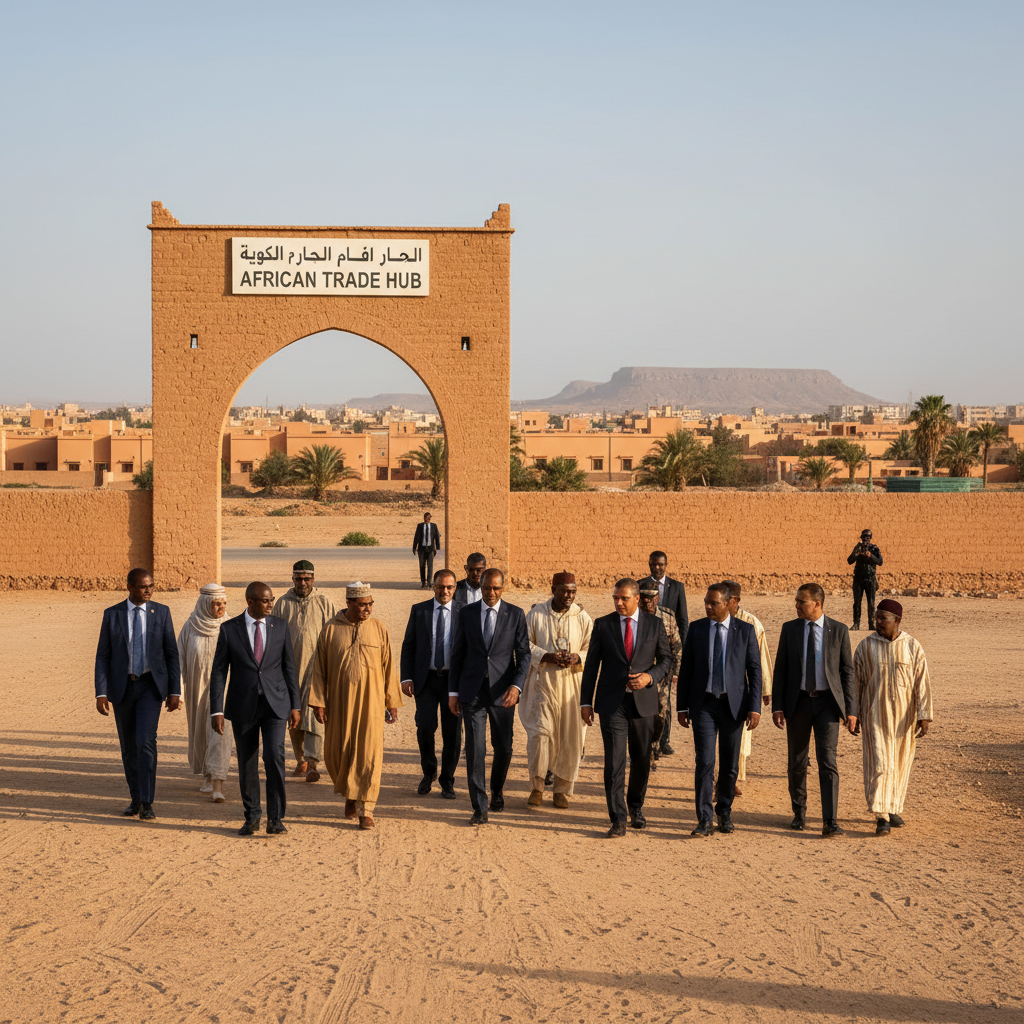
Employment, skills and social inclusion: which jobs for the Western Sahara economic hub
The rise of Es-Semara calls for an immediate HR strategy. The jobs in shortage combine logistics, industrial maintenance, international trade and data. Qualified recruitments are expected in warehouse management, cold chain engineering, supply chain optimization, and platform cybersecurity.
Training systems must support this qualitative leap. Regional centers and Moroccan universities are already expanding their offer, with sector partnerships and work-study programs. Short courses focused on “logistics 4.0” can quickly improve local employability.
On the health front, service densification is an attractiveness factor for families and executives. Hospital groups are extending their coverage, allowing to combine quality of life and professional anchoring. Candidates also inform themselves through comparisons and rankings to choose where to settle.
Multiple opportunities open up for candidates and recruiters thanks to engaged players. Public job announcements in education and administration also support the territory’s skills base. All this is articulated with reconversion and skills upgrade programs to meet demand.
- 🛠️ Key jobs: warehouse management, planning, quality, data.
- 📦 Specialties: cold chain, transit, cross-border e-commerce.
- 🧑💻 Digital skills: ERP, WMS, cybersecurity, applied AI.
- 🩺 Essential services: local care, emergency, telemedicine.
- 🎓 Training: work-study, short certifications, internal mobility.
- 🤝 Inclusion: youth, women, and diaspora talent employment.
Several initiatives illustrate this dynamic. Recruitments in national education support the elevation of human capital, while training engineering strengthens the relevance of curricula. In higher education, the International University of Rabat multiplies bridges with industry.
Health careers are also rising, with needs in polyvalent care and specialties. Candidates rely on concrete benchmarks such as hospital rankings, targeted offers from growing establishments, and the rise of quality private services such as the Rabat clinic.
The digital transition plays a structuring role. Job openings at Maroc Telecom and the connectivity needs of logistics platforms create bridges between telecoms, data centers, and supply chain operators. Customer support B2B jobs, network architects, and IT security are particularly in demand.
The vitality of the private sector is also observed in related sectors. Automotive, agri-food, and materials are strengthening their HR bases to support flows. For example, job openings at SMEIA or industrial innovations at LafargeHolcim show how supply chains intertwine with the southern hub.
The issue of youth and women inclusion remains central. Employers seek transparent HR policies, attentive internal mobility, and bridges to entrepreneurship. In this debate, some observers urge paying attention to the civic expression of new generations, a subject regularly analyzed such as in those about youth, to combine social trust and economic ambition.
| Job family 🧭 | Expected skills 🧠 | Employer examples 🏢 | Opportunities 💡 |
|---|---|---|---|
| Logistics | WMS, KPI, cold chain | 3PL, free zones, Royal Air Maroc | Coordinators, supervisors, data analysts |
| Industry | Maintenance, Lean, quality | OCP, Cosumar | Technicians, UAP managers, HSE |
| Digital | Cloud, network, cybersecurity | Maroc Telecom, integrators | IT architects, SecOps, B2B support |
| Health | Care, imaging, emergency | Private groups, local clinics | Nurses, technicians, healthcare managers |
Last key point: the link between training and the production apparatus guarantees employability. The ongoing alignment between skills, standards, and business needs consolidates the hub’s social impact.
Infrastructures and corridors: Dakhla, Es-Semara and the Atlantic Initiative serving value chains
The southern hub combines next-generation infrastructures and a corridor strategy. The port of Dakhla Atlantic aims to absorb flows towards West Africa, while road axes strengthen logistical continuity. The Atlantic Initiative structured around African cooperation opens perspectives for exchanges and regional assembly.
The execution quality of upstream sites conditions final competitiveness. Expertise in planning is central to synchronizing roads, activity zones, and urban services. Engineering offices and major materials suppliers contribute to reliability of deadlines and cost control.
International connectivity completes the structure. Prospects include innovative links between the two shores, while air and telecom networks consolidate service continuity. At regional level, local authorities adjust their urban planning to anticipate growth.
The multimodal supply chain relies on industrial and service partners. Fertilizer exports, input imports, and agro-industry generate regular volumes. Actors such as Royal Air Maroc (cargo), Maroc Telecom (data and IoT), and producers like OCP or Cosumar converge towards shared efficiency.
- 🛣️ Reliable land corridors between Es-Semara and Dakhla.
- ⚙️ Urban planning led by specialized actors.
- 🏗️ Cement materials and innovations for efficient projects.
- 🛰️ Telecom connectivity, data centers and logistics IoT.
- ✈️ Air cargo for sensitive and time-critical flows.
- 🔌 Renewable energies to reduce operational costs.
For illustration, Salma, our start-up leader, plans a consolidation hub in Es-Semara with temperature sensors connected to the Maroc Telecom network. Urgent shipments travel by pre-road transport to Dakhla before an air or maritime solution. The goal: to guarantee a stable service level for African distributors.
Intercontinental connectivity projects, including the Morocco–Spain tunnel project, are regularly mentioned by logisticians to simulate time and cost savings on Euro-African trade. On the ground, urban planning engineering and material innovations target faster, less energy-consuming, and better integrated works.
At local and regional levels, urban planning trajectories such as the projects along the Tangier–Assilah axis provide useful lessons: fine zoning, access to services, and soft mobility. These best practices inspire the organization of future activity zones in Es-Semara, where acceptable density and quality of life will be HR arguments.
| Infrastructure 🧩 | Function 📦 | Expected gain 📈 | Potential partners 🤝 |
|---|---|---|---|
| Port of Dakhla | Export/import, transshipment | Lead time and cost reduction | Shipowners, 3PL, Royal Air Maroc |
| Southern roads | Pre-carriage/last mile | Deadline reliability | Carriers, insurers |
| Telecom connectivity | IoT, real-time data | Traceability and security | Maroc Telecom, integrators |
| ZAE Es-Semara | Production/storage | SME cluster effect | Developers, engineering offices |
The crux of the matter remains the synchronization of flows. Execution regularity will make the difference against competition, whether Atlantic neighboring ports or West African land corridors.
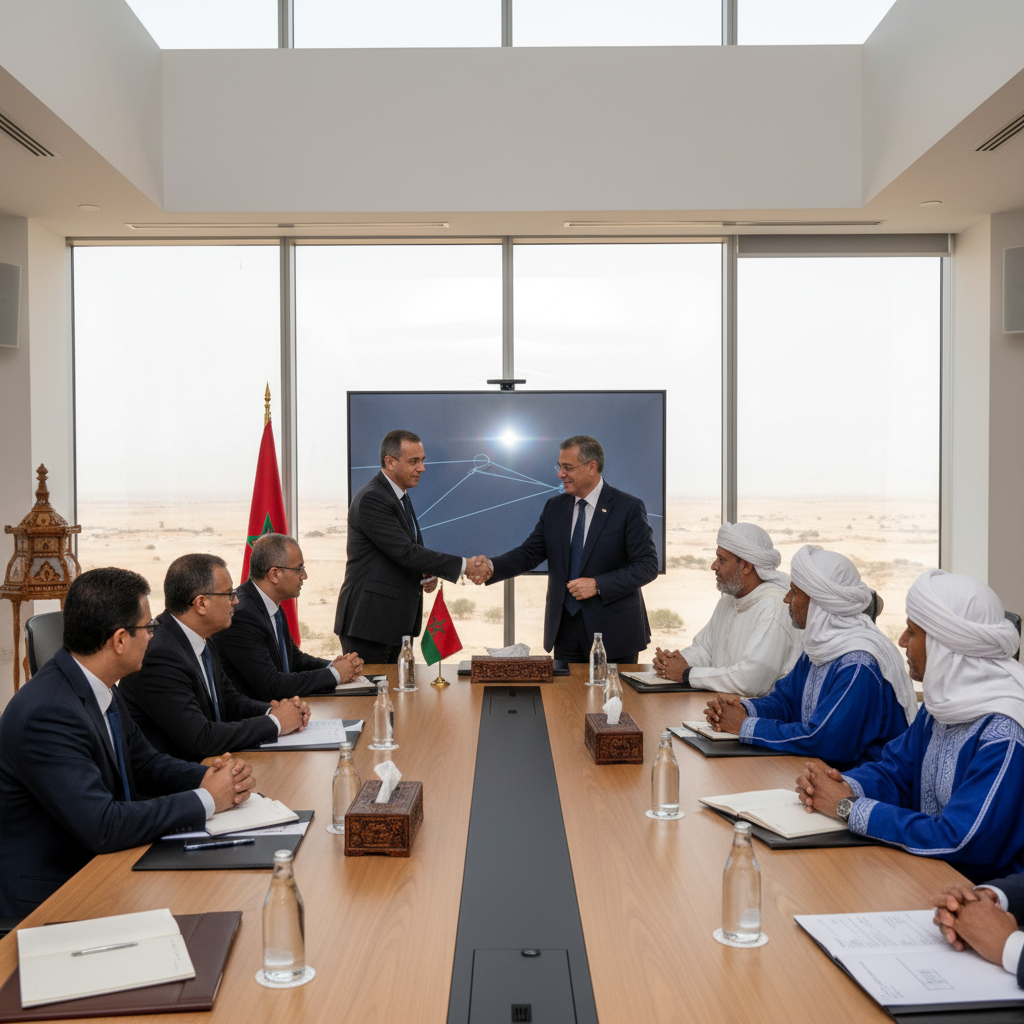
Financing, insurance and patient capital: how to mobilize banks and large groups around Es-Semara
The realization of an economic hub requires agile financing. Moroccan banks — Attijariwafa Bank, Bank of Africa, CIH Bank, and BMCE Bank — have desks dedicated to SMEs, international trade, and infrastructure. Life insurance and capitalization, via actors like La Marocaine Vie, can provide patient capital, precious for logistics platforms and industrial zones.
Large groups, drivers of multiplier effects, play an aggregator role. National champions such as OCP, Cosumar, Ynna Holding, or service operators like Maroc Telecom and Royal Air Maroc can secure volumes, SLAs, and quality standards. Their presence attracts suppliers and subcontractors, creating a robust ecosystem.
Agri-food export or agricultural input strategies particularly benefit from this scheme. In this logic, Euro-African collaborations allow for hybridizing know-how, standards, and outlets. The consolidation of mixed sectors, from farm to distribution hubs, paves the way for cross-sector investments.
Attraction of international investors also relies on narratives of concrete opportunities. On the industrial side, energy efficiency, sustainability standards, and digitalization strengthen competitiveness. Incentive and support mechanisms, relayed by chambers of commerce, secure the installation path.
- 🏦 Solutions: investment credits, leasing, inventory financing.
- 📑 Coverages: credit insurance, public guarantees, life insurance.
- 🤝 Partnerships: supply contracts, off-take agreements.
- 🌱 ESG: energy efficiency, traceability, footprint reduction.
- 📊 Data: flow management, sales forecasting, quality control.
- 🌐 Markets: West Africa, Southern Europe, Mediterranean.
Intersectoral synergies are growing. Automotive and mobility — in connection with distributors like SMEIA — or agri-business, inspired by European cases like a high-performance farm in Brittany, enrich Moroccan value chains through technical cooperation. This hybridization consolidates the country’s role as a regional integration hub.
On the construction and urban planning side, industrial partnerships secure schedules and supplies. Material innovations, like cement optimization and prefabrication, help contain costs and improve quality, with a direct impact on the sustainability of activity zones and attractiveness for investors.
| Mechanism 💳 | Objective 🎯 | Financial actors 🏦 | Employment benefit 👥 |
|---|---|---|---|
| CAPEX credit | Finance warehouses/equipment | Attijariwafa Bank, CIH Bank | Industrial and logistics jobs |
| Trade finance | Secure import/export | Bank of Africa, BMCE Bank | International trade positions |
| Life insurance/patient capital | Support long-term projects | La Marocaine Vie | Stability and skills upgrading |
| Leasing | Rolling equipment | Banks and captives | Qualified technicians and drivers |
The key lies in complementarity: well-structured financing, ESG anchoring, industrial contracts. This triptych transforms investment promises into sustainable jobs.
Governance, cooperation and economic diplomacy: 2025 roadmap for the Atlantic Sahara hub
Beyond the projects, success requires clear governance. The CACS–CFCIM–Es-Semara trio animates the deal flow, catalyzes trust, and coordinates business agendas. These actors publish an event calendar, organize sectoral missions, and support fast resolution of administrative bottlenecks.
The diplomatic dimension remains structuring. Es-Semara’s anchoring in the Atlantic corridors fits within a broader strategy, visible through African cooperation, Euro-Mediterranean dialogues, and partnerships with America. Favorable international political signals fuel investor appetite.
The European neighborhood, logistical proximity, and cultural bridges reinforce competitiveness. Structuring works multiply tendering opportunities, also fueled by major sporting events. In this context, Moroccan sectors gain in value by relying on standards and quality of service.
Local governance must finally remain open and participative. Territories such as Skhirat–Témara offer examples of citizen listening and attentive urban management that inspire the development of new activity zones. Regulatory clarity, transparency, and closeness to economic users speed implantation.
Over the months, targeted B2B forums bring together logistics, agro-industry, clean energy, and digital sectors. Mixed missions involve Moroccan, African, and European companies, with workshop and matchmaking formats. Project sheets detail needs, standards, partners, and employment impacts.
- 🗓️ Agenda: quarterly forums and thematic missions.
- 📍 Locations: Es-Semara, Dakhla, regional platforms.
- 🤝 Focus: co-investments, supply chains, quality standards.
- 🧩 Tools: one-stop-shops, fast-track, regulatory mediation.
- 🎯 Indicators: jobs created, implantation deadlines, net export.
- 🧭 Principles: transparency, inclusion, measurable results.
Economic diplomacy relies on clear political benchmarks, cited above, including UN positions and bilateral support, which create a predictable investment climate. Regular communication on results, delivered projects, and jobs created strengthens collective trust.
| Governance pillar 🏛️ | Tools ⚙️ | Expected result ✅ | Employment effect 👔 |
|---|---|---|---|
| Economic animation | B2B missions, trade fairs, clusters | Investment pipeline | Direct/indirect jobs |
| Facilitation | One-stop-shop, fast-track | Shortened deadlines | Accelerated recruitments |
| Transparency | Reporting, public KPIs | Predictability | Talent retention |
| Inclusion | Youth/women programs | Social cohesion | Widened talent pool |
Operational conclusion: an open, measurable governance focused on results transforms projects into tangible economic and social realities.
Essential services, quality of life and territorial anchoring: framework conditions to attract and retain talent
A prosperous economic hub requires a living environment worthy of the ambitions. Health, education, culture, and mobility services are decisive to attract executives and stabilize families. Private and public operators deploy structured offers to meet these strategic needs.
Local health care remains a priority. Groups strengthen their offer, combining emergency, maternity, imaging, and telemedicine. Practitioners and nursing staff find career perspectives, while residents benefit from better continuity of care.
Education and initial training play a decisive role in equal opportunities. Massive recruitments in education and improvements in school infrastructure broaden access to knowledge. Universities and engineering schools, through sectoral chairs, bring academia closer to industrial sectors.
Mobility and connectivity lie at the heart of attractiveness. Air links, land transport, and high-speed broadband coverage create a continuum for business trips and telework. Air cargo, coupled with road logistics, guarantees reliable service for sensitive flows.
Digital uses are generalizing, from medical records to distance learning. Companies use HR platforms for e-recruitment, internal mobility, and continuous training. Adapted insurance solutions support employees through all stages of life.
- 🏥 Health: network of clinics, emergencies, telemedicine.
- 🎒 Education: recruitments, equipment, digital education.
- 🛫 Mobility: Royal Air Maroc links, reliable road axes.
- 📶 Connectivity: Maroc Telecom backbone, cloud services.
- 🛡️ Protection: health and life insurance for families.
- 🎭 Culture: events, media libraries, sports and leisure.
Useful benchmarks guide candidates and families: quality of care at the Rabat clinic, regional health indicators, or even clinic rankings for information. Insurance and savings schemes, supported by actors like La Marocaine Vie, secure patrimonial planning.
In urban planning, inspiring practices are emerging, from Tangier to the Tangier–Assilah axis. For Es-Semara, the challenge is to orchestrate balanced growth: housing, public facilities, green spaces, and connected activity zones. Project owners rely on local engineering and international standards.
The role of corporate HR services is crucial: relocation packages, childcare, spouse mobility, language training. These details facilitate the decision to settle for scarce talents — maintenance engineers, data scientists, purchasing managers. SMEs, by allying, can mutualize these services.
| Key service 🧱 | Quality indicators 📊 | Effect on attractiveness 🌟 | Partners 🎯 |
|---|---|---|---|
| Health | Access time, equipment rate | Secures family settlement | Private groups, health authorities |
| Education | Supervision rate, digital | Retains executives and youth | Institutions, ministry |
| Mobility | Frequency, punctuality | Improves time-to-market | Royal Air Maroc, carriers |
| Connectivity | Bandwidth, network stability | Supports telework and e-services | Maroc Telecom, integrators |
Final insight: attractiveness is built through a bouquet of solid services. These “non-productive” factors ultimately anchor talent and create a lasting advantage.
{“@context”:”https://schema.org”,”@type”:”FAQPage”,”mainEntity”:[{“@type”:”Question”,”name”:”Quu2019apporte concru00e8tement le partenariat tripartite u00e0 Es-Semara ?”,”acceptedAnswer”:{“@type”:”Answer”,”text”:”La CACS du00e9ploie une antenne du00e9diu00e9e u00e0 la coopu00e9ration africaine, la CFCIM ouvre un bureau du2019appui aux investisseurs et aux PME, et le Conseil de la ville facilite le foncier et les services. Ensemble, ils organisent forums B2B, missions du2019affaires et guichets de facilitation pour accu00e9lu00e9rer les implantations et lu2019emploi.”}},{“@type”:”Question”,”name”:”Quels secteurs recruteront en prioritu00e9 dans le pu00f4le du Sahara occidental ?”,”acceptedAnswer”:{“@type”:”Answer”,”text”:”Logistique (WMS, chau00eene du froid), industrie (maintenance, qualitu00e9), digital (ru00e9seaux, cybersu00e9curitu00e9), et santu00e9 (soins, imagerie). Les besoins transverses en commerce international et en data renforcent lu2019employabilitu00e9 des jeunes diplu00f4mu00e9s.”}},{“@type”:”Question”,”name”:”Comment les entreprises peuvent-elles financer leurs projets u00e0 Es-Semara ?”,”acceptedAnswer”:{“@type”:”Answer”,”text”:”Par le cru00e9dit CAPEX, le trade finance, le leasing et des solutions du2019assurance-vie/capital patient. Des banques comme Attijariwafa Bank, Bank of Africa, CIH Bank et BMCE Bank proposent des guichets spu00e9cialisu00e9s, avec des critu00e8res ESG et des garanties adaptu00e9es.”}},{“@type”:”Question”,”name”:”Quel ru00f4le joue la connectivitu00e9 pour la compu00e9titivitu00e9 du hub ?”,”acceptedAnswer”:{“@type”:”Answer”,”text”:”Essentiel. La couverture de Maroc Telecom permet la trau00e7abilitu00e9 IoT, le pilotage en temps ru00e9el et la cybersu00e9curitu00e9 des flux. Couplu00e9e au cargo de Royal Air Maroc et au port de Dakhla, elle optimise le time-to-market dans tout le Sahel.”}},{“@type”:”Question”,”name”:”Des ressources existent-elles pour se repu00e9rer et candidater ?”,”acceptedAnswer”:{“@type”:”Answer”,”text”:”Oui. Les annonces publiques de recrutement, les programmes de formation ru00e9gionaux, les classements hospitaliers et les offres sectorielles (ex. SMEIA, LafargeHolcim) constituent des repu00e8res concrets. Les chambres de commerce relayent u00e9galement les opportunitu00e9s B2B.”}}]}What does the tripartite partnership concretely bring to Es-Semara?
The CACS deploys a branch dedicated to African cooperation, the CFCIM opens a support office for investors and SMEs, and the City Council facilitates land and services. Together, they organize B2B forums, business missions, and facilitation desks to accelerate establishments and employment.
Which sectors will recruit as a priority in the Western Sahara hub?
Logistics (WMS, cold chain), industry (maintenance, quality), digital (networks, cybersecurity), and health (care, imaging). Cross-cutting needs in international trade and data strengthen the employability of young graduates.
How can companies finance their projects in Es-Semara?
Through CAPEX credit, trade finance, leasing, and life insurance/patient capital solutions. Banks like Attijariwafa Bank, Bank of Africa, CIH Bank, and BMCE Bank offer specialized desks, with ESG criteria and adapted guarantees.
What role does connectivity play for the hub’s competitiveness?
Essential. Maroc Telecom’s coverage enables IoT traceability, real-time management, and flow cybersecurity. Coupled with Royal Air Maroc cargo and the port of Dakhla, it optimizes time-to-market across the Sahel.
Are there resources to guide and apply?
Yes. Public recruitment announcements, regional training programs, hospital rankings, and sectoral offers (e.g., SMEIA, LafargeHolcim) serve as concrete references. Chambers of commerce also relay B2B opportunities.

Comments are closed