An infrastructural metamorphosis in the service of a global ambition
When observing the horizon of Rabat today, the transformation is striking. The capital, which once stopped at the limits of the Medina, now stretches along the Atlantic, punctuated by symbols of architectural modernity. To the north, the Mohammed VI Tower rises like a rocket, establishing itself as the second tallest building in Africa. To the south, the recently renovated Prince Moulay Abdellah sports complex evokes a futuristic structure ready to host the biggest competitions. This urban transformation is no accident: it embodies Morocco’s will to position itself as a global sports power.
This development strategy goes far beyond the aesthetic framework. It responds to a clear economic and diplomatic imperative. By investing massively in world-class infrastructures, the Kingdom is preparing the ground for co-hosting the 2030 World Cup. The colossal project of the Grand Stade Hassan II in Casablanca, with its planned capacity of 115,000 seats, aims nothing less than to become the largest sports venue on the planet. These gigantic sites are real engines for local employment, offering unprecedented prospects for those seeking to enter the labor market in 2025, notably in construction, engineering, and services.

Football as a lever for growth and influence
Royal investment in sport has positioned the Kingdom as an essential pillar of African football. However, this national ambition also raises legitimate debates within civil society. While the stadiums built for the Africa Cup of Nations (AFCON) shine with their modernity, voices are raised to emphasize the importance of balancing these expenditures with social needs, particularly in the health sector. It is a complex challenge: making sports development a catalyst for overall modernization without deepening inequalities.

For economic analysts, the profitability of these projects lies in their ability to attract foreign investments and boost tourism. Hosting major tournaments is an exceptional showcase. The success of this balance will depend on the post-event management of infrastructures and their integration into the daily economic fabric of Moroccans.
From participation to a winning culture: the paradigm shift
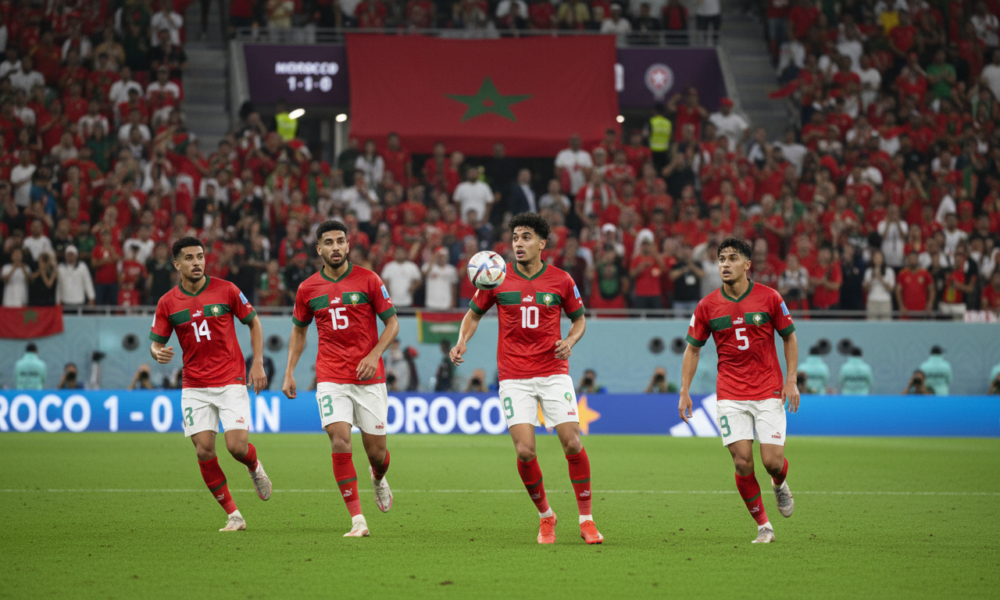
On the field, the transformation is just as palpable. The national team no longer settles for mere participation. Under the leadership of Walid Regragui, the Atlas Lions have undergone a mental revolution. The former fullback, now a respected tactician, has instilled a winning culture that was sometimes lacking in the past. His message is clear: it is no longer just about participating, but about “glorifying the country” through concrete results. This mentality is crucial as the country prepares to host the elite of continental and world football.
The management of Moroccan talents is at the heart of this success. The Federation has established structures to identify and train local prodigies while remaining attractive to dual nationals. The case of players coveted by several nations illustrates this talent battle, comparable to the case involving Lamine Yamal between Spain and Morocco, which shows that the Kingdom is now perceived as a top sporting option, able to compete with the great European nations.
Rational management amid popular fervor
The Moroccan approach is distinguished by what could be described as “technocratic” management, piloted from Rabat. Unlike the sometimes chaotic fervor of Casablanca, the historical and emotional center of national football, the federal strategy favors rationality and organization. This is reflected in the scheduling of matches and ticketing management. The goal is to guarantee security and a spectator experience to international standards, as can be seen with the procedures for booking tickets for AFCON 2025.
However, this relative sterilization carries a risk highlighted by some observers, including The Athletic: that of diluting the incandescent atmosphere that is the strength of North African football. A magnificent but silent stadium can paradoxically favor the opponent. Finding the balance between the modernity of infrastructures, comparable to the Allianz Arena or the Estádio da Luz, and the raw passion of Moroccan supporters will be decisive for future home successes.
Here is an overview of the key infrastructures supporting this vision towards 2030:
| 🏟️ Stadium / Project | 📍 City | 📊 Capacity (est.) | 🎯 Strategic objective |
|---|---|---|---|
| Grand Stade Hassan II | Casablanca (Benslimane) | 115,000 | Host the final of the 2030 World Cup |
| Prince Moulay Abdellah Complex | Rabat | 65,000+ | Administrative competitions hub |
| Grand Stade de Tanger | Tangier | 85,000 | Northern pole, connection with Europe |
Moroccan soft power: diplomacy through football
Sports development has become a major tool of influence. The Atlas Lions’ jersey is now a globally recognized symbol, recalling the enthusiasm sparked by the design worn during the 2022 campaign. This visibility strengthens the “Morocco” brand and opens diplomatic doors, turning every international competition into a political and economic networking opportunity.
To maintain this status, Morocco must overcome several structural challenges identified by experts:
* 🏗️ Completion of projects: Meet delivery deadlines for transport and accommodation infrastructures.
* 🌍 Tourism attractiveness: Convert sports visitors into long-term tourists.
* 🎓 Continuous training: Sustain the Mohammed VI Academy to ensure succession.
* ⚖️ Social equity: Ensure that economic benefits reach the entire population.
* 📣 Crowd management: Combine maximum security and festive atmosphere in stadiums.
This dynamic of construction and organization creates a breath of fresh air for numerous professions. Whether in logistics, reception, or security, opportunities are multiplying. It is a whole ecosystem mobilizing to prove that Morocco has what it takes to host these global events, inspired by the most demanding standards, such as those observed during preparations for the future World Cup stadiums.
Finally, the spectator experience is not limited to the 90 minutes of play. It encompasses ease of access, quality of services, and smooth movement flows. That is why the digitization of services, like CAF initiatives, is crucial for managing the flow of international visitors.
{“@context”:”https://schema.org”,”@type”:”FAQPage”,”mainEntity”:[{“@type”:”Question”,”name”:”What is the main goal of the Grand Stade Hassan II in Casablanca?”,”acceptedAnswer”:{“@type”:”Answer”,”text”:”With a planned capacity of 115,000 seats, this stadium aims to become the largest in the world and specifically intends to host the final of the 2030 World Cup, positioning Morocco as an infrastructural leader.”}},{“@type”:”Question”,”name”:”How does the development of football impact employment in Morocco?”,”acceptedAnswer”:{“@type”:”Answer”,”text”:”Massive investments in infrastructures (stadiums, transport, hospitality) and the organization of major events generate strong demand for labor in construction, tourism, security, and services, boosting the local job market.”}},{“@type”:”Question”,”name”:”What are the social challenges related to these sports investments?”,”acceptedAnswer”:{“@type”:”Answer”,”text”:”The main challenge lies in budgetary balance. Part of public opinion and observers emphasize the necessity not to neglect essential public services like health and education in favor of exclusive focus on major sports projects.”}},{“@type”:”Question”,”name”:”What role does Walid Regragui play in the Moroccan strategy?”,”acceptedAnswer”:{“@type”:”Answer”,”text”:”Beyond his technical role, the coach embodies the mental shift. He transformed the psychological approach of the national team, moving from mere participation to a demand for victory, thereby lending credibility to the Kingdom’s global ambitions.”}}]}What is the main goal of the Grand Stade Hassan II in Casablanca?
With a planned capacity of 115,000 seats, this stadium aims to become the largest in the world and specifically intends to host the final of the 2030 World Cup, positioning Morocco as an infrastructural leader.
How does the development of football impact employment in Morocco?
Massive investments in infrastructures (stadiums, transport, hospitality) and the organization of major events generate strong demand for labor in construction, tourism, security, and services, boosting the local job market.
What are the social challenges related to these sports investments?
The main challenge lies in budgetary balance. Part of public opinion and observers emphasize the necessity not to neglect essential public services like health and education in favor of exclusive focus on major sports projects.
What role does Walid Regragui play in the Moroccan strategy?
Beyond his technical role, the coach embodies the mental shift. He transformed the psychological approach of the national team, moving from mere participation to a demand for victory, thereby lending credibility to the Kingdom’s global ambitions.

Comments are closed