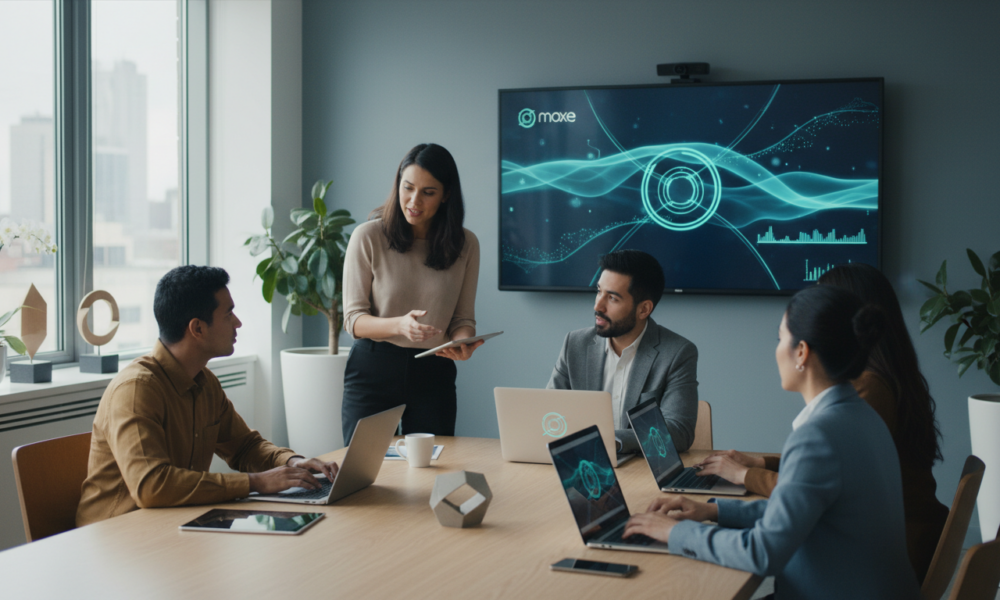
The year 2025 marks a decisive turning point in the way companies manage their information flows, and at the heart of this dynamic is Moxe. Often cited as a flagship example of innovative service, Moxe redefines the standards of data exchange, especially in the complex healthcare sector. For Moroccan professionals, whether decision-makers, recruiters, or analysts, understanding how this entity operates offers valuable insight into the future of B2B (Business to Business) collaboration and system interoperability.
Moxe: A revolution in clinical data exchange
Fundamentally, Moxe positions itself as an intelligent digital bridge. Unlike traditional models where information circulates in a fragmented way, this service uses technology to connect care providers (hospitals, clinics) to payers (insurance companies, mutual funds) in a completely seamless manner. The objective is to streamline the movement of clinical information, a major challenge that we also observe in the modernization of infrastructures in Morocco.
This model relies on a strict B2B approach. It is not a consumer application, but a robust infrastructure designed for organizations. By automating the transfer of medical records and administrative data, Moxe eliminates bureaucratic burdens, reduces manual errors, and speeds up reimbursement and care processes. This is a perfect illustration of digital transformation applied to critical processes.

Automation and AI as performance drivers
In 2025, innovation is no longer sufficient by itself; it must mean profitability and efficiency. Moxe integrates advanced automation solutions that allow processing massive volumes of data without constant human intervention. This ability to make heterogeneous systems communicate is what truly qualifies a project as innovative today.
Artificial intelligence plays a key role here. It does not merely transport data; it helps structure it and make it instantly usable. For a company, this means moving from reactive management to proactive file management. In a context where customer service and partner satisfaction are paramount, the execution speed offered by these tools becomes an undeniable competitive advantage.

Comparison: Traditional Approach vs Innovative Moxe Approach
To better understand the technological breakthrough embodied by this type of solution, it is useful to compare the classic methods still very present with Moxe’s value proposition. This parallel is particularly relevant for Moroccan structures in the midst of digitalization.
| Criterion | Traditional Method 🐌 | Moxe Method (Innovative Service) 🚀 |
|---|---|---|
| Data Transmission | Manual sends (Fax, Mail, Unstructured Email) | Automated and instantaneous digital exchange |
| Security | High risk of loss or leakage of information | End-to-end encryption and strict compliance |
| Processing Times | Several days, even weeks | Few seconds or minutes |
| Operating Costs | High (significant administrative labor) | Reduced thanks to automation of tasks |
Why does this model inspire the Moroccan market?
Morocco, with the widespread medical coverage and modernization of its institutions, is undergoing a pivotal period similar to the issues Moxe solves. The innovation brought by Moxe strongly resonates with local needs: interconnecting the different health actors (public, private, insurance) to offer better service to the citizen. Observing these international models makes it possible to anticipate technological standards that will soon prevail in Casablanca, Rabat, or Tangier.
Adopting such solutions not only gains productivity but also refocuses teams on higher value-added tasks. Instead of entering data, employees can focus on analysis and decision-making. This is the whole point of the future of services: technology must erase administrative complexity to put humans back at the center.
The pillars of success for such a service
If Moxe manages to establish itself as a reference in 2025, it is thanks to several key factors that can serve as a checklist for any entrepreneur or project manager wishing to launch a similar product:
- 🔒 Security above all: Trust is the most precious currency of exchange, especially when it comes to sensitive data.
- 🤝 Interoperability: The ability to integrate smoothly with clients’ existing software is crucial.
- ⚡ Speed of implementation: Companies no longer want projects that last years; they seek “plug-and-play” solutions.
- 💰 A clear ROI: The savings realized on administrative time quickly justify the technological investment.
- 🌐 Scalability: An architecture capable of supporting rapid data volume growth.

Towards a new era of digital collaboration
By analyzing Moxe’s success, we understand that true innovation does not reside solely in computer code, but in a deep understanding of the sector’s points of friction. By smoothing exchanges between providers and payers, the company does not just sell software; it sells efficiency and peace of mind. This is a valuable lesson for the Moroccan entrepreneurial ecosystem: the most promising projects are those that build digital highways where there were only beaten paths.
Is Moxe intended for individuals?
No, Moxe operates primarily in a B2B (Business to Business) framework. Its target market focuses on healthcare organizations and insurance companies rather than end consumers.
Why is Moxe considered an innovative service?
Moxe is considered innovative because it uses technology to solve the complex problem of healthcare data interoperability. It automates clinical information flows, thereby reducing manual administrative tasks and improving care speed.
What is the impact of this type of service on employment?
Automation offered by services like Moxe transforms professions. It reduces the need for manual data entry, allowing professionals to focus on analysis, customer relationship management, and strategic decision-making tasks.
How is data security managed?
In the field of healthcare data exchange, security is the absolute priority. Moxe uses advanced encryption protocols and adheres to strict compliance standards to ensure sensitive information is securely transmitted between parties.

No responses yet