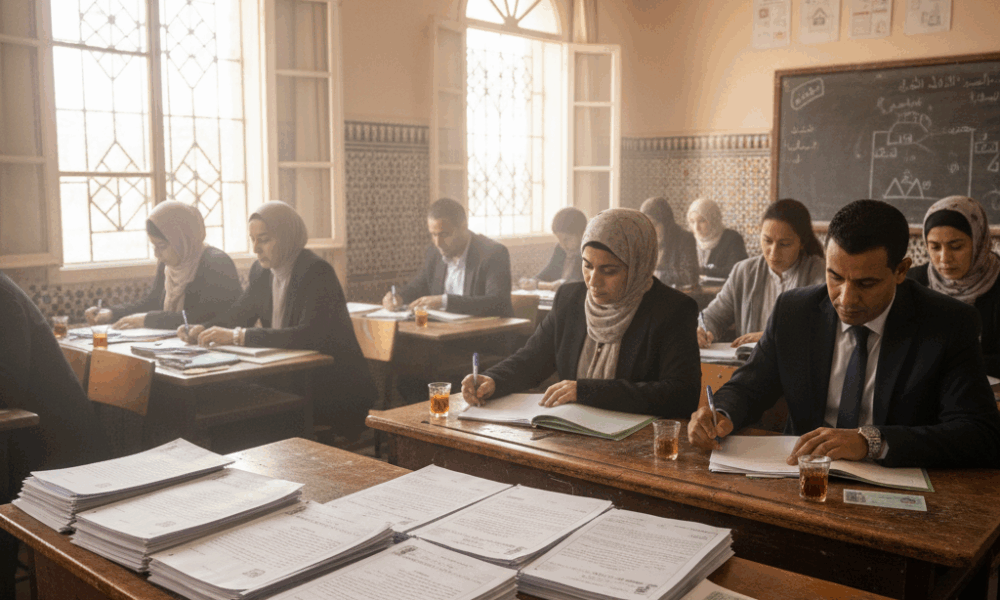
Preselection Results for the Taalim Competition: schedule, criteria, and official access
The Results of the Preselection for the Taalim Competition, November 2025 Session, constitute a decisive step for candidates aspiring to join the AREF and begin their Training at the CRMEF. According to the established schedule, the publication of the lists of Selected Candidates for the written tests will take place on November 17, 2025, after the file review phase from the 15th to the 17th. The number of available positions for success amounts to 19,000 Posts distributed across the primary and secondary cycles. This campaign is part of a Recruitment policy aimed at meeting educational needs and strengthening the quality of Public Employment in education in Morocco.
The lists can be consulted via the official platforms of the regional academies. Candidates are invited to check their status from November 17, then prepare for the written exam scheduled on November 22, 2025. Specialties in physical education benefit from practical tests between November 24 and 26, before the oral phase scheduled from December 2 to 11. The final results will be posted on December 16, and registrations at the centers will take place from December 18 to 20, with the Training starting on December 22.
To prepare effectively for this stage, it is useful to master the following points: the selection logic, the required documents, the posting methods (often in PDF format), and the mandatory deadlines. Regularly checking institutional websites is strongly recommended, supplemented by following information published in the national press.
- 📅 Publication of Preselection Results: 11/17/2025
- 📝 Written tests of the Taalim Competition: 11/22/2025
- 🏃♂️ Practical tests (PE): 11/24–26/2025
- 🗣️ Orals: 12/02–11/2025
- ✅ Final results: 12/16/2025
- 🎓 CRMEF registrations: 12/18–20/2025 | Start of training: 12/22
For the procedures and history of the operation, a complete guide on online registration and file validation is available here: tips for successful MEN registration. A global overview of the volumes and sought profiles can be found in this resource dedicated to the 19,000 Posts: career opportunities with AREF – Taalim.
| Step 📌 | Key date 📅 | Expected action ✅ | Practical tip 💡 |
|---|---|---|---|
| Official announcement | 10/29/2025 | Read the notice and check eligibility | Compare specialties with your diploma 🎯 |
| Online submission | 10/30–11/13 | Create/validate account and upload documents | Scan clear PDF (less than 2 MB) 🧾 |
| Preselection | 11/15–17 | Track file status | Check AREF sites every morning 🔎 |
| Preselection lists | 11/17 | Print the invitation | Verify room/time/center number 🧭 |
| Written tests | 11/22 | Arrive 60 minutes early | Prepare ID + black pens 🖊️ |
| Practical tests (PE) | 11/24–26 | Outfit and medical certificate | Hydrate and warm up properly 🏅 |
| Orals | 12/02–11 | Pedagogical interview simulation | Prepare a mini-lesson plan 📘 |
The ministry reminds that its mission covers preschool, fundamental, secondary, as well as certain post-bac streams (BTS, preparatory classes) and supervision of private education. A good understanding of this scope helps contextualize the contest requirements and anticipate the needs of the academies.
To broaden the perspective on economic dynamics and the impact of public policies on regional Employment, useful insight is found in this article: economy and development of the Moroccan Sahara. The selection mechanisms combining fairness and efficiency are also illuminated by relevant HR practices, like the recommendations here: optimizing hiring processes.
Final focus point of this section: every minute counts between November 17 and 22. Anticipate, verify, equip, and practice as the best guarantee to turn preselection into written success.
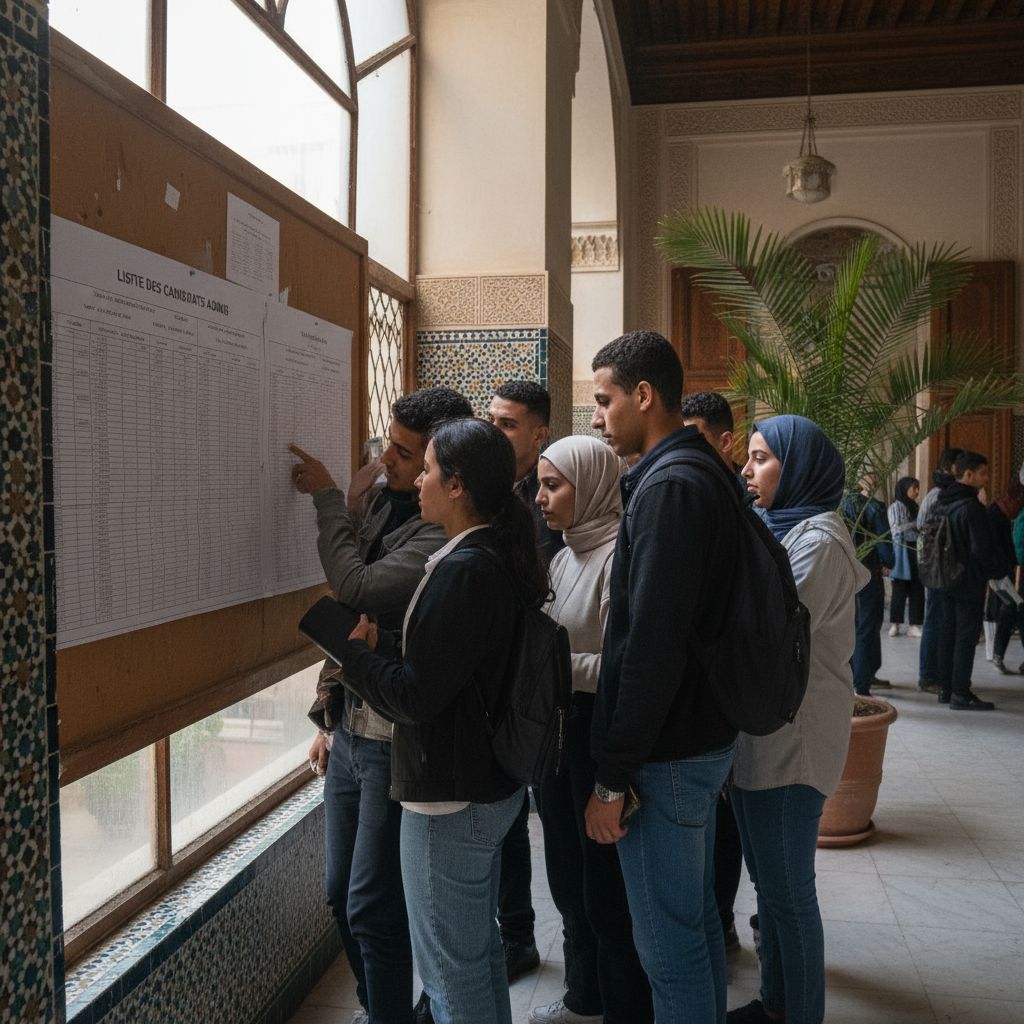
Regional Mapping and Stakes of the AREF: where to consult and what to watch
The lists of Selected Candidates are published by region to guarantee proximity and transparency. The following AREFs centralize the information for the November 2025 Session: Tanger-Tétouan-Al Hoceima, Oriental, Fès-Meknès, Rabat-Salé-Kénitra, Béni Mellal-Khénifra, Casablanca-Settat, Marrakech-Safi, Drâa-Tafilalet, Souss-Massa, Guelmim-Oued Noun, Laâyoune-Sakia El Hamra and Dakhla-Oued Eddahab. Candidates must consult their academy’s website, download the lists in PDF format, and take note of the logistical instructions (centers, schedules, required documents).
In practice, the academies adapt the organization according to candidate density and high-demand specialties. For example, profiles in mathematics, French, and life and earth sciences remain highly sought after at middle/high school levels, while Arabic and English see a significant rise linked to curriculum reforms. Primary education remains central to rural needs, justifying reinforced coordination of exam centers to reduce travel. Candidates linked to the Saharan provinces must regularly consult local portals integrated into the national publication scheme.
To maintain an overview, here is an operational summary table by region. It does not replace official portals but helps prioritize actions to take and points of attention to verify.
| Region 🧭 | High-demand Specialties 📚 | Alert Point ⚠️ | Useful Reflex 🔗 |
|---|---|---|---|
| Tanger-Tétouan-Al Hoceima | Math, French, English | Centers spread between prefectures | Verify exact center the day before ✅ |
| Oriental Region | Life Sciences, Physics, Arabic | Significant inter-city distances | Plan extra travel time ⏱️ |
| Fès-Meknès | History-Geography, French | High candidate flow | Arrive early to avoid queues ⏳ |
| Rabat-Salé-Kénitra | English, IT | Multiplicity of university sites | Locate the room on access map 🗺️ |
| Casablanca-Settat | Math, Physics | Urban congestion zones | Anticipate road traffic 🚦 |
| Marrakech-Safi | Life Sciences, Arabic | Distribution between urban/rural areas | Arrange accommodation if necessary 🏨 |
| Souss-Massa | French, PE | Specific practical tests | Prepare outfit and medical certificate 🧑⚕️ |
| Drâa-Tafilalet | Arabic, Primary | Distant centers | Check weather and itinerary 🌤️ |
| Guelmim-Oued Noun | Primary, French | Moderate flow, dispersed rooms | Confirm signing-in time 🕘 |
| Laâyoune-Sakia El Hamra | Primary, Math | Access logistics | Follow academic announcements 📣 |
| Dakhla-Oued Eddahab | Arabic, Primary | Provincial coordination | Check invitation and ID 🪪 |
Candidates can rely on additional resources for preparation: an overview of public competitions by sector is available here conditions, registrations and competition results. For understanding territorial balances and impact on Employment basins, see also this macroeconomic insight: dynamics in the Moroccan Sahara. Finally, some cities have useful transport networks on exam days, with updated information on urban mobility: networks and opportunities around Casa Transport.
- 🔍 Download the PDF list for your region and keep it locally
- 🖨️ Print the invitation and keep it in a clear folder
- 🧭 Locate the exact center on a map and plan your route
- 📞 Quickly note useful numbers (academy, center, contacts)
- 🕒 Allow a 30–45 minute margin for entering the room
Overall, this regional monitoring transforms the pressure of the schedule into a clear and controlled action plan.
After Preselection: invitations, documents, and organization of tests
Once preselected, the candidate enters an operational phase where personal organization makes the difference. The goal is to arrive calmly at the written exam on November 22, 2025 with all required proof elements. The invitation, available on the academic portal, specifies the room, entry time, and instructions (prohibited objects, authorized pens, ID). For PE specialties, the schedule of separate practical tests is detailed, generally with clothing requirements and medical certificates.
A good practice is to prepare two folders: one for administrative documents, the other for exam materials. Many candidates gain efficiency by making a checklist the day before, which reduces forgetfulness and anxiety. This rigor, however simple, values the sense of responsibility, a skill much appreciated in the teaching profession.
- 🗂️ Administrative file: ID card, invitation, diploma copies, signed certificates
- 🖊️ Equipment on exam day: black/blue pens, analog watch, clear water bottle
- 🚫 Forbidden items: connected devices, unauthorized documents, personal notes
- 🧑⚕️ PE: recent medical certificate, sportswear, proper shoes
- 🧘 Stress management: 4-7-8 breathing, micro-breaks, hydration
| Key action ✅ | Deadline 📅 | Proof/Support 📎 | HR advice 💼 |
|---|---|---|---|
| Download and check the invitation | 11/17–21 | PDF + printout | Re-read name, ID, center, schedule 🔎 |
| Prepare originals and copies | Before 11/21 | ID card, diplomas, certificates | Organize as requested 📑 |
| Location scouting | 11/21 | Route and travel time | Test the path at peak hours 🚗 |
| Written test | 11/22 | Invitation + ID card | Arrive 60 min early, breathe 🧘 |
| Practical tests (PE) | 11/24–26 | Invitation + certificate | Warm up and manage effort ⚽ |
| Written results | 11/27 | AREF list | Quickly organize oral preparation 🗣️ |
For methodological support, several useful resources exist. On registration and file compliance, see MEN registration rules. For HR references adapted to the Moroccan context, this guide offers effective levers: optimizing hiring. Finally, technical competitions often share common organizational codes, as illustrated here: IRAT competition guide.
A good habit is also to follow scientific public organizations to draw inspiration from their requirements in documentary rigor and calendar accuracy, like this overview: Institut Pasteur of Morocco. This discipline, transferable, helps secure each stage of the application.
Final recommendation: prepare a logistical plan B (alternative transport, spare pens, copy of invitation). A minor incident can be absorbed if simple solutions were thought of in advance.
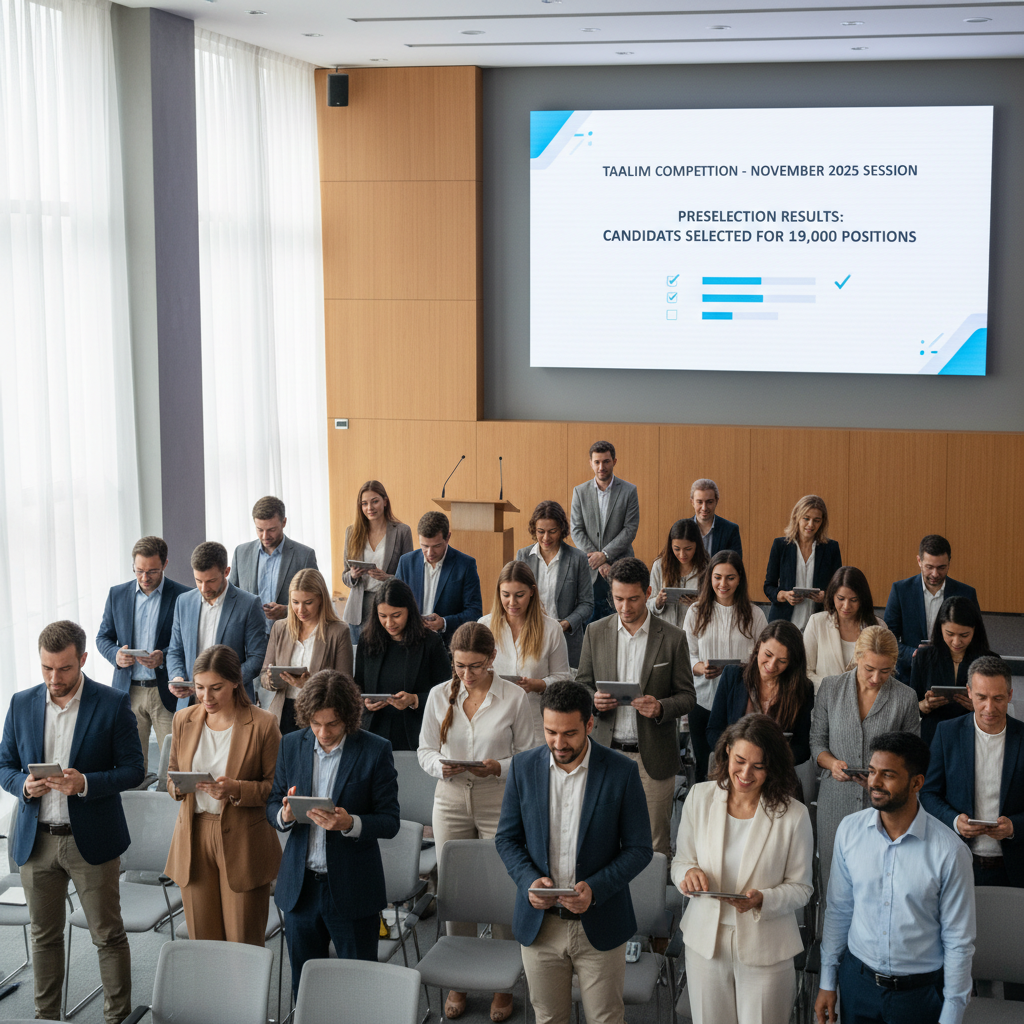
Winning preparation for the Taalim Competition tests: written, practical, oral
The written phase of the Taalim Competition evaluates both disciplinary content and didactic skills. The November 2025 Session focuses on mastery of reference frameworks, clarity of argumentation, and the ability to propose concrete solutions to pedagogical situations. A “triple anchoring” strategy works particularly well: learning key concepts, training on typical subjects, and targeted proofreading. This progression strengthens confidence, a major element on exam day.
For the oral, posture and communication ease are crucial. Juries observe the structuring of a mini-lesson, the ability to handle diversity in class, and capability to integrate national priorities (equity, remediation, basic skills). In PE, the practical demonstration must show safety, clear instructions, and progression adapted to the students’ age.
- 🧠 Disciplinary: summary sheets, mind maps, glossaries
- 📝 Didactic: three-part lesson plan (hook, activity, evaluation)
- 🔁 Training: timed simulations, paired peer corrections
- 🎤 Oral: pedagogical storytelling, time management, calm voice
- 🏃 PE: codified warm-up, safety, inclusive variations
| Evaluated skill 🎯 | Recommended exercise 🧩 | Quality indicator ⭐ | Common mistake to avoid 🚫 |
|---|---|---|---|
| Disciplinary mastery | Solution of 3 typical subjects | 80% correct answers | Learning without understanding |
| Didactic | 30-min lesson plan | Measurable objectives | Activities too abstract |
| Communication | 2-minute pitch | Clear message, steady voice | Digressions, excessive jargon |
| Time management | 90-min simulation | 5-min final margin | Neglected proofreading |
| PE – safety | Brief instructions + demonstration | No risky situations | Insufficient warm-up |
An inspiring case study illustrates this approach. Amal, a physics graduate from Fès, structured her work over 4 weeks: two weeks to consolidate disciplinary basics, one week for didactics with production of mini-lessons, then one week of full simulations (written + oral). Result: more serenity and readable papers, with short but well-supported arguments contextualized to the Moroccan classroom.
External resources enrich preparation, notably on competency interviews used in various sectors. For inspiration, see for example young talents methods in industry and evaluation practices at Maroc Telecom. These methods, transferred with discernment, help clarify the proof of competency required at the oral.
For final training, focusing on cross-cutting topics (inclusion, remediation, educational digital tools) strengthens the capacity to answer open questions. In PE, repeating a typical sequence (warm-up, workshop, evaluation) secures the demonstration. Cornerstone of this part: prepare “as if the test were tomorrow” to enter a dynamic of efficiency and anticipation.
Impact of the 19,000 Posts on Employment and Training in Morocco
The opening of 19,000 Posts in public education acts as a multiplier of Employment and skills. Economically, this volume injects local salary dynamics, supports consumption, and strengthens demand for related services (housing, transport, bookstores). On the human level, it contributes to reducing overcrowded classes, a necessary condition to improve foundational learning. Finally, institutionally, it consolidates the CRMEF as hubs of initial Training for teachers, with a quick start from the end of December.
This impetus can also be seen in supply chains and adjacent public services. Massive recruitment in education stimulates complementary sectors, whether infrastructure, school health, culture, or sports. Crossovers with other public and quasi-public competitions encourage emulation and the improvement of selection standards.
- 🏫 Territorial effect: academy networks and vitality of mid-sized cities
- 🧑🏫 Professionalization: strengthening pedagogical skills
- 📈 Local economy: stimulated consumption and mobility
- 🤝 Intersectoral: interactions with health, transport, digital
- 🔁 Sustainability: recurring recruitment and quality improvement
| Dimension 🌍 | Expected effect 🧭 | Indicator 📊 | Partnership lever 🤝 |
|---|---|---|---|
| Economic | Stimulation of local demand | Expenses of new hires | Urban mobility, bookstores, housing |
| Educational | Reduction of student/teacher ratios | Supervision rate | CRMEF and AREF synergy |
| Social | Retention of young graduates in their region | Insertion rate | Local support mechanisms |
| Skills | Didactic and digital strengthening | Hours of training attended | Certified continuing education |
The landscape of public competitions 2025, beyond Taalim, offers experience crossovers and useful references. For example, information on social security and public service sheds light on application paths: CNSS and public employment overview and applying to CNSS. The recruitment dynamics in health and services illustrate complementarity between fields: example of nurse needs at Akdital or HR movements in local authorities. This perspective supports the idea that school remains a pillar, nourishing the entire economy.
Focus on essentials: these Results of Preselection open a window of opportunity embedded in the long term. Relying on synergy between education, health, transport, and digital, Morocco is building a robust and inclusive trajectory of Employment and skills.
Tools, Useful Links, and Opportunity Ecosystem around Taalim
For all candidates, aggregating reliable resources accelerates preparation and secures administrative steps. The following links illuminate various facets: Recruitment process in education, registration, good HR practices, and complementary perspectives in the public and private sectors. The goal is to equip candidates of the November 2025 Session with concrete landmarks and proven methods.
- 🔗 AREF – Taalim Competition: 19,000 Posts and procedures
- 🧭 Online registration: steps and checks
- 💼 HR methods: optimize your application
- 🧪 Competition culture: documentary requirements
- 🛠️ Other competitions: IRAT practical guide
- 🏙️ Urban ecosystems: mobility and associated jobs
| Theme 🧩 | Resource 🔗 | Usefulness 📌 | What to remember ✍️ |
|---|---|---|---|
| Taalim Competition | AREF – 19,000 Posts | Overview and schedule | Note all key deadlines |
| MEN Registration | Step-by-step procedure | Assemble error-free file | Check documents before validation |
| HR Practices | Optimize hiring | Structure CV and proofs | Stay concise and proof-oriented |
| Comparable Competitions | IRAT Guide | Learn from best practices | Adapt strategies to tests |
| Ecosystem | Mobility – Casa | Anticipate logistics | Plan travel early |
To complete this overview, industrial actors and service providers run HR policies that inspire rigorous and transparent selection processes in form. Innovations and quality requirements, even in other sectors, strengthen a performance culture useful to future teachers. Indicatively, consult innovations at LafargeHolcim and talent hunting initiatives like Hydro Advisor which highlight the rise of cross-cutting skills (digital, communication, rigor).
In summary, this toolkit connects the essentials: the official links to act, HR methods to enhance yourself, and an Employment ecosystem showing that success in the competition opens the door to a structured career, supported by professionalizing Training.
{“@context”:”https://schema.org”,”@type”:”FAQPage”,”mainEntity”:[{“@type”:”Question”,”name”:”Where to consult the preselection results for the November 2025 Session?”,”acceptedAnswer”:{“@type”:”Answer”,”text”:”The lists of selected candidates are published on November 17 on the official AREF sites. Check your region, download the PDF and print your invitation for the written test on November 22.”}},{“@type”:”Question”,”name”:”What documents are necessary on the day of the written test?”,”acceptedAnswer”:{“@type”:”Answer”,”text”:”Printed invitation, national identity card, compliant pens, and any documents explicitly requested by your academy. For PE, add appropriate outfit and a medical certificate if required.”}},{“@type”:”Question”,”name”:”How to prepare effectively for the written and oral tests?”,”acceptedAnswer”:{“@type”:”Answer”,”text”:”Work on core disciplinary fundamentals, train on typical subjects, develop mini-didactic lessons, and do oral simulations. Structure your preparation with a weekly plan.”}},{“@type”:”Question”,”name”:”What to do if not preselected?”,”acceptedAnswer”:{“@type”:”Answer”,”text”:”Analyze required criteria, complete your proofs (diplomas, certificates), follow other available public competitions, and prepare a new application. Get inspired by HR best practices contextualized to Morocco.”}},{“@type”:”Question”,”name”:”When do trainings start at the CRMEF?”,”acceptedAnswer”:{“@type”:”Answer”,”text”:”After the final results published on December 16, registrations take place from December 18 to 20 and training officially starts on December 22 in the centers.”}}]}Where to consult the preselection results for the November 2025 Session?
The lists of selected candidates are published on November 17 on the official AREF sites. Check your region, download the PDF and print your invitation for the written test on November 22.
What documents are necessary on the day of the written test?
Printed invitation, national ID card, compliant pens, and any documents explicitly requested by your academy. For PE, add appropriate outfit and medical certificate if required.
How to prepare effectively for the written and oral tests?
Work on core disciplinary fundamentals, train on typical subjects, develop mini-didactic lessons, and do oral simulations. Structure your preparation with a weekly plan.
What to do if not preselected?
Analyze required criteria, complete your proofs (diplomas, certificates), follow other available public competitions, and prepare a new application. Get inspired by HR best practices contextualized to Morocco.
When do trainings start at the CRMEF?
After the final results published on December 16, registrations take place from December 18 to 20 and training officially starts on December 22 in the centers.

Comments are closed