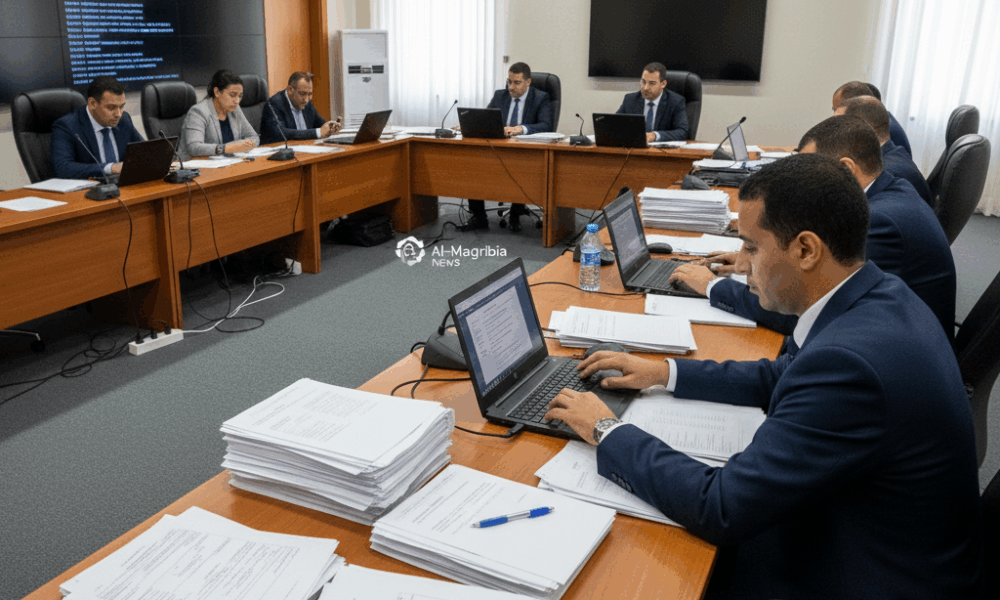
IRAT Morocco: IRAT missions, public role, and territorial anchoring in 2025
The IRAT Morocco, based in Kénitra, remains the national reference for the training of authority agents of the Ministry of the Interior. Its IRAT missions are at the heart of public service: consolidating the rule of law, managing territorial action, orchestrating risk prevention, and supporting local development. Beyond a simple academic institution, the IRAT institute functions as a laboratory of public practices where future executives learn to combine republican standards, anticipation skills, and closeness to citizens.
This vocation is expressed through a dual anchoring, military and administrative, which shapes a posture of responsible authority and manager. The instruction instills discipline, a sense of collective, and resilience, while civil teachings structure skills in law, public finance, urban planning, digital governance, and social mediation. Why is this hybridization decisive in 2025? Because territorial action covers a broad spectrum: civil security, local economic regulation, social policies, and management of structuring projects in provinces and prefectures.
In the Moroccan context, territorial authority is often the first citizen interface. Expectations are rising regarding transparency, response times, access to IRAT services, and listening to youth. The social landscape has become more complex, with generational movements and sustained public debates. To gauge the challenge, a useful insight recalls the importance of quality institutional dialogue with youth and the protection of public space, a topic regularly discussed in current events, as seen in analyses of Generation Z mobilizations in Morocco, available via this perspective.
Training authority agents for a moving Morocco
The IRAT missions translate into concrete expectations: crisis management, supervision of local teams, interministerial coordination, proximity with economic actors, and management of public policies. Students learn to articulate the legal framework, territorial data, and human management. They are prepared to intervene across very different territories, from urban centers to rural municipalities, with a constant concern for equal access to services.
Facing climate and digital transitions, IRAT Morocco increasingly works with partners who provide sectoral feedback (energy, health, mobility, agri-food). This permeability with the real economy enriches the understanding of local value chains and skill needs, a major asset for animating economic watch committees or management cells for major events.
- 🧭 Citizen orientation: anchoring trust through quality reception and clarity of procedures.
- 🛡️ Civil security and prevention: anticipate, coordinate, protect.
- 📊 Data-driven management: indicators, mapping, dashboards.
- 🤝 Territorial mediation: social dialogue, consultations, partnerships.
- 🚀 Public innovation: digital tools, e-gov, evaluation culture.
Key capacities and local impact
The expected skills of graduates revolve around three registers: strategy, execution, and relation. The first embeds actions over time, the second ensures operationality, and the third guarantees stakeholder buy-in. At the local level, these assets translate into projects that improve everyday life: faster urban services, support for cooperatives, risk prevention, continuity of services during periods of tension.
| Key mission 🌐 | IRAT skills 💼 | Territorial impact ✅ |
|---|---|---|
| Public order and civil security | Crisis management, coordination, sensitive communication | Safer cities and municipalities, continuity of services |
| Local development | Economic analysis, partnerships, project management | Employment, attractiveness, structuring projects |
| User services | Digitization, simplification, quality | Shorter delays, more transparency |
| Social mediation | Negotiation, law, participation | Calm social climate, better accepted decisions |
The quality of results relies on complete profiles and modern tools. IRAT is committed to this, with a guiding principle: exemplary, efficient, and close to citizens authority executives.
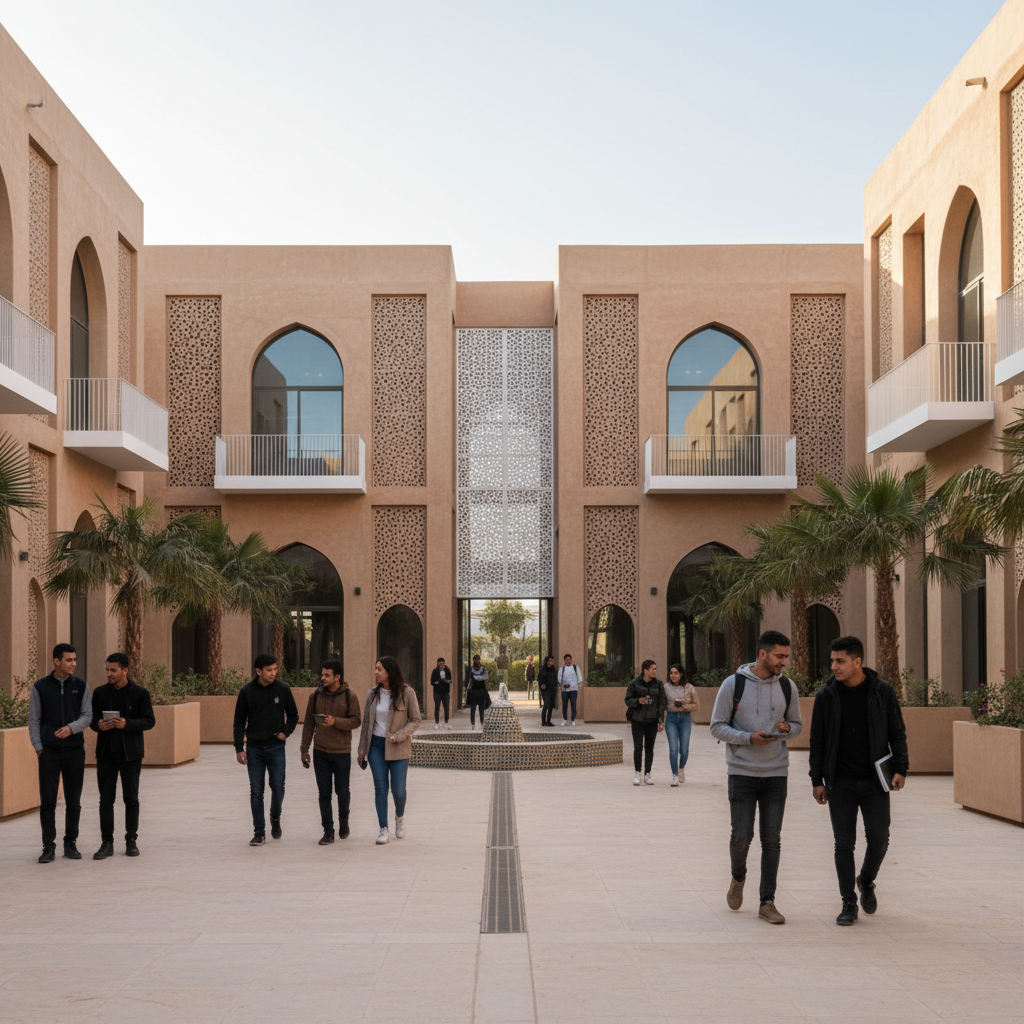
IRAT 2025: IRAT services, training cycles, and recognized diplomas
In IRAT 2025, the offer is structured around a standard cycle (two years), a higher cycle (two semesters), specialized cycles, continuing education, and programs dedicated to foreign executives. The IRAT services cover pedagogical engineering, military supervision, tutorials, internships, seminars, and study visits. Graduation includes the master’s in territorial administration and the higher cycle diploma, jointly signed by the Minister of the Interior and the Institute’s Directorate.
To understand entry routes and content, a concise guide dedicated to the competitive exam is a useful resource: see this practical guide to preparing the IRAT exam. For a retrospective view, the history of previous exams helps evaluate the evolution of tests and criteria, as illustrated in this archive of a previous edition.
Cycle architecture and diploma recognition
The standard cycle is intended for the initial training of authority agents. It combines public law, state finances, urban planning, territorial management, military instruction, leadership, communication, and digital governance. The higher cycle, shorter, prepares for responsibilities in design and command, with a strong focus on strategy and change management. Other programs address specialization (e.g., risk management, mediation, territorial data) and continuous skill development.
- 🎓 Master in territorial administration: academic and professional recognition.
- 🪖 Instruction and discipline: common foundation for authority agents.
- 🧠 Public leadership: ethics, role modeling, decision-making.
- 🛰️ Digital governance: e-services, cybersecurity, data.
- 🧭 Field immersion: internships and study visits in provinces.
| Cycle 🧩 | Duration ⏱️ | Certification 📜 | Purpose 🎯 |
|---|---|---|---|
| Standard cycle | 2 years (4 semesters) | Master’s in territorial administration | Initial training of authority agents |
| Higher cycle | 2 semesters | Higher cycle diploma | Design and command executives |
| Specialized cycles | According to decree | Certificate signed by the Directorate | Targeted expertise (risks, data, mediation) |
| Continuing education | Modular | Certificate | Updating executives’ skills |
| Foreign executives | Dedicated programs | Specific certificate | Expertise sharing and cooperation |
Pedagogical content and useful resources
The common core emphasizes administrative law, territorial economics, public communication, and operational management. Tutorials use Moroccan cases, negotiation exercises, and crisis simulations. Internships immerse participants in the reality of the province or prefecture. To pace preparation, corporate internships can supplement skills before the exam: examples of opportunities to explore on pre-hire internships in Morocco or also on paid internship offers 2025.

The added value of IRAT lies in the alignment between academic rigor and field skills, with a diploma carrying authority and responsibility.
IRAT 2025 procedures: access conditions, registration, documents, and schedule
The IRAT procedures comply with precise criteria. The age limit is 35 years on the exam date. The diploma must allow access to scale 10 at minimum, in accordance with Decree No. 2-12-90 of April 30, 2012 on equivalences and grades. The procedure unfolds between official announcement, file submission, admissibility, tests, and results. Announcements and schedules are disseminated through institutional channels, while candidates consult specialized resources, like this updated registration guide.
Conditions and supporting documents
Candidates must gather a complete file: diploma (or certificate), equivalences for foreign degrees, national ID, criminal record extract, CV, motivation letters, and if applicable, certificates of experience or internship. Presentation quality matters: a well-structured file enhances skills and facilitates review by the commission.
- 🧾 Diploma granting scale 10 rights or equivalent recognized.
- 🪪 Identity document and civil status proofs.
- 📑 CV and letter oriented towards “public service” and “territories”.
- 🗂️ Certificates of relevant internships and experiences.
- ⏳ Respect of the schedule (deadlines and modalities).
Registration steps and best practices
The typical procedure includes monitoring announcements, preparing the file, online registration if applicable, then preparing written and oral tests. Candidates preparing study visits abroad (languages, civil security, data) consider logistical arrangements; for consular procedures, booking an appointment on the VFS appointment platform may be necessary. IRAT missions sometimes involve international exchanges; knowing visa-free countries for Moroccans is an asset for planning swift immersions.
| Step 🔎 | Required action 📝 | Watch point ⚠️ |
|---|---|---|
| Monitoring | Follow the official exam announcement | Verify age and degree (scale 10) |
| File | Assemble documents and equivalences | Legible documents, deadlines respected |
| Registration | Submission online or on-site | Keep receipts and acknowledgments |
| Preparation | Review law, management, current events | Simulate oral and case studies |
| Tests | Rigor, time management | Clear argumentation and ethics |
Prior employability often strengthens the file: sectoral experiences consolidating understanding of territories are to be considered. Examples include health opportunities via nurse recruitments at Akdital, auto distribution with offers from SMEIA group, or engineering through the Vinci Energies Young Talents program. Such experiences nurture a results culture and aptitude for management.
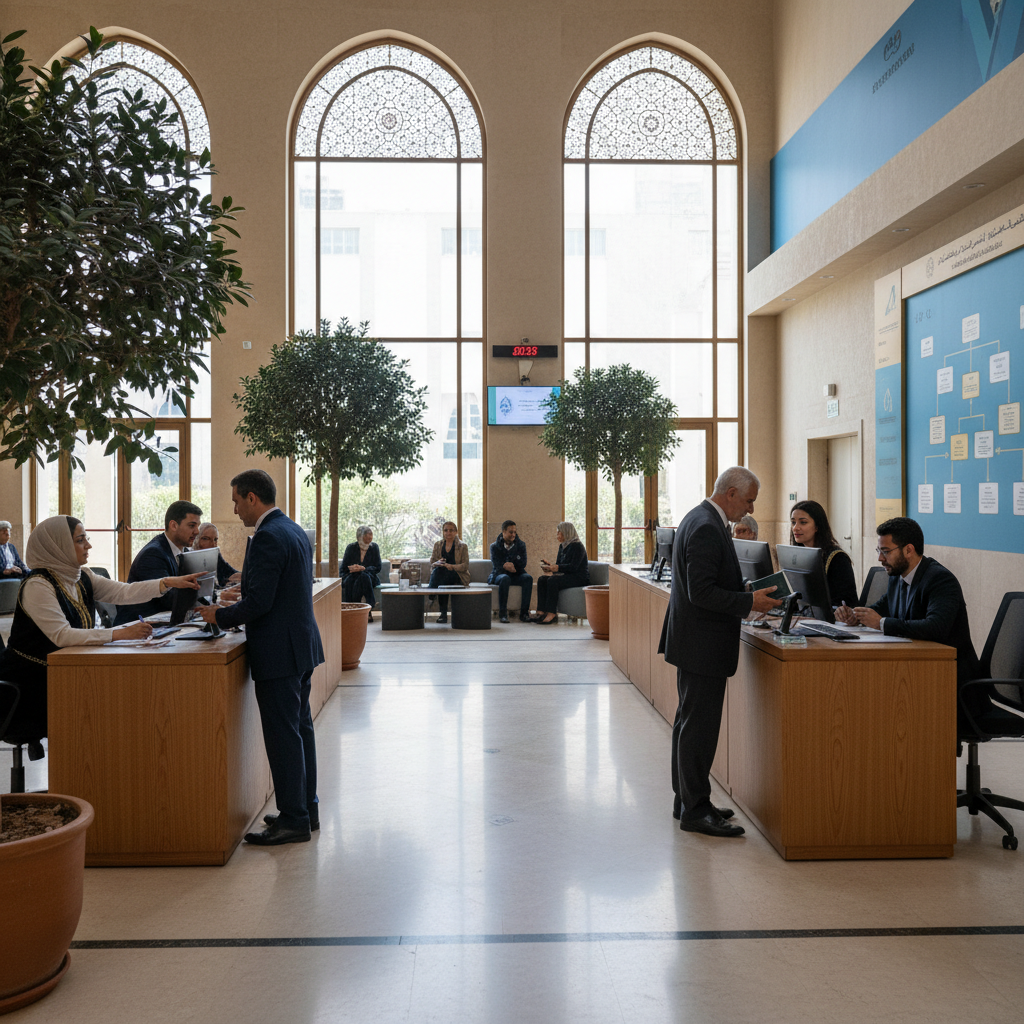
Careers after the IRAT institute: professions, mobility, and economic prospects
At the end of training, success in exams opens the way to the rank of caïd and progressive responsibilities within territorial administration. Positions involve local command, service management, and coordination with regional directorates. The path is demanding but meaningful: contributing to development and cohesion of Moroccan territories.
Career start and increasing responsibilities
Early positions are characterized by a strong field anchoring. The authority agent animates local units, monitors projects, manages varied situations: authorizations, security meetings, mediation, watch mechanisms. Experience allows access to broader responsibilities, sometimes up to design or direction roles at regional or central levels. This mobility requires versatility and continuous learning capacity.
- 🧭 Local command: operational management and daily presence.
- 🤝 Partnerships: companies, associations, decentralized services.
- 📈 Project monitoring: infrastructures, services, social inclusion.
- 🛰️ Digital transformation: e-services and data management.
- 📚 Continuing education: regular skill updates.
Economic ecosystem and skill bridges
While most of the career unfolds in the public sector, understanding the local economy is crucial. Programs like Scalian teams in Morocco or Vinci Energies initiatives illustrate the density of industrial and digital projects. Knowing these actors helps anticipate infrastructure, energy, and skill needs, and facilitates the establishment of job-creating projects.
| Public profession 🏛️ | Key skills 🧠 | Economic interactions 🤝 |
|---|---|---|
| Caïd | Command, mediation, law | Local committees, dialogue with investors |
| Regional executive | Strategy, data, management | Monitoring structuring projects |
| Thematic director | Design, central coordination | Partnerships, financing, evaluation |
The geopolitical and economic context of the Kingdom also weighs on territorial action. Debates on the Sahara and investment dynamics in the South condition infrastructures and jobs; for a synthetic overview see this economic analysis linked to the Sahara as well as diplomatic angles around the autonomy initiative. These topics shape operational priorities: logistics, security, public services, and business support.

Altogether, graduates contribute to a more close, more efficient, and more transparent State, in an economic environment undergoing full transformation.
Rural territories, agricultural training Morocco, and agricultural technology: cooperation with agricultural technicians
Many provinces have a strong rural footprint. Without being an agricultural institute, IRAT Morocco interacts with actors of agricultural training Morocco and agricultural technicians to better manage local policies related to irrigation, sectors, collective land, and prevention of climate risks. The authority agent must understand production, processing, and marketing mechanisms to support cooperatives, streamline authorizations, and stimulate investment.
Why agricultural technology matters for territorial action
Innovations in agricultural technology (moisture sensors, satellite imagery, traceability apps) help anticipate hazards and secure harvests. For a territorial executive, integrating these tools refines decisions: prioritizing rural tracks, calibrating water plans, preventing fires. This requires coordination with technical services, agricultural technicians, and private operators.
- 🌾 Knowledge of sectors: citrus, olive, market gardening, cereals.
- 💧 Water management: localized irrigation, aquifer monitoring.
- 📡 Agricultural data: local weather, sensors, alerts.
- 🏭 Agro-industry: logistics, standards, export.
- 🤝 Governance: mixed public-private committees, bottleneck clearing.
Examples of linkage with employment and insertion
Moroccan agri-food basins offer job opportunities and internships that strengthen territory understanding. Purchasing internships in agro, like this opportunity at Lesaffre Morocco, expose to supply, quality, and cost issues. In the biscuit and flour industries, recruitment campaigns at Excelo highlight logistics, maintenance, and sales needs, useful for animating a local employment committee.
| Agricultural theme 🚜 | Contribution to authority agent 🧭 | Key partners 🤝 |
|---|---|---|
| Irrigation and water | Prioritize investments and manage crises | ABH, municipalities, cooperatives |
| Value chains | Facilitate downstream (transport, quality, export) | Agro-industries, ONSSA, customs |
| Agricultural tech | Decide with local data | Startups, OFPPT, universities |
| Insertion | Link youth and offers | ANAPEC, local companies |
Beyond public posts, the private market offers useful bridges for rural youth. Internship and qualified employment schemes reduce exodus and enhance local know-how; to follow for example via paid internship programs and industrial initiatives. A cross-reading of employment, technology, and public policies feeds a more agile territorial management.
Step conclusion: by combining professional training Morocco, agricultural technology, and demands of the IRAT institute, rural territories gain resilience and competitiveness.
Preparing one’s application and career project: methods, monitoring, and resources
Preparation for the IRAT exam and pathway requires rigor and consistency. It is conceived as a career project in its own right, combining strategic monitoring, practice, targeted experiences, and network. The guiding thread: develop a fine understanding of public policies, social and economic dynamics, and digital tools.
Action plan over 6 to 9 months
A realistic timeline is decisive. It includes subject revision, practicing tests, file preparation, and concrete experiences (internships, structured volunteering). Integrating sectoral news strengthens arguments during oral and case studies.
- 📚 Structured revisions: public law, finance, management.
- 📰 Weekly monitoring: territorial policies, local economy.
- 🗣️ Oral simulations: posture, clarity, ethics.
- 🏢 Experiences: targeted internships public/private.
- 🌍 Openness: languages, international comparisons.
Territorial transformations and major public debate topics
Candidates benefit from mastering issues crossing territories: civil security, youth employment, health, energy transition, major events, and tourism. Being able to read local impacts of national and sporting events can also prove useful, if only for managing flows and services; for an event organization overview, consult this information related to ticketing for a major sports event and its peripheral effects on host cities’ activity.
| Target skill 🎯 | Tool/Practice 🔧 | Progress indicator 📈 |
|---|---|---|
| Argumentation | Reading sheets, simulated debates | Clarity and conciseness orally |
| Crisis management | Scenario exercises | Reflexes and anticipation capacity |
| Monitoring | Current events dashboards | Regularity, relevance of sources |
| Network | Professional meetings, mentoring | Qualified contacts acquired |
Finally, openness to other sectors enriches the territory vision. Companies recruit and train young talents, useful to understand local industrial logics: examples with opportunities from SMEIA group or Scalian projects. These benchmarks, combined with public expertise, develop a valuable results culture for territorial action.
{“@context”:”https://schema.org”,”@type”:”FAQPage”,”mainEntity”:[{“@type”:”Question”,”name”:”What are the eligibility conditions for the IRAT exam?”,”acceptedAnswer”:{“@type”:”Answer”,”text”:”Maximum age 35 years on exam date, diploma granting access to scale 10 minimum, and complete file according to official call. Foreign diplomas must have equivalence in accordance with Decree No. 2-12-90 of April 30, 2012.”}},{“@type”:”Question”,”name”:”What diplomas does IRAT Morocco award?”,”acceptedAnswer”:{“@type”:”Answer”,”text”:”The standard cycle is validated by a master’s degree in territorial administration. The higher cycle awards the higher cycle diploma. Specialized cycles and continuing education issue certificates signed by the Institute’s Directorate, and some foreign tracks give specific certificates.”}},{“@type”:”Question”,”name”:”How long is the initial training?”,”acceptedAnswer”:{“@type”:”Answer”,”text”:”The initial training (standard cycle) lasts two years, divided into four semesters, with a dual military and administrative curriculum, courses, tutorials, internships, seminars, and study visits.”}},{“@type”:”Question”,”name”:”How to prepare adequately for the exams?”,”acceptedAnswer”:{“@type”:”Answer”,”text”:”Structure a work plan over several months, revise law/management, practice mock tests, follow territorial news, and train for the oral. Internship and volunteer experiences also strengthen the application.”}},{“@type”:”Question”,”name”:”Does IRAT cooperate with the agricultural sectors?”,”acceptedAnswer”:{“@type”:”Answer”,”text”:”IRAT is not an agricultural institute, but authority agents interact with agricultural technicians and agri-food operators. Understanding sectors and agricultural technologies helps manage local policies in rural provinces.”}}]}What are the eligibility conditions for the IRAT exam?
Maximum age 35 years on exam date, diploma granting access to scale 10 minimum, and complete file according to official call. Foreign diplomas must have equivalence in accordance with Decree No. 2-12-90 of April 30, 2012.
What diplomas does IRAT Morocco award?
The standard cycle is validated by a master’s degree in territorial administration. The higher cycle awards the higher cycle diploma. Specialized cycles and continuing education issue certificates signed by the Institute’s Directorate, and some foreign tracks give specific certificates.
How long is the initial training?
The initial training (standard cycle) lasts two years, divided into four semesters, with a dual military and administrative curriculum, courses, tutorials, internships, seminars, and study visits.
How to prepare adequately for the exams?
Structure a work plan over several months, revise law/management, practice mock tests, follow territorial news, and train for the oral. Internship and volunteer experiences also strengthen the application.
Does IRAT cooperate with the agricultural sectors?
IRAT is not an agricultural institute, but authority agents interact with agricultural technicians and agri-food operators. Understanding sectors and agricultural technologies helps manage local policies in rural provinces.

Comments are closed