The Tourism Boom of Zagora: A Strategic Destination in 2025
Southern Morocco is experiencing a true revival, driven by a desire to diversify the national offer and highlight regions with strong potential. In this regard, the province of Zagora stands out as a model of successful territorial development, combining identity preservation and openness to the world. With more than 5.7 million visitors recorded nationally in the first quarter, the momentum is underway and directly benefits local stakeholders. This region, often called the “Gateway to the Desert,” offers much more than a simple stopover: it provides an immersion in an ecosystem where the local economy, agriculture, and tourism coexist harmoniously.
For professionals seeking disconnection or history enthusiasts, Zagora represents a must-see stop on the Great South route. The infrastructure has modernized, facilitating access to emblematic sites while respecting the fragile environment of the oases. This is where the Saharan adventure truly begins, inviting travelers to take the path to the Moroccan desert, the symbolic and physical route that connects the Atlas Mountains to the endless stretches of sand.
The Draa Valley: Green Backbone and Living Heritage
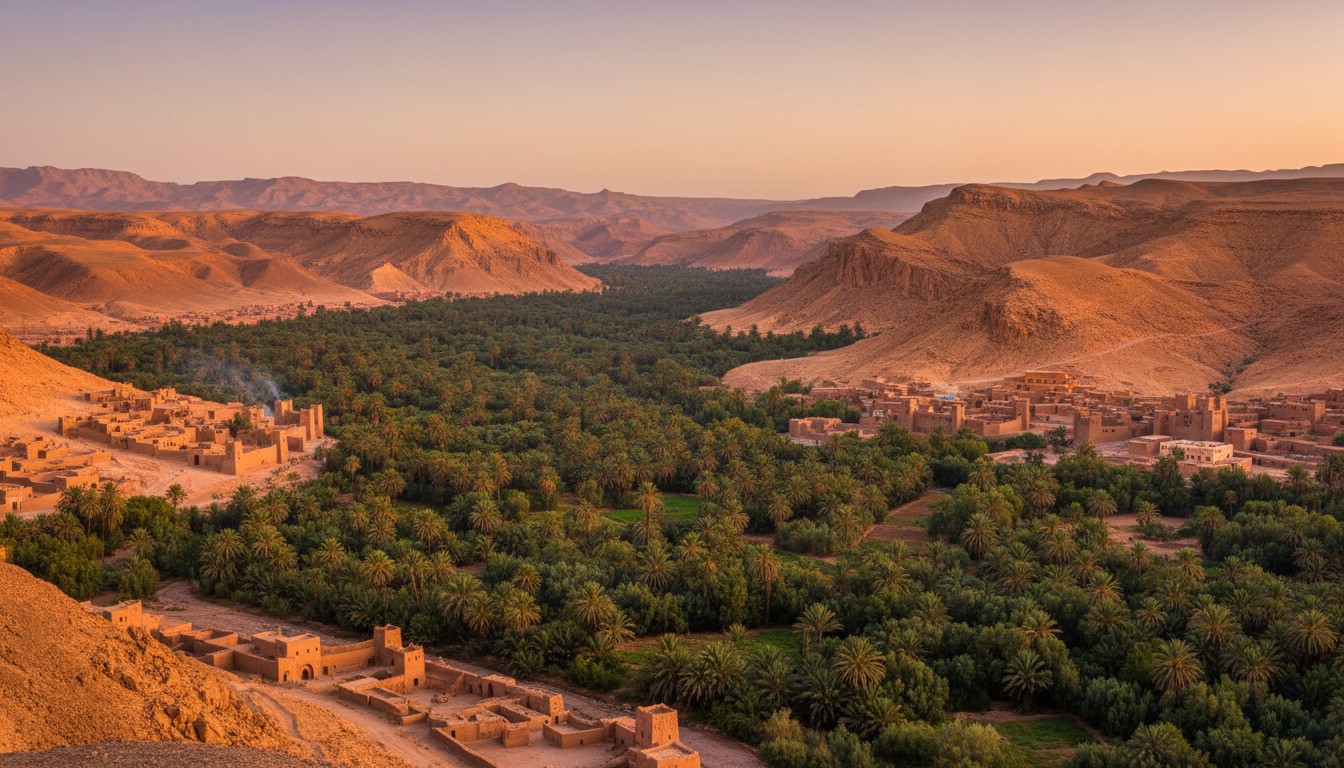
Stretching over nearly 200 kilometers, the Draa Valley is the economic and ecological lung of the region. This ribbon of greenery, made up of millions of date palms, provides a striking contrast to the aridity of the surrounding plateaus. Beyond its scenic beauty, the valley testifies to a millenary human ingenuity, notably through traditional irrigation systems (khettaras) that enable thriving subsistence agriculture. It is a striking example of climate resilience from which we can draw many lessons today.
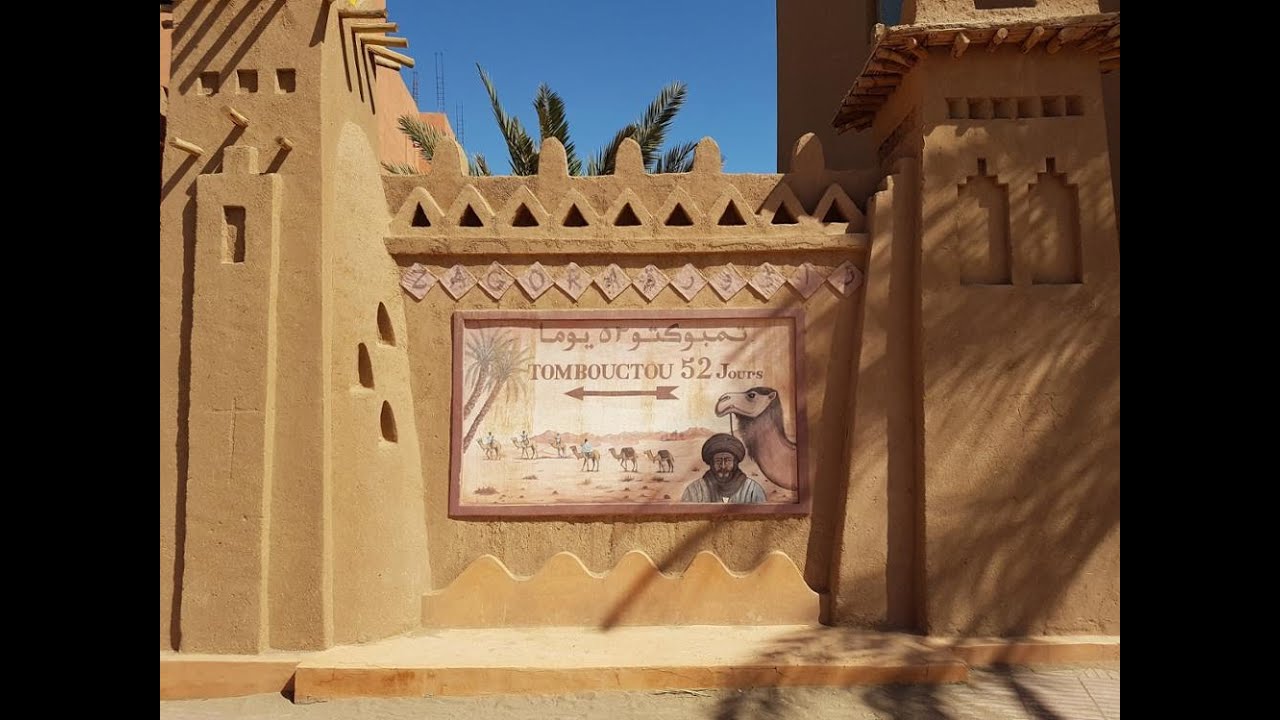
The attentive visitor will notice the many ksour and mudbrick kasbahs that punctuate the palm grove. These earthen architectures are not merely relics; they tell the history of caravan routes that connected Timbuktu to Marrakech. To extend this discovery of oasis architectures and understand water resource management in these arid environments, a comparable visit can be considered to Skoura, a timeless oasis, which shares many similarities with the Draa Valley in terms of heritage preservation.
Between Accessible Dunes and Wild Vastness: The Call of the Desert
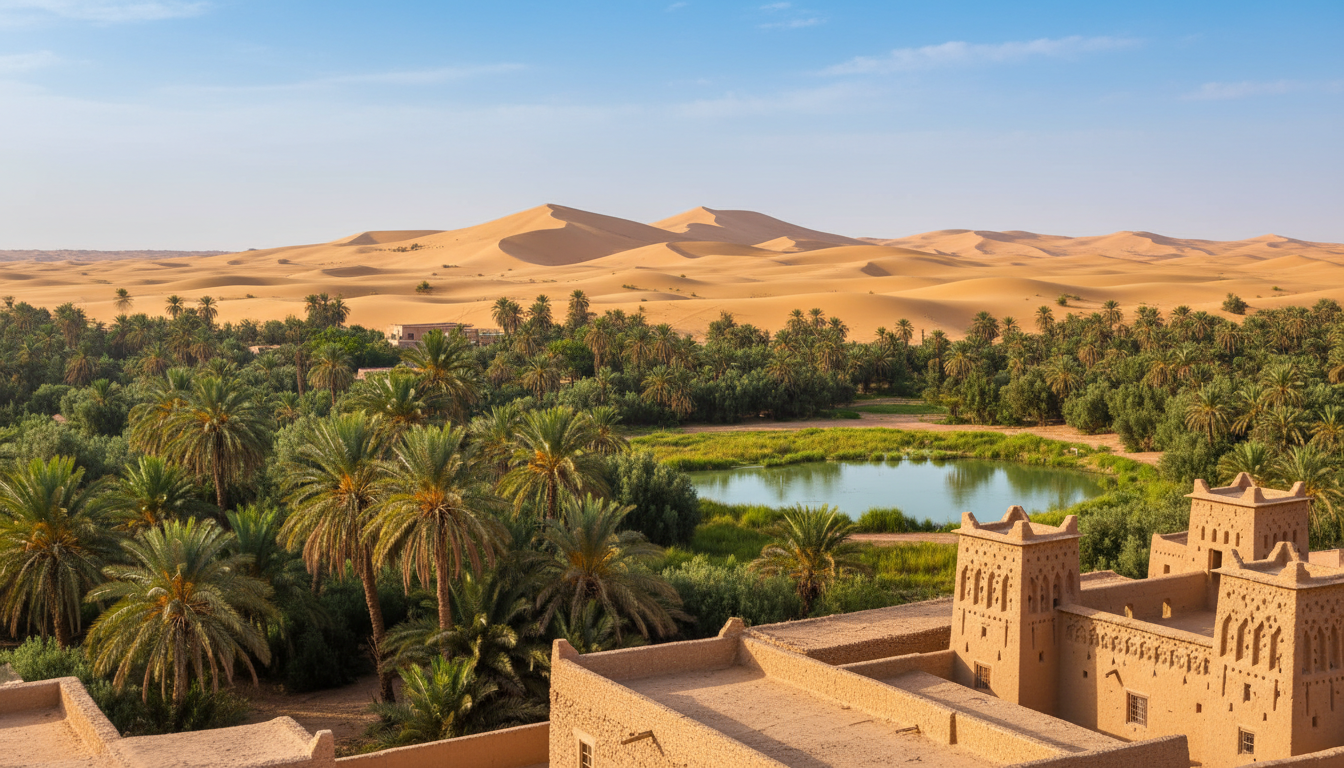
The geography of Zagora offers a fascinating duality for lovers of untouched spaces. Unlike other Saharan destinations, the region allows you to choose your level of intensity in the desert experience. On one hand, the dunes of Tinfou offer an immediate and accessible glimpse of the magic of the sands, ideal for those with limited time. On the other, the Erg Chegaga, a true sea of sand, requires more advanced logistics and a stronger adventurous spirit, promising in return total disconnection under the Milky Way.
This diversity of landscapes allows structuring a varied tourist offer, ranging from luxury bivouacs to rustic nomad trekking. It is also an exceptional playground for understanding the geology of southern Morocco. For those wishing to explore even more spectacular rock formations and stray from beaten paths, it is relevant to push exploration towards Foum Zguid to discover the gates of Iriqui National Park, another facet of the Moroccan desert.
Here is a comparison of the desert experiences available in the region to guide your choice:
| Site 📍 | Type of Experience 🔭 | Accessibility 🚗 | Ideal for 🎯 |
|---|---|---|---|
| Dunes of Tinfou | Quick initiation, sunset | Easy (paved road) | Families, tight schedules |
| Erg Chegaga | Deep immersion, wild bivouac | Hard (2h by 4×4/track) | Adventurers, quest for silence |
| M’Hamid El Ghizlane | End of the road, start of camel treks | Medium (asphalt road) | Nomadic culture, festivals |
Know-how and Spirituality: The Legacy of Tamegroute
A few kilometers south of Zagora, Tamegroute embodies the intellectual and artisanal richness of the province. This village houses a Quranic library founded in the 17th century, containing thousands of precious manuscripts dealing with sciences, law, and literature. It is a powerful reminder that these areas, now seen as remote, were once crossroads of intense knowledge. The cultural heritage is carefully preserved here, offering researchers and the curious unique access to the written history of the Maghreb.
Another jewel of Tamegroute is undoubtedly its emerald green glazed pottery, whose secret recipe is passed down from father to son. The workshops still operate according to ancestral methods, using wood-fired kilns and local clay. Supporting this craft is directly participating in the region’s solidarity economy and promoting a unique art profession in the world. It is a perfect illustration of how culture can become a lever for sustainable economic development.
Must-See Experiences and Natural Treasures Not to Miss
Visiting Zagora in 2025 means accepting to slow down the pace to align with desert time. The region’s natural treasures do not always reveal themselves at first glance; one must know how to observe, listen, and feel. The adventure here is not necessarily synonymous with adrenaline but rather with an authentic encounter with a powerful environment and welcoming populations.
To guide you, here is a selection of activities that capture the essence of the destination:
- 🔭 Astronomical Observation: Far from any light pollution, the desert sky offers an unrivaled spectacle.
- 🏺 Pottery Workshop: Get your hands dirty in Tamegroute to understand the complexity of this art.
- 🌴 Bike Ride in the Palm Grove: Explore local agriculture in the shade of date palms for a welcome freshness.
- 🐪 Sunset Camel Trek: Experience the slow rhythm of the caravan, a meditative experience par excellence.
- 🔥 Bivouac Night: Sleep under the tent or under the stars for a total connection with nature.
The region is also famous for its local products, notably dates. The “Mejhoul” variety, often called the queen of dates, is a local pride celebrated at agricultural fairs. These events are crucial for the local economic fabric. If your itinerary allows, do not hesitate to take the old caravan routes, such as the famous Moroccan desert path, to understand the scale of past trade exchanges. Likewise, for those looking to extend their journey westward, an excursion to Foum Zguid to discover is an absolute must, completing a loop rich in varied landscapes.
A Land of Festivals and Human Encounters
The cultural life of the province is marked by major events such as the International Nomads Festival in M’Hamid or the Date Fair. These events are not staged folklore for tourists but genuine celebrations of local identity. They help keep oral, musical, and artisanal traditions alive. By participating in these festivities, visitors do not just watch; they share a moment of life, support the local economy, and leave with a deeper understanding of the challenges faced by these oasis territories.
What is the best time to visit Zagora?
The ideal period extends from October to April. Temperatures are pleasant (20-25°C during the day), allowing full enjoyment of outdoor activities. Summer can be very hot, with temperatures often exceeding 40°C.
How long does it take to reach Zagora from Marrakech?
It takes about 6 to 7 hours by road (360 km) passing through the Tichka pass and Ouarzazate. The journey is magnificent but winding, crossing the Atlas and the Draa Valley. Flights also serve Zagora Airport from Casablanca or via Ouarzazate.
Is it necessary to book a guide for the desert?
Yes, for any excursion in the deep desert (like Erg Chegaga) or for hikes, a certified guide is essential for safety and orientation reasons. For classic tourist sites like the palm grove or Tamegroute, visits can be done independently.
What artisanal souvenirs should I bring back?
The green pottery of Tamegroute is the emblematic souvenir. You will also find excellent dates (in season), Berber silver jewelry, locally woven carpets, and baskets made from palm leaves.

No responses yet