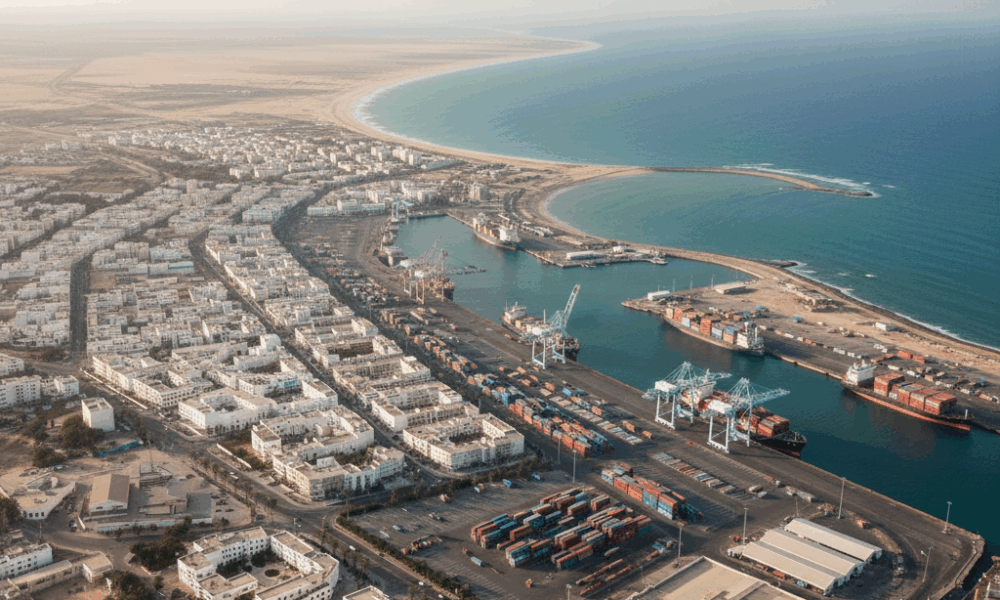
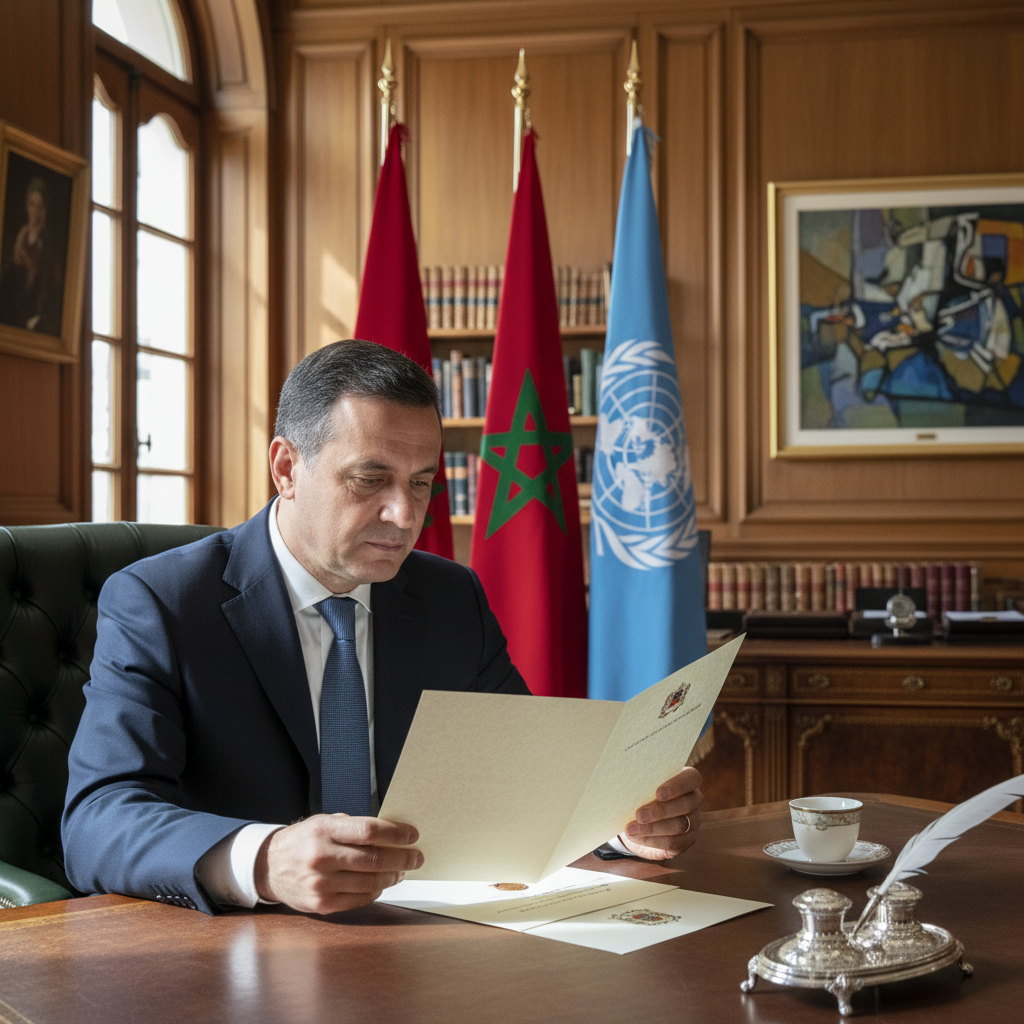
Isaac Herzog celebrates Morocco’s victory for autonomy in the Sahara: diplomacy, security, and international recognition
The diplomatic victory that placed Morocco at the center of discussions on the autonomy of the Sahara was amplified by the explicit recognition from Israeli President Isaac Herzog. Following a recent United Nations Security Council resolution, hailed as a major step towards a lasting political solution, this stance strengthens the option of an advanced status for the territory under Moroccan sovereignty. Herzog’s public appreciation, conveyed to King Mohammed VI, was described as a “strong diplomatic success” and a “decisive step towards regional stability and security.” For economic actors, this sequence validates years of proactive diplomacy and redraws investment perspectives.
In this dynamic, the reiterated reference to previous resolutions, including 2756, and the most recent one confirming the centrality of the Moroccan plan, consolidates international consensus. Strategic partners see a predictable and gradual framework, able to reconcile the imperatives of security, development, and territorial inclusion. At a time when competition for human capital intensifies, this recognition sends a signal of confidence to markets, funders, and talents.
Strategic scope for employment and attractiveness
Beyond the geopolitical angle, the impact on employment is tangible. A stabilized political framework facilitates regional value chains, from logistics services to renewable energies. Sectoral plans support the creation of skilled positions in project management, industrial maintenance, supply chain, and sustainable tourism. HR decision-makers now rely on a clear compass: a horizon of framed autonomy, supported by international institutions and state partners.
This reading is illustrated through public and private initiatives already underway. The alignment between Southern regions and national hubs (Casablanca, Tangier, Agadir) mobilizes training programs, tax incentives, and better digital interoperability. The goal is clear: to connect the territory of the Sahara to major investment corridors while anchoring local employment.
- 📌 Consolidation of the international recognition of the autonomy plan 🏛️
- 💼 Positive signal for investment and recruitment in the Southern provinces
- 🛡️ Strengthening of legal security and long-term prospects
- 🌍 Knock-on effect on economic diplomacy partnerships
To deepen the UN framework, the available analyses on the American initiative and reference texts help understand the depth of this consensus. See for example the study on the American initiative around autonomy and the dedicated summary on the Moroccan autonomy plan at the UN. These resources show how the architecture of international politics overlaps with employability issues.
| Diplomatic milestone 🌐 | Key content 🧭 | Employment effect 💼 |
|---|---|---|
| Messages from Isaac Herzog to Morocco | Public support for the UN trajectory | Investor confidence ✅ |
| UN resolutions | Centrality of the autonomy plan | Multi-year visibility of projects 📈 |
| Regional partnerships | Coordination of security and development | Creation of skilled jobs 🛠️ |
In short, the catalytic effect of political recognition nourishes a coherent investment and employment trajectory, the first step of a sustainable rollout.
Autonomy of the Sahara and the Moroccan labor market: concrete opportunities and targeted training
The dynamic around autonomy of the Sahara today irrigates the Moroccan job market. The Laâyoune-Sakia El Hamra and Dakhla-Oued Eddahab regions benefit from a knock-on effect where jobs in logistics, responsible hospitality, high value-added fishing, sustainable construction, and renewable energies attract diverse profiles. Investors seek immediately operational skills: project managers, planners, purchasers, maintenance technicians, security agents, and data analysts. This momentum fits within the continuity of diplomatic announcements and the strengthening of investment security.
To meet this demand, the national effort focuses on agile training pathways. Certification courses and work-study programs become decisive. Candidates can rely on updated guidance devices in 2025, notably through the OFPPT and ITA which structure targeted sectors (wind, solar, naval maintenance, supply chain). Internships are an essential springboard for local employability, with recurring offers accessible through dedicated portals.
From internship to hiring: a winning continuum
The transition from internship to employment is organized around three levers: field immersion, acquisition of soft skills, and measurable technical qualification. Candidates benefit from mixing operational missions and final year projects, capitalizing on company supervision. Online resources simplify monitoring: best internship offers in Morocco, pre-hiring internships, and 2025 final year project opportunities to accelerate the transition to permanent contracts.
- 🚀 Choose internships aligned with the territory sectors (energy, logistics, construction)
- 🧩 Work on soft skills (communication, critical thinking, teamwork)
- 📊 Validate traceable skills (certifications, measurable projects)
- 🤝 Build a local network (clusters, chambers of commerce, HR forums)
National companies are strengthening their presence and recruiting to meet growing demand. In retail and space development, the Kitea recruitment campaign illustrates the scaling-up of logistics, purchasing, and retail profiles. The automotive industry, a key exporter, is expanding its technical teams, as seen in APTIV technician recruitments. On the hospital front, the expansion of care services accompanies demographic and economic growth, with dedicated campaigns like the recruitment at the Casablanca University Hospital.

This training–integration–mobility continuum is key to a sustainable upscale of the job market in the Southern provinces. It turns a diplomatic announcement into a concrete professional trajectory.
| Sector 🎯 | Key skills 🧠 | Access point 🔗 |
|---|---|---|
| Logistics & ports | Planning, customs, security | OFPPT + local internships ✅ |
| Renewable energies | Maintenance, HSE, data | Targeted training 🌞 |
| Responsible tourism | Revenue management, eco-welcoming | Internship offers 🧭 |
Under the surface, the coherence between public policies and HR needs supports local competitiveness, a decisive asset for the South’s attractiveness.
Geopolitics, security, and mapping: clear signals for investors
The consolidation of security and cartographic clarification are major indicators for investors. Following UN advances and allied messages, several international platforms update their representations and risk assessment sheets. Sector organizations confirm the priority given to port and logistics hubs connecting the territory of the Sahara to African and Atlantic markets. This set of elements strengthens the readability of costs and delays, a key factor in location decisions.
In this context, the evolution of public references also plays an educational role. Analyses on the border layout on Google Maps help read the visual summary of a diplomatic trajectory, while decryptions on the Sahara dossier in Morocco and the Saharan economy provide concrete benchmarks. The alignment between international perception and Moroccan public policy reassures investors about the stability of the framework.
Regulatory stability and value chains
Regulatory stability translates into better customs predictability, streamlined procedures, and faster communications between public agencies. The value chains structured around Dakhla and Laâyoune combine ports, free zones, and service hubs. Positive externalities benefit local SMEs, apprenticeship, and security professions. This coherence reduces capital costs and operational risk.
- 🧭 More readable risk indicators for international investors
- 🛡️ Strengthening of security and compliance standards
- 🔗 Interconnection of logistics and energy corridors
- 📚 Increased visibility thanks to public and sectoral resources
Finally, the reputation effect should not be underestimated. When a head of state, like Isaac Herzog, welcomes the Moroccan trajectory, the ecosystem captures a highly credible signal. Recognition feeds confidence, confidence attracts projects, and projects create qualified local jobs.
| Signal 🔎 | Source 📌 | Business impact 💡 |
|---|---|---|
| Official support | Allied head of state, UN | Confidence premium ✅ |
| Mapping | Updates | Facilitated risk reading 🗺️ |
| Economic analyses | Local data | Robust business plans 📈 |
At this stage, the investment environment in the South resembles a growth platform where diplomacy and economy mutually reinforce each other.
Public policies, inclusion, and human capital: turning victory into sustainable jobs
Turning a diplomatic breakthrough into sustainable jobs requires fine orchestration of public policies. Three axes structure this transformation: territorial governance, access to social protection, and support for micro-enterprises. HR and social initiatives gain efficiency when pathways are clear and accessible, especially for young graduates and career changers.
State programs support activating the labor market at multiple levels. Expanding public employment to support professions and streamlining competitive exams contribute to regional balance. Guidance and inclusion mechanisms must remain pragmatic, focused on skills–job match and administrative simplification. In this spirit, information on the CNSS and public employment access paths is useful for planning a secure trajectory.
Supporting micro-enterprises and securing transitions
The entrepreneurial fabric of the Southern provinces is mainly composed of micro-enterprises. The need for support in management, formalization, and financing is constant. Support mechanisms such as Al Amana accompaniment for micro-enterprises provide local support: preparing cash flow plans, social compliance, and access to microcredit. The goal is twofold: consolidate existing micro-jobs and create sustainable added value.
- 🏦 Secure cash flow and social compliance of micro-enterprises
- 🧑🏫 Strengthen skills through support and training
- 🔁 Facilitate career changes with certified pathways
- 🧑⚕️ Mobilize public services (health, education) to anchor social autonomy
Conjunctural data enlighten these choices. Analyses on post-crisis health and economic resilience, like those regarding the monitoring of the pandemic in Morocco, inspired more reactive protection mechanisms. HR trends published in the 2025 barometers confirm the rise of hybrid jobs, partial telework, and cross-cutting skills (data, compliance, purchasing).
| Public mechanism 🏛️ | Purpose 🎯 | Employment benefit 💼 |
|---|---|---|
| CNSS & pathways | Protection and mobility | Securing pathways ✅ |
| Micro-enterprise support | Management, financing | Job sustainability 📈 |
| Regional training | Scarce skills | Accelerated integration 🚀 |
This architecture, anchored to the international recognition of the Moroccan plan, aims to make autonomy fully inclusive and opportunity-creating.
Culture, communication, and local anchoring: from the national holiday to professional identities
Symbols matter. National celebration and attachment to the territory strengthen social cohesion, essential to economic vitality. Commemorations associated with the international recognition of the Moroccan Sahara inspire civic initiatives, employer branding actions, and educational projects. Editorial resources dedicated to the national celebration illustrate this dynamic. It extends into organizational life, where values of public service, rigor, and proximity structure HR frameworks.
In this context, cultural benchmarks play a bridging role between identity and work. Whether local events, festivals, or heritage initiatives, these moments give meaning to engagement. Companies integrating these codes gain in attractiveness, stimulate pride of belonging, and retain talents. Universities and schools can associate with anchored projects, like living labs around oases, water management, or Saharan gastronomy, for rewarding internships and final projects.
Content and benchmarks to nurture engagement
Thematic platforms help understand the historical depth of the dossier and its socio-economic outcomes. The overview offered on the Moroccan Sahara and UN summaries on the autonomy plan provide a clear framework to disseminate internally. Integrating timelines, explanatory maps, and key figures makes communication educational and mobilizing.
- 🎉 Highlight celebrations to support employer branding
- 🗂️ Provide educational kits on autonomy and security
- 📣 Host testimonials from employees originating from the South
- 🤝 Create campus–business partnerships for anchored projects
Internal communication benefits from relying on multimedia formats to promote appropriation. Videos, interactive maps, and podcasts offer better message retention without overwhelming attention. The goal: consolidate a common culture translating the diplomatic victory into shared ambition.
| Resource 📚 | HR usage 🧩 | Team effect 🤝 |
|---|---|---|
| UN timelines | Onboarding new members | Rapid alignment ✅ |
| Maps and infographics | Project onboarding | Operational clarity 🗺️ |
| Video testimonials | Employer branding | Pride of belonging 🌟 |
When teams share a solid narrative, strategy becomes clearer and execution smoother, conditions for long-term success.
Market indicators and practical tools: from diplomacy to HR decisions
Converting a diplomatic victory into recruitment decisions requires simple and actionable indicators. HR and finance departments look at order book visibility, payment cycles, but also consumption signals reflecting household confidence. For example, monitoring the price of the iPhone 17 in Morocco can serve as a proxy for high-end purchasing power, useful for calibrating compensation policies in urban clusters.
Talent planning gains by integrating sectoral conjunctural variables. Job trends, salary evolutions, and critical skills feature in annual barometers. The 2025 trends confirm growing demand for data, responsible purchasing, HSE, and security. At the same time, candidate interest in impact positions in the South continues to rise.
Tools for decision-makers
Implementing an operational HR cockpit helps steer recruitment waves in the Southern provinces. On the menu: candidate pipeline by sector, ratio of internships to permanent contracts, and retention dashboards. Management can enrich this cockpit with educational content and updated geopolitical analyses. Finally, audiovisual monitoring usefully complements internal notes.

- 📊 Track a panel of indicators (logistics costs, delays, retention)
- 🧭 Integrate UN benchmarks and recognition signals
- 🤝 Co-build with campuses and local micro-enterprises
- 🛡️ Align HSE and operational security from the project phase
To keep a global vision, it is useful to aggregate public and private resources on the Saharan dossier. Monitoring reference resources, such as the American initiative and publications dedicated to the national celebration related to the UN, clarifies calendar and budget decisions.
| Pillar ⚙️ | Key indicator 📈 | Practical action 🧰 |
|---|---|---|
| Recruitment | Time-to-hire | Pipeline via pre-hiring internships ✅ |
| Skills | Certification rate | Mobilize pre-hiring + final project 🎓 |
| Risk | HSE incidents | Security trainings and audits 🛡️ |
In the end, best practice is to link diplomacy, market data, and HR management to make decisions fast, aligned, and transparent.
{“@context”:”https://schema.org”,”@type”:”FAQPage”,”mainEntity”:[{“@type”:”Question”,”name”:”Que signifie lu2019appui du2019Isaac Herzog pour le dossier du Sahara marocain ?”,”acceptedAnswer”:{“@type”:”Answer”,”text”:”Il renforce la reconnaissance internationale du plan du2019autonomie portu00e9 par le Maroc, en validant la trajectoire onusienne comme base su00e9rieuse de solution politique. Ce signal cru00e9dibilise le cadre de su00e9curitu00e9 et soutient lu2019attractivitu00e9 u00e9conomique des provinces du Sud.”}},{“@type”:”Question”,”name”:”Quels secteurs recruteront le plus dans les provinces du Sud ?”,”acceptedAnswer”:{“@type”:”Answer”,”text”:”Logistique portuaire, u00e9nergies renouvelables, BTP durable, tourisme responsable et services de su00fbretu00e9. Les postes clu00e9s incluent chefs de projet, techniciens de maintenance, planificateurs supply chain, responsables HSE et data analysts.”}},{“@type”:”Question”,”name”:”Comment accu00e9lu00e9rer lu2019insertion apru00e8s un stage ?”,”acceptedAnswer”:{“@type”:”Answer”,”text”:”Cibler des stages de pru00e9-embauche, valider des certifications techniques, du00e9velopper les soft skills et activer le ru00e9seau local. Les ressources comme les offres de stages, PFE et formations OFPPT permettent du2019optimiser la transition vers le CDI.”}},{“@type”:”Question”,”name”:”Quelles ressources suivre pour comprendre lu2019u00e9volution du dossier saharien ?”,”acceptedAnswer”:{“@type”:”Answer”,”text”:”Les analyses sur le plan du2019autonomie u00e0 lu2019ONU, les initiatives partenaires, les mises u00e0 jour cartographiques et les baromu00e8tres u00e9conomiques annuels offrent une vision complu00e8te et actionnable.”}},{“@type”:”Question”,”name”:”Pourquoi la stabilitu00e9 politique est-elle du00e9cisive pour lu2019emploi ?”,”acceptedAnswer”:{“@type”:”Answer”,”text”:”Elle ru00e9duit le risque, amu00e9liore la visibilitu00e9 des projets, facilite le financement et attire des entreprises pru00eates u00e0 investir sur des horizons plus longs, cru00e9ant ainsi des emplois locaux qualifiu00e9s.”}}]}What does Isaac Herzog’s support mean for the Moroccan Sahara dossier?
It strengthens the international recognition of the autonomy plan led by Morocco, validating the UN trajectory as a serious basis for a political solution. This signal legitimizes the security framework and supports the economic attractiveness of the Southern provinces.
Which sectors will recruit the most in the Southern provinces?
Port logistics, renewable energies, sustainable construction, responsible tourism, and security services. Key positions include project managers, maintenance technicians, supply chain planners, HSE managers, and data analysts.
How to accelerate integration after an internship?
Target pre-hiring internships, validate technical certifications, develop soft skills, and activate the local network. Resources such as internship offers, final projects, and OFPPT training help optimize the transition to permanent contracts.
Which resources should be tracked to understand the evolution of the Saharan dossier?
Analyses on the autonomy plan at the UN, partner initiatives, cartographic updates, and annual economic barometers provide a comprehensive and actionable vision.
Why is political stability decisive for employment?
It reduces risk, improves project visibility, facilitates financing, and attracts companies ready to invest over the long term, thus creating qualified local jobs.

Comments are closed