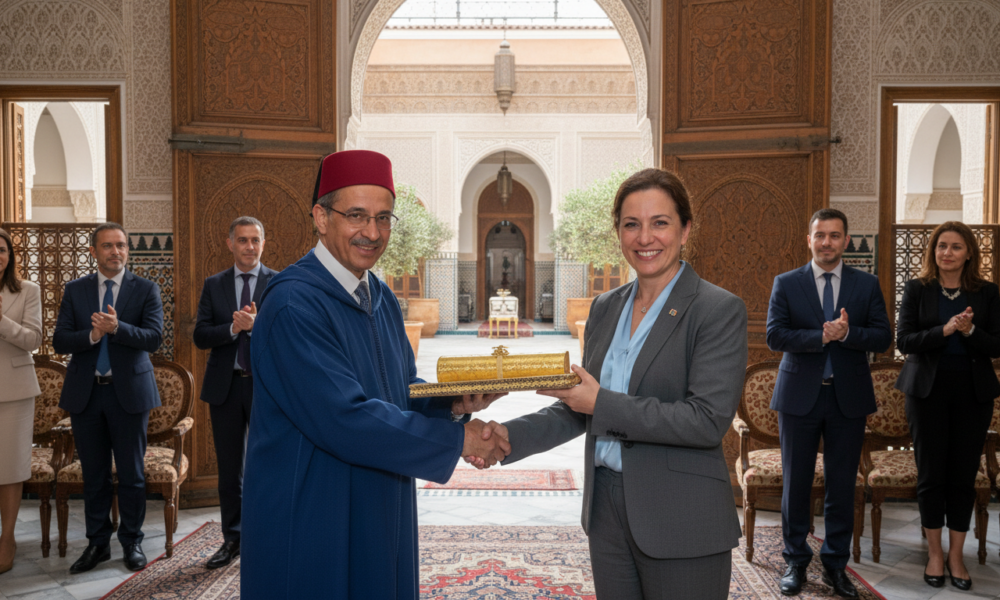
In a global context where scientific diplomacy becomes an essential lever for rapprochement, Rabat confirms its central role as a land of meetings and exchanges. The capital of the Kingdom was recently the scene of a significant event: the awarding of a prestigious distinction to an Israeli researcher, acknowledging his significant contribution to intercultural dialogue and the advancement of shared knowledge.
This initiative, far from being an isolated act, is part of a deep-rooted dynamic initiated several years ago, aimed at strengthening the bridges between scientific and academic communities. It highlights the ability of Morocco to promote collective intelligence beyond borders, to address the common challenges of our time, whether climatic, technological, or human.
A recognition marked by history and the future
The ceremony, imbued with emotion and solemnity, recalls the Kingdom’s constant commitment to peace and coexistence. This recognition granted to a leading scientist echoes the legacy carried by emblematic figures such as André Azoulay. Advisor to His Majesty and president of the Anna Lindh Euro-Mediterranean Foundation, Mr. Azoulay himself has been honored in the past for his unique contribution to the influence of Moroccan Judaism and the promotion of living together.
In 2026, this historical continuity takes on a new pragmatic dimension. It is no longer only about celebrating the past, but about building a common future through technical and intellectual cooperation. This approach aligns with local initiatives aimed at promoting diversity, as evidenced by efforts to enhance the Manoise culture in Morocco, illustrating the country’s openness to all forms of heritage wealth.
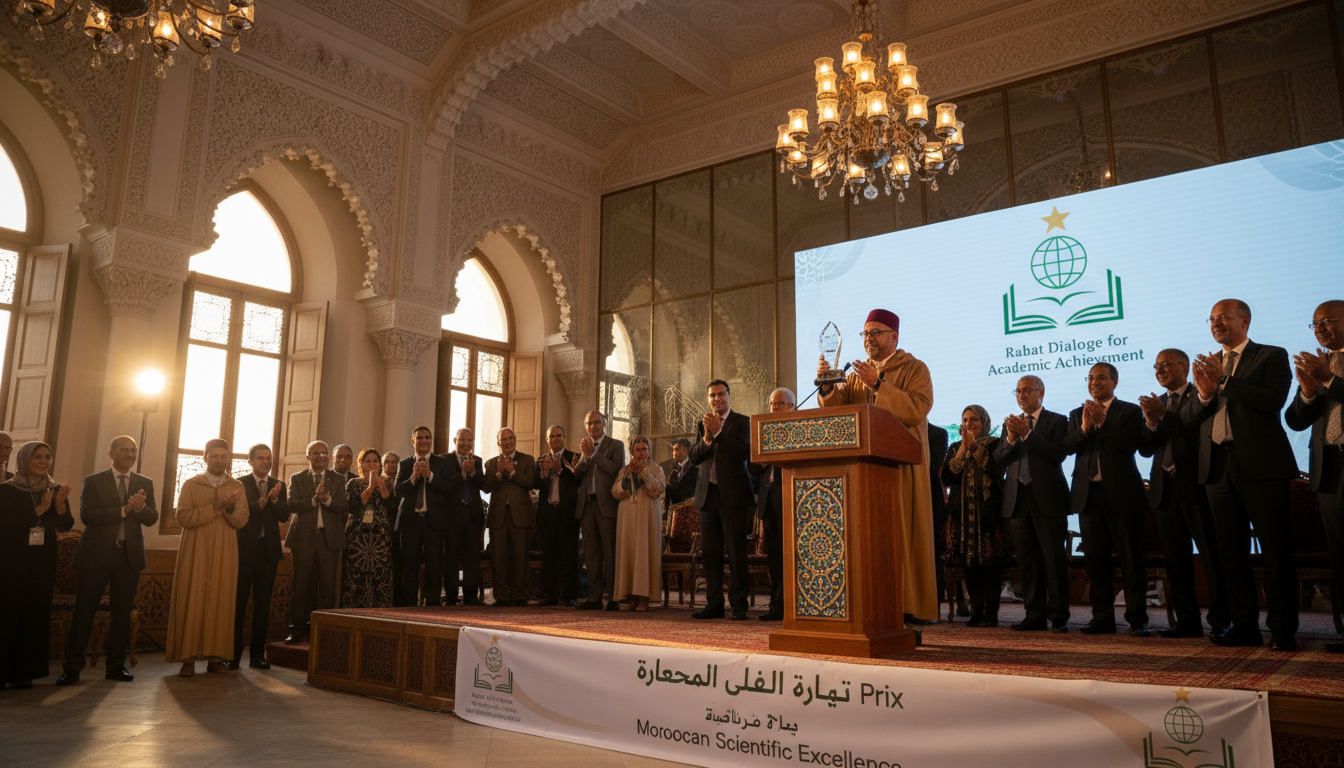
Science as a vector of soft diplomacy
The profile of the laureate, whose work focuses on critical environmental issues for the region, demonstrates that research transcends political divides. His active participation in environmental conferences in Rabat has allowed him to forge strong links with his Moroccan counterparts. This is where the notion of international relations takes on its full meaning: it is embodied in concrete projects, useful for populations.
Experts agree that this type of distinction sends a strong message to investors and international partners. It signals a stable, open environment conducive to innovation. Political stability, reinforced by major international support such as the US initiative on Sahara autonomy, creates an ideal framework for these scientific collaborations to thrive peacefully.
The rise of academic and technological partnerships
One of the most tangible outcomes of this rapprochement is the acceleration of university exchanges. Since the signing of the Memorandum of Understanding in May 2022 between the Ministries of Higher Education of the two countries, collaboration has reached several new levels. This institutional framework has made it possible to structure exchanges and multiply joint projects in cutting-edge fields.
Moroccan universities, in search of excellence, see in these partnerships an opportunity to enhance their skills. For example, the International University of Rabat opens its doors to new talents, integrating international profiles to enrich its faculty and research teams. This openness fosters a transfer of technologies vital to the national economy.
Key sectors of bilateral cooperation 🤝
The contribution of Israeli researchers is particularly evident in sectors where Morocco harbors great ambitions. Water, precision agriculture, and biotechnologies are at the heart of discussions. These synergies enable the development of solutions adapted to the Kingdom’s climatic realities, while benefiting from the technological expertise of the Israeli state.
- 💧 Water Management: Development of desalination and wastewater recycling technologies.
- 🌾 Agritech: Introduction of drought-resistant seeds and irrigation optimization.
- 🧬 Health and Biotechnologies: Collaboration on advanced medical research projects, linked to recent health innovations in the Biomed sector.
- 🔋 Renewable Energies: Sharing expertise on solar energy storage.
Economic impact and future prospects
Beyond the cultural symbol, this dynamic of cooperation feeds the Moroccan economic ecosystem. Joint research centers act as incubators for innovative startups, thus creating qualified employment for young Moroccan graduates. The job market, increasingly oriented towards R&D professions, directly benefits from this effervescence.
To better understand the evolution of these academic and scientific relations, here is an overview of the key milestones that have led to the current situation in 2026:
| Year 📅 | Key Event 🔑 | Market Impact 📈 |
|---|---|---|
| 2022 | Signing of the Memorandum of Understanding on scientific research | Official opening of institutional cooperation channels. |
| 2023-2024 | Increase in visits by university delegations | Launch of the first pilot projects in agriculture and water. |
| 2025 | Increased integration of international researchers on campuses | Rise in joint scientific publications and patents. |
| 2026 | Major distinction of a researcher for dialogue | Consolidation of Morocco’s image as a hub of tolerance and innovation. |
This trajectory demonstrates that culture and science are powerful drivers of development. By honoring this scientist, the Kingdom does not just decorate an individual; it validates a long-term strategy where openness to others is synonymous with shared growth.
What is the purpose of this distinction awarded to the researcher?
The objective is twofold: to recognize scientific excellence in vital fields for Morocco and to salute the personal commitment of the researcher in promoting intercultural dialogue and peace through science.
How does this cooperation benefit Moroccan students?
It opens access to exchange programs, advanced technologies, and joint research opportunities, thereby strengthening the employability of young graduates in the local and international market.
What are the main research areas concerned?
The cooperation focuses mainly on sustainable agriculture, water management, renewable energies, and biotechnologies, strategic sectors for the Moroccan economy.
Is this approach isolated in the region?
Morocco is a pioneer by strongly integrating the scientific and academic dimension into its diplomatic relations, serving as a model for diplomacy based on human and technological development.

No responses yet