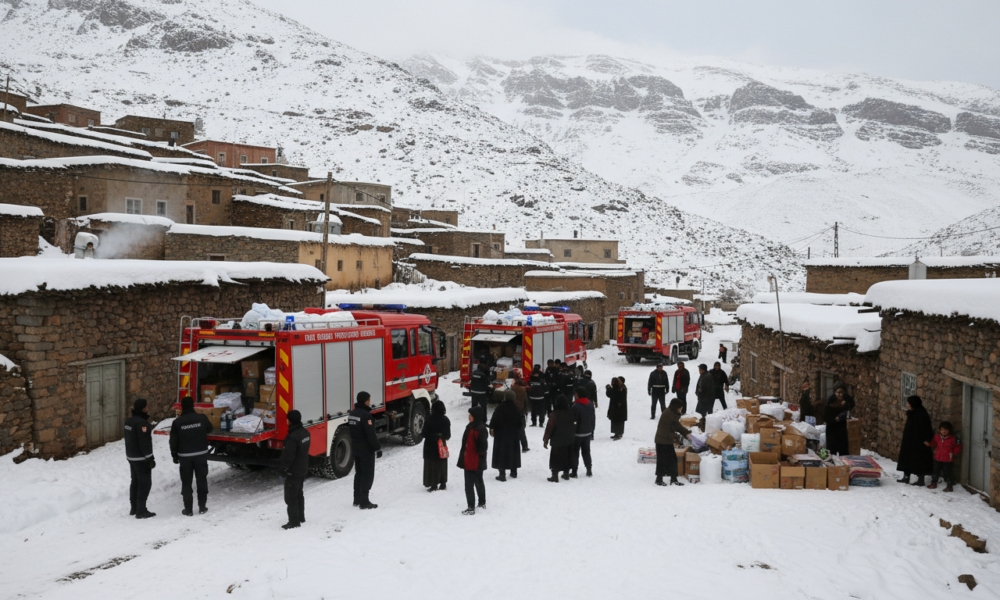
Faced with a rare large-scale climate disaster, Morocco is mobilizing its resources to respond to the emergency. Torrential rains and exceptional snowfall hit the kingdom this December 2025, plunging several regions into mourning and chaos. At the heart of this crisis, the city of Safi pays the heaviest human toll, while authorities deploy a massive aid plan to support the disaster victims.
A national emergency operation for 73,000 affected households
The Moroccan government officially launched this Tuesday a vast emergency operation aimed at assisting populations affected by extreme winter weather. This support program targets about 73,000 households spread over 28 provinces, currently isolated by snow or devastated by floodwaters. Authorities, in coordination with civil security, orchestrate the distribution of food, blankets, and essential supplies to meet immediate needs.
This mobilization comes as meteorological services maintain a high level of alert. A red alert has been issued for the High Atlas mountains, where up to 80 cm of snow is expected, accompanied by freezing temperatures. Meanwhile, an orange alert for heavy rain remains in effect in the central and northern regions, complicating rescue and aid delivery operations.
The tragedy of Safi: a city submerged in a few hours
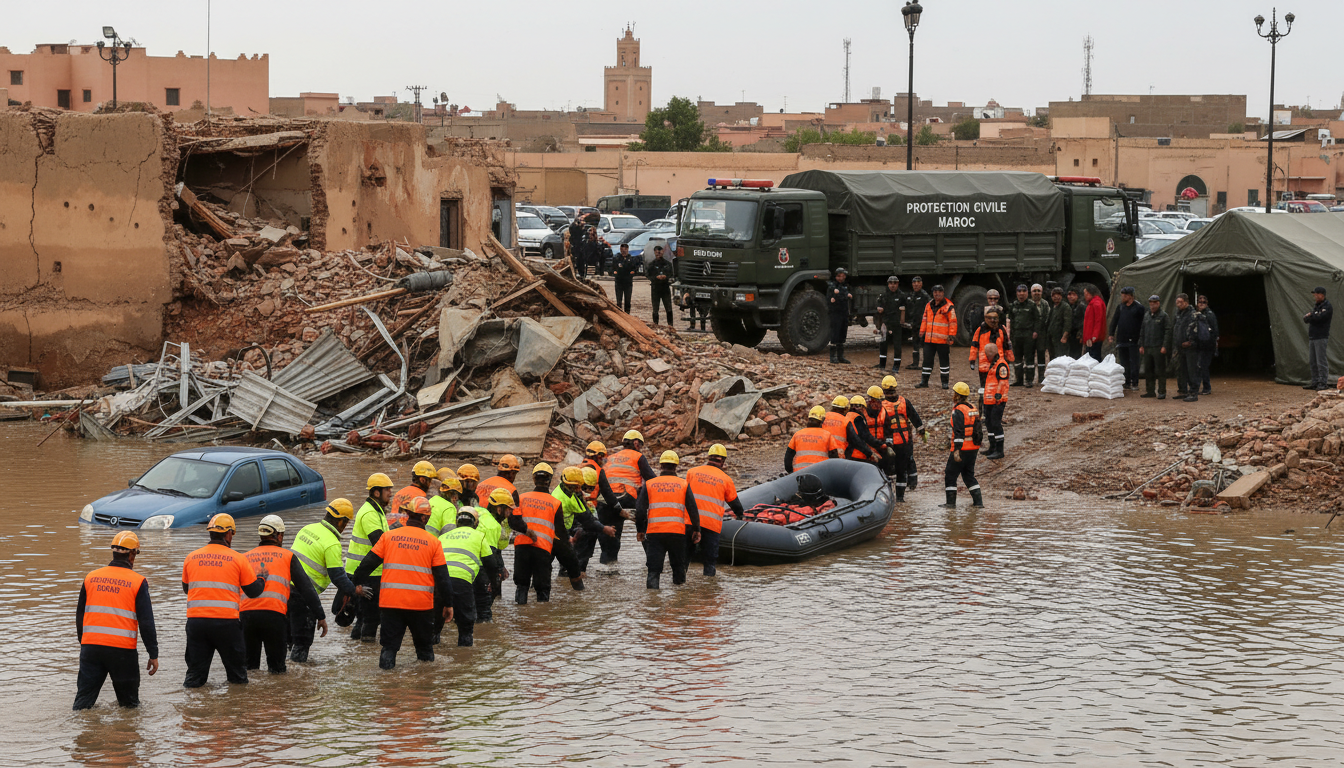
The heaviest human toll was recorded in the coastal city of Safi. Last Sunday, sudden floods turned the streets into devastating mud torrents. In just one hour, a deluge struck the city, surprising residents and trapping many merchants in their shops.
The Bab Chabaa district was particularly hit hard, with water levels reaching up to four meters in some places. Official reports mention at least 37 victims, a figure reflecting the violence of the event. About 70 homes and businesses suffered major damage, swept away by the force of the waters.
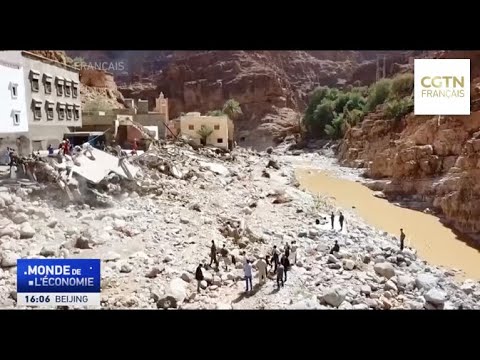
Survivors’ accounts describe scenes of absolute panic. Witnesses recount how merchants, attempting to protect their goods by locking themselves inside their shops, found themselves trapped by the rapidly rising waters. This disaster raises crucial questions about resilient urban planning and the capacity of current infrastructure to cope with extreme climatic events.
Infrastructure and accountability: time for answers
Beyond the emotion, it is time to analyze structural causes that amplified this tragedy. The public prosecutor announced the opening of an investigation to determine whether failures in sanitation infrastructure contributed to the scale of the disaster. Although precipitation was intense, the issue of maintenance of drainage networks is at the center of the debate.
This situation painfully recalls the recent collapse of two buildings in the historic city of Fès, which cost the lives of 22 people. These successive events highlight the fragility of the urban fabric in the face of hazards and strengthen calls for accountability from civil society, demanding stricter building standards and better maintenance.
The Moroccan climate paradox: from drought to flood
This outbreak of elements occurs in a paradoxical climatic context. Morocco comes out of seven consecutive years of severe drought that have depleted aquifers and water reservoirs. The previous year was recorded as the hottest ever observed in the kingdom. Climatologists emphasize that this global warming makes storms more unpredictable and violent in North Africa.
Although these rains could theoretically benefit dam reservoirs’ reserves, their torrential intensity over soil hardened by drought favors runoff rather than infiltration, increasing the risk of flash floods. Managing these extreme phenomena becomes a major economic challenge for the country.
| Geographical Area 🌍 | Alert Type ⚠️ | Weather Forecast 🌨️ | Main Impact |
|---|---|---|---|
| High Atlas | Red | Snow (80 cm), Frost | Village isolation, road closures |
| Center & North | Orange | Torrential rains | Wadi floods, urban flooding |
| Safi (Coastal) | Affected | Progressive water decrease | Severe material damage, high human toll |
| Rabat (South-East) | Watch | Snow (50 cm) | Below freezing temperatures |
Solidarity and reconstruction: the next steps
In the face of adversity, national solidarity is organizing. Schools in Safi will remain closed for a minimum of three days, the time needed to clear roadways blocked by mud and debris. Hospitals continue to care for the injured, some of whom remain in intensive care. The immediate goal is to secure survivors and restore essential services.
For the future, Morocco will need to imperatively integrate these new climate realities into its development strategies. This will require necessary technical expertise to redesign coastal cities’ infrastructure and pipelines. Protecting citizens and ensuring the sustainability of economic activity depend directly on this.
Here are the priority actions deployed on the ground:
- 🚑 Medical evacuation: Transfer of seriously injured patients to regional hospitals and psychological support for victims’ families.
- 🍲 Food aid: Distribution of nutrition kits and drinking water to 73,000 isolated households.
- 🚜 Access restoration: Deployment of civil engineering machinery to clear mountain roads and Safi’s main arteries.
- 🔍 Technical inspection: Emergency audit of buildings weakened by water to prevent further collapses.
- 💧 Water management: Increased monitoring of stormwater management to avoid overflow of hillside reservoirs.
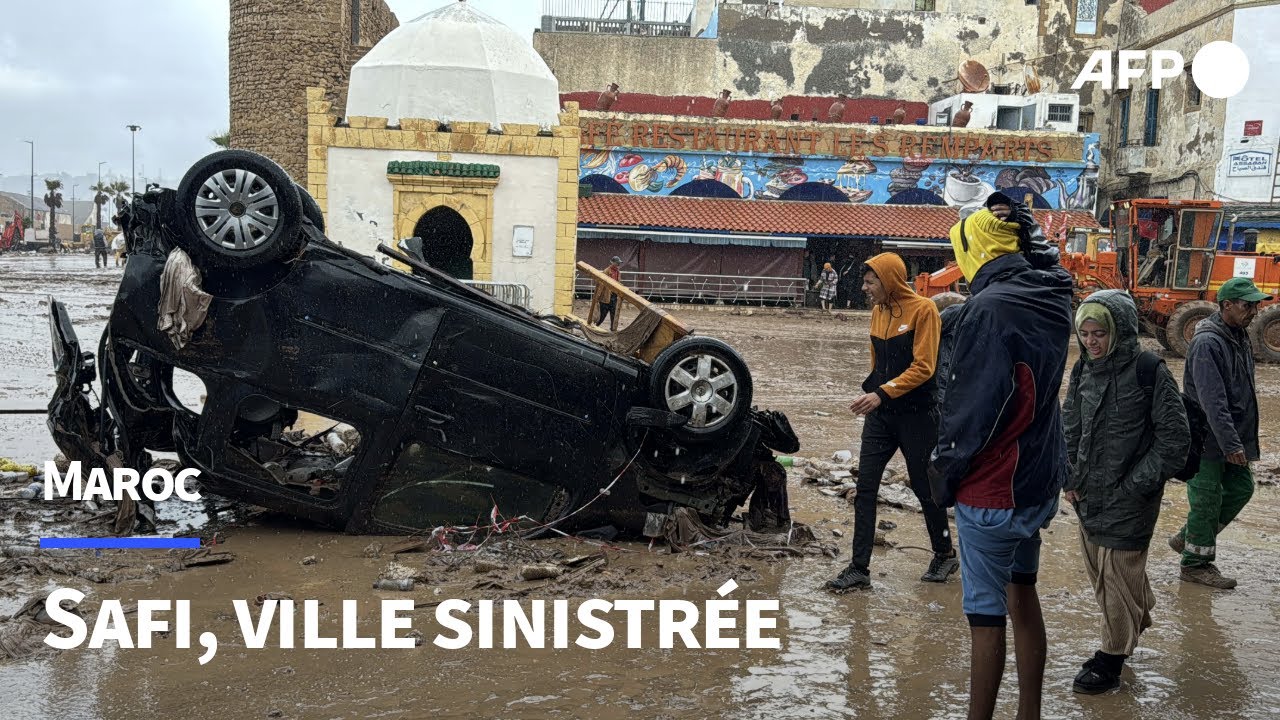
Reconstruction will take time, but the responsiveness of state services and the solidarity spirit of Moroccans form the first line of defense against this natural disaster. The local economy, although affected, will have to show resilience to overcome this major climatic ordeal.
{“@context”:”https://schema.org”,”@type”:”FAQPage”,”mainEntity”:[{“@type”:”Question”,”name”:”Which areas are most affected by the December 2025 weather disruptions?”,”acceptedAnswer”:{“@type”:”Answer”,”text”:”The city of Safi was the hardest hit by deadly flash floods. Meanwhile, 28 provinces, notably in the High Atlas and southeast of Rabat, are experiencing snowstorms and torrential rains.”}},{“@type”:”Question”,”name”:”How is the Moroccan government responding to this disaster?”,”acceptedAnswer”:{“@type”:”Answer”,”text”:”A national emergency operation was launched to assist 73,000 households. It includes the distribution of food, blankets, and deployment of civil security for rescues and clearing operations.”}},{“@type”:”Question”,”name”:”Why were the floods in Safi so deadly?”,”acceptedAnswer”:{“@type”:”Answer”,”text”:”The sudden intensity of precipitation, combined with specific topography and potentially drainage system failures, caused a rapid rise in water levels (up to 4 meters) in the Bab Chabaa district, trapping residents.”}},{“@type”:”Question”,”name”:”Is there a link between these floods and climate change?”,”acceptedAnswer”:{“@type”:”Answer”,”text”:”Yes, experts note that global warming intensifies meteorological phenomena in North Africa, making storms more unpredictable and violent, especially following long drought periods.”}}]}Which areas are most affected by the December 2025 weather disruptions?
The city of Safi was the hardest hit by deadly flash floods. Meanwhile, 28 provinces, notably in the High Atlas and southeast of Rabat, are experiencing snowstorms and torrential rains.
How is the Moroccan government responding to this disaster?
A national emergency operation was launched to assist 73,000 households. It includes the distribution of food, blankets, and deployment of civil security for rescues and clearing operations.
Why were the floods in Safi so deadly?
The sudden intensity of precipitation, combined with specific topography and potentially drainage system failures, caused a rapid rise in water levels (up to 4 meters) in the Bab Chabaa district, trapping residents.
Is there a link between these floods and climate change?
Yes, experts note that global warming intensifies meteorological phenomena in North Africa, making storms more unpredictable and violent, especially following long drought periods.

Comments are closed