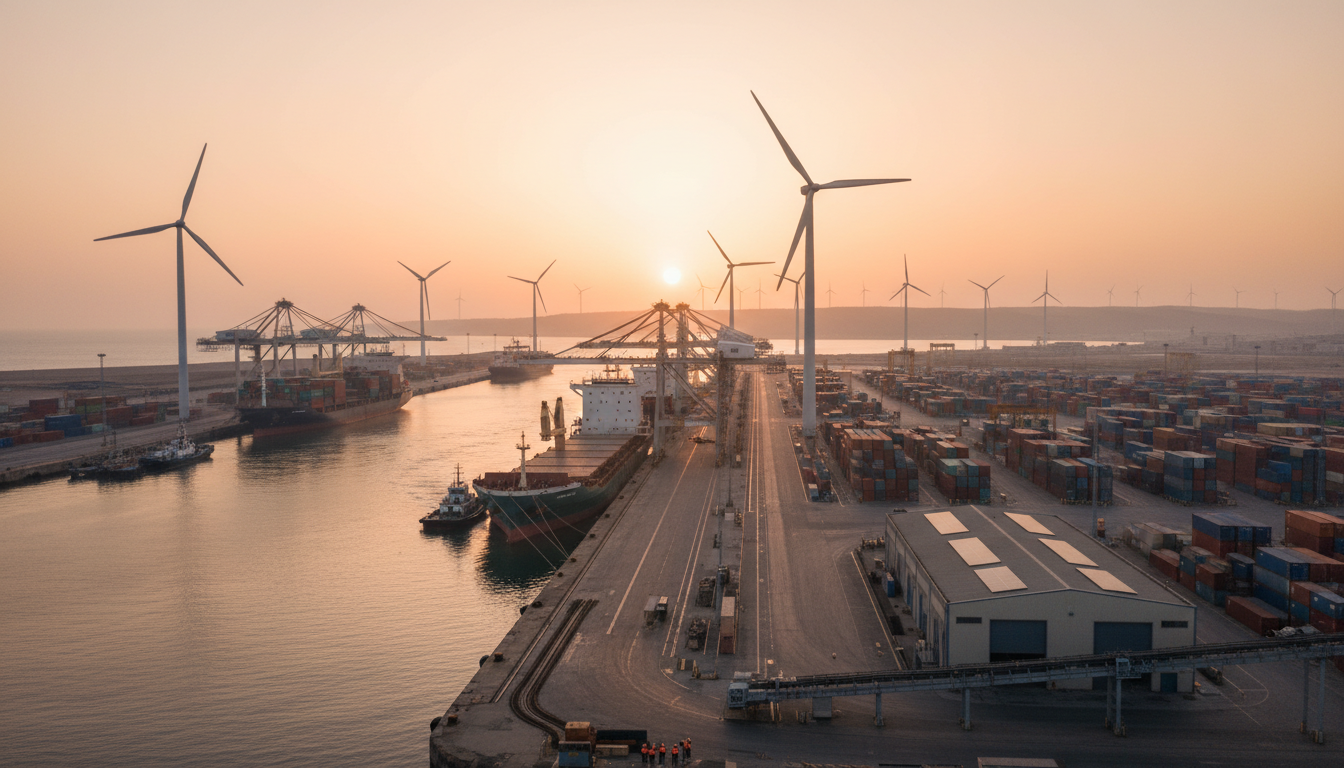
In an era marked by the fragmentation of global supply chains and the redefinition of economic alliances, Morocco presented itself at the World Economic Forum in Davos with a clear and bold value proposition. Far from being a mere spectator of global shifts, the Kingdom asserts its status as a competitive and stable platform, a true link between the European continent and the African growth dynamics. This stance is not just a simple statement of intent, but the result of a deep structural transformation.
A structural transformation in the service of investment
During the session entitled “Invest in Morocco,” organized by the Moroccan Agency for Investment and Export Development (AMDIE), the message delivered to international decision-makers was unequivocal. Ali Seddiki, General Manager of the agency, highlighted the progress made since the late 1990s. It is crucial to recall that in 1999, only half of the territory had access to electricity. Today, the Kingdom ranks among regional leaders in infrastructure quality, a metamorphosis made possible thanks to an ambitious Royal vision coupled with a rigorous execution capacity on the ground.
This evolution allows the country to play a central role in international cooperation. For investors seeking visibility in an uncertain world, Moroccan fundamentals — stability, predictability, and openness — constitute major assets. With free trade agreements covering more than 90 countries, companies established in Morocco benefit from privileged access to over 2.5 billion consumers, thus strengthening the links between Europe, the Atlantic, and Africa.

Speed of execution as a competitive advantage
Beyond physical infrastructures, it is the administrative and operational agility that now appeals to large industrial groups. The Stellantis project example was cited as tangible proof of this efficiency: in just two years, a greenfield site was transformed into a world-class industrial zone. In a context where large-scale projects often suffer delays elsewhere in the world, this ability to move quickly from decision to delivery becomes a crucial differentiating factor for industrial development.
This agility also benefits emerging sectors. The country does not limit itself to attracting heavy industry; it cultivates an ecosystem conducive to innovation and new technologies, as evidenced by recent initiatives to strengthen the digital visa and innovation in Morocco, facilitating the recruitment of international talents and promising startups.
The successful bet on green energy and decarbonization
The energy transition is at the heart of the Moroccan argument in Davos. With more than 40% of its electricity mix already coming from renewable energies, the Kingdom offers a considerable “green advantage” to industrialists. The availability of abundant solar and wind energy allows production at globally competitive costs, a strong argument at a time when energy price volatility affects global markets.
This energy strategy aims not only for self-sufficiency but positions the country as a key player in the decarbonized economy. Investors are now looking for platforms capable of guaranteeing “net-zero” production. Morocco meets this requirement, thus attracting capital concerned with sustainability. Furthermore, structuring projects such as strengthening the status of Morocco as an LNG import hub further diversify and secure the national energy supply.
A talent pool for the future
Morocco’s demographic advantage was also highlighted during exchanges with international bodies. Unlike many aging economies, the Kingdom benefits from a young population, with an average age of 29. This “demographic dividend” is supported by business environment reforms and investment support mechanisms, such as the investment charter which can cover up to 30% of capital expenditures for eligible projects.
Industrial acceleration zones offer not only tax advantages but also access to a qualified and adaptable workforce. It is in this context that companies actively recruit, as seen with recent opportunities where Heliatec is recruiting HSE profiles to accompany this industrial upscaling.
Morocco, a logistic and geopolitical crossroads
Morocco’s geographical position, at the crossroads, takes on a new strategic dimension with the rise of “nearshoring.” European and American companies seek to shorten their supply chains to gain resilience. Kelsey Goodman from the World Economic Forum emphasized that this geography is now revalued by global logistical disruptions.
To illustrate this rise and the comparison with other models, here is an overview of the Kingdom’s competitive advantages in 2026:
| Strategic Pillar 🏗️ | Moroccan Competitive Advantage 🇲🇦 | Impact for the Investor 💼 |
|---|---|---|
| Logistics Connectivity | Tanger Med Port + Dense highway and rail network | Quick access to EU and US markets (48h for Europe) |
| Green Energy | 40%+ renewables in the energy mix | Carbon footprint reduction and controlled costs |
| Human Capital | Young population (avg. 29 years) and multilingual | Availability of adaptable and tech-savvy talents |
| Market Access | FTA with +90 countries (USA, EU, AfCFTA) | Potential market of 2.5 billion consumers |
This positioning is reinforced by an active economic diplomacy that multiplies strategic partnerships. The Kingdom’s role is not limited to trade; it extends to regional stability and security, as shown by discussions where the King of Morocco is consulted for peace advice, affirming the country’s geopolitical weight.
Towards an economy of innovation and knowledge
Finally, the panel “Strengthening Long-Term Partnerships for Sustainable Growth” helped to deconstruct certain myths. Mohamed Mabrouk from Ernst & Young recalled that the Moroccan innovation landscape is often underestimated. The country has developed a robust startup ecosystem, capable of offering relevant solutions on a global scale. This dynamic is reflected in the growing interest in bold projects, such as the railway adventure linking London to Morocco, which symbolizes this willingness to break physical and economic barriers.
The reforms underway aim to transform traditional trade into a high value-added economy. Here are the key sectors that currently benefit from this dynamic:
- 🚗 Automotive & Aeronautics: Upgrade towards engineering and design.
- ⚡ Renewable Energies: Export of green electricity and hydrogen production.
- 💻 Outsourcing & Tech: High value-added services (KPO, ITO).
- Agro-industry 🌾: Local processing to maximize exported value.
- 💊 Pharmaceutical Industry: Health sovereignty and hub for Africa.
In sum, at Davos, Morocco has not just sold a destination but a capacity to deliver results. For economic players looking to diversify their risks while tapping into African growth, the Kingdom stands out as the indispensable strategic bridge, ready to turn ambition into concrete execution. This reality is translated daily into new opportunities in the job market, notably visible through recruitment competitions in Tangier, a true economic lung of the North.
What is the impact of this positioning at Davos on employment in Morocco?
This strategy aims to attract massive foreign direct investments, which mechanically generates job creation, not only in industry but also in services, logistics, and engineering, offering opportunities to young graduates and specialized technicians.
How does Morocco guarantee green energy to industrialists?
Thanks to massive investments in solar (Noor) and wind for over 15 years, Morocco has secured renewable production capacity exceeding 40% of its energy mix, allowing it to offer decarbonized electricity at competitive rates for factories.
What are the most promising sectors for the years to come?
Beyond automotive and aeronautics, which are already mature, the sectors of energy transition (green hydrogen), digital (high-tech offshoring), pharmaceutical industry, and processed agri-food are experiencing sustained growth.
Is Morocco only focused on Europe?
No, Morocco positions itself as a triangular hub. While it remains a privileged partner of Europe, it is also the gateway to Africa thanks to the African Continental Free Trade Area (AfCFTA) and maintains strong trade relations with the United States and Asia.

No responses yet